Infrared Outdoor Saunas UK: Cabin and Installation Guide
An infrared outdoor sauna uses electric emitters that warm occupants and interior surfaces by radiant energy rather than relying only on a high-temperature mass of air. Putting that system in a garden cabin adds questions that an indoor infrared box does not face: rain, condensation, low ambient temperatures, cable routes, foundation and post-use drying.
This page explains how to compare compatible outdoor cabins, emitter layout, controls, weather protection, electrical work and ownership. It deliberately avoids detoxification, calorie, pain-treatment and disease claims. TimberIN sells sauna products, not medical treatment, and any health concern belongs with an appropriately qualified professional.
Compatibility first: an attractive timber cabin is not automatically suitable for infrared equipment. The enclosure, emitters, controls and outdoor electrical installation must be designed and approved as one system.
How infrared sauna heating differs
A traditional electric or wood-fired sauna heater warms stones and room air, with water sometimes used on suitable stones to change the sensation. Infrared emitters direct radiant energy towards users and nearby surfaces. The room can therefore be operated differently, but exact temperature, warm-up and control behaviour depend on the designed system.
“Infrared” is not one universal specification. Emitter material, wavelength claims, surface temperature, placement, control logic and distance from the body vary. Compare documented equipment and instructions rather than treating a marketing label as proof of performance.
Outdoor cabins currently assigned to infrared use
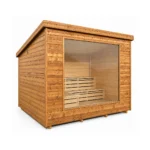
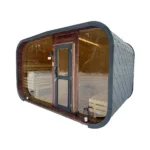
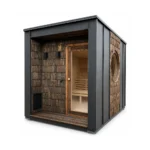
The models below are currently assigned to the infrared-compatible category. Open each page and request the exact emitter package, layout, controls, electrical data and weather specification for the chosen size. A cabin photograph or category assignment does not mean every infrared component shown or discussed is included in its starting price.
-
 TimberIN Nordic Vista™From: €6,978
 -
Panoramic designTimberIN Nordic Horizon™€9,584
-
Oculus designTimberIN Nordic Oculus™€12,290
Infrared, electric-stone and wood-fired sauna compared
| Heat system | Operating character | Main outdoor planning question |
|---|---|---|
| Infrared emitters | Radiant panels arranged around seated users | Is the complete cabin and emitter system approved for outdoor conditions? |
| Electric sauna heater | Heats room air and suitable sauna stones | Can the property supply and room design support the selected heater? |
| Wood-fired sauna stove | Fire-heated stones and air with manual firing | Where will stove, guard, chimney, fuel and ash be managed? |
| Hybrid room | More than one approved heat mode | Have controls, clearances and ventilation been designed together? |
Infrared is an alternative experience, not an automatic upgrade. Buyers who want the familiar hot-air and stone routine should compare electric outdoor saunas and wood-fired saunas before deciding.
Compare carbon, ceramic and mixed emitters by evidence
Carbon panels are commonly broad and relatively low-profile; ceramic elements can be more concentrated; mixed layouts may use more than one emitter type. Those descriptions do not establish which system is better for a particular body position or cabin.
Request manufacturer data for emitter model, rated power, approved distance, surface protection, control range, warranty and replacement. Ask for a layout drawing that shows what reaches the back, sides and legs of each normal user. A list of emitter counts without positions is weak evidence.
Emitter position matters more than a headline wattage
Radiant heat depends on line of sight, distance and body position. A powerful panel behind a backrest or far from the legs may not create an even experience. Bench width, user height and the possibility of moving closer or farther from an emitter should be considered.
Do not add panels, cover guards or change benches without approval. Emitters and surrounding materials operate at designed temperatures and clearances. The finished layout should prevent accidental contact and keep controls reachable from the intended seated position.
Outdoor construction must manage rain and condensation
An indoor infrared cabin placed under a light canopy is not automatically an outdoor sauna. The shell needs a roof, exterior finish, openings and base detail suitable for its exposure. Electrical parts and connectors need the environmental protection specified for the installation.
Temperature changes can create condensation even when rain does not enter. Design ventilation and a post-use drying routine, keep air paths open and allow inspection behind accessible panels. Treat the exterior on schedule and keep planting away from walls that need airflow.
Electrical design starts with the full connected load
Add every emitter, controller, transformer, fan and light. A competent electrician should assess the property supply, cable route, isolation, protective devices, earthing, equipment ratings and outdoor environment. Do not assume a plug visible in a product photograph defines the UK installation.
In England, GOV.UK’s Approved Document P explains the building-regulations framework for electrical safety in dwellings. Wales, Scotland and Northern Ireland use their own frameworks. Use qualified professionals and keep test, commissioning and product documents.
Warm-up and energy use depend on the real system
Infrared cabins are often promoted with short fixed warm-up times. Outdoor ambient temperature, cabin insulation, emitter design, control method and the user’s expected sensation all affect readiness. Ask what “ready” meant in any quoted test and under which conditions it was measured.
Estimate electricity from rated load and actual operating time, then add auxiliary equipment. A lower air temperature does not by itself prove lower session cost. Compare like-for-like usage, tariff and standby behaviour instead of extrapolating from a best-case claim.
Select the cabin around seated use
Infrared layouts commonly work from fixed seated positions, so clear bench width and back comfort matter. Decide whether users will sit side by side, face each other or use separate levels. If reclining matters, confirm that emitter coverage remains appropriate.
Large glass may make the cabin open and modern but removes emitter wall area and changes privacy. Request the finished internal plan with all panels, controls, door and glazing shown. Nominal person capacity is not enough.
Ventilation is still required
Infrared operation does not remove the need for fresh air, moisture management and post-use drying. Follow the approved cabin and emitter instructions for openings and fans. Do not block vents because the air temperature feels milder than in a traditional sauna.
After use, remove wet textiles, clean touch surfaces and allow the room to dry. Inspect emitters, guards, cables and controls as instructed. Commercial operators need documented checks and fault reporting rather than relying on users to notice damage.
Foundation, access and garden position still apply
Prepare a level, drained foundation to the selected model’s support drawing. Keep rainwater away from the base and electrical routes. Preserve external access for treatment and internal access to emitter panels, controllers and connectors that may need service.
Measure the path from house to cabin, privacy after dark and delivery route. The garden-sauna guide covers domestic siting; the small-sauna guide helps where the available rectangle is tight.
Keep health and wellness claims restrained
People may enjoy the warmth and quiet of an infrared session, but a sales page should not promise detoxification, weight loss, treatment of pain, improved immunity or cure of a condition without robust evidence and the required regulatory basis. Testimonials do not prove a medical effect.
The UK’s Advertising Standards Authority explains that health-treatment claims require appropriate substantiation. Anyone who is pregnant, takes medication or has cardiovascular, respiratory, heat-sensitivity or other health concerns should seek individual medical advice before use. Stop if feeling unwell.
Check product safety and serviceability
Request the exact model and conformity information for the emitters, controls and electrical equipment supplied. Confirm installation instructions, environmental ratings, warranty conditions, fault isolation and replacement availability. A generic panel added after delivery may invalidate the cabin design or warranty.
Keep labels and manuals accessible. Ask which components can be replaced without dismantling the cabin and who can diagnose a failed emitter or controller in the UK. Service access is part of product quality.
Build the complete infrared-sauna budget
| Budget area | Include | Question for the quote |
|---|---|---|
| Outdoor cabin | Size, benches, glazing, roof and exterior finish | Is it specified for the site’s exposure? |
| Infrared system | Emitters, guards, controls, sensors and cables | Is the complete layout included and approved? |
| Electrical work | Supply, route, isolation, protection, testing and commissioning | Who designs and certifies the installation? |
| Site work | Survey, foundation, drainage, path and access | What must be complete before delivery? |
| Logistics | Freight, unloading, lifting and assembly | Can the largest component reach the base? |
| Ownership | Electricity, cleaning, treatment and replacement parts | What is the expected inspection routine? |
Infrared outdoor-sauna buying checklist
- Confirm the cabin and infrared package are designed together.
- Request emitter models, positions, power and approved distances.
- Compare seating and coverage for the actual users.
- Verify outdoor weather and electrical protection.
- Design the complete connected load and cable route.
- Ask how warm-up and energy claims were measured.
- Plan ventilation, drying, foundation and service access.
- Reject unsupported medical or detoxification promises.
- Confirm documentation, warranty and replacement parts.
Frequently asked questions
Can an infrared sauna be installed outdoors?
Yes, when the complete cabin, emitters, controls and electrical installation are designed for outdoor exposure. An indoor cabin under a simple cover is not automatically suitable.
Is infrared better than a traditional sauna?
It is different rather than universally better. Infrared focuses on radiant heating from emitters, while traditional heaters warm stones and room air. Choose the experience and installation that suit you.
How hot does an infrared outdoor sauna get?
The operating range depends on the designed system, controls, cabin and ambient conditions. Follow the exact product instructions rather than a generic temperature quoted for another infrared cabin.
Does an infrared sauna use less electricity?
It may use a different load and session pattern, but savings cannot be assumed from the label. Compare rated load, warm-up, operating time, standby use and tariff for the actual system.
Do infrared saunas detox the body?
This page makes no detoxification or treatment claim. Marketing health effects requires robust substantiation, and personal medical questions should be discussed with an appropriately qualified healthcare professional.
Specify the cabin and emitters as one product
Share your available footprint, normal users, access, glazing preference and electrical context. TimberIN can help identify compatible cabin options and the technical information needed before a professional installation is designed.