Outdoor Jetted Tub UK: Wooden and Wood Fired Hot Tub with Jets Guide

An outdoor jetted tub combines hot-water bathing with powered water movement. Depending on the configuration, the experience may be a gentle air-bubble effect, a stronger hydromassage stream or a combined system with both water jets and air bubbles.

A wood fired hot tub with jets is different from a simple soaking tub because the stove heats the water while a separate electric pump or blower powers the massage system. The same principle applies to a wooden hot tub with jets or a log burner hot tub with jets: the fire and the jet system must be planned as separate technical systems.

This upgraded guide explains hydro jets, air bubbles, pump sizing, jet placement, electricity, wood-fired and electric heating, filtration, pipework cleaning, winter drain-down, foundations, rental use and total installed cost. It also shows why the number of visible nozzles is less important than the full hydraulic and electrical design.

Best buying principle: choose the sensation, seating position, pump performance and service access before comparing the number of visible jets.

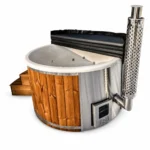
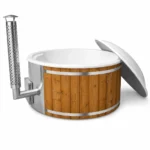
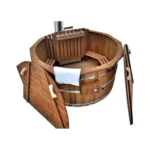
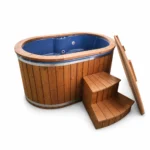
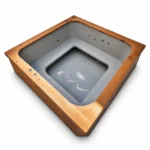
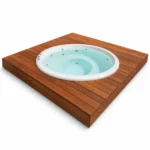
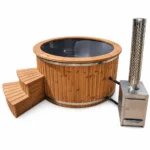
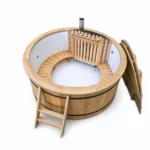
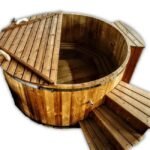
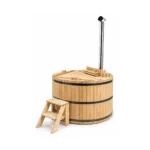
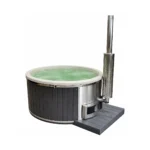
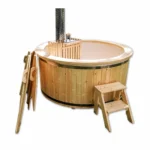
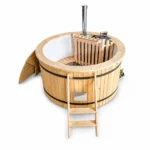
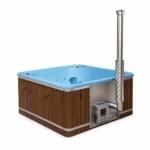
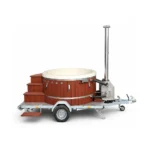
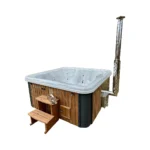
Outdoor jetted tub models and jet-compatible configurations

The products and current prices above are loaded dynamically from WooCommerce. Not every displayed base configuration necessarily includes jets as standard, so open the product page and confirm the selected hydromassage, air-bubble, filtration, electrical and heating options.

Hot tubs with jets at a glance

Decision Practical direction What to confirm
Outdoor jetted tub or simple soaking tub? Choose jets when you want water movement and spa-style comfort. Pump, blower, jet positions, controls and pipework access.
Hydro jets or air bubbles? Hydro jets give more focused pressure; air systems give softer bubbling. Pump or blower type, outlet position and maintenance routine.
Wood-fired or electric heating? Heating and massage are separate systems. Jets normally still require electricity, even with a log burner.
How many jets? More is not automatically better. Pump flow, pipe balance, nozzle type and useful placement.
Family or adult-focused? Seating and jet strength should suit normal users. Water depth, controls, cover and supervision.
Private or rental use? Rental systems need simple controls and robust service access. Filtration, instructions, cleaning and servicing.
Winter use? Possible with suitable procedure. Drainability of every pump, blower, manifold and jet line.
Jet quality depends on the complete hydraulic and electrical system, not only the visible nozzles.

Outdoor jetted tub, wood fired hot tub with jets and log burner hot tub with jets: search intent

The phrases outdoor jetted tub, wood fired hot tub with jets, wooden hot tub with jets and log burner hot tub with jets are closely related but not identical. Some buyers want the comfort of jets in any outdoor tub, while others specifically want a traditional wood or log-fired bathing experience with modern massage features.

Exact phrase Likely buyer meaning Best practical response
outdoor jetted tub A garden hot tub with water or air movement. Explain jet type, pump, electricity, filtration, base and access.
wood fired hot tub with jets A tub heated by a wood stove but fitted with powered jets. Clarify that the stove heats water while jets need electric pump or blower power.
wooden hot tub with jets A timber-clad or traditional wooden tub with massage features. Explain liner, fittings, sealing, water care and service access.
log burner hot tub with jets A log-fired bathing tub with a modern jet system. Discuss fire routine, electricity, pipework, winterisation and safety.
hot tub with air bubbles Softer bubbling rather than targeted hydro pressure. Explain blower noise, cooling effect and line drainage.
The correct buying advice depends on whether the buyer mainly wants massage pressure, bubbling atmosphere or a wood-fired outdoor bathing ritual.

What is an outdoor jetted tub?

An outdoor jetted tub is an outdoor hot tub with a pump, blower or both. A hydro system draws water from the tub and returns it through nozzles. An air system sends air through outlets to create bubbles. Combined systems use more components and give more choice, but they also increase cost, electrical demand and maintenance.

System How it works Typical sensation Main equipment
Hydro massage jets A pump draws and returns water through nozzles. Focused water pressure. Water pump, suction, pipework, jets and controls.
Air bubble system A blower sends air through outlets. Gentle whole-tub bubbling. Air blower, manifold, outlets and controls.
Air-assisted hydro jets Water jets mix air at the nozzle. Stronger-feeling aerated stream. Water pump plus air intake or control.
Combined hydro and air Separate pumps and blowers operate different outlets. Choice between targeted and general movement. More components, pipework and electricity.

Hydro massage jets versus air bubbles

Comparison Hydro massage jets Air bubble system
Pressure More targeted and adjustable depending on design. Softer and more evenly distributed.
Positioning Usually placed around backs, sides or legs. Often distributed around floor or bench areas.
Water cooling Recirculates warm water with limited air addition. Can cool water faster because outdoor air enters the tub.
Noise Pump noise and water movement. Blower noise and bubbling.
Pipe cleaning Water remains in hydraulic pipework unless drained or flushed. Air lines need drying and protection from water backflow.
Best suited to Buyers prioritising massage-style pressure. Buyers wanting atmosphere and gentle movement.
Complexity Needs balanced suction and return flow. Needs blower protection and anti-backflow design.

A combined outdoor jetted tub offers the widest range of sensations, but it also creates the most pipework, equipment access and winter drain-down requirements.

Wood fired hot tub with jets

A wood fired hot tub with jets uses a stove for heat and a powered system for massage. The stove may be internal, external or integrated, but the jet pump, air blower, controls and filtration remain separate equipment. This means a wood-fired model with jets should not be described as electricity-free unless every powered function is removed or supplied by an adequate independent power system.

System element Wood-fired function Jet-system function
Heat source Log stove transfers heat into the water. Does not normally power the jets.
Heating circulation May be natural or pump-assisted depending on layout. Massage pump creates separate high-flow water movement.
Electricity May not be needed for a simple heater. Normally required for pumps, blowers and controls.
Operation Fire must be supervised and water level maintained. Jets should operate only at correct water level.
Shutdown Stove must cool before draining. Pumps, manifolds and jet lines must be drained before frost.
Service access Stove, flue and ash route must remain reachable. Pump, blower, controls and unions must remain accessible.

Use the dedicated wood-fired hot tubs with jets guide for the most specific configuration.

Wooden hot tub with jets

A wooden hot tub with jets may be a traditional all-wood vessel adapted for compatible equipment, or a smooth liner-based tub with real timber cladding. Liner-based designs often make it easier to seal jet fittings, shape seating and clean the interior, while timber exteriors preserve the natural outdoor appearance.

Construction Jet-system advantage Maintenance consideration
Traditional all-wood tub Authentic water-contact timber and outdoor character. Every penetration must suit timber movement and compatible water care.
Polypropylene liner with timber cladding Flexible jet placement and smooth cleanable surface. Inspect welded fittings, supports and pipe connections.
Fibreglass shell with timber cladding Formed seating can align users with jets. Uniform support and compatible treatment matter.
Acrylic or composite square model Integrated seating and technical layout. More complex shell, controls and service access.
In-ground or decked surround Can create a premium built-in appearance. Service panels and drain points must not be blocked.

Compare the main wooden hot tubs and sunken hot tub guides before deciding on the construction.

Log burner hot tub with jets

A log burner hot tub with jets appeals to buyers who want the atmosphere of a fire-heated tub and the comfort of powered water movement. The combination can work very well when the firebox, chimney, jet pump, blower, filter, controls and service access are planned together.

Planning point Why it matters
Firebox access Logs and ash must be managed safely without blocking the bathing area.
Chimney route Smoke, flue heat and clearances must be considered.
Electrical supply Jets, bubbles, lighting and filtration need power.
Pump access The jet pump may need service or replacement later.
Water level Both heater and jet system have minimum operating levels.
Temperature mixing Wood heating and jet circulation can create changing temperature zones.
Winter drain-down Stove circuits and jet circuits both require protection.

Do jets provide medical hydrotherapy?

Jets can create a pleasant massage-style sensation, but a garden hot tub should not be presented as diagnosing, treating or curing an injury or medical condition. Comfort depends on jet position, pressure, water temperature and the individual user.

  • Use moderate jet pressure rather than assuming stronger is always better.
  • Avoid directing powerful jets at sensitive or painful areas.
  • Keep sessions and water temperature appropriate for the user.
  • Children require direct supervision.
  • Anyone with pregnancy, cardiovascular concerns, reduced sensation or other health risks should obtain individual medical advice.

Jets are a comfort feature, not a substitute for medical assessment or treatment.

Electric hot tubs with jets

An electric hot tub with jets combines automatic heating with powered massage. It can be convenient for regular use, but the heater, jet pump, filtration pump, air blower and lights may create a substantial combined electrical load.

Electrical component Typical role Planning effect
Electric heater Raises or maintains water temperature. Often the largest continuous load.
Hydro pump Powers water jets. High operating and starting current may apply.
Air blower Powers bubbles. Additional load and noise.
Filter pump Runs circulation and filtration. May operate for long periods.
Lighting and controls Provide operation and visual features. Smaller load but still requires suitable protection.
Optional backup heating Can support some wood-fired configurations. Adds controls, load and service points.

Compare electric wooden hot tubs when automatic temperature control is the priority.

Do jets always need electricity?

Practical hot-tub jet systems normally need electricity. Hydro jets need a water pump, air bubbles need a blower, and digital controls or lighting also need power. A wood fired hot tub with jets may heat water with logs, but the massage system is still powered separately.

  • Obtain the maximum connected load for all pumps, blowers, heaters and controls.
  • Confirm whether systems can operate simultaneously.
  • Use a permanent outdoor supply rather than an extension lead.
  • Provide suitable isolation, earthing and protective devices.
  • Keep electrical equipment dry, ventilated and serviceable.
  • Use a qualified electrician familiar with outdoor wet-area installations.

Pump size, jet count and pressure

The pump must move enough water through the pipework and nozzles without excessive noise, poor balance or uncomfortable suction. Adding more outlets to the same pump can reduce pressure at each jet, so the best outdoor jetted tub is not simply the one with the highest jet count.

Design factor Why it matters
Pump flow Determines available water movement through the system.
Pump head Accounts for resistance through pipes, fittings and nozzles.
Pipe diameter Undersized pipes increase resistance and noise.
Pipe length Longer routes reduce available pressure.
Number of open jets More outlets share the same flow.
Jet nozzle size Affects pressure and stream character.
Air mixing Changes how strong the jet feels without necessarily increasing water flow.
Suction safety Intakes must be suitable for the pump and user safety.

Ten well-positioned jets with a balanced pump can feel better than twenty poorly supplied outlets.

Jet placement and seating ergonomics

Jet zone What to assess
Upper back Shoulder height varies between users.
Lower back Bench depth and posture determine alignment.
Legs and calves Users need room to position legs without blocking circulation.
Feet Floor jets may feel pleasant but can complicate drainage and cleaning.
General body movement Air bubbles provide wider but less targeted stimulation.
Couples seating Jet positions should work for two different body sizes.
Family seating Avoid excessive pressure for smaller or more sensitive users.

Where possible, compare internal dimensions and seating drawings rather than relying only on exterior photographs.

Adjustable jets and control options

Control Potential benefit Trade-off
On/off control Simple operation and fewer decisions. No pressure variation.
Air control Changes the aerated feel of hydro jets. Adds tubing and controls.
Individual jet adjustment Allows selected outlets to be reduced or closed. More parts to inspect and clean.
Multiple pump zones Separates seating areas or jet groups. Higher cost, electrical demand and maintenance.
Timed operation Limits unnecessary running. Requires controls and correct programming.
Simple guest mode Useful for holiday lets. May reduce user adjustability.

For rental use, simple labelled controls are usually more valuable than a large number of settings.

Noise, vibration and neighbour comfort

Pumps and blowers create sound and vibration. The perceived noise depends on equipment quality, enclosure, mounting, surrounding structures and proximity to neighbours. Do not seal equipment into an airtight sound box because pumps and blowers need cooling and access.

Noise source Potential response
Pump motor Use correct mounting, ventilation and service clearances.
Air blower Place in a suitable dry compartment with controlled airflow.
Pipe vibration Support pipework and avoid contact with resonant panels.
Water turbulence Select jet pressure appropriate to the intended experience.
Deck resonance Keep equipment support independent where practical.
Evening use Consider neighbours and property boundaries at design stage.

Do jets cool the water?

Water movement can increase heat loss, and an air-bubble system introduces outdoor air into the tub. The effect is more noticeable in cold or windy weather. A larger heater or longer recovery time may be required when jets or bubbles run extensively.

Feature Heat-loss effect
Hydro jets Increase water movement and surface disturbance.
Air bubbles Introduce ambient air and can cool water more quickly.
Open cover Removes the main barrier to surface heat loss.
Wind Accelerates evaporation and cooling.
Long sessions Require additional heating or recovery after use.
Large water volume Needs more heat input after cooling.

Filtration, pipework cleaning and water care

Jet systems add internal pipework where water can remain. Good water care and circulation are therefore more important than in a simple soaking tub. A wooden hot tub with jets should use treatment compatible with the liner, timber, seals, fittings and heater.

Maintenance area Why it matters Typical action
Filter Removes suspended debris from circulating water. Clean or replace according to load and system instructions.
Jet outlets Can collect scale, residue or debris. Inspect and clean with compatible methods.
Internal pipework Can retain water and biofilm. Use approved pipe-cleaning procedure when required.
Pump basket or intake Debris can restrict flow. Inspect where fitted.
Water chemistry Affects users, seals, fittings and equipment. Test and maintain the approved range.
Thermal cover Reduces debris and heat loss. Clean, dry and inspect regularly.
  • Shower before use.
  • Keep cosmetics and loose debris out of the water.
  • Never mix chemicals.
  • Use treatment compatible with the shell, timber, seals and heater.
  • Do not operate pumps below the required water level.
  • Replace water when it cannot be maintained safely.

Winterising an outdoor jetted tub

Jet-equipped hot tubs are more difficult to winterise than simple tubs because water can remain in pumps, manifolds, air lines, filters and low sections of pipework. A jet system is not winterised until every connected component and low point has been addressed.

Component Winter risk Planning response
Hydro pump Water can freeze in the housing. Drain according to the manufacturer’s procedure.
Jet manifolds Multiple branches trap water. Provide drainability and follow blow-out instructions where specified.
Air blower lines Water backflow may remain in low points. Use correct loop, check valve and shutdown process.
Filter housing Can crack if left full. Remove or drain as instructed.
Heater pipework May freeze even when the tub looks empty. Drain every connected circuit.
External equipment area Wind and freezing air increase risk. Protect while keeping access and ventilation.

Foundation, drainage and equipment access

A filled hot tub is heavy: one litre of water weighs approximately one kilogram. Jet pumps, filters and controls also need dry, ventilated and accessible space. For recessed designs, consult the sunken and in-ground hot tub guide before enclosing any technical side.

Site requirement Why it matters
Level structural base Prevents shell distortion and uneven loading.
Drainage Controls rain, splash and full-volume emptying.
Dry equipment area Protects electrical components.
Ventilation Allows motors and controls to release heat.
Removable panels Provides access to pumps, unions and valves.
Delivery route Ensures the tub reaches the prepared base.
Future replacement route Avoids dismantling a terrace to replace equipment.

Family use, holiday lets and hospitality

Jets can make a tub more attractive for families and guests, but they add controls, pumps, pipework and maintenance. Commercial success, higher nightly rates or increased occupancy should not be guaranteed simply because a tub has jets.

Use case Priority Practical response
Family garden Safe water temperature, child supervision and simple controls. Use secure cover, stable steps and direct adult supervision.
Holiday let Reliable operation and quick turnover. Provide simple instructions, water-care routine and service access.
Glamping site Visual appeal and robust equipment. Plan cleaning, drainage, power and noise.
Spa or wellness venue Frequent use and fast maintenance. Use documented checks, filtration and accessible equipment.
Commercial rental Downtime reduction. Keep spare parts and qualified support available.

Delivery and installation

Hot-tub production is commonly approximately 3–4 weeks, with transport planned after production. Total UK delivery is often around 6–8 weeks depending on the model, jet options, production schedule, destination and route. These are estimates rather than guaranteed dates.

Stage What to prepare
Before ordering Confirm shell, jet system, pumps, controls, power and access.
During production Complete foundation, drainage and electrical preparation.
Before transport Confirm vehicle access and lifting equipment.
At delivery Inspect packaging and place the tub on the prepared base.
Commissioning Fill, inspect, prime pumps, test jets and verify electrical protection.

Total project cost

Current product prices are displayed dynamically above. The complete cost of a jet-equipped configuration may include pumps, blowers, filtration, controls, electrical work, insulation, foundation, delivery, lifting and commissioning.

Cost area What to compare Common omission
Jet system Hydro, air or combined; number and placement of outlets. Comparing nozzle count without pump specification.
Pumps and controls Power, zones, adjustment and access. Ignoring electrical installation.
Heating Wood-fired, electric, pellet or hybrid. Assuming heat and jets are one system.
Filtration Pump, filter and water-treatment compatibility. No plan for pipework cleaning.
Insulation and cover Walls, base, pipework and top cover. Underestimating heat loss while bubbles run.
Foundation and drainage Wet load, access and emptying. Treating the tub like lightweight garden furniture.
Delivery and commissioning Lifting, connection and testing. Assuming kerbside delivery includes setup.

Common mistakes when choosing hot tubs with jets

Mistake Likely result Better approach
Choosing by jet count alone Weak or poorly placed massage. Compare pump, layout and useful seating positions.
Assuming wood-fired jets are electricity-free Electrical supply is omitted. List every pump, blower and control.
No access to pumps Routine repair requires dismantling the surround. Use removable service panels.
Ignoring air-bubble heat loss Water cools faster than expected. Plan heater capacity and session length.
No jet-line cleaning routine Residue remains in hidden pipework. Follow an approved flushing schedule.
No winter drain procedure Frozen pumps or manifolds. Drain every circuit and low point.
Oversized pump in a resonant enclosure Excessive noise and vibration. Design mounting, ventilation and pipe support correctly.
Using rental claims as a sales guarantee Unrealistic investment expectations. Evaluate local demand and operating cost separately.
Poor jet alignment Jets miss the user’s back or legs. Compare internal seating and outlet positions.
No cover plan More heat loss and debris. Choose and maintain a suitable cover.

Hot tub with jets buying checklist

  • Choose hydro massage, air bubbles or a combined system.
  • Decide whether you want an outdoor jetted tub, wood fired hot tub with jets, wooden hot tub with jets or log burner hot tub with jets.
  • Compare jet position and seating alignment.
  • Confirm pump flow, zones and controls.
  • Check whether pressure can be adjusted.
  • List the electrical load for heater, pumps, blower, filter and lighting.
  • Confirm that a wood-fired model still has power for jets where needed.
  • Decide between wood-fired, electric, pellet or hybrid heating.
  • Confirm internal construction, shell material and jet fitting compatibility.
  • Choose normal user numbers and realistic water volume.
  • Compare filtration and water-treatment requirements.
  • Plan regular jet-line cleaning.
  • Prepare a level foundation for the complete wet load.
  • Provide drainage for rain, splash and full emptying.
  • Keep pumps, valves, unions and controls accessible.
  • Assess pump and blower noise near neighbours.
  • Create a complete winter drain-down procedure.
  • Survey delivery access and lifting route.
  • Compare total installed cost rather than only jet count.

Frequently asked questions about hot tubs with jets

What is an outdoor jetted tub?

An outdoor jetted tub is an outdoor hot tub with a powered pump, air blower or both, sending water or air through outlets to create movement, pressure or bubbles.

What is a wood fired hot tub with jets?

It is a hot tub where a wood stove heats the water while a separate electric pump or blower operates the jets or air bubbles.

Can a wooden hot tub have jets?

Yes. A wooden hot tub with jets can use suitable fittings, pipework and liner or timber-compatible construction when designed for that equipment.

What is a log burner hot tub with jets?

It is a log-heated hot tub that also includes powered massage jets or bubbles. The log burner heats the water, but the jet equipment normally needs electricity.

What is the difference between hydro jets and air bubbles?

Hydro jets recirculate water through targeted nozzles. Air-bubble systems use a blower to introduce air for a softer whole-tub effect.

Do hot tub jets need electricity?

Yes. Practical hydro jets need a pump and air bubbles need a blower. Controls and filtration can add further electrical demand.

How many jets are enough?

There is no universal number. Placement, pump performance, pipe balance and seating alignment matter more than the count alone.

Do more jets mean stronger massage?

Not necessarily. Adding more outlets to the same pump can reduce flow at each jet. The complete hydraulic design determines performance.

Do air bubbles cool the water?

They can. Ambient air entering the tub and increased surface movement can increase heat loss, especially in cold weather.

Are jets difficult to maintain?

They add pumps, fittings and hidden pipework that need water care, inspection, cleaning and winter drainage.

How are jet pipes cleaned?

Use the cleaning and flushing process approved for the system. It may involve circulating a compatible cleaner, operating pumps and rinsing thoroughly.

Can jet-equipped hot tubs be used in winter?

Yes, when the system is operated or winterised correctly. Every pump, filter, manifold and pipe low point must be protected from freezing.

Are hot tubs with jets suitable for families?

They can be, provided adults supervise children directly and manage water temperature, depth, jet pressure, access and the cover.

Are hot tubs with jets suitable for holiday lets?

They can be attractive to guests, but rentals need robust filtration, simple controls, pipe-cleaning routines, safety instructions and service access.

Are jets worth the extra cost?

They may be worthwhile for buyers who value water movement and massage-style comfort. A simpler no-jet tub may suit those prioritising quiet soaking and lower complexity.

Choose the jet system before the number of outlets

Start with the sensation you want, the normal users, seating layout, heating method and available power. Then compare pump performance, controls, filtration, service access and winterisation as one complete outdoor jetted tub system.

GET A QUOTE FAST!
close slider


Special summer discount code 4 %. Follow us on Instagram and DM us.