
Family Hot Tubs UK: Choosing 4, 6 or 8 Person Space
A family hot tub should be sized for the people who use it every week, not the largest group that might squeeze in once a year. Four-, six- and eight-person labels are useful starting points, but comfort depends on internal dimensions, seat geometry, water depth, heater intrusion and the mix of adults and children.
This guide explains how to turn a capacity label into a realistic seating plan, compare wood and electric heating, manage shared water, plan safe family use and budget for the complete garden installation.
Family sizing rule: choose comfortable everyday occupancy first, then decide whether occasional extra seats justify more water, fuel, footprint and delivery width.
What makes a hot tub family friendly?
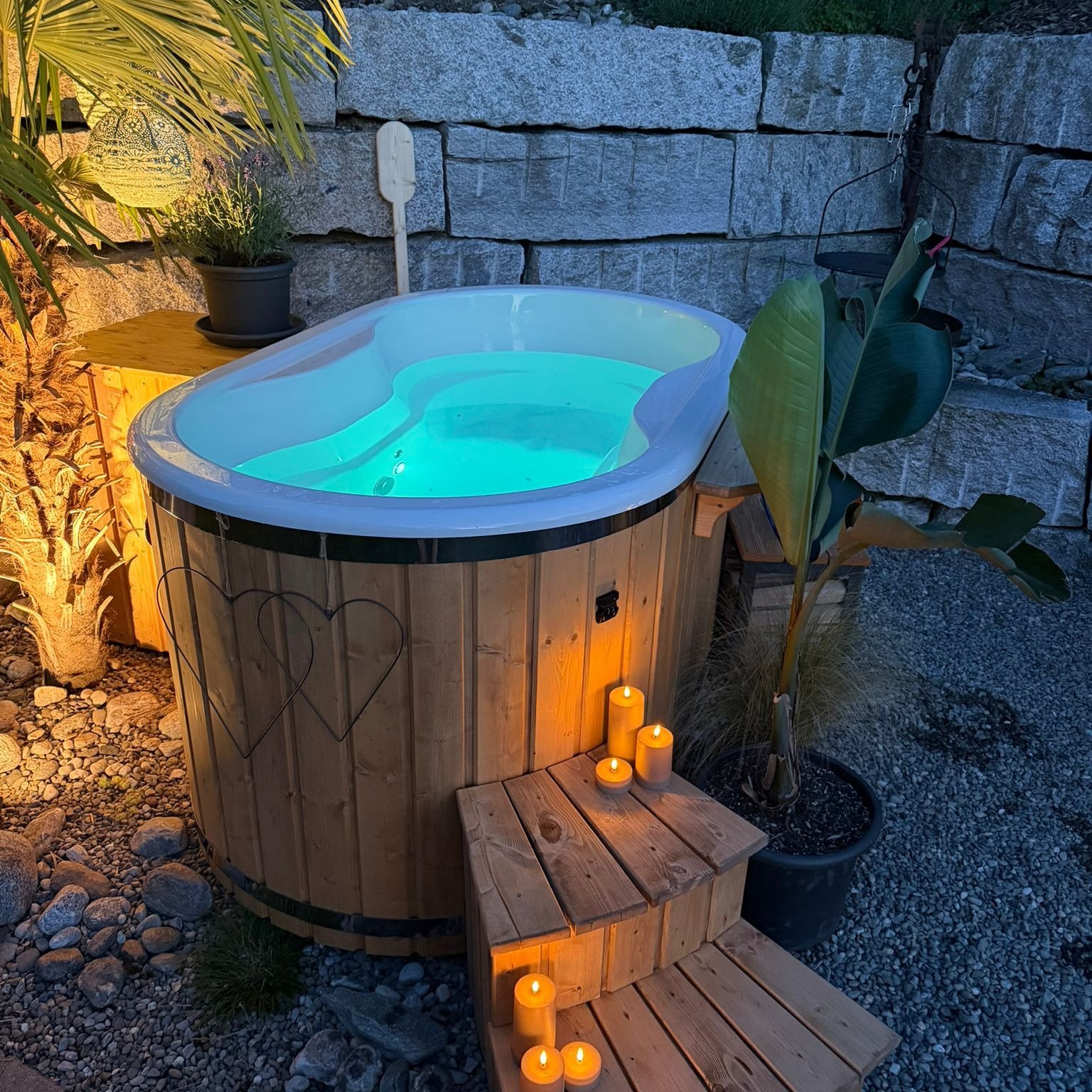
Useful family design combines stable entry, appropriate water depth, seats that suit different body sizes, a guarded heater, a manageable cover and surfaces that can be cleaned. Parents also need clear sightlines and a layout that does not force a child close to a stove, suction point or deep central footwell.
“Family” does not certify suitability for every age or health condition. Follow product instructions, supervise children continuously and seek medical advice where hot bathing may conflict with pregnancy, medicines, cardiovascular illness or another condition.
Four, six and eight person capacity compared
| Nominal class | Often suits | Questions before choosing |
|---|---|---|
| 4 person | Couple, small household or two adults wanting generous room | Can the regular users sit naturally around the heater and footwell? |
| 6 person | Growing household or frequent small social groups | Is every listed seat usable by an adult, and what is the normal water volume? |
| 8 person | Large family, group use or commercial accommodation | Does the site, access, heating and water-management plan support the extra scale? |
These are planning classes, not universal dimensions. Request the internal diameter or length and width, bench length, depth, footwell, water line and heater guard. Draw the expected users on the seat plan. The four-person guide provides more detail for smaller households.
Current family hot-tub models
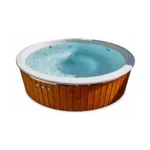
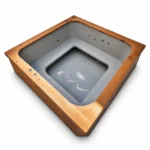
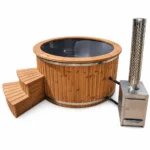
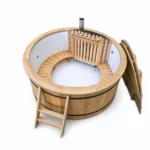
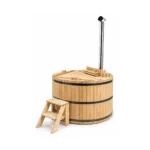
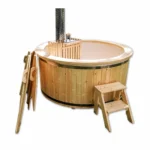
The current family category appears below. Open a model to check its configured size, internal layout, heater, water volume, included equipment and options. Person labels remain model guidance rather than a promise of equal comfort for every group.
-
Product on saleSave up to 16% Wood Fired Hot Tub with Jets – TimberIN Nordic Rojal™ (4–8 Person)
From: €6,954From: €6,021 -
Modular coreTimberIN Nordic Core™From: €3,371
-
Electric heatingElectric Wooden Hot Tub for Garden Use – TimberIN Nordic Family™ ElectricFrom: €2,975
-
Square modelSquare Wood Fired Hot Tub – TimberIN Nordic Square™ (160–220 cm)From: €2,934
-
External stoveWood Fired Hot Tub with External Stove – TimberIN Nordic™ External ComfortFrom: €3,382
-
PolypropylenePolypropylene Hot Tub – TimberIN Nordic Flex™ (160–220 cm, Configurable)From: €2,600
-
Spruce value modelWooden Hot Tub Basic – TimberIN Nordic™ (Affordable Wood Fired Model)From: €2,333
-
Compact for 44 Person Wood Fired Hot Tub – Compact Snorkel Stove DesignFrom: €2,963
Everyday users versus occasional guests
A larger shell carries more water every time it is filled, even when only two people use it. That affects foundation load, heating time, fuel or electricity, treatment and drainage. If extra guests are rare, a comfortable four- or six-person configuration can be more practical than buying the maximum label.
If group use is frequent, choose space intentionally and compare access around the perimeter. A bigger tub also needs more room for steps, cover handling and circulation. Do not place all service equipment where people naturally gather.
Round or square family layout?
A round tub supports social seating around one centre and can distribute legroom evenly. A square tub can align with a terrace or corner and offer distinct sides, moulded positions or a larger shared footwell. The external footprint does not reveal usable internal space.
Compare dimensioned interiors and the heater position. An internal stove can reduce seating; an external stove preserves it but adds footprint. The round and square hot-tub guides explain those shape decisions.
Wood-fired family hot tubs
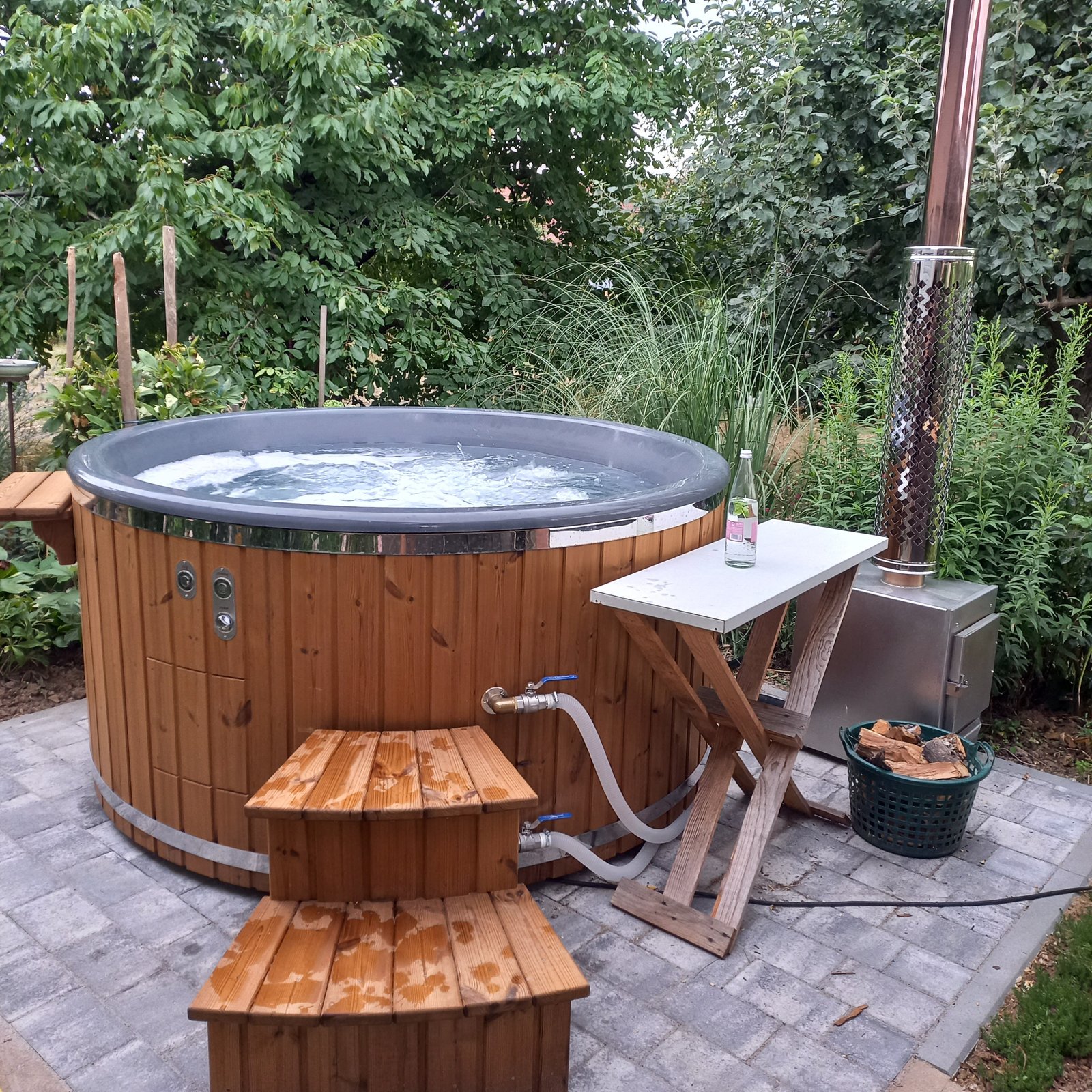
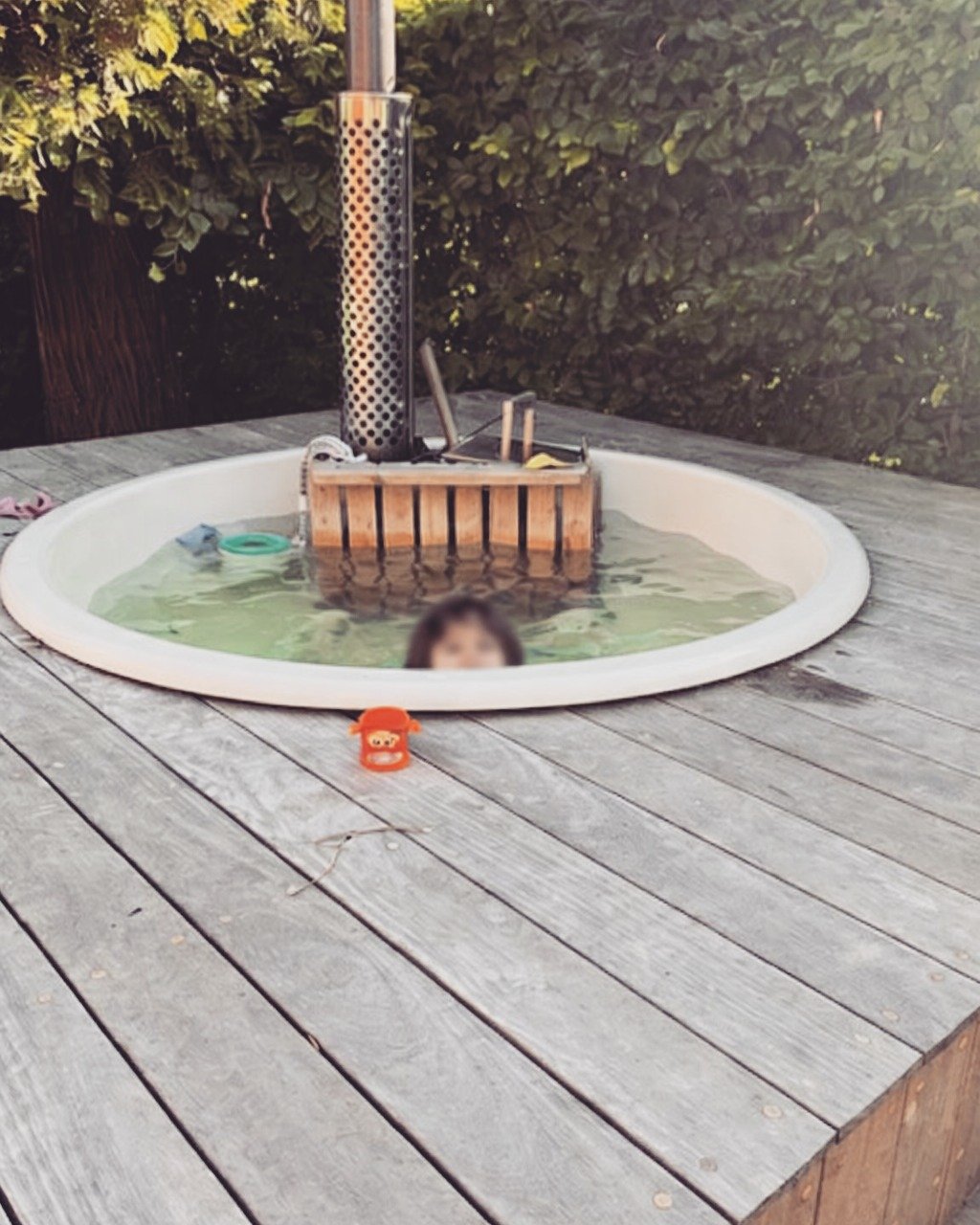
Wood heating makes fire preparation part of the session and avoids a large electric water-heater load. It still requires dry fuel, safe stove and chimney positioning, ash handling and continuous supervision. External, integrated and internal heaters change seating and access differently.
Establish the required water level and circulation before lighting. Keep children and users away from hot surfaces and fuel handling. Never dry-fire, obstruct flow or drain while the stove remains hot. Heating time depends on water volume, starting temperature, useful output, fuel, cover, wind and technique.
Electric and hybrid family heating
Electric heating can suit regular use and scheduled control, but the property supply must support the heater plus pumps, filtration, lights, bubbles and jets. A competent electrician should assess the final equipment and cable route before the order and landscaping are fixed.
Approved hybrid configurations combine wood heating with electric support. This adds flexibility but also two systems to install, operate and maintain. The electric hot-tub guide explains connected load and running-cost estimates.
Water volume changes heating and running cost
Use the operating volume for the chosen size, not a catalogue range. More water needs more energy for the same temperature rise. Real consumption also includes heat loss through the shell, surface, pipes and cover, plus pumps or accessories.
Compare models under the same starting temperature, target, weather and cover use. A larger heater may warm faster but can change fuel use, electrical supply or clearances. Fixed “cost per session” claims are weak unless volume, tariff or fuel and conditions are stated.
Shared water needs a stronger care routine
Families introduce more organic matter and can vary widely in bathing habits. Washing before entry, keeping outdoor footwear away and using clean swimwear can reduce contamination, but they do not replace filtration, treatment, testing and cleaning where water is retained.
Write a routine for the actual volume and bather load. Clear-looking warm water is not proof of hygiene. Holiday-let or other business use needs formal risk-based controls, records and competent responsibility; the HSE spa-pool guidance addresses recognised infection risks.
Jets, bubbles and family noise
Hydromassage jets add directed water movement; air systems add bubbles. They can be enjoyable but bring pumps, pipework, noise, electrical load, cleaning and winter-drainage duties. Ask where jets sit relative to different body sizes and whether every user actually wants them.
A quiet soaking tub can be a better family fit when conversation and simpler ownership matter. If massage is central, compare the complete equipment on the jetted hot-tub guide.
Safe entry, supervision and cover use
Plan stable steps, appropriate handholds, non-slip access and lighting. Keep the route free from stove doors, chimney surfaces, hoses and electrical equipment. Users should enter slowly and confirm depth and temperature before sitting.
Children require continuous active supervision. A cover helps manage debris and heat loss but is not a substitute for supervision, a secure garden or any safety measures required by the product, insurer or property. Store and move it without creating a lifting or trip hazard.
Foundation, access and drainage scale with capacity
Obtain empty weight, operating water volume and support requirements, then add users, stove, steps and accessories. A full family tub creates a substantial load. Have the actual ground, slab, pads or deck assessed; visual levelness is not proof of capacity.
Measure gates, corners, slopes, eaves and overhead cables using packed dimensions. Clarify unloading and lifting. Plan full drain-down and splash water so they do not undermine the base, flood neighbouring land or enter unsuitable drains.
Compare the whole family project
| Budget line | Include | Family question |
|---|---|---|
| Tub | Size, body, cladding, seating and heater | Is everyday occupancy genuinely comfortable? |
| Equipment | Cover, steps, insulation, filtration, lights and spa options | Which features will be used and maintained? |
| Delivery | Freight, unloading, lifting and final positioning | Can the larger model reach the base? |
| Site works | Foundation, drainage, electrical and fire-safe setting | Who designs and certifies each part? |
| Operation | Fuel or energy, water treatment, cleaning and winter care | Does the routine fit family life? |
| Protection | Warranty, service access, spare parts and insurance | Are household and business uses covered? |
Use the hot-tub price guide to align quotations. A lower starting price may omit necessary equipment or local work; a higher package may include features that do not help your family.
Family hot-tub checklist
- List regular users and occasional maximum occupancy.
- Request internal dimensions, seat plan and water volume.
- Choose round or square around the site and posture.
- Select wood, electric or hybrid heating deliberately.
- Map steps, handholds, stove and service equipment.
- Write the filtration, treatment and cleaning routine.
- Design the foundation for the complete operating load.
- Audit delivery access using packed dimensions.
- Compare full project and ownership cost.
How to compare family hot-tub quotations
Ask each supplier to price the same diameter or internal dimensions, heater position, cladding, insulation, cover, steps, filtration and delivery assumptions. Confirm whether VAT, unloading, lifting, commissioning and electrical or foundation work are included. A short quotation that says only “six person hot tub” does not provide enough detail for a fair comparison.
Keep the written specification with the order and check it again before production. Bespoke dimensions, selected colours and optional spa systems can change water volume, access requirements and final cost. If a family member needs easier entry or a particular seating depth, record that requirement rather than relying on a capacity label.
Frequently asked questions
Is a six-person hot tub comfortable for six adults?
Not necessarily. Person counts are model guidance. Request internal dimensions, bench length, water depth and heater intrusion, then compare them with the actual users.
Should a family buy the largest tub it can fit?
Usually not by default. Extra capacity increases water, load, heating and maintenance. Choose everyday comfort first, then decide whether frequent guests justify the larger system.
Are wood-fired hot tubs suitable around children?
They require continuous adult supervision, guarded hot surfaces, safe stove and chimney positioning, controlled access and strict operation. Follow the product instructions and never leave a lit heater unattended.
Do family hot tubs need filtration?
Retained shared water normally needs an approved filtration, treatment, testing and cleaning system. Fill-and-drain operation differs. Use the method specified for the model and intended use.
Which heating system is best for frequent family use?
Electric control can suit frequent routines; wood firing suits households that enjoy fire management; approved hybrid systems add flexibility and complexity. Compare utilities, supervision, cost and maintenance.
Choose from the family’s normal week
Share the regular users, occasional group size, preferred layout, heating route, access and water-care plan. TimberIN can then identify family models and provide a written configuration for a realistic comparison.