
Outdoor sauna maintenance is mainly moisture management. Sweat and bathing water need to be removed, the cabin needs to dry through its designed ventilation, and rain must be kept outside by the roof and envelope. Cleaning, timber care, heater inspection and hardware adjustments then support that dry structure rather than trying to rescue it later.
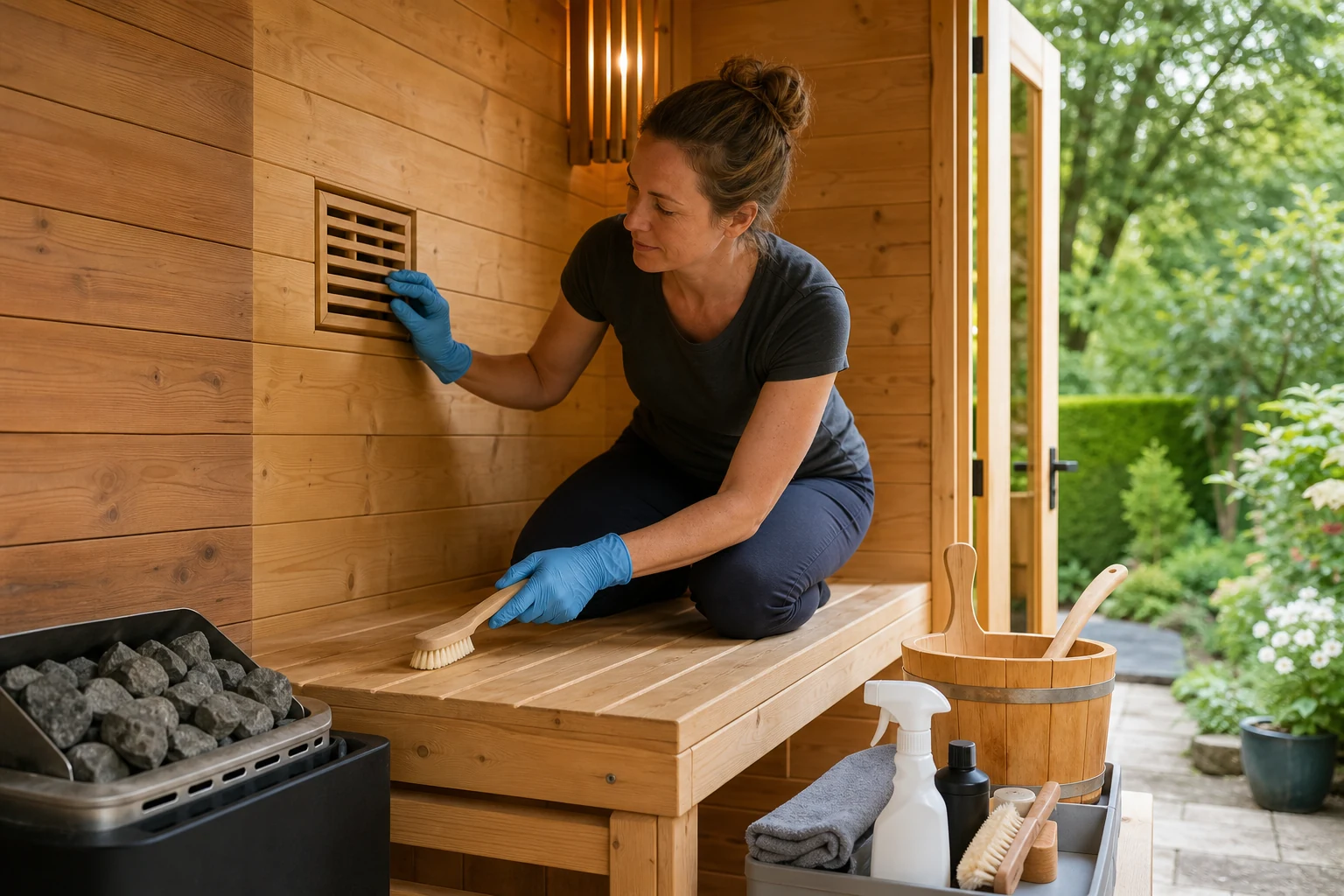
After each session: leave the room clean enough to dry
Use clean towels on benches and rinse feet before entry to reduce sweat, cosmetics and grit reaching the timber. After bathing, remove towels, buckets and loose floor slats that would trap moisture. Wipe standing water and brush away debris with the method allowed for the interior finish.
Run the heater and ventilation only through the drying sequence specified for the sauna, then leave vents and door in their prescribed positions until surfaces are dry. A fixed number of minutes is not reliable: a busy winter session in a glazed cabin behaves differently from one summer user. The result—not the timer—is what matters.
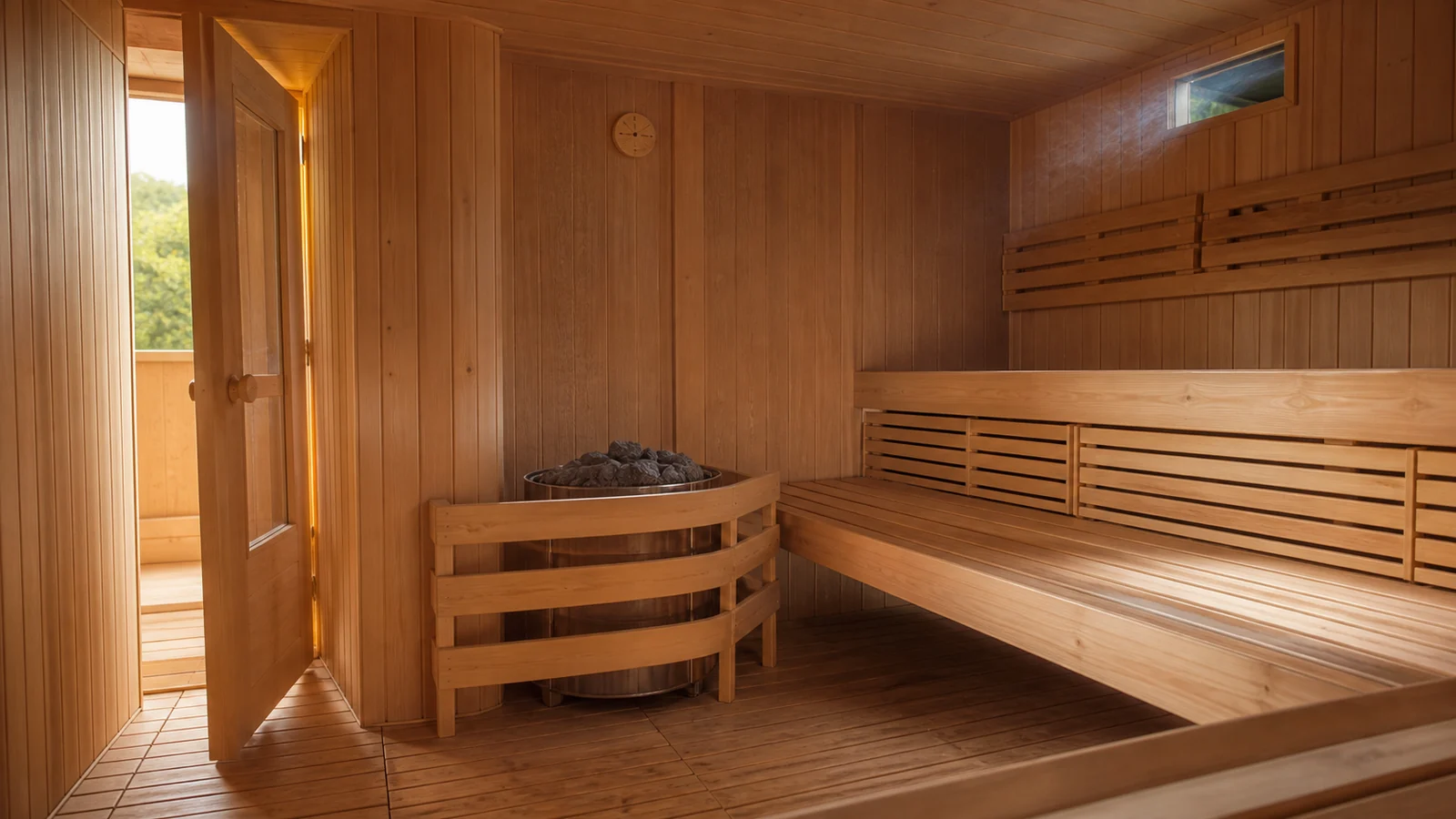
Clean according to use, not an arbitrary calendar
A private sauna used once a week and a holiday-let sauna used daily need different intervals. Inspect benches and floor after each use, then schedule a fuller clean when soil or body-oil marks begin to build—not after they have soaked into the surface. Vacuum or lift debris from beneath removable floor sections and keep the drain clear.
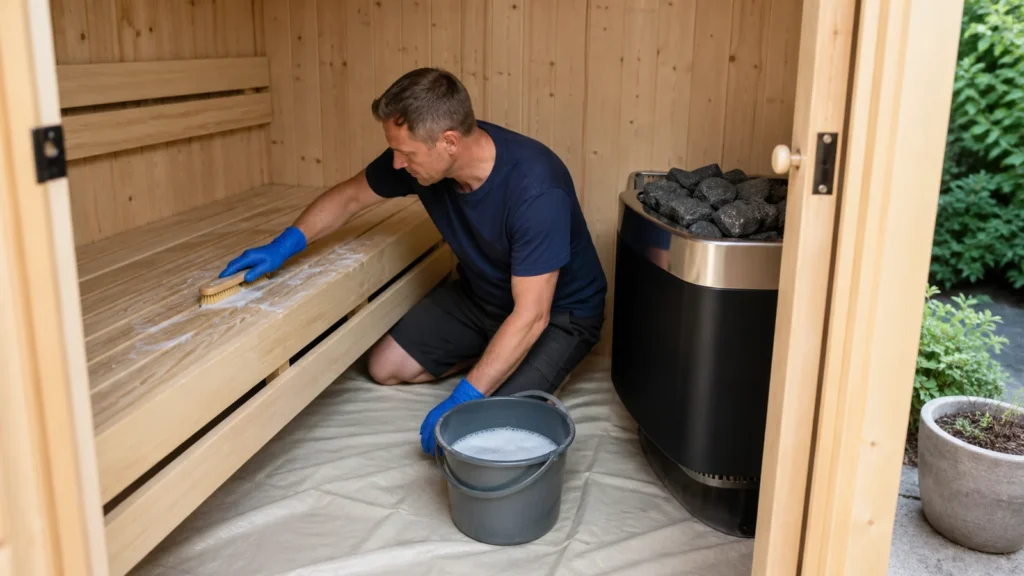
Use the cleaner and concentration approved for the timber and supplied finish. Apply it with a soft cloth or brush, rinse or wipe as directed, and dry the room. Avoid household coatings, strong solvents and abrasive treatment that can leave residues, roughen seating or alter heat behaviour. Test an unfamiliar product on a hidden area first.
Interior and exterior timber have different jobs
Hot-room benches and wall linings are exposed to heat and skin contact; exterior cladding is exposed to rain and ultraviolet light. Do not apply an exterior oil inside simply because it is labelled for timber. Many interiors remain untreated, while any bench protection must be specifically approved for sauna temperatures and contact.
Outside, follow the selected species and factory finish. A compatible breathable coating can help retain a chosen colour, while untreated timber may weather naturally. Inspect end grain, lower boards, corners, trims and fixings, and keep soil, plants and splashback away from the cladding. Recoat by condition and exposure rather than assuming every face needs the same interval.
Inspect the heater and stones as a system
For an electric heater, isolate it using the approved procedure before maintenance and have faults handled by a competent person. Check the guard, mounting, controls and visible cable or enclosure condition. For a wood-burning heater, inspect the stove, guard, flue joints, terminal and signs of smoke leakage; arrange the cleaning frequency required by the appliance, fuel and use.
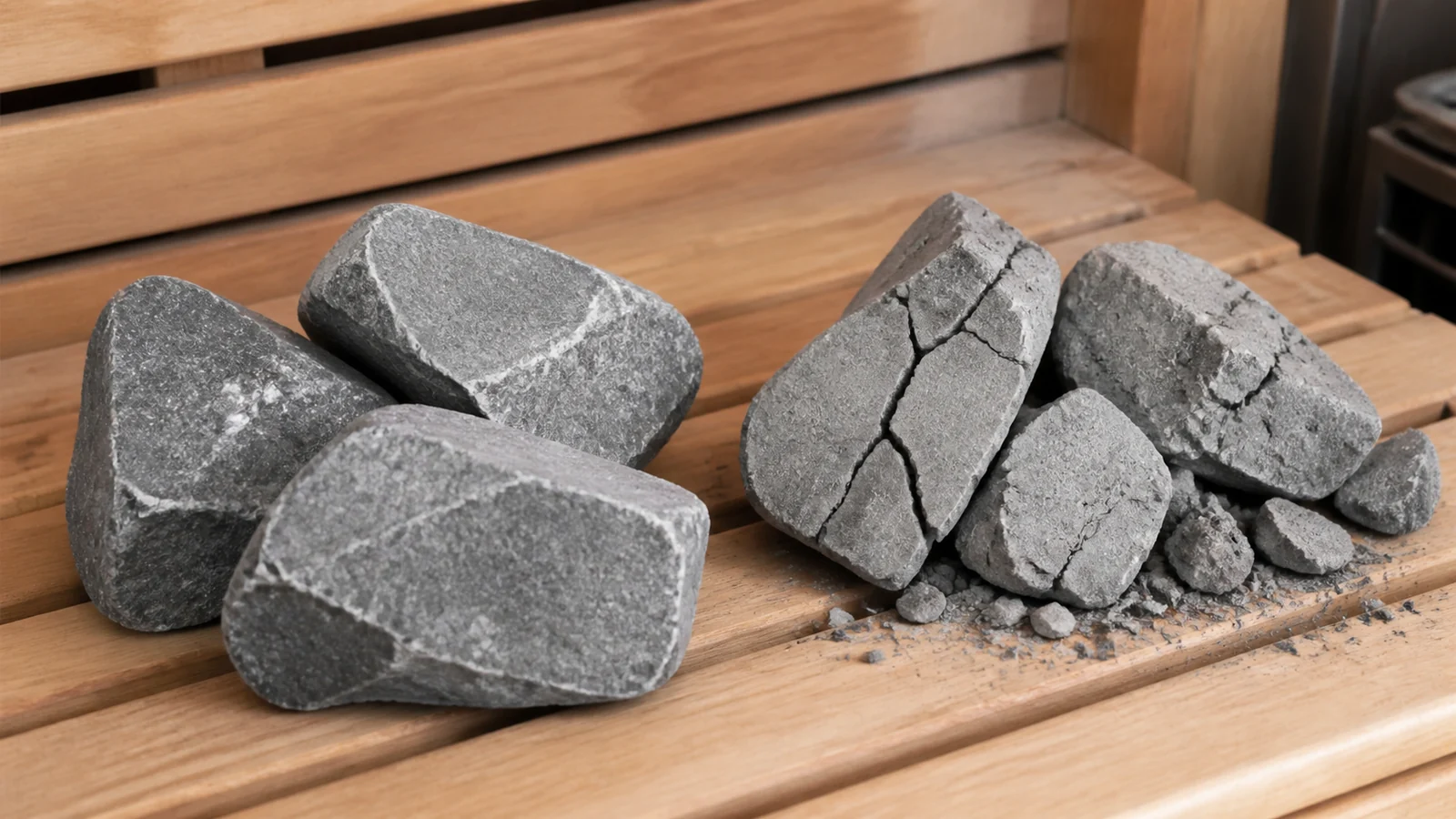
Heater stones age, crack and settle. Compacted fragments can restrict airflow and place extra stress on an electric heater. Once completely cold and isolated, inspect or restack them only as the heater manual directs, replacing unsuitable stones with the specified type and size. Do not tightly pack stones around elements or mix decorative garden stones into the heater.
Doors, glazing and ventilation reveal movement early
Check that the door opens freely, closes as designed and never traps a user. Tighten or adjust hardware using the maker’s instructions and replace damaged heat-compatible seals where fitted. Inspect glazing edges, fasteners and any protective guard; stop using damaged glass until it has been assessed.
Keep vents unobstructed inside and outside. A musty smell, repeated condensation in one corner or a surface that remains wet points to a drying, drainage or envelope problem—not a need for fragrance. Trace the source before coating over it.
The roof, base and drainage protect the cabin between sessions
Inspect roof covering, flashings, chimney penetration, drip edges and gutters after storms and at seasonal changes. Look underneath for staining rather than waiting for water to appear in the hot room. Maintain ground fall away from the sauna, clear drains and check that the base remains level and fully supported.
Settlement can show first as a sticking door, uneven floor or opening joint. Correct the base cause before repeatedly adjusting the building around it. Keep vegetation away from the walls and preserve the access needed to inspect every side.
Use an annual condition record, not a memory
Photograph the same roof edges, lower boards, door alignment, heater area and underside at least once a year and after exceptional weather. Record cleaning products, finish work, stone service, chimney work and any recurring damp area. For a rental or commercial sauna, shorten intervals to match use and retain the records required by the operating plan.

Harvia notes that stone service depends on use and that crumbling, compacted stones reduce airflow; follow the interval in your own heater manual. Use our outdoor sauna troubleshooting guide when a symptom persists.