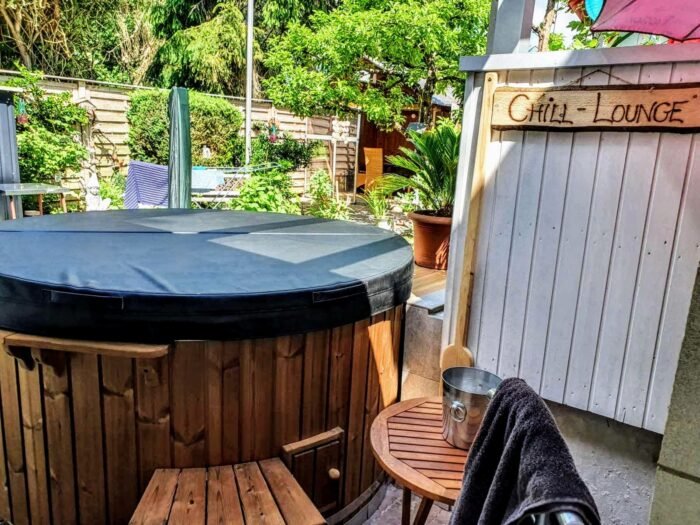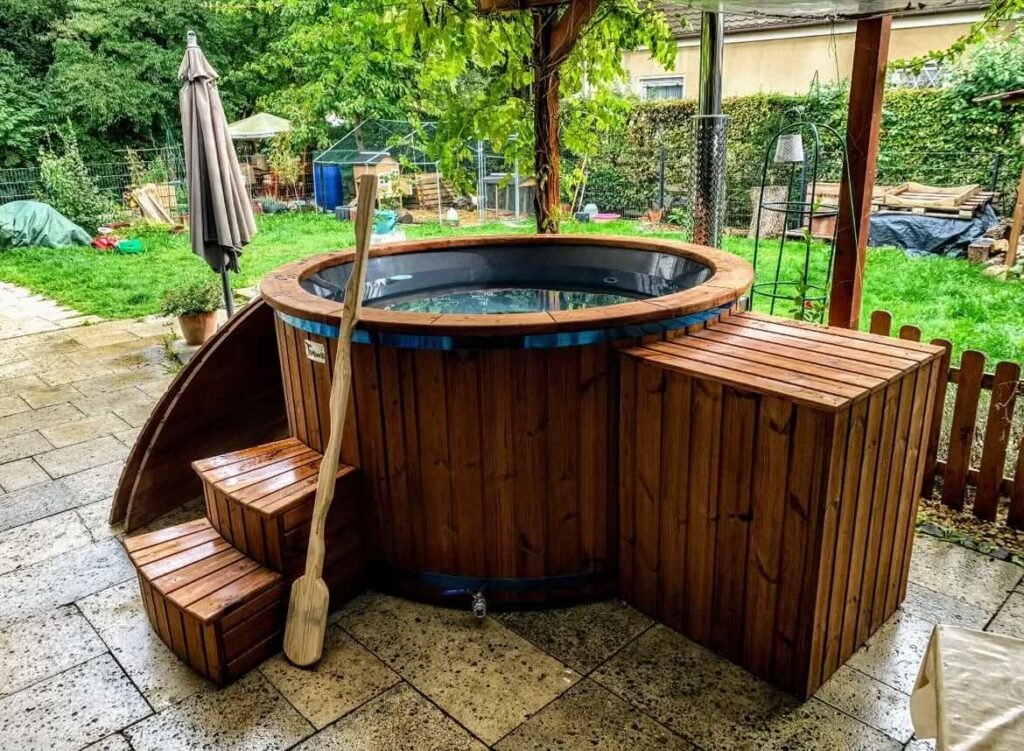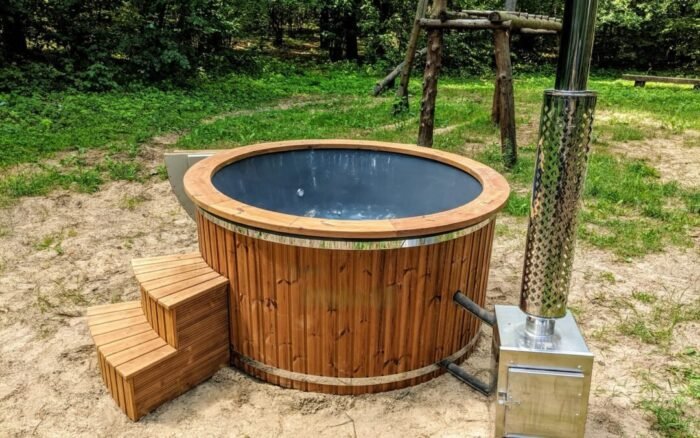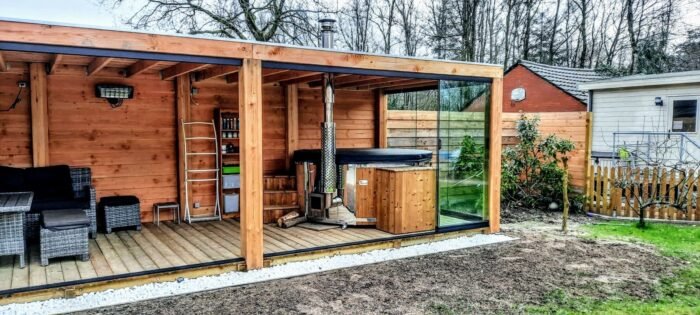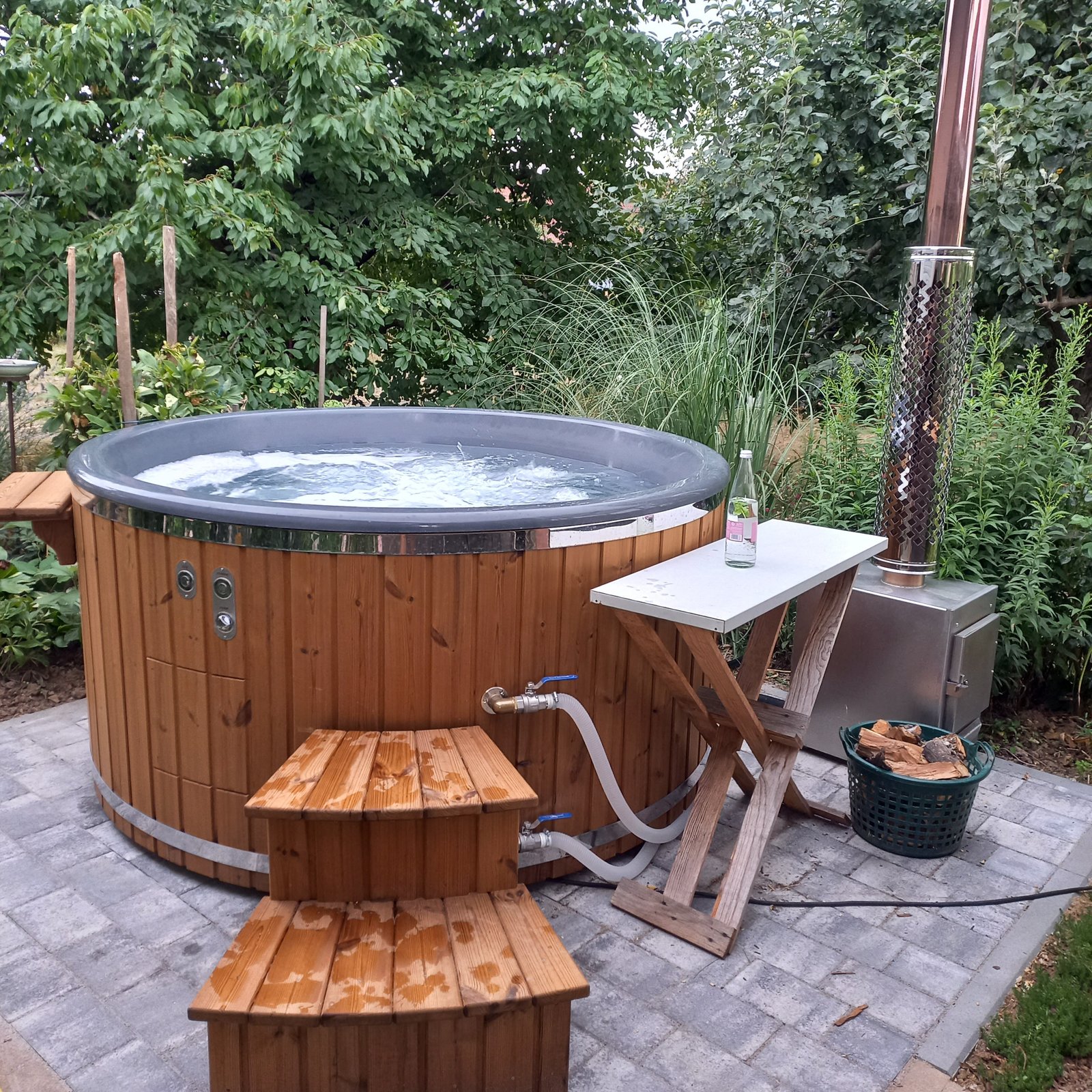

The 2-meter diameter wood-fired hot tub is the industry standard for a reason. It is the “Goldilocks” sizeโnot too small, not too big. Often marketed as a “4-6 person” tub, it is the go-to choice for families and those who love to host. But what does “4-6 person” actually mean in reality? Is it a comfortable lounge for four, or a tight squeeze for six?
Continue reading โGarden Sauna vs Backyard Sauna: Which One Fits Your Space?
When planning a home wellness retreat, terminology can be confusing. You might hear terms like “Garden Sauna” and “Backyard Sauna” used interchangeably, but in the world of landscape design, they often imply different approaches to placement and integration. Are you looking for a feature piece that blends into the flowerbeds, or a functional unit placed near the back door? The distinction lies in the location, the logistics, and the intended use.
Continue reading โ2-Person Wood-Fired Hot Tubs: Compact, Efficient & Romantic
In the world of outdoor wellness, bigger is not always better. While huge party spas have their place, there is a growing trend towards intimacy and efficiency. Enter the 2-person wood-fired hot tub. Often referred to as “Ofuro” style tubs (nodding to their Japanese heritage) or simply “Mini Tubs,” these compact vessels are revolutionizing how couples and singles enjoy their gardens. They are not just scaled-down versions of the big tubs; they are efficiency monsters that offer a completely different user experience.
Continue reading โSmall Wood-Fired Hot Tubs: Ideal for Small Gardens & Terraces
Urban living often means smaller outdoor spaces. Terraced houses, courtyards, and rooftop balconies are becoming the norm. But a small footprint doesn’t mean you have to sacrifice the luxury of outdoor bathing. The “Mini Tub” trend is growing fast. Small wood-fired hot tubs (designed for 1-2 people) are not just space-savers; they are efficiency champions.
Continue reading โCheap Wood-Fired Hot Tubs: Where You Can Save (and Where You Canโt)
We all love a bargain. When you see wood-fired hot tub prices ranging from ยฃ2,000 to ยฃ6,000, it is tempting to go for the cheapest option. After all, it’s just a tub of water, right? Wrong. In the world of outdoor wellness, “cheap” can often mean “expensive later.”
Continue reading โWood-Fired Hot Tub for Sale: What to Check Before Buying
Buying a hot tub is a significant investment. When browsing online, you will find hundreds of listings for “Wood-Fired Hot Tub for Sale,” often with very different price tags for what looks like the same product. Why does one tub cost ยฃ3,000 and another ยฃ6,000? The difference usually lies in the materials you can’t see in a thumbnail image.
Continue reading โLog Burner Hot Tub: Pros, Cons & Common Mistakes
There is a primal allure to the log burner hot tub. It taps into an ancient human instinct: the comfort of gathering around a fire. Unlike clinical, electric spas that hum with machinery, a log burner tub breathes. It requires interaction. You feed it, you control the airflow, and in return, it rewards you with a heat that feels deeper and more satisfying than anything a thermostat can provide.
Continue reading โWood-Fired Hot Tub Heater Types: Internal vs External Stove
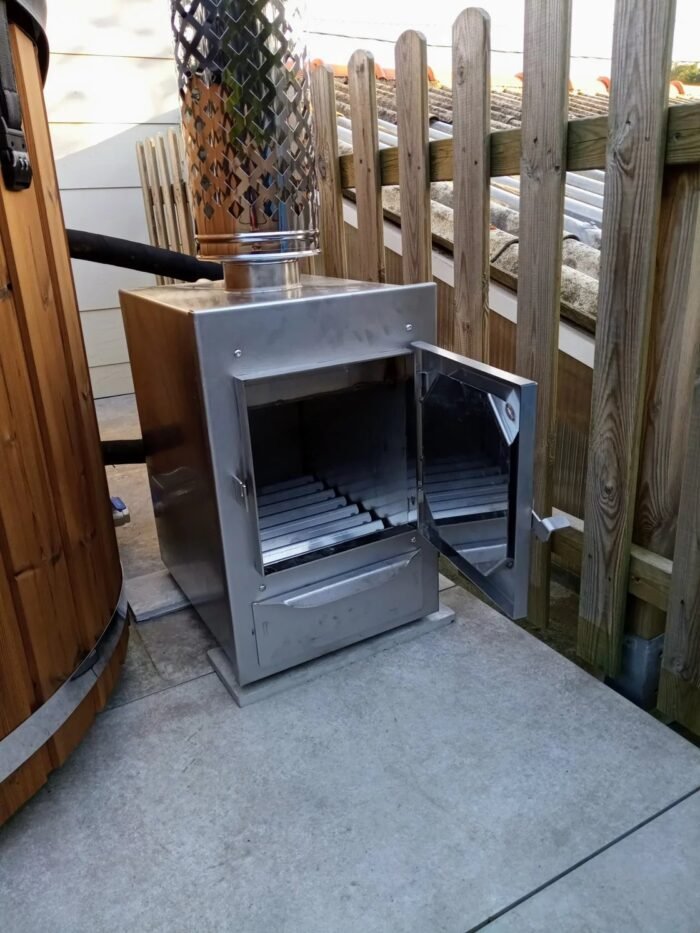
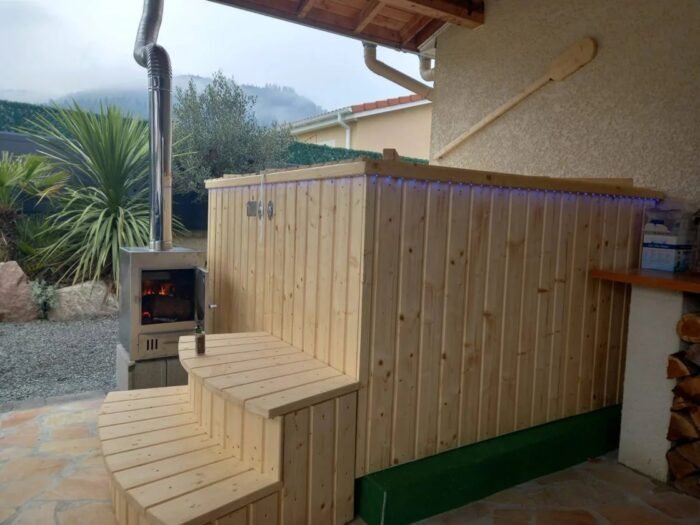
When configuring your dream wood-fired hot tub, one of the first technical choices you face is the stove type: Internal (Snorkel) or External? This choice changes the look of the tub, the amount of space you have for bathing, and how you clean it. It is not just about aesthetics; it is about functionality.
Continue reading โHow Long Does a Wood-Fired Hot Tub Take to Heat?
One of the most common questions potential buyers ask is: “How long until I can jump in?” In our instant-gratification world, the idea of waiting for water to heat up can seem daunting. Unlike an electric spa that is kept hot 24/7, a wood-burning hot tub is usually heated from cold (or cool) each time you use it. This heating time is the main variable in your hot tub experience.
Continue reading โWood-Fired Hot Tub Running Costs: Firewood, Time & Maintenance
One of the main reasons people switch from electric Jacuzzis to wood-fired hot tubs is the promise of lower running costs. With electricity prices fluctuating and the cost of living rising, the idea of heating your bath with a few logs seems financially attractive. But is it really as cheap as it sounds? Or are there hidden costs in water consumption, chemical treatments, and stove maintenance that add up over time?
Continue reading โ