
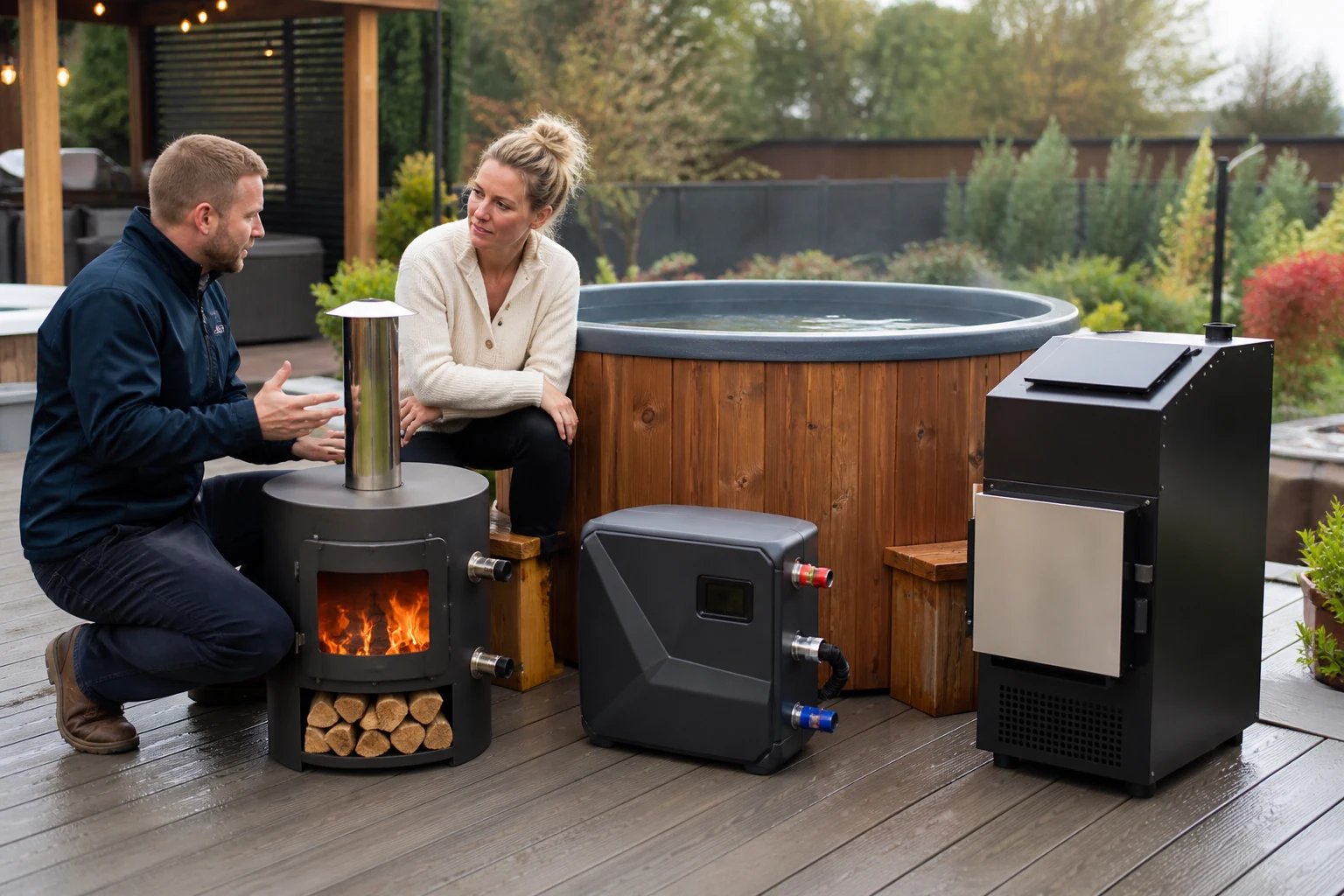
The best hot-tub heater is the one whose routine fits the site after the novelty has worn off. Start with normal occupancy, water volume, required readiness, available power, dry fuel storage and service space. Then choose the vessel and heater together, because internal, integrated and external arrangements change seating, pipework, cover, flue and maintenance access.
Begin with six site and ownership facts
- Normal occupancy and real water volume. Heat litres, not advertised seat labels.
- Starting condition. Will the tub be filled cold, reheated after a day or held warm?
- Readiness. Is a supervised fire acceptable, or must temperature be predictable at a set time?
- Services. What electrical capacity and approved cable route are available?
- Fuel and flue. Can dry fuel be stored and the appliance operated without smoke nuisance or clearance conflicts?
- Access. Can every heater, pump, union, drain and control remain reachable after landscaping?
Internal or snorkel wood stove
The heater sits in the bathing vessel behind its guard, so the water surrounds much of the heated surface and external pipework is minimal. It can give a compact, direct system and leave more garden space. The heater and guard displace water and seating, create a hot component inside the tub and affect cover design. Confirm guard, clearances, fill level and cleaning access.
External wood stove
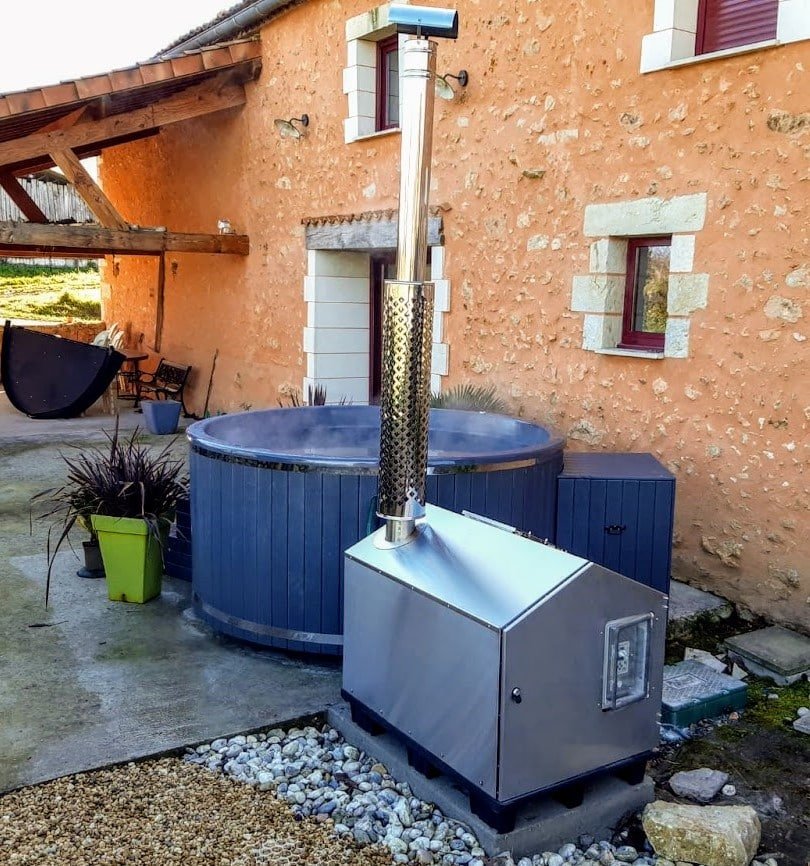
The heater sits beside the tub, preserving the internal seating area and keeping fuel loading outside. It needs its own stable base, hot zone, flue and an approved lower/upper water loop. Distance, port height, pipe diameter and slope are model-specific. It is best where the owner wants bathing space and can protect a visible, serviceable heater footprint.
Integrated wood heater
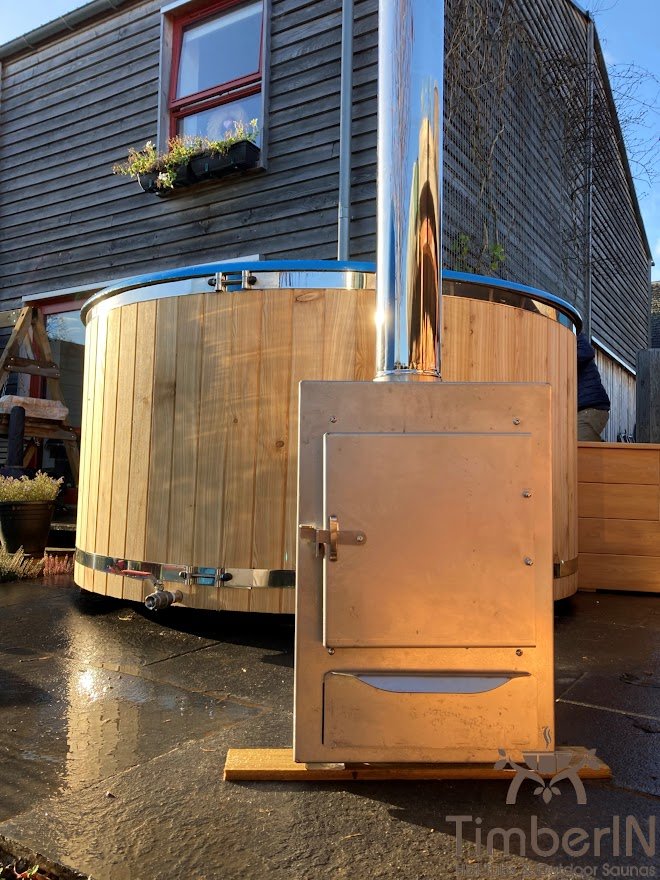
An integrated heater is built into a compatible shell arrangement and loaded from outside. It can produce a tidy footprint with less exposed connecting pipework, but it is not compatible with every vessel. Check how much internal volume it uses, how ash is removed, which panels remain accessible and what happens if the heater requires replacement.
Electric water heater
Electric heat offers thermostat control, scheduled operation and no solid-fuel handling at the tub. It requires a supply designed for the final heater, pumps, filtration, massage, lighting and controls. Output options and phase requirements vary by product and country supply; do not repeat a universal claim that one named kilowatt rating is always single-phase. A competent electrician must confirm the exact configuration.
Automatic pellet heater
A pellet system meters fuel and can provide automatic ignition and temperature response where those features are included. It also needs power, approved pellets, a dry hopper, feed-path cleaning, sensors and a flue. Ask what the app controls, which alarms appear locally and remotely, and how the system recovers after power, network or ignition failure.
Hybrid wood or pellet plus electric
Hybrid heating can use solid fuel for the large temperature rise and electric support for smaller corrections or holding. It is appropriate only when hydraulic flow, sensors and controls cover every permitted operating mode. Decide which source is primary and whether simultaneous operation is allowed before the system is built.
| Priority | Often points towards | Verify before choosing |
|---|---|---|
| Off-grid simplicity | Log stove with approved natural circulation | Water care, lighting, drainage and winter protection without pumps |
| Maximum seating | External or compatible integrated heater | Garden footprint, pipe route, flue and service panels |
| Compact direct wood heating | Internal/snorkel heater | Guard, displaced seating, cover and hot-surface management |
| Automatic temperature | Electric or pellet | Supply, controls, maintenance and failure behaviour |
| Frequent mixed use | Designed hybrid system | Connected load, circulation, interlocks and winter strategy |
Make suppliers quote the same job
Provide normal occupancy, volume range, starting temperature, target, frequency, site services and access. Each proposal should identify the exact heater, water volume, cover, insulation, circulation, controls, electrical load and included safety equipment. Treat heating-time claims as estimates unless all test conditions are stated.
Use the specialist guides for external stove connections, pellet heaters and hybrid heating after choosing a shortlist.
Decision rule
If you enjoy building and supervising a fire, have dry fuel and want a simple main heat source, wood remains compelling. If exact timing and temperature holding matter more, electric control deserves the infrastructure. Pellet heating sits between those routines, while hybrid systems trade simplicity for flexibility. The best choice is the one whose ordinary operating and maintenance tasks you are willing to repeat.