
Off-Grid Hot Tubs UK: Wood-Fired and Low-Power Planning Guide
An off-grid hot tub can mean a simple wood-heated tub with no electrical equipment, a remote tub that uses a small independent power system, or a normal hot tub at a property not connected to mains utilities. Those are different projects and should not share one vague “no electricity needed” promise.
This guide separates water heating from pumps, filtration, jets and lighting, then explains water supply, drainage, fuel, foundations, frost protection and remote delivery. It is for UK cabins, rural homes, glamping sites and garden owners who want to reduce infrastructure without overlooking hygiene or safety.
Off-grid rule: list every component that consumes electricity. Wood can heat the bathing water while a pump, filter, light, controller or jet system still depends on power.
Define what off-grid means for your project
A zero-electricity configuration uses an approved wood-fired water-heating arrangement and avoids powered filtration, jets, bubbles, lighting and controls. A low-power configuration may use wood for heat but run selected accessories from a suitably designed supply. A remote project may still use substantial electricity from solar, batteries or a generator.
Write the target before choosing the tub. “I want no permanent mains cable” is different from “I need everything to operate without electricity”. The selected product, stove, water routine and optional equipment must all support the same target.
Wood-fired models to assess for off-grid use
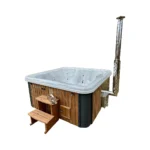
The wood-fired category appears below. A product belonging to this category is not automatically a zero-electricity installation: open the model and remove or separately plan any electric heater, filtration, jets, bubbles or lights. Ask for the final configuration to identify every powered component.
-
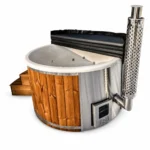
Product on saleSave up to 16% Wood Fired Hot Tub with Jets – TimberIN Nordic Rojal™ (4–8 Person)
From: €6,954From: €6,021 -
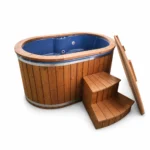
2-person model2 Person Wood Fired Hot Tub – TimberIN Nordic DuoFrom: €2,481
-
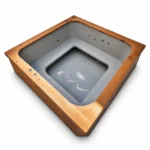
Square modelSquare Wood Fired Hot Tub – TimberIN Nordic Square™ (160–220 cm)From: €2,934
-
8-person modelLarge 8 Person Wood Fired Hot Tub – TimberIN Nordic Elite™ SquareFrom: €4,397
-
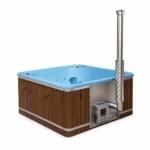
Acrylic luxuryTimberIN Nordic Square™ Acrylic Hot Tub – External or Integrated Wood Stove (Luxury Marble Edition)From: €6,957
Audit every energy and utility load
| System | Can be electricity-free? | What to verify |
|---|---|---|
| Water heating | Potentially, with an approved wood-fired configuration | Stove, circulation method, water level, monitoring and safe shutdown |
| Filtration | A fill-and-drain routine may avoid a powered filter | Bathing load, hygiene instructions, water source and disposal |
| Hydromassage jets | Normally require a pump | Rated load, duty cycle, controller and service access |
| Air bubbles | Normally require a blower | Power, noise, pipework and frost procedure |
| Lighting | Can be omitted or separately powered | Voltage, driver, controls and installation environment |
| Water supply | Gravity or delivered water may be possible | Source quality, volume, pressure and fill time |
How wood-fired water heating works
A wood-fired heater transfers combustion heat into the tub water through the model’s approved system. External heaters usually connect to the shell, while integrated and internal heaters form part of the tub layout. The water level and circulation requirements must be established before lighting.
Do not assume that every stove circulates in the same way or that an extra pump can be removed without consequence. Follow the selected model’s pipe, valve, water-level and operating instructions. Never light the heater dry, obstruct required circulation or drain the tub while the stove remains hot.
Choose the heater position for a remote site
An external stove keeps the fire outside the bathing area and preserves seating, but adds pipework and footprint. It needs level support and access for fuel, ash and maintenance. An integrated heater creates a compact outline, while an internal snorkel heater occupies part of the tub and requires a guard.
Draw the operator’s route in darkness and bad weather. Fuel should move from dry storage to the stove without crossing wet steps or guest circulation. Keep clearances, chimney access and hot surfaces away from tents, decking, vegetation and combustible stores.
Water supply without mains pressure
An off-grid tub still needs a known quantity of suitable water. Establish the selected model’s operating volume, source, storage, treatment, transfer method and refill time. A spring, borehole, rainwater store or delivered tank should not be assumed safe for bathing without appropriate assessment and management.
Gravity filling depends on elevation, pipe size and route. A transfer pump introduces another electrical or fuel load. Plan how hoses are drained and stored in freezing conditions, and prevent cross-connections or contamination of potable supplies.
Water hygiene without powered filtration
A simple tub can use a documented fill, bathe and drain routine, but “fresh water” is not automatically hygienic after users enter. Smaller volumes and multiple bathers can change water quality quickly. Follow the product and treatment guidance, clean accessible surfaces and avoid retaining warm untreated water merely to save refilling.
Holiday-let and commercial use need a formal risk-based water-management process, testing and records appropriate to the operation. A domestic fill-and-drain assumption should not be copied into guest accommodation. Obtain competent advice before the facility is offered to paying users.
Solar, battery and generator support
Independent power can run selected low-power equipment, but the system must be designed from real loads. Record watts, start-up demand, voltage, operating hours and seasonal use for every pump, blower, light and control. Add losses and the performance expected in poor weather.
Do not size a battery from an accessory label or assume solar output is constant. A generator adds fuel, noise, exhaust, storage and maintenance. Have a competent designer assess the complete system, protective devices, earthing, isolation and outdoor installation. Electric water heating is a much larger design question than a light or circulation pump.
Fuel choice, storage and realistic heat-up
Dry, suitable firewood supports cleaner, more predictable heating. Store it off the ground with ventilation and weather protection, away from the hot stove and chimney. Plan enough fuel for the expected sessions and for slower heating in cold or windy conditions.
There is no universal heat-up time. Water volume, starting temperature, useful stove output, fuel moisture and size, cover, wind and operator technique all matter. Ask for estimates under stated assumptions and monitor the actual tub with suitable equipment rather than chasing a promised number.
Size the tub for water and fuel logistics
A larger tub accommodates more users but requires more water, foundation capacity and energy. At a remote cabin, the source and disposal route can make water volume more important than purchase price. Choose around normal occupancy and usable seating.
A two-person hot tub can reduce volume and footprint for a couple. Family or commercial use may justify a larger model, but the water, fuel and turnaround plan should be written before ordering.
Foundation, drainage and environmental protection
Remote ground can be soft, sloping or difficult to excavate. Obtain the final support drawing, empty weight and operating water volume, then design a level, durable base for the site. Keep the stove and any external components supported at the correct relationship to the tub.
Drainage should handle the volume without eroding tracks, flooding neighbours or discharging hot or treated water into sensitive ground or watercourses. Check local requirements and treatment instructions. Preserve vehicle or maintenance access even when the setting is intended to feel secluded.
Winter and frost protection
Off-grid sites can be unattended during the coldest weather. Decide whether the tub will be drained after each use or protected through a documented winter routine. Empty the shell, pipework, valves, stove, pumps and filters as instructed; residual water can freeze in hidden low points.
A cover helps with debris and heat loss but is not a substitute for freeze protection. Keep access safe, store hoses dry and inspect for storm damage. Never improvise unattended heating or leave a combustion appliance burning as frost protection.
Remote delivery and installation
Provide the full postcode or coordinates, road condition, bridge or weight limits, gate widths, slopes, overhead obstacles and final unloading area. Seasonal tracks may change significantly after rain. Confirm the vehicle and whether a smaller transfer method or lifting equipment is needed.
Identify who assembles the tub, installs the stove and chimney, prepares the water system and commissions any power equipment. Remote delivery should not end with undocumented parts at the roadside. Keep manuals, drawings, certificates and spare-part details on site.
Private cabins, glamping and commercial use
A private owner can supervise the fire and known users. A glamping or holiday business needs trained responsibility, water and cleaning records, fuel control, pre-use inspections, guest instructions, emergency information and fault isolation. Insurance and local planning, fire and environmental duties also need review.
Simpler can be safer and easier to operate. Remove features that the site’s power, staff or maintenance routine cannot support. Do not market a tub as off-grid if normal guest use depends on a generator or charged battery that is not included in the operating plan.
Off-grid project cost checklist
| Cost area | Include | Off-grid question |
|---|---|---|
| Tub and heat | Selected shell, cladding, stove, chimney, guard and cover | Does the quoted configuration operate without electricity? |
| Water | Source assessment, storage, transfer, treatment and drainage | How is each full volume supplied and disposed of? |
| Power | Solar, batteries, generator, wiring and protection if used | Which exact loads and operating hours are designed? |
| Site | Foundation, track work, fuel store and weather protection | Can the site be maintained through winter? |
| Logistics | Freight, remote access, unloading, lifting and installation | Where does supplier responsibility end? |
| Operation | Fuel, water tests, cleaning, inspections and replacement parts | Who performs and records each routine? |
Off-grid buying checklist
- Define zero-electricity, low-power or remote-grid operation.
- List every heater, pump, filter, jet, blower, light and control.
- Confirm the approved water-heating and circulation arrangement.
- Calculate supply, storage and disposal for the full water volume.
- Plan dry fuel, chimney access, ash and fire-safe circulation.
- Design any independent power system from measured loads.
- Document foundation, frost protection and remote delivery.
- Create an operating and maintenance plan before guest use.
Frequently asked questions
Can a hot tub work with no electricity?
Yes, an approved wood-heated configuration can avoid electricity when powered filtration, jets, bubbles, lights and controls are omitted. Confirm every component in the final specification.
Do wood-fired hot tubs need a circulation pump?
It depends on the model and heater arrangement. Follow the approved pipework, water-level and circulation instructions; do not remove a pump or alter connections based on a general assumption.
Can solar panels power hot-tub jets and filtration?
Potentially, but the system must be designed from the actual running and start-up loads, operating hours, battery capacity and seasonal generation. Use a competent designer and electrician.
How do I keep off-grid hot-tub water clean?
Use the documented fill-and-drain or filtration and treatment routine for the bathing load. Remote and commercial sites still require appropriate water hygiene, cleaning and records.
What is the best off-grid hot-tub size?
The best size fits normal users while keeping water, fuel, foundation and delivery practical. Compare usable seating and operating volume rather than buying the largest stated capacity.
Design the utility plan before the feature list
Share the site, users, water source, drainage route, fuel supply and any available power. TimberIN can then help identify a wood-fired configuration and clearly separate genuinely electricity-free operation from optional powered systems.