
Outdoor Hot Tubs: Choosing the Right Heating System
An outdoor hot tub should be chosen around the way it will be used: how many people bathe, how often, whether water is retained, how quickly it must be ready and who will manage heating and maintenance. Wood, electric, pellet and hybrid systems can all work well, but they create different demands on the site, utilities and owner.
This UK guide provides the decision framework. It compares heating routes, vessel materials, sizes, shapes, soaking and spa equipment, then connects them to foundation, access, drainage, water care and complete project cost. Product pages remain the source for each model’s available configuration and live price.
Best starting point: describe the normal week—users, frequency, readiness and maintenance—before choosing the largest tub or most powerful heater.
Current outdoor hot-tub models
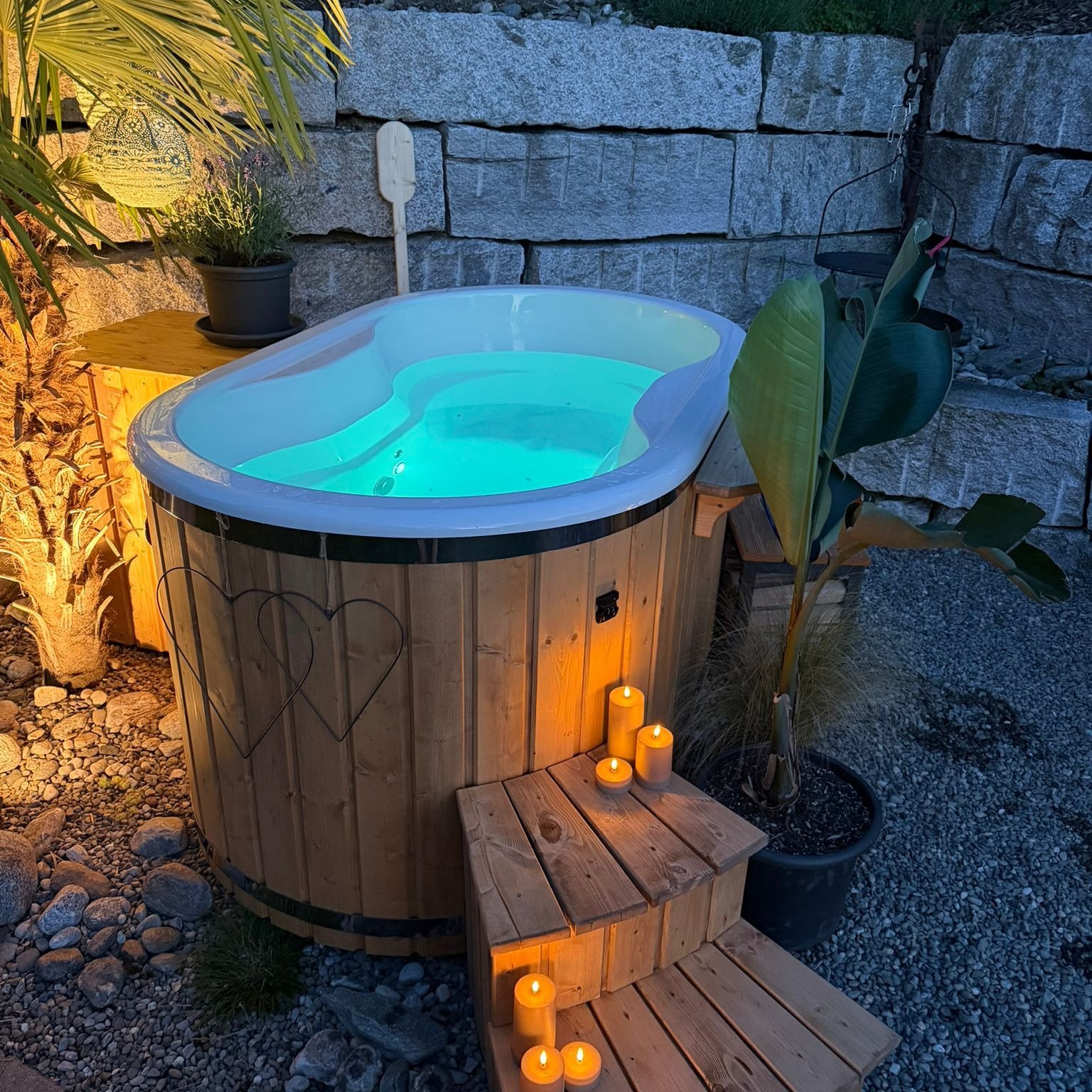
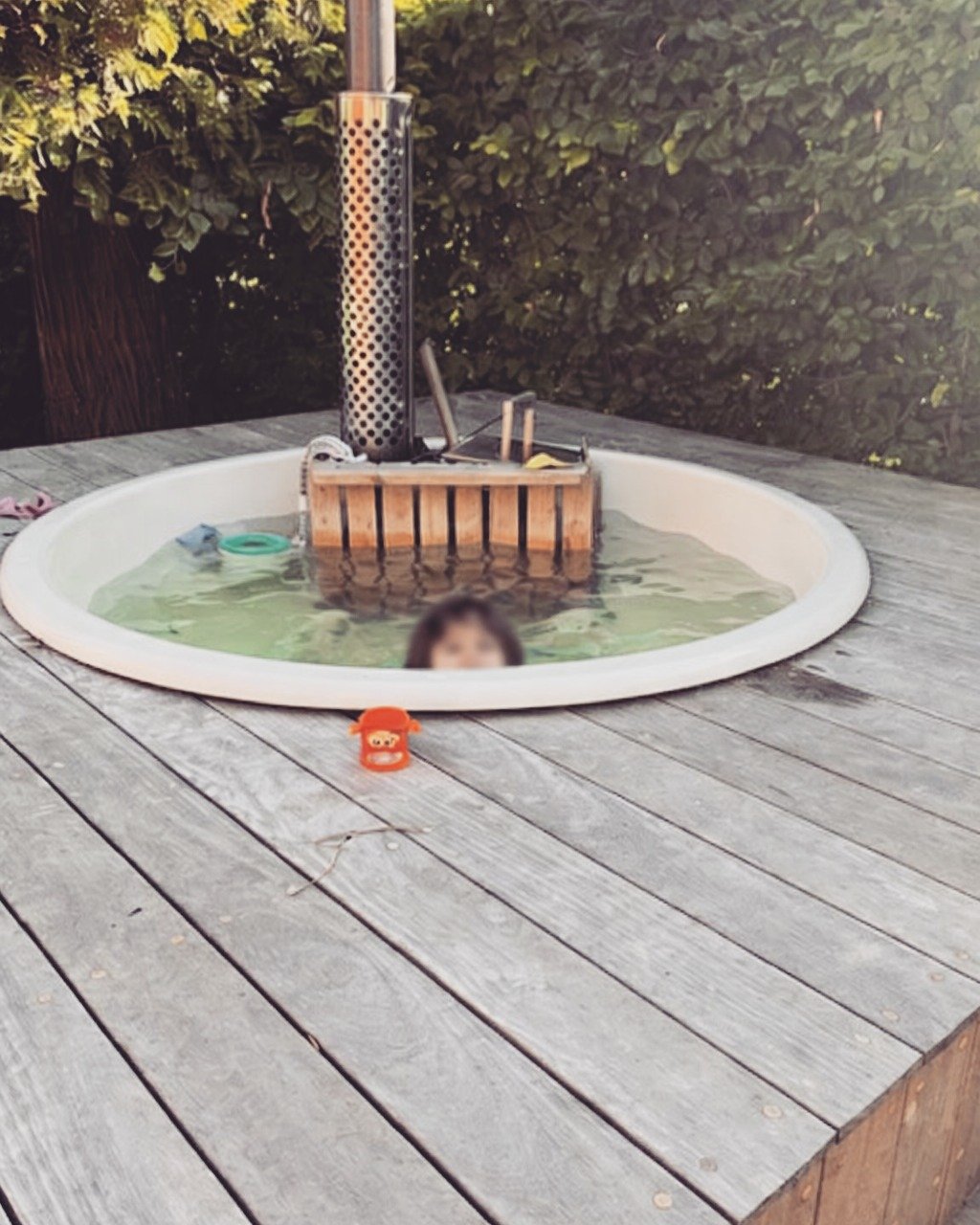
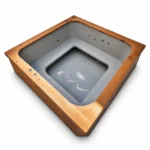
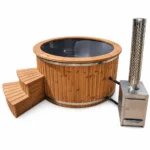
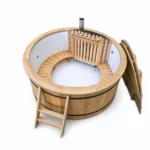
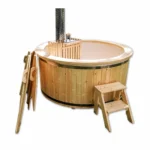
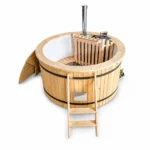
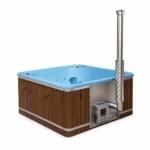
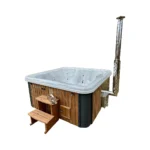
The live catalogue below includes current wood-fired, electric, pellet-compatible, compact, family, round, square, mobile and in-ground options. Open a model to check its exact dimensions, realistic occupancy, water volume, heating arrangements, materials, included equipment and selectable features.
Wood-fired, hybrid and larger family tubs
These models combine moulded liners or shells with wood-fired or hybrid heating routes. Compare heater position, water volume, seating plan and service access before choosing by shape alone.
-
Product on saleSave up to 16% Wood Fired Hot Tub with Jets – TimberIN Nordic Rojal™ (4–8 Person)
From: €6,954From: €6,021 -
Modular coreTimberIN Nordic Core™From: €3,371
-
Square modelSquare Wood Fired Hot Tub – TimberIN Nordic Square™ (160–220 cm)From: €2,934
-
External stoveWood Fired Hot Tub with External Stove – TimberIN Nordic™ External ComfortFrom: €3,382
-
PolypropylenePolypropylene Hot Tub – TimberIN Nordic Flex™ (160–220 cm, Configurable)From: €2,600
-
Compact for 44 Person Wood Fired Hot Tub – Compact Snorkel Stove DesignFrom: €2,963
-
Product on saleSave up to 17%Affordable Wooden Hot Tub for Your Garden – TimberIN Nordic Value™From: €3,269From: €2,931 -
8-person modelLarge 8 Person Wood Fired Hot Tub – TimberIN Nordic Elite™ SquareFrom: €4,397
-
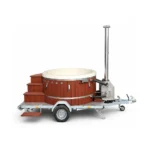
Trailer modelMobile Wood Fired Hot Tub on Trailer – TimberIN Nordic Mobile™From: €5,797
-
Acrylic luxuryTimberIN Nordic Square™ Acrylic Hot Tub – External or Integrated Wood Stove (Luxury Marble Edition)From: €6,957
Two-person and compact hot tubs
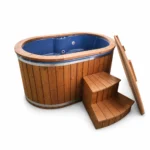
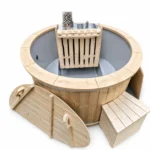
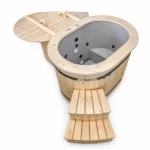
Compact models reduce the normal bathing volume or footprint, but their heater, steps and cover still need working space. Check internal dimensions and the exact seat layout for the intended users.
-
2-person model2 Person Wood Fired Hot Tub – TimberIN Nordic DuoFrom: €2,481
-
TimberIN Nordic Compact™ SnorkelFrom: €2,683
-
2 Person Polypropylene Hot Tub – TimberIN Nordic Oval™ DuoFrom: €2,311
Traditional timber hot tubs
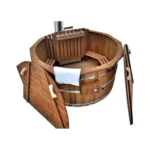
Here the timber construction is central to the bathing experience. Compare the wood species, water-retaining construction, maintenance routine and seasonal care required by each model.
-
ThermowoodThermowood Hot Tub – TimberIN Nordic™ Deluxe (Wood-Fired, 4–8 Person)From: €3,280
-
Traditional timberWood Fired Wooden Jacuzzi – Traditional Timber Hot TubFrom: €2,820
-
Spruce value modelWooden Hot Tub Basic – TimberIN Nordic™ (Affordable Wood Fired Model)From: €2,333
-
2-person wood tubTimberIN Nordic Duo™ WoodFrom: €1,959
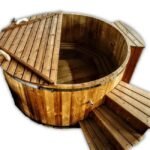
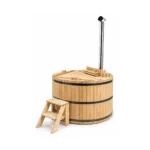
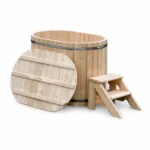
Electric, pellet and in-ground systems
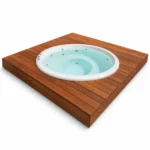
These specialist routes suit buyers prioritising scheduled electric heat, pellet operation or a built-in appearance. Electrical capacity, drainage and permanent service access must be designed around the selected model.
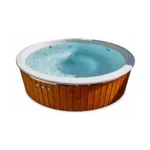
Compare wood, electric, pellet and hybrid heating
| Heating route | Often suits | Plan for |
|---|---|---|
| Wood fired | Owners who enjoy active fire management and have suitable dry fuel | Stove access, chimney, clearances, ash, smoke, supervision and temperature overshoot |
| Electric | Regular use where scheduled control or temperature maintenance matters | Complete connected load, tariff, cable route, protection and standing heat loss |
| Pellet | Sites suited to a compatible metered-fuel burner and documented controls | Dry pellet storage, feed mechanism, electrical needs, cleaning and specialist service |
| Approved hybrid | Buyers who want wood heat plus electric support in one configuration | Two systems to install, operate, protect and maintain |
Heating labels do not reveal performance on their own. Water volume, starting temperature, useful output, insulation, cover, weather and operating routine determine heat-up and consumption. Compare the exact selected model on the wood-fired, electric and pellet hot-tub guides.
Wood-fired heater position changes the whole layout
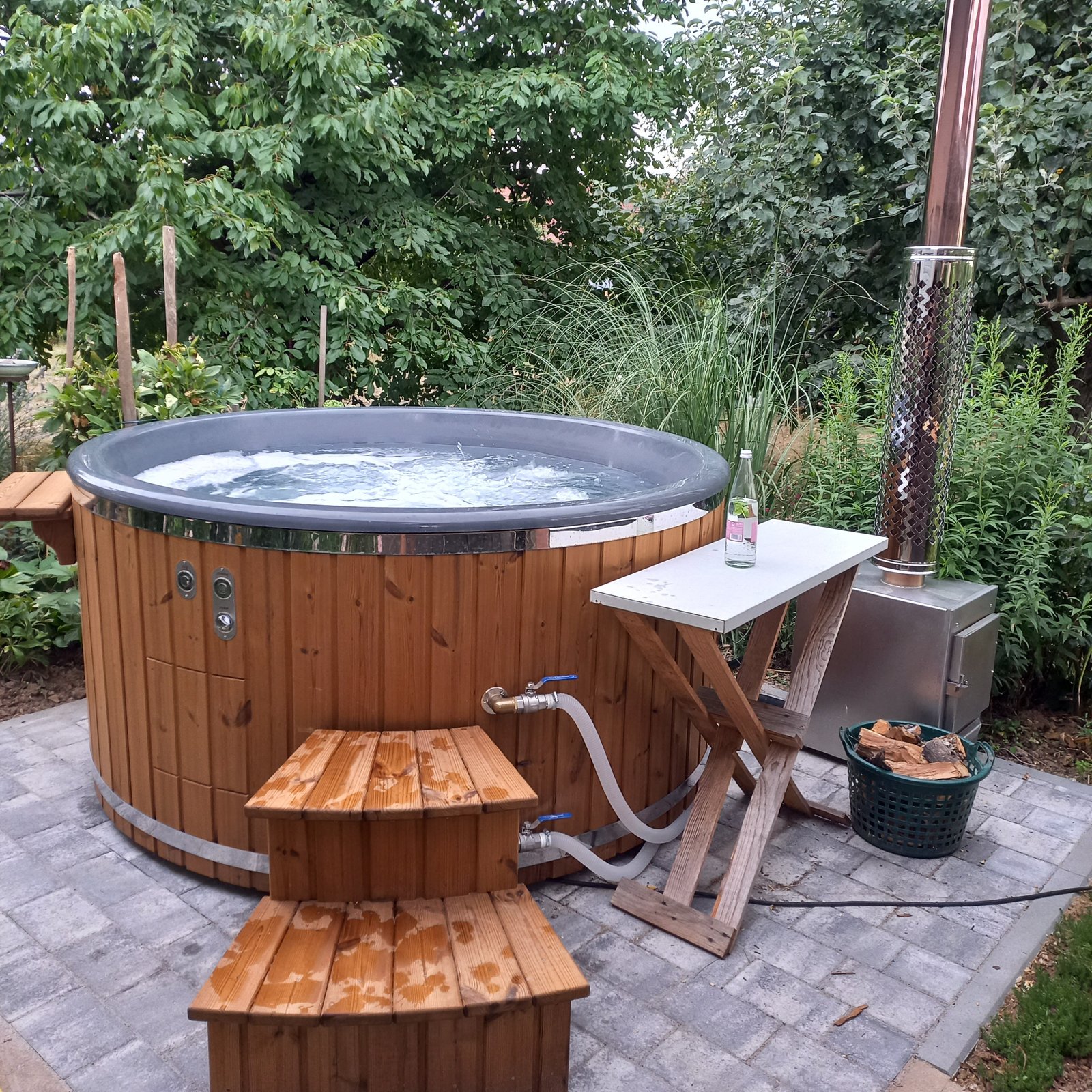
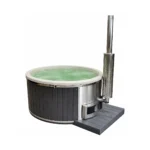
An external stove preserves bathing space but adds footprint and connecting pipework. An integrated stove creates a compact combined outline but changes one area of seating and service access. An internal stove reduces external equipment but occupies the vessel and requires a secure guard. Choose from the actual seat plan, stove door, chimney and service route rather than appearance alone.
Every arrangement needs the specified water level and circulation before lighting. Never dry-fire, obstruct required flow or drain while the heater remains hot. The heater guide compares external, integrated and internal systems in detail.
Vessel construction matters more than timber cladding
A traditional coopered wooden tub retains water through fitted timber staves and requires an ownership routine that accepts timber movement. A modern lined tub uses a moulded shell or liner and may add spruce, larch, thermowood, oak or another exterior for appearance. “Wooden hot tub” can describe either, so ask which material actually retains the water.
Compare allowable treatment, cleaning, insulation, repair route, empty weight and winter procedure. Premium cladding is worthwhile when its appearance and care suit the setting; it does not transform one vessel type into another. See the wooden hot-tub guide and the material-focused cedar guide.
Choose capacity from internal space and water volume
Four-, six- and eight-person labels are useful filters, not universal measurements. Request internal diameter or length and width, bench dimensions, water depth, footwell and heater intrusion. Draw the regular users on the seat plan and decide whether occasional guests justify a larger vessel.
More volume increases filled load, heat demand, water treatment and drainage on every use. Compact buyers can use the two-person and four-person pages; larger households should use the family hot-tub guide.
Round and square tubs create different social space
A round tub organises seating around one centre and can distribute legroom evenly. A square tub can align with decking or a corner and may offer distinct sides, shaped positions or a broad shared footwell. External dimensions do not show how a heater, steps or service equipment affect circulation around the installed tub.
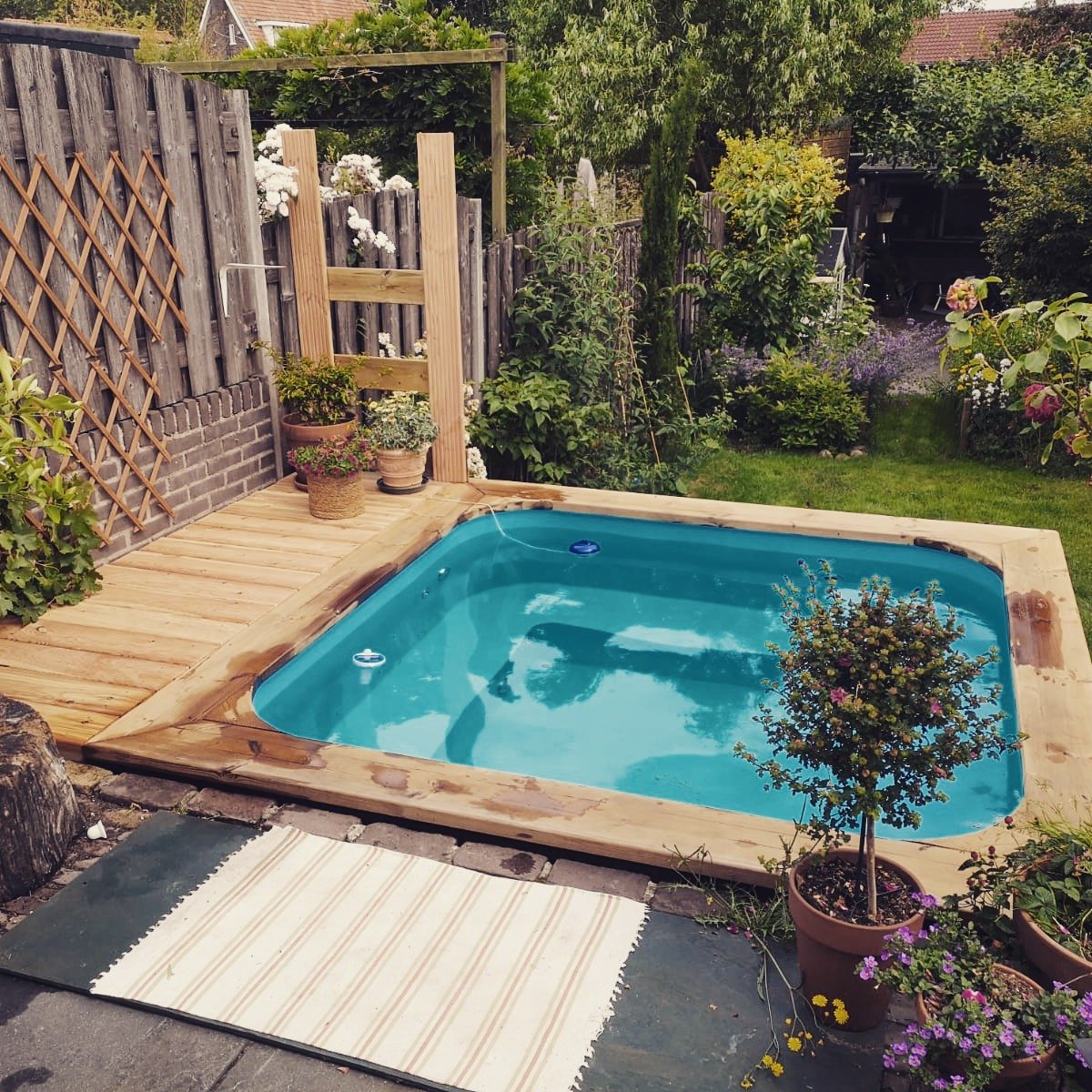
Compare dimensioned interiors and the final site on the round and square hot-tub guides. An in-ground look requires a separate service and drainage design; use the sunken hot-tub page before building a surround.
A soaking tub and a jetted spa are different ownership choices
A quiet soaking tub can keep equipment and maintenance comparatively simple. Hydromassage jets add directed water movement; air systems add bubbles. They also introduce pumps, pipework, electrical load, noise, cleaning and freeze-sensitive components. Check jet positions against the actual users and leave access to every serviceable part.
Choose massage deliberately on the hot tubs with jets page. Avoid assuming that bubbles and water jets are the same system or that more outlets guarantee better comfort.
“Off grid” needs a line-by-line utility audit
A naturally circulating wood-heated vessel may heat without mains power, but pumps, filtration, lights, controls, jets and backup heat require electricity unless omitted or supplied by another documented system. Water still needs to reach the site, and used water needs a suitable destination. The off-grid guide separates marketing language from the complete utility plan.
Water care starts with the operating pattern
Fill-and-drain soaking and retained shared water need different systems. Retained water normally requires appropriate filtration, treatment, testing and cleaning. Jets and pipework increase the internal surfaces that need management. The selected materials determine which products and concentrations are permitted.
Wash before entry, keep soil and outdoor footwear away and maintain the cover, but do not treat appearance as proof of hygiene. Holiday-let and commercial operators need formal risk-based controls; the HSE spa-pool guidance covers systems used as part of a business activity.
The foundation supports water, people and equipment
Obtain empty weight, normal operating volume and support requirements. One litre of water weighs approximately one kilogram before bathers, stove, steps and accessories are added. A level appearance is not proof that a deck, patio or compacted area can carry the full load without settlement or distortion.
Design the base around the manufacturer’s support pattern and the real ground. Leave service access and plan splash and drain-down water so it does not erode support, flood adjoining land or enter an unsuitable drain.
Delivery must be surveyed with packed dimensions
Measure gates, turns, slopes, walls, steps, eaves, cables and the unloading point. Clarify whether the quote covers freight, kerbside unloading, lifting or final positioning. Larger tubs may need a crane or specialist handling; agree the equipment, labour and insurance before production.
Mobile trailer-mounted hot tubs bring different towing, loading and water responsibilities. Use the mobile hot-tub guide rather than treating wheels as ordinary delivery equipment.
Planning, electrical and smoke checks belong before ordering
A freestanding domestic tub is not the same project as raised decking, a shelter, an outbuilding, extensive landscaping or business accommodation. Boundaries, listed or protected sites and local conditions can change the answer. Ask the planning authority about the complete proposal with dimensions rather than assuming the tub alone settles permission.
Have a competent electrician assess every powered component and the proposed cable route. For wood firing, use the approved chimney, clearances and fuel and check local smoke-control and nuisance requirements. Keep hot surfaces, ash and fuel handling away from bathers and children.
Year-round use needs a winter failure plan
Decide whether the tub remains filled and protected or is drained between uses. Water can stay trapped in the heater, pipes, valves, pumps, filter housings, jets and air lines. Follow model-specific instructions and identify every low point. If circulation is frozen or uncertain, do not light the stove or energise equipment to improvise a thaw.
Compare the complete project, not only the tub
| Project line | Define before comparing | Typical omission |
|---|---|---|
| Product | Size, vessel, cladding, heater, cover, steps and insulation | Comparing different configurations by starting price |
| Water system | Fill route, filtration, treatment, drainage and winter plan | Leaving retained-water duties undecided |
| Powered equipment | Heater, pumps, lights, bubbles, jets and controls | Quoting one device instead of complete connected load |
| Delivery | Freight, unloading, lift, access route and placement | Assuming delivery includes installation |
| Site work | Foundation, drainage, electrical, chimney and landscaping | Surveying after the tub is ordered |
| Ownership | Fuel or electricity, water, treatment, maintenance and service | Using a universal session-cost claim |
| Protection | Warranty, spares, insurance and permitted use | Assuming private and commercial terms match |
The hot-tub price guide shows how to align quotations. A cheaper base model can be good value when it fits the users and site; omitting necessary access, water care or safety equipment is not a saving.
Sequence the site work around confirmed production dimensions
Begin with a measured site and an outline model choice, but do not cast tightly dimensioned surrounds, close service routes or fix utility penetrations from an early brochure figure. Bespoke size, heater position, insulation and equipment can change the final body, connections and clearances. Obtain written production dimensions and support details before completing irreversible work.
A practical sequence is: define users and heating; survey access and ground; select the configuration; confirm drawings, weights and services; design the base and drainage; arrange electrical or lifting work; then prepare for delivery and commissioning. Assign responsibility for every interface. Gaps between the product supplier, carrier, groundworker and electrician are where avoidable delays often arise.
Warranty and serviceability should influence the model choice
Read what the warranty covers, for how long, and which maintenance, water chemistry, installation or winter records may be required. Confirm whether private, holiday-let and commercial use have different terms. A long headline warranty is less useful when the excluded component is central to the chosen configuration or when access prevents inspection.
Ask how routine parts are identified and supplied, where pumps, filters, valves, controls and stove surfaces can be reached, and what happens if a large component must be removed. Leave enough space to service the tub without dismantling permanent landscaping. Keep the final order, manuals, photographs of concealed services and commissioning records together.
Which route fits your normal week?
| Your priority | Start with | Then verify |
|---|---|---|
| Fire-led outdoor ritual | Wood-fired tub | Fuel, heater position, chimney, supervision and heat-up conditions |
| Regular scheduled use | Electric or approved hybrid | Supply, tariff, insulation, holding strategy and winter resilience |
| Remote simple site | Off-grid-capable wood system | Every pump, water source, drainage route and service dependency |
| Family use | Internal seating and everyday capacity | Entry, supervision, water volume, cover and equipment placement |
| Massage experience | Jetted model | Pump load, positions, noise, cleaning and frost drainage |
| Compact footprint | Two- or four-person round or square model | Usable interior, heater intrusion and access around the installed tub |
Outdoor hot-tub buying checklist
- Describe regular users, occasional group size and frequency.
- Choose wood, electric, pellet or hybrid around the real routine.
- Request internal dimensions, seat plan and water volume.
- Separate vessel construction from exterior cladding.
- Decide whether soaking, bubbles or hydromassage is required.
- Define fill, filtration, treatment, testing and drainage.
- Calculate the complete operating load and foundation.
- Measure delivery with packed dimensions and lifting needs.
- Confirm all electrical, chimney, planning and local checks.
- Write the winter, maintenance, service and warranty plan.
- Compare complete delivered-and-sited configurations.
Frequently asked questions
Which type of outdoor hot tub is cheapest to run?
There is no universal winner. Compare actual water volume, temperature rise, local wood or electricity cost, insulation, cover, frequency, holding losses, pumps, water and maintenance under the same conditions.
Can an outdoor hot tub stay filled all year?
Only with a water-care and freeze-protection method approved for the model and climate. Otherwise complete drain-down must remove water from the vessel and every heater, pipe, pump, filter and spa line.
Do I need electricity for a wood-fired hot tub?
Not necessarily for the main heating in an approved natural-circulation design. Filtration, lights, bubbles, jets, controls and electric support require power unless omitted or supplied by another documented system.
How many people fit in a hot tub?
Person labels are guidance. Compare internal dimensions, bench length, depth, footwell and heater intrusion with the actual users. Everyday comfort is more useful than occasional maximum capacity.
Does an outdoor hot tub need a concrete base?
Not every model requires the same foundation, but every installation needs level, stable support designed for its complete load and support pattern. Obtain requirements and have the real site assessed.
Choose the operating system before the final finish
Share the regular users, preferred heating routine, water-care plan, site dimensions, access and utilities. TimberIN can then identify compatible models and provide a written configuration for a meaningful comparison.