
Material guide with real TimberIN examples
Choose the timber by its job, exposure and maintenance needs
A hot tub can combine a water-retaining liner, exterior timber cladding, structural supports and separate accessories. An outdoor sauna adds a weather shell, framing, hot-room lining and benches. The right comparison therefore starts with the component—not with a species name on its own.
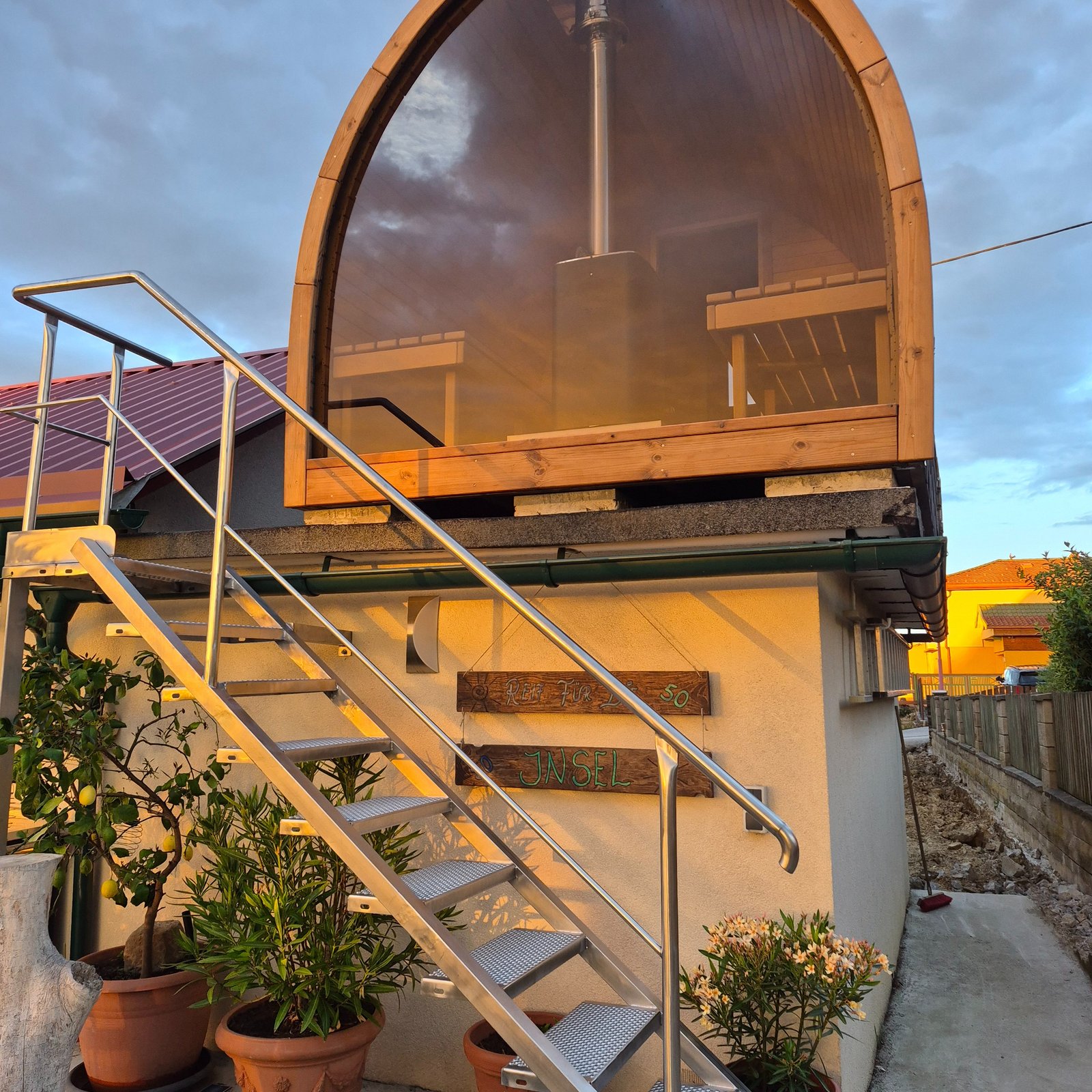
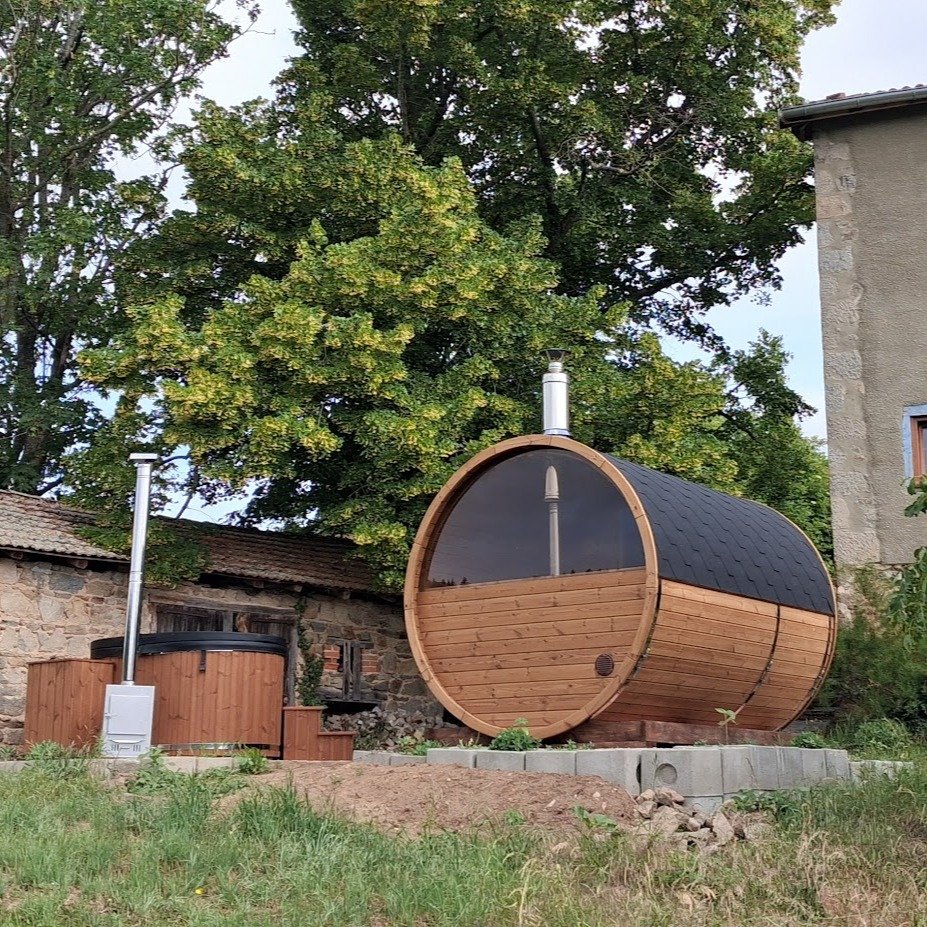
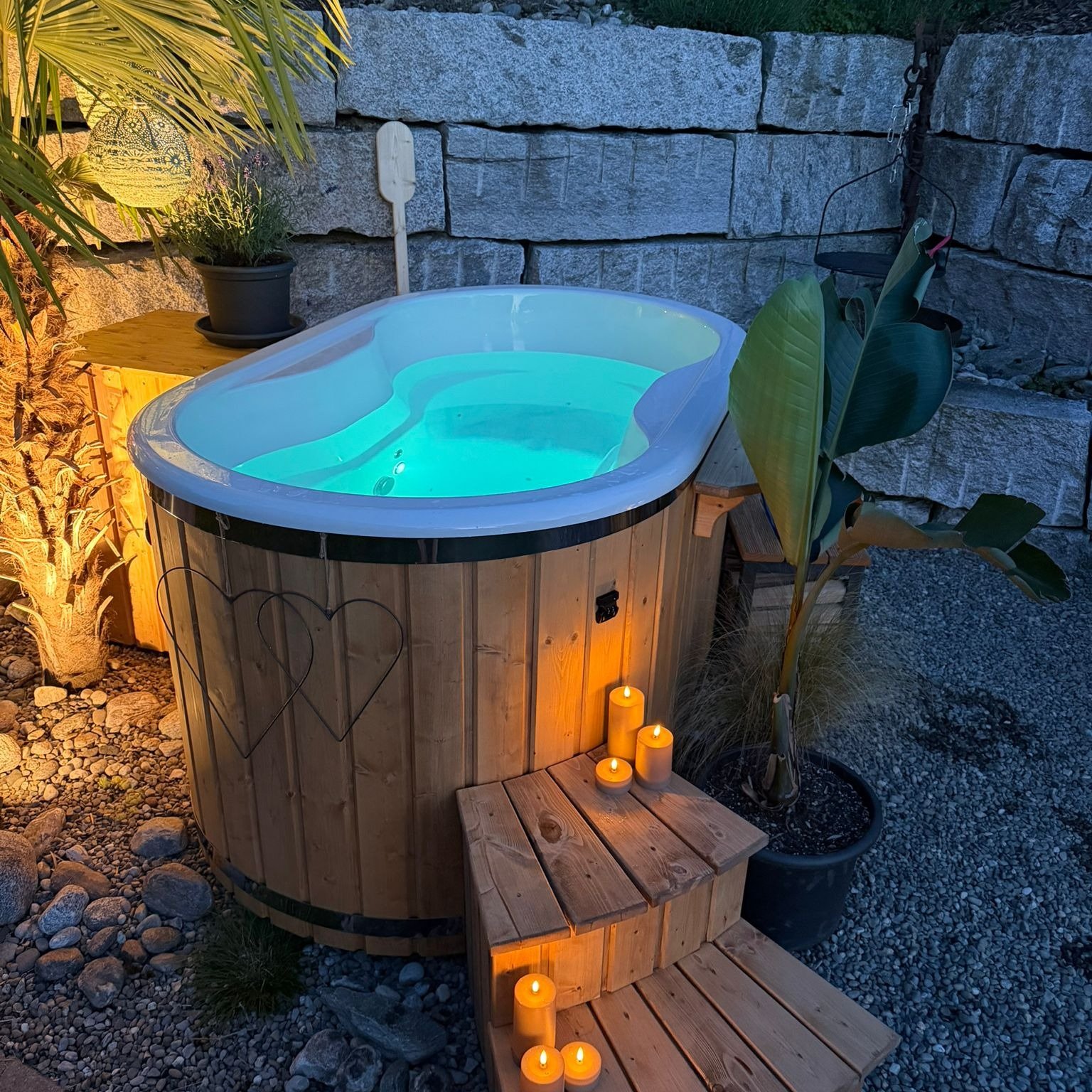
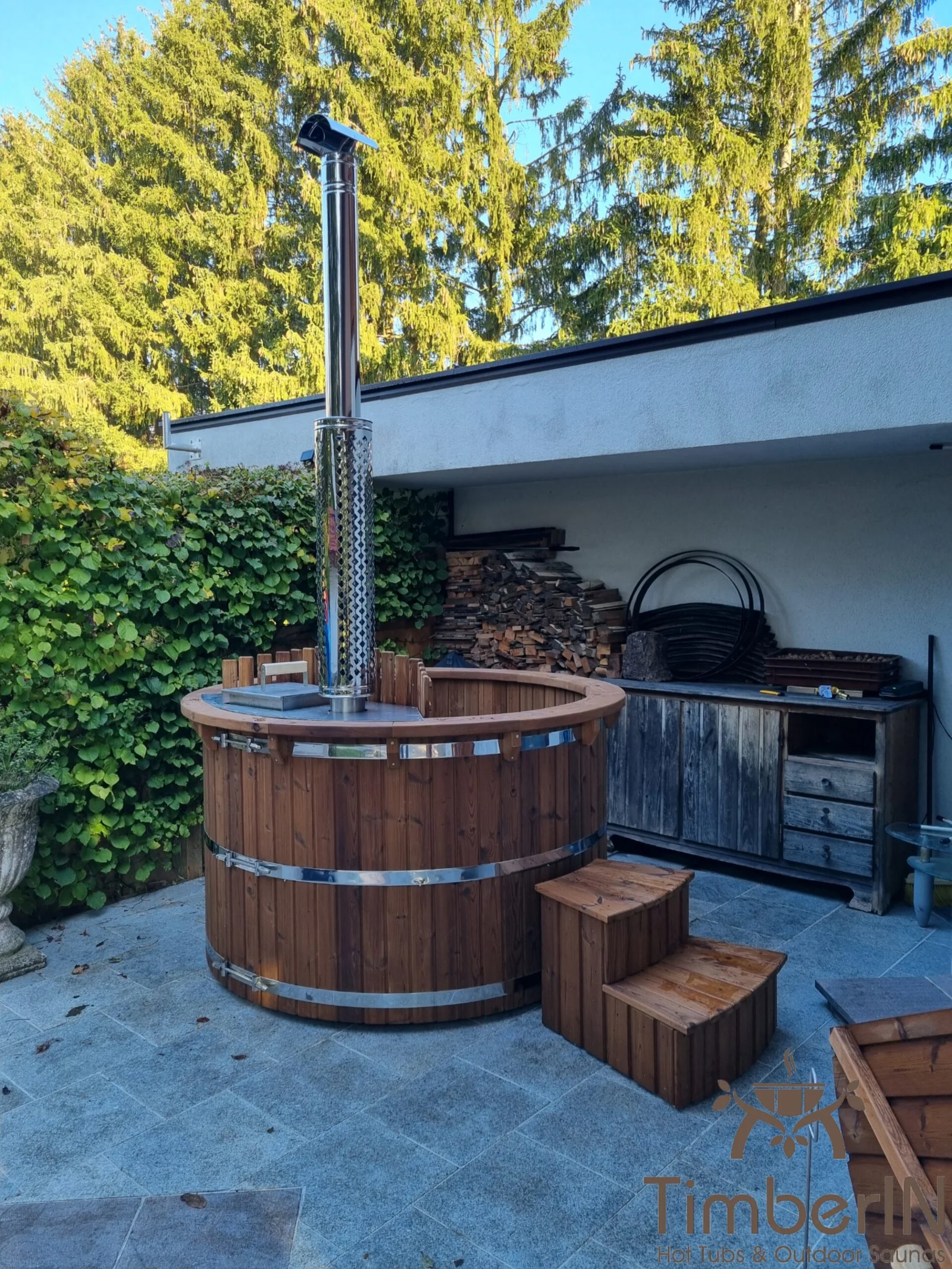
Hot-tub wood types in pictures
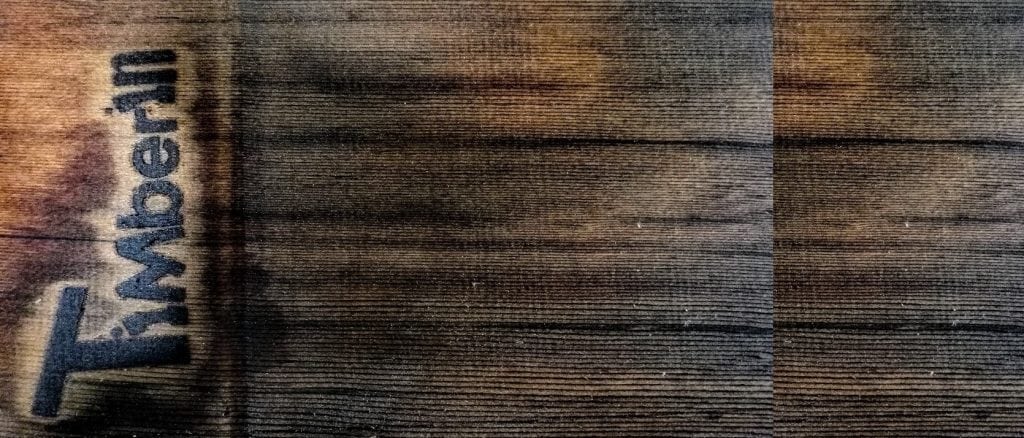
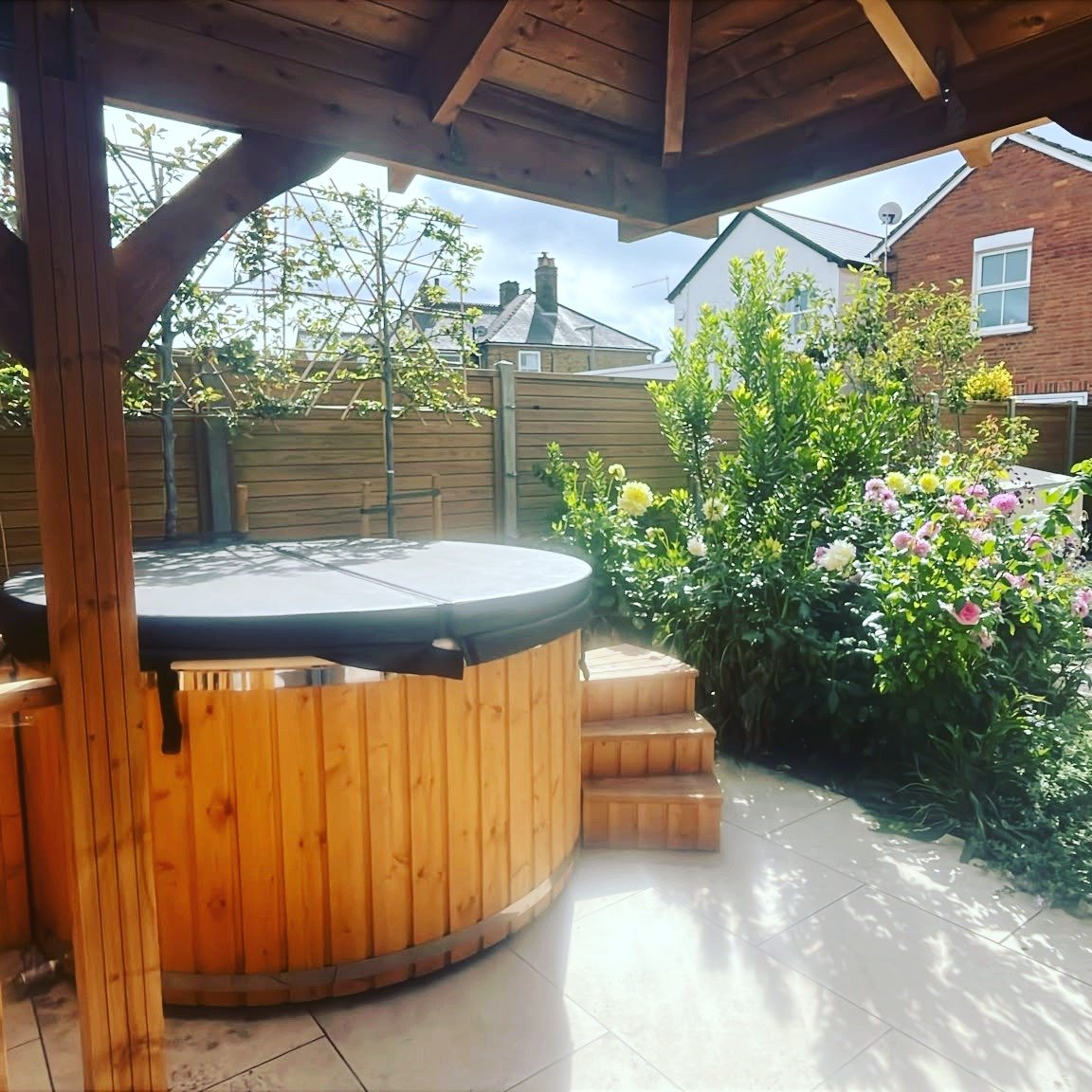
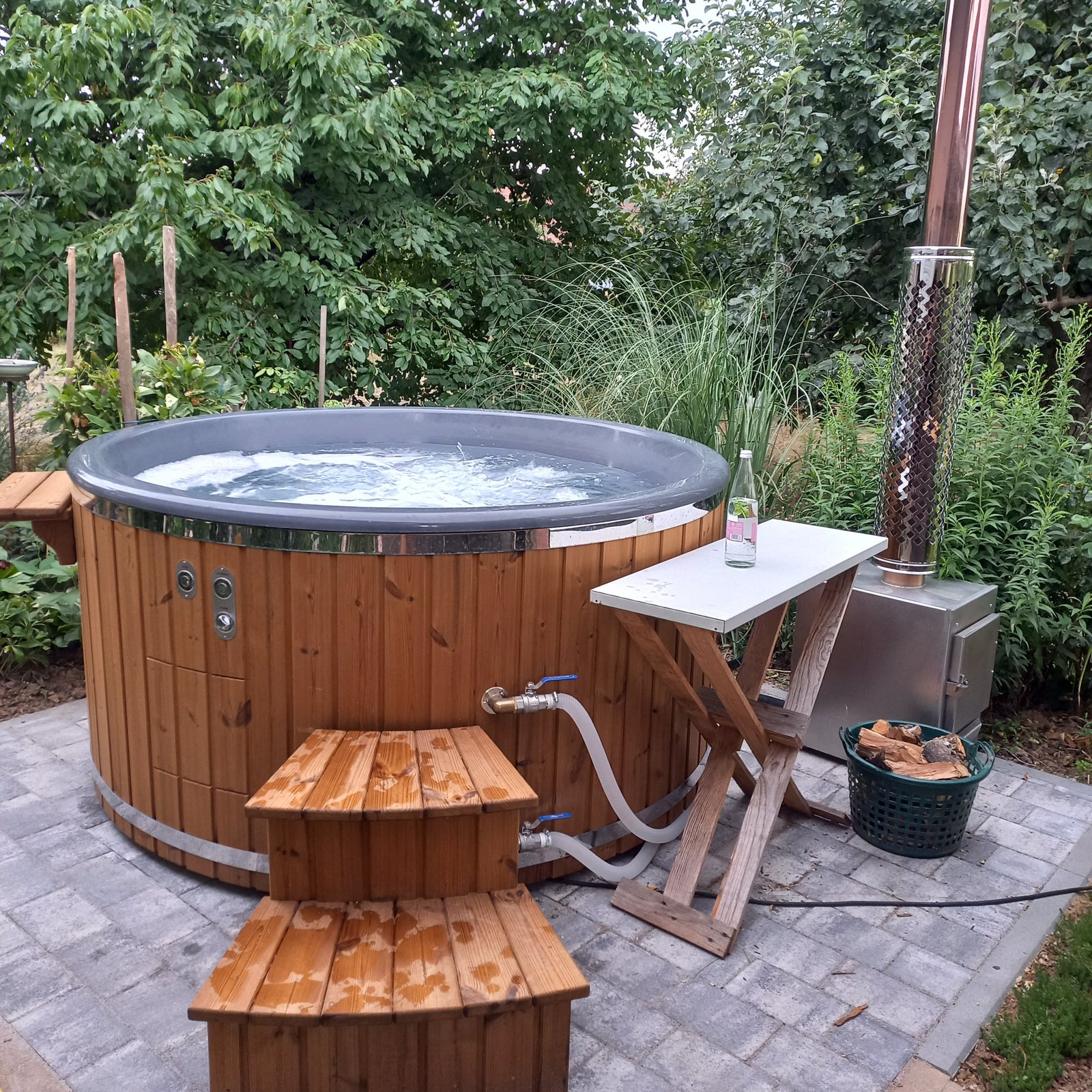
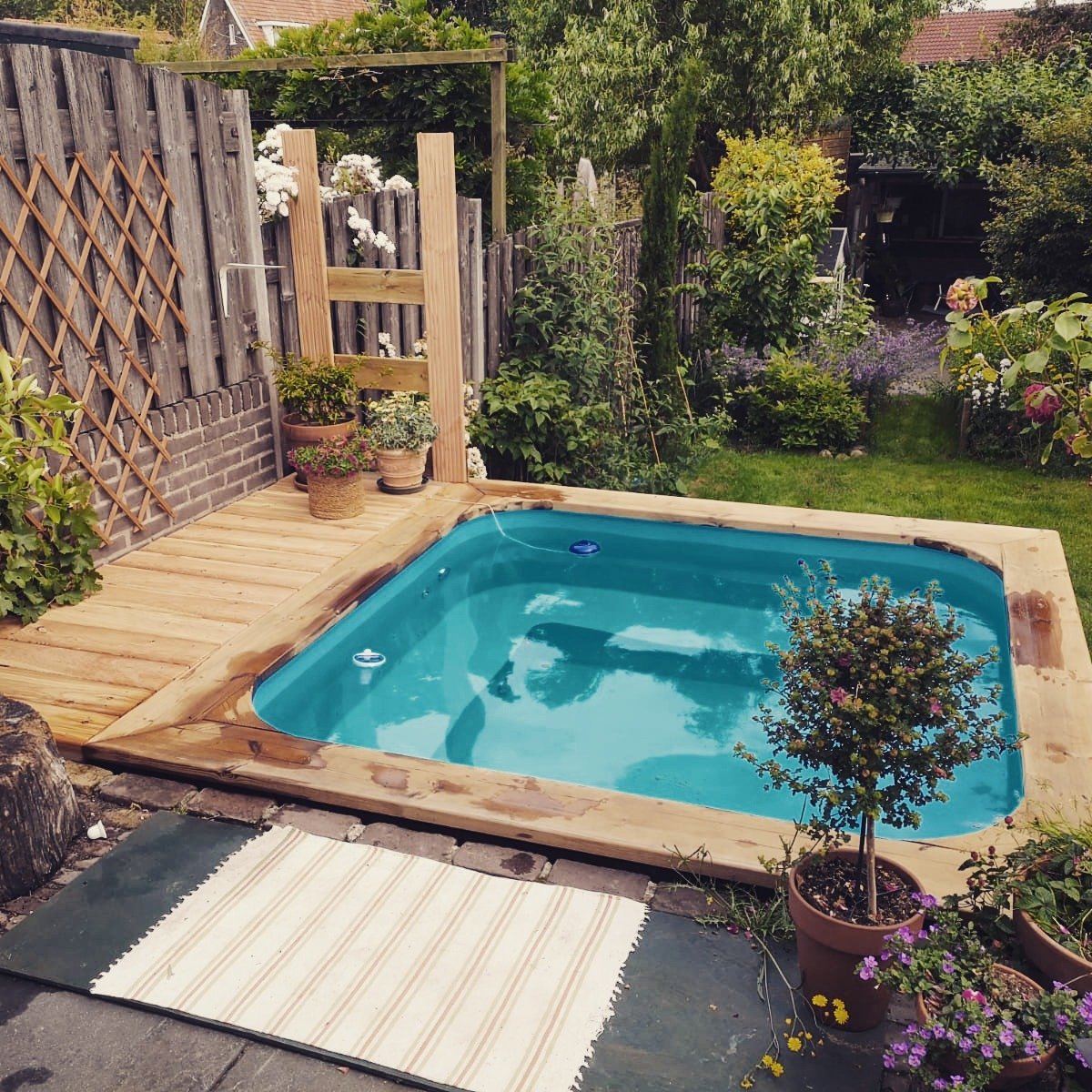
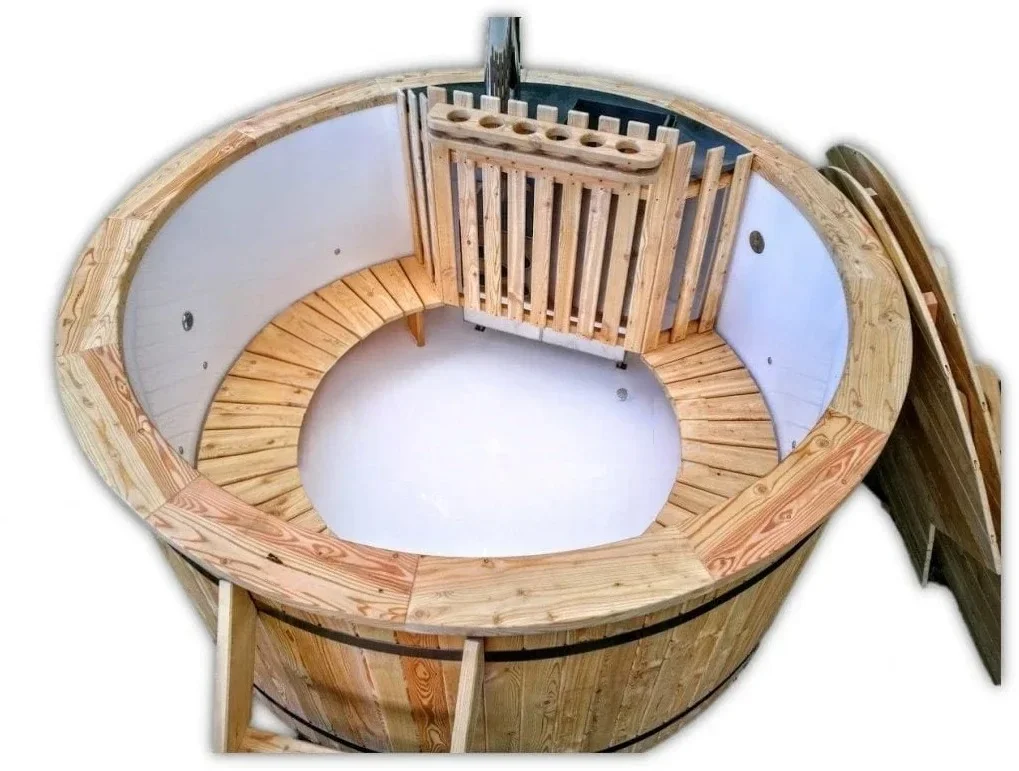
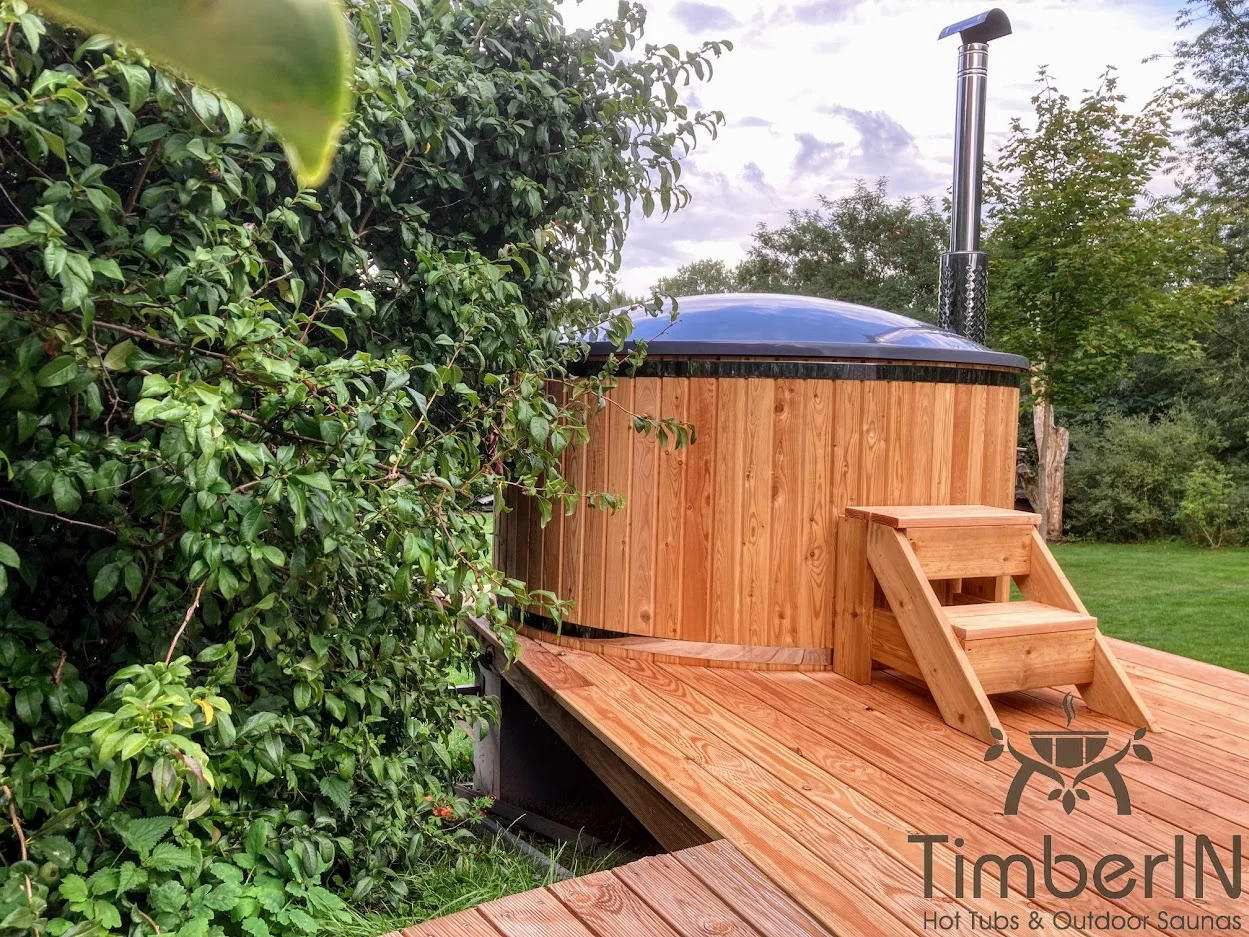
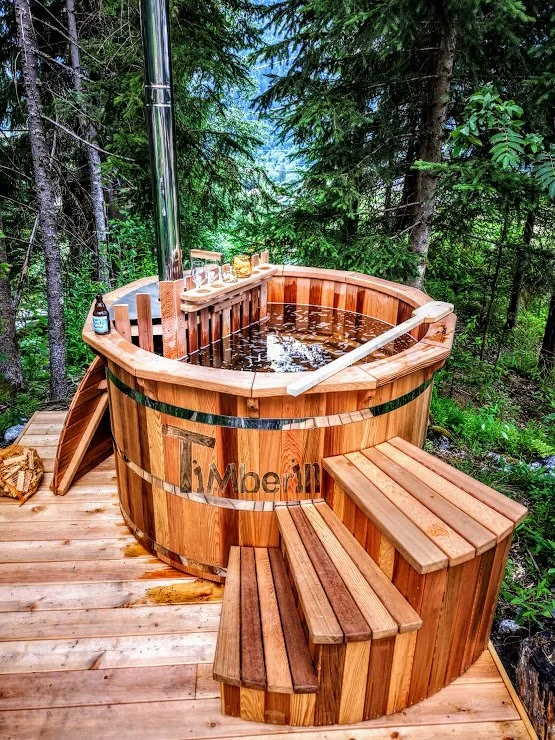
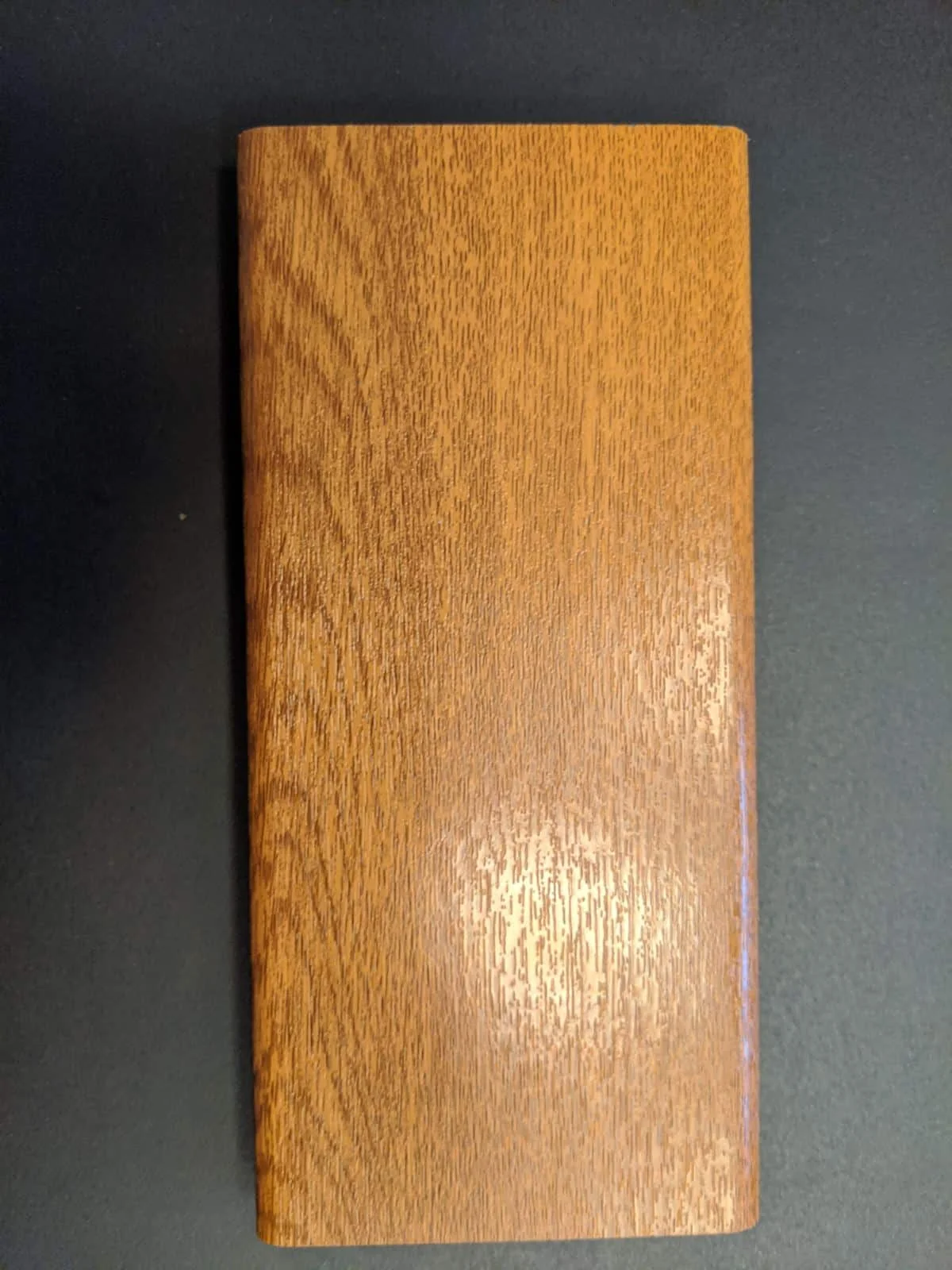
These first-party TimberIN photographs show the visual differences more clearly than small colour swatches. Natural variation, camera light, oil, weathering and age all change the appearance, so the written order specification remains the final material reference.
First identify what the timber is doing
Water-retaining vessel
In a traditional solid-timber tub, accurately made staves swell and seal to retain the water. Moisture cycling, initial leakage, drying and maintenance are part of this construction method.
Exterior cladding
With a fibreglass or polypropylene liner, the liner retains the water and the timber forms the visible outer shell. The wood can then be selected primarily for appearance, weathering and maintenance.
Sauna interior
Benches and hot-room lining must remain comfortable at operating temperature, dry appropriately and avoid unsuitable exterior coatings. Heat behaviour matters more than garden-deck durability.
Structure and supports
Frames, runners and hidden supports are specified for strength, moisture exposure and the construction system. They may differ from the wood visible on the outside.
Timber choices used in hot tubs and outdoor saunas
| Material | Typical character | Where it may be used | What to confirm |
|---|---|---|---|
| Thermowood | Thermal modification reduces moisture uptake and improves dimensional stability. The colour is warm brown and generally more even than untreated softwood. | Exterior hot-tub cladding, solid-timber models and selected sauna components, depending on grade and design. | Base species, modification class, supplied surface treatment, permissible coatings and expected colour change. |
| Nordic spruce | Light colour, visible knots and a familiar Nordic appearance. It is economical and widely used in protected timber construction. | Sauna structures and interiors, cladding and selected hot-tub applications where the exposure and treatment are suitable. | Grade, weather exposure, ventilation, factory treatment and the maintenance interval. |
| Larch | Dense softwood character, pronounced grain and a golden to reddish tone. Resin and natural checking can be visible. | Outdoor cladding, steps and selected structural or decorative components. | Grade, detailing, resin behaviour, checking, fixings and the chosen oil or finish. |
| Western red cedar | Low density, characteristic aroma and natural durability, with colour varying from pale brown to deep red. | Premium cladding, selected sauna applications and traditional solid-timber work when correctly engineered. | Species authenticity, grade, natural colour variation, supply, price and model-specific compatibility. |
| Oak | Dense hardwood with strong grain and high weight. Contact with unsuitable metals can cause staining. | Selected premium details or components when specifically designed for the material. | Availability, drying, movement, fixings, tannin staining, finish and whether the current TimberIN model actually offers it. |
| Modified and composite alternatives | Controlled modification or engineered construction can offer stable, low-maintenance external surfaces. | Premium exterior components or cladding where supported by the product design. | Exact product, warranty, approved fixings and coatings, repair method and end-of-life replacement. |
Hot tubs
Solid timber vessel or timber-clad liner?
This distinction has a larger effect on ownership than the colour of the outer boards. A solid-timber vessel needs regular hydration and behaves like a carefully made wooden container. A liner-based tub retains water in a fibreglass or polypropylene shell, while the exterior timber can dry independently.
- Ask which part is watertight.
- Confirm the exact exterior wood and supplied finish.
- Check whether steps, cover, rim and heater guard use the same material.
- Use only cleaning and coating products approved for that component.
Practical consequence
A solid-timber tub may need swelling time after being left dry. A liner-based tub normally does not rely on timber swelling to hold water, but its cladding still needs drainage, airflow and surface care.
Neither construction is automatically “better”; they serve different priorities in authenticity, maintenance, water tightness, insulation and finish choice.
What determines service life
Species matters, but long-term performance also depends on design and use. Persistent water traps, poor ventilation, soil contact, unprotected cut ends, unsuitable fixings and harsh cleaning can shorten the life of otherwise durable timber. A correctly detailed less-exotic wood can perform better than an expensive species used in the wrong place.
Keep it able to dry
Maintain drainage gaps and airflow. Do not bury exterior boards in soil, decking or standing water.
Protect the finish
Inspect exposed faces, edges and joints. Renew a compatible finish before it fails completely if you want to retain the original colour.
Control the environment
Use a cover correctly, repair leaks promptly and keep aggressive water-treatment concentrates away from timber and metal components.
How to care for hot-tub and sauna timber
- Record the supplied material and finish. Keep the quotation and care instructions for each component.
- Clean gently. Remove dirt with approved products and avoid high-pressure washing that raises fibres or drives water into joints.
- Inspect before recoating. Look for trapped moisture, failed sealant, mechanical damage and areas that cannot dry.
- Use compatible products. Test a discreet area and respect drying times, temperature limits and hot-room restrictions.
- Expect natural weathering. UV light gradually greys many untreated exterior timbers. Greying is not the same as structural decay.
- Keep sauna interiors separate. Never apply an exterior decking oil to benches or hot-room surfaces unless the manufacturer approves that use.
Frequently asked questions
Which wood is best for a hot tub?
There is no universal winner. First decide whether the wood must retain water, form exterior cladding, carry load or provide a sauna interior. Thermowood, spruce, larch and cedar each suit different priorities.
Does Thermowood require no maintenance?
No. Thermal modification improves stability, but the surface still collects dirt and changes colour outdoors. Maintenance depends on exposure and the appearance you want to preserve.
Is cedar always the premium choice?
Cedar is valued for low density, aroma and natural durability, but grade, availability, construction role and price all matter. It should not be specified solely from a photograph.
Can all exterior sauna wood be treated with decking oil?
No. Confirm compatibility with the supplied timber and factory finish. Keep exterior products away from the hot room unless specifically approved for sauna temperatures and skin contact.
Why do two tubs made from the same species look different?
Natural grain, knots, heartwood/sapwood distribution, finish, exposure, age and lighting all affect colour. The written material specification is more reliable than a screen image.
Compare like with like
Ask for every material by component
Confirm the vessel or liner, exterior cladding, structure, steps, rim and sauna-interior materials in the final written specification.