
Wood Fired Hot Tubs Scotland: Gardens, Cabins and Rural Sites
A wood-fired hot tub can suit a Scottish garden, cabin or rural property when the complete site is planned around exposure, access, drainage and a safe firing routine. The main water heating does not require a high-output electric heater, but pumps, filtration, lights or jets still need power unless the selected configuration is designed without them.
This guide focuses on the Scottish decisions that generic product descriptions miss: mainland, Highland and island delivery; wind and frost; smoke-control checks; ground conditions; private versus holiday-let use; and the full route from unloading to winter operation. TimberIN supplies Scotland from its European manufacturing base and does not claim a local Scottish showroom or installer on this page.
Scottish-site rule: select the tub for normal occupancy, then prove that its packed load can reach a suitable base and that the stove, drainage and winter plan work at that exact location.
Current wood-fired models for Scottish projects
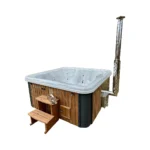
The live models below are not held at a Scottish showroom. Open a product to check its available size, heater position, vessel and cladding materials, included equipment and configurable options. Delivery and any local lifting or site work must be confirmed for the postcode and access route.
-
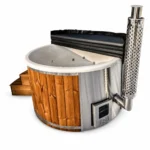
Product on saleSave up to 16% Wood Fired Hot Tub with Jets – TimberIN Nordic Rojal™ (4–8 Person)
From: €6,954From: €6,021 -
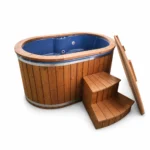
2-person model2 Person Wood Fired Hot Tub – TimberIN Nordic DuoFrom: €2,481
-
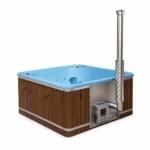
Square modelSquare Wood Fired Hot Tub – TimberIN Nordic Square™ (160–220 cm)From: €2,934
-
8-person modelLarge 8 Person Wood Fired Hot Tub – TimberIN Nordic Elite™ SquareFrom: €4,397
-
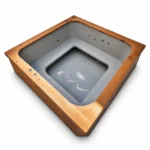
Acrylic luxuryTimberIN Nordic Square™ Acrylic Hot Tub – External or Integrated Wood Stove (Luxury Marble Edition)From: €6,957
Why wood-fired heating appeals in Scotland
Wood firing can work where buyers enjoy active fire management, have suitable dry fuel and want the main heat source to remain independent of a large electric water-heater load. It can be attractive for remote cabins and rural homes, but rural location does not remove the need for safe chimney placement, dependable water, drainage and access.
The trade-off is manual operation. Someone must light and supervise the stove, manage ash and hot surfaces, monitor water temperature and protect the circuit from freezing. A wood-fired tub is not automatically “off grid” when filtration or spa equipment is specified. Use the off-grid hot-tub guide to map every utility.
Delivery to Scotland starts with a route survey
Provide the postcode and exact property access before treating a delivery quotation as final. Mainland trunk-road delivery differs from a narrow glen road, ferry movement or an island transfer. Confirm freight stages, vehicle limits, unloading point, ferry booking responsibility, storage if a sailing is disrupted, and whether the final vehicle can reach the property.
Measure gates, turns, gradients, bridges, walls, eaves and overhead cables against packed dimensions. Soft verges and seasonal ground can prevent a heavy vehicle or crane from using an apparently open route. Agree who supplies lifting equipment, labour, slings and insurance; kerbside delivery is not installation.
| Scottish delivery setting | Confirm before ordering | Likely local input |
|---|---|---|
| Central-belt or urban garden | Parking, restricted streets, gate width, neighbours and crane position | Access survey, lifting and traffic or parking arrangements |
| Rural mainland property | Road width, bridge or weight limits, turning, gradients and firm unloading area | Final-mile vehicle and weather-resilient ground plan |
| Highland or exposed site | Wind, snow, power resilience, water source and winter access | Structural, drainage and freeze-protection assessment |
| Island delivery | Ferry route, booking, dimensions, transfer, delay and onward haulage | Local carrier, storage contingency and final lift |
| Holiday-let or commercial site | Guest management, staff access, water controls and service response | Risk assessment, operating system and competent maintenance |
Cold weather changes heat demand, not the laws of physics
Water volume and temperature rise set the basic energy demand. Wind, low air temperature, exposed pipework and an uncovered surface increase losses. A larger stove can change heat-up, but so can a well-fitting insulated cover, shelter that preserves safe clearances and a smaller everyday water volume.
Do not rely on a universal Scottish heat-up time. Ask for the exact water volume and test conditions behind a claim. During heating, circulate or mix as instructed and measure away from the hot outlet. The main wood-fired guide gives a heat-demand calculation.
Wind exposure affects the chimney, cover and bathing area
Use the heater manufacturer’s approved flue system and clearances, then assess prevailing wind, gusts, nearby roofs, trees, doors, windows and user routes. A windbreak or enclosure must not create unsafe combustion, flue or service conditions. Secure the cover using its approved method and avoid a storage position where a gust turns it into a lifting hazard.
Plan sheltered changing and non-slip access without trapping smoke where people gather. A dramatic exposed view can be enjoyable, but it can also make cover handling, fire management and temperature control harder.
Write a complete frost-protection procedure
Water can remain in the heater jacket, connecting pipework, valves, pump, filter housing, jets and air lines after the visible vessel is empty. If it freezes, expansion can crack components. Follow the selected model’s drain-down instructions and identify every low point. Never light a heater to thaw a frozen or uncertain circuit.
If the tub remains filled, define how circulation and protection are maintained during power cuts, absence and extreme conditions. A backup plan is especially important where winter access or service response can be delayed. Record who acts and where safe drainage goes.
Smoke-control and nuisance checks are local
Scotland has its own smoke-control legislation and local smoke-control areas. Outdoor hot-tub stove circumstances do not map automatically onto guidance written for a household room heater. Before fixing the flue, ask the local authority how the proposed appliance, fuel and setting are treated. The Scottish Government lists relevant air-quality and smoke-control legislation.
Use only suitable dry fuel permitted by the heater instructions and never burn treated, painted, glued or household waste. Consider neighbours and air quality even outside a designated area. Persistent smoke or odour can create a nuisance, and exposed wind can carry it far from the stove.
Planning and building questions depend on the whole project
A freestanding domestic tub, raised deck, shelter, outbuilding, flue, retaining work and holiday-let development are not the same planning proposal. Conservation areas, listed buildings, boundaries and non-domestic use can change the position. Ask the planning authority about the complete scheme rather than describing only the portable tub.
Scottish permitted-development guidance for sheds and similar garden buildings has conditions and applies to dwellinghouses, not business use. The mygov.scot outbuilding page is a starting point, not approval for a particular hot-tub project. Structural and electrical work may also require competent design or building-standards input.
Foundation and drainage need site-specific design
Obtain empty weight, normal water volume and support requirements, then add bathers, stove, steps and equipment. Peaty, sloping, made-up or waterlogged ground needs particular care. A patio that looks level is not proof that it can support the concentrated load without movement.
Plan full drain-down and splash water so they do not erode the base, flow onto neighbouring land, overload a private drainage system or enter a watercourse. SEPA distinguishes a single domestic hot-tub discharge to land or soakaway from discharges that may need authorisation; commercial, multi-unit or sensitive-site proposals need early advice. Treatment chemicals and the receiving ground must be considered.
Wood, electric or approved hybrid?
Wood suits users willing to manage fuel and fire. Electric heating suits scheduled control where the supply and tariff support the water volume. An approved hybrid package can combine wood heat with electric maintenance, but it adds installation and two systems to protect. Compare the complete connected load on the electric guide rather than assuming a standard socket is enough.
Holiday lets need more than a guest instruction card
Wood firing introduces hot surfaces, fuel, ash, temperature overshoot and user behaviour. Decide whether guests may operate the stove or whether trained staff heat the tub. Define water treatment, testing, cleaning, records, fault isolation and emergency response. Confirm that the product, warranty and insurer permit the intended use.
The HSE spa-pool guidance addresses hot tubs used as part of business activity. Remote location makes responsibility more—not less—important because service and emergency response can take longer.
Compare complete delivered-and-sited cost
Start with the configured tub, then add Scottish freight stages, ferry where applicable, unloading, lifting, foundation, drainage, electrical work, fuel storage, chimney setting and commissioning. Include filters, treatment, test supplies, cover care and winter maintenance. The price guide provides a like-for-like quotation table.
Scotland site and quotation checklist
| Decision | Evidence to record | Who confirms it |
|---|---|---|
| Model | Size, internal layout, water volume, heater and equipment | Supplier and buyer |
| Route | Packed dimensions, roads, ferry, gates, slopes and unloading | Carrier and lifting provider |
| Base | Operating load, ground, support and level | Competent local contractor or designer |
| Fire setting | Flue, clearances, wind, smoke area and neighbour impact | Manufacturer, local authority and installer as applicable |
| Water | Supply, filtration, treatment, testing and drain route | Owner or business operator |
| Winter | Drain points, power resilience, cover and responsible person | Owner, supplier and service provider |
| Project cost | Product, freight, ferry, lift, site works and commissioning | All quoted parties |
Frequently asked questions
Can TimberIN deliver a wood-fired hot tub to the Scottish Highlands?
Routes can be quoted, but the postcode, road access, vehicle limits, unloading area and final lift must be assessed. Remote and island movements may need separate final-mile or ferry arrangements.
Do wood-fired hot tubs work in Scottish winter weather?
Yes when heat demand, wind, cover, access and freeze protection are planned for the exact site. Every heater, pipe, pump, filter and spa line needs a documented winter procedure.
Does a hot tub need planning permission in Scotland?
It depends on the complete project and property. Decking, shelters, outbuildings, flues, listed or protected sites and business use can change the answer. Ask the local planning authority with drawings and dimensions.
Can a Scottish cabin hot tub be off grid?
The wood heater may operate without mains electricity in an approved natural-circulation design, but pumps, filtration, lights and jets need power. Water supply, drainage and winter protection also remain necessary.
Are wood-fired tubs suitable for Scottish holiday lets?
They can be, but the operator needs a risk-based water and fire-management system, competent responsibility, records, maintenance and an emergency plan. Confirm product, warranty and insurance terms for business use.
Quote the route and the site with the tub
Provide the postcode, access photographs and measurements, intended users, preferred heater, utilities and winter routine. TimberIN can then identify compatible models and clarify the product and delivery assumptions for a Scottish project.