
Wood-Fired Soaking Tubs UK: Outdoor Bath Buying Guide
A wood-fired soaking tub puts warm water and quiet outdoor bathing ahead of pumps, screens and a long list of spa functions. The fire is part of the routine: you fill the tub, prepare suitable dry wood, heat the water under supervision and decide how the water will be managed after the session.
That apparent simplicity still needs proper planning. Tub construction, usable seating, stove position, water volume, cover, drainage and winter routine affect ownership more than the label “outdoor bath”. This guide explains those choices for UK gardens, cabins, holiday properties and small wellness spaces without promising one heat-up time or treating every wood-fired tub as the same product.
Start with the bathing routine: decide who will use the tub, how often it will be filled and who will tend the fire. Then choose the shell, capacity and heater arrangement that make that routine practical.
What is a wood-fired soaking tub?
It is an outdoor tub whose bathing water is heated by a wood-burning stove or heater designed for that model. “Soaking tub” describes the experience rather than one construction method: the vessel may have a smooth moulded insert, a traditional timber interior or a deeper, compact layout inspired by an ofuro. Some configurations are intentionally simple; others can add filtration, lights or massage equipment.
A basic wood-heated tub may operate without electric water heating, but optional pumps, filters, jets, bubbles and lights usually need power. Confirm the complete specification rather than assuming that the words “wood fired” mean the whole installation is electricity-free.
Wood-fired soaking-tub models to compare
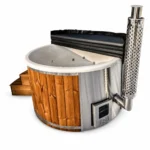
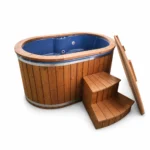
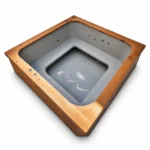
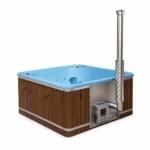
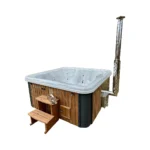
The current wood-fired range appears below. Open an individual model to check its real diameters, seating, stove choices, included equipment and optional systems. A model card is a route into the configuration, not proof that every photographed feature or accessory is included in the displayed starting price.
-
Product on saleSave up to 16% Wood Fired Hot Tub with Jets – TimberIN Nordic Rojal™ (4–8 Person)
From: €6,954From: €6,021 -
2-person model2 Person Wood Fired Hot Tub – TimberIN Nordic DuoFrom: €2,481
-
Square modelSquare Wood Fired Hot Tub – TimberIN Nordic Square™ (160–220 cm)From: €2,934
-
8-person modelLarge 8 Person Wood Fired Hot Tub – TimberIN Nordic Elite™ SquareFrom: €4,397
-
Acrylic luxuryTimberIN Nordic Square™ Acrylic Hot Tub – External or Integrated Wood Stove (Luxury Marble Edition)From: €6,957
Soaking tub, wooden hot tub or spa?
| Format | What usually defines it | Best question to ask |
|---|---|---|
| Simple wood-fired soaking tub | Fire-heated water with few powered features | How will we fill, heat, supervise and drain it? |
| Traditional wooden hot tub | Timber forms the water-holding interior and exterior character | What timber-care and water-retention routine is required? |
| Moulded-insert hot tub | Smooth liner with external timber cladding | Which insert material, insulation and seating shape suit us? |
| Hydromassage hot tub | Jets, pumps, controls and usually filtration | What electrical supply and service access do the systems need? |
| Electric spa | Thermostatic electric heating and powered circulation | What are the standing heat, filtration and maintenance demands? |
The categories overlap. A wood-fired tub can also have jets, and a moulded insert can still be clad in timber. Compare the complete build and operating method. For a broader model overview, use the wood-fired hot-tub guide; for powered massage, see hot tubs with jets.
Choose between a moulded insert and a timber interior
A moulded insert offers a smooth bathing surface and defined seats. The surrounding cladding supplies the wooden appearance without asking the timber itself to contain the water. Check insert colour, cleaning guidance, insulation and whether the seating leaves enough legroom for the intended group.
A traditional timber body delivers a more direct wooden-bathing character, but it has a different ownership routine. Natural material moves as moisture conditions change, and the tub must be used and maintained according to its construction. Buyers drawn to this format should read the wooden hot-tub guide and discuss seasoning, swelling, cleaning and periods out of use before ordering.
Select capacity from usable seating, not a headline
Nominal person counts are planning labels, not comfort guarantees. Body size, bench depth, footwell space, stove position and the amount of personal space wanted all change the experience. A couple who normally bathes alone may prefer a compact, deep model; a family may value easier entry and a broader bench more than maximum stated capacity.
Ask for internal dimensions and operating water volume for the selected version. Mark the outside footprint, heater and step area at the site, then allow room for circulation and servicing. The two-person hot-tub guide covers compact choices in more detail.
External, integrated and internal heaters
An external stove preserves bathing space and keeps the fire outside the tub, but it extends the installation and adds connecting pipework. It needs a stable support, access to the door and ash area, and the correct relationship to the vessel. An integrated heater creates a more compact outline while still keeping the combustion area separated from bathers.
An internal or snorkel-style heater sits within the tub and can reduce external footprint, but occupies water space and must have its specified guard. There is no universal winner. Use only the approved heater and connection arrangement for the chosen model, establish the required water level before lighting and never drain while the stove remains hot.
Plan heat-up as a variable process
Any single heat-up promise hides the conditions behind it. Water volume and starting temperature matter, as do useful stove output, fuel moisture, log size, airflow, wind, cover quality and operator technique. A larger firebox does not cancel poor fuel or excessive heat loss.
Ask for an estimate tied to a stated model and set of conditions. Use suitable water-temperature monitoring, mix or circulate the water as instructed and supervise the fire throughout. A soaking tub is ready when the water is evenly at the intended safe bathing temperature—not when an advertised number of hours has elapsed.
Use dry fuel and create a safe firing route
Store suitable dry wood under cover with ventilation and away from the heater. The person tending the fire needs a firm route that does not cross wet steps, robes or the main path used by bathers. Hot doors, chimney parts and ash must remain inaccessible to children and guests who have not been instructed.
Smoke can affect neighbours even where the installation itself fits comfortably. Check local restrictions and whether the property is in a smoke-control area using the official DEFRA smoke-control information. Follow the appliance, fuel and chimney requirements that apply to the actual site; a garden setting does not exempt combustion equipment from responsible operation.
Cover and insulation change everyday ownership
A fitted cover reduces debris and heat loss while the water is being prepared. Wall and base insulation can also make the heating process less exposed to cold ground and wind. Confirm what is standard, what is optional and how each part is removed, stored and secured.
A cover is not a safety barrier unless it is specifically designed and used as one, and insulation is not a frost-protection plan. If the tub will stand unused in winter, the shell, heater, valves, pipework, pumps and filters must be drained or protected exactly as the manufacturer instructs.
Decide how the water will be managed
A simple soaking routine may involve filling with suitable water, bathing, draining and cleaning. Repeated or shared use may justify approved filtration and treatment. Neither route is maintenance-free: warm water changes after people enter it, and clear appearance alone does not confirm hygienic quality.
Choose the routine before adding equipment. Establish the water source, fill time, bathing load, treatment guidance, test method, change frequency and discharge route. Holiday-let and commercial operators need a formal risk-based water-management process, trained responsibility and records; a private household routine should not be copied into guest use.
Jets, bubbles and lights are separate systems
Hydromassage jets require pumps and carefully placed outlets. Air bubbles need a blower, while lighting introduces its own electrical components and controls. These features can enrich a soak, but they also add supply requirements, noise, service access, winterisation and replacement parts.
Ask for a configuration sheet that identifies each system, its power requirement and what happens when it is switched off. A wood-fired model with powered accessories may still be a good choice, but it should not be described or planned as a zero-electricity tub. For genuinely remote projects, use the off-grid hot-tub planning guide.
Prepare a level base, drainage and service space
Water is heavy, and the full installation also includes bathers, the tub, stove, steps and accessories. Obtain the model-specific dimensions, empty weight, operating volume and support requirements before the base is designed. The heater and connected components must sit in the specified position rather than being levelled independently by guesswork.
Plan where a complete drain-down will go. Water should not undermine the base, flood a neighbour, cross a walking route or enter a watercourse improperly. Leave access to valves, connections, ash removal and any pump or filter. A beautiful enclosure that blocks routine maintenance will make ownership harder from the first service visit.
Check delivery access before finalising the model
Measure gates, passages, corners, steps and overhead obstructions, then compare them with the packed product rather than only its installed footprint. Record the road surface, unloading point and distance to the prepared base. A crane or lifting plan may be needed where direct handling is unsafe or impossible.
Clarify who unloads, positions, connects and commissions each part. Send photographs and measurements early, especially for terraced gardens, roof terraces, islands or remote tracks. Delivery assumptions are cheapest to correct before production begins.
Allow for UK weather and periods out of use
Rain, wind, leaves and low temperatures affect preparation and cleaning. Position the tub so the cover can be handled safely, the stove can be reached in poor weather and the bathing route remains slip-resistant. Shelter can improve comfort, but it must not create unsafe clearances or restrict the chimney.
Write a shutdown routine for holidays and freezing weather. Drain all low points specified for the shell and equipment, clean the tub, secure the cover and inspect after storms. Never leave a wood fire operating unattended as a frost-control measure.
Budget for the complete soaking-tub project
| Budget area | Items to include | Decision to document |
|---|---|---|
| Tub and finish | Selected size, insert or timber body, cladding and treatment | Which exact variant and colour are quoted? |
| Heating | Stove, chimney, guard, pipework and controls | Where is the fire tended and what is included? |
| Heat retention | Cover, wall insulation and base insulation | Which components are standard or optional? |
| Water systems | Filling, drainage, filtration, treatment, jets and lights | What power, testing and maintenance are required? |
| Site works | Base, access route, screening, electrical work and drainage | Who designs and signs off each trade? |
| Delivery and operation | Freight, unloading, lifting, fuel, cleaning and consumables | What remains the owner’s responsibility? |
Wood-fired soaking-tub buying checklist
- Define normal users, session frequency and desired bathing depth.
- Choose a moulded insert or traditional timber interior deliberately.
- Compare internal dimensions, usable seats and operating water volume.
- Select the approved external, integrated or internal heater arrangement.
- Document every powered pump, filter, jet, blower, light and control.
- Plan dry fuel, safe firing access, cover handling and smoke impact.
- Confirm foundation, full drain-down route and winter procedure.
- Measure packed-product delivery access and assign installation work.
- Review the written final configuration, inclusions and exclusions before ordering.
Frequently asked questions
Does a wood-fired soaking tub need electricity?
A simple approved configuration can heat water with wood and omit powered accessories. Filtration, jets, bubbles, lights and some circulation systems require electricity, so check every component in the final specification.
How long does a wood-fired outdoor bath take to heat?
There is no responsible universal figure. Model volume, starting temperature, stove output, dry fuel, weather, cover and operation all matter. Request an estimate based on the selected configuration and stated conditions.
Is a soaking tub the same as a hot tub?
The terms overlap. “Soaking tub” usually emphasises quiet immersion and simpler equipment, while “hot tub” is broader and can include wood-fired, electric, jetted and spa-style systems. The actual specification is more useful than the label.
Can I keep the same water in a wood-fired tub?
Only under a suitable water-management routine for the model and bathing load. Follow the supplier’s filtration, treatment, testing and water-change guidance; clear-looking warm water is not proof that it is hygienic.
Which wood-fired tub size should I buy?
Choose around normal occupancy, usable seating and practical water volume. Check internal dimensions and heater position instead of relying only on a nominal person count, then confirm that the full footprint fits the prepared site.
Specify the routine as carefully as the tub
Share your usual group size, preferred interior, site access, water plan, heater position and optional equipment. TimberIN can then help identify a suitable model and provide a written configuration for you to check against the prepared garden.