
The water beside a stove return can feel hot while the far side of a tub is still cool. To understand why, follow two separate paths: the fire transfers heat through metal into water, and the water must move that energy around the vessel. Heater layout determines how those paths meet.
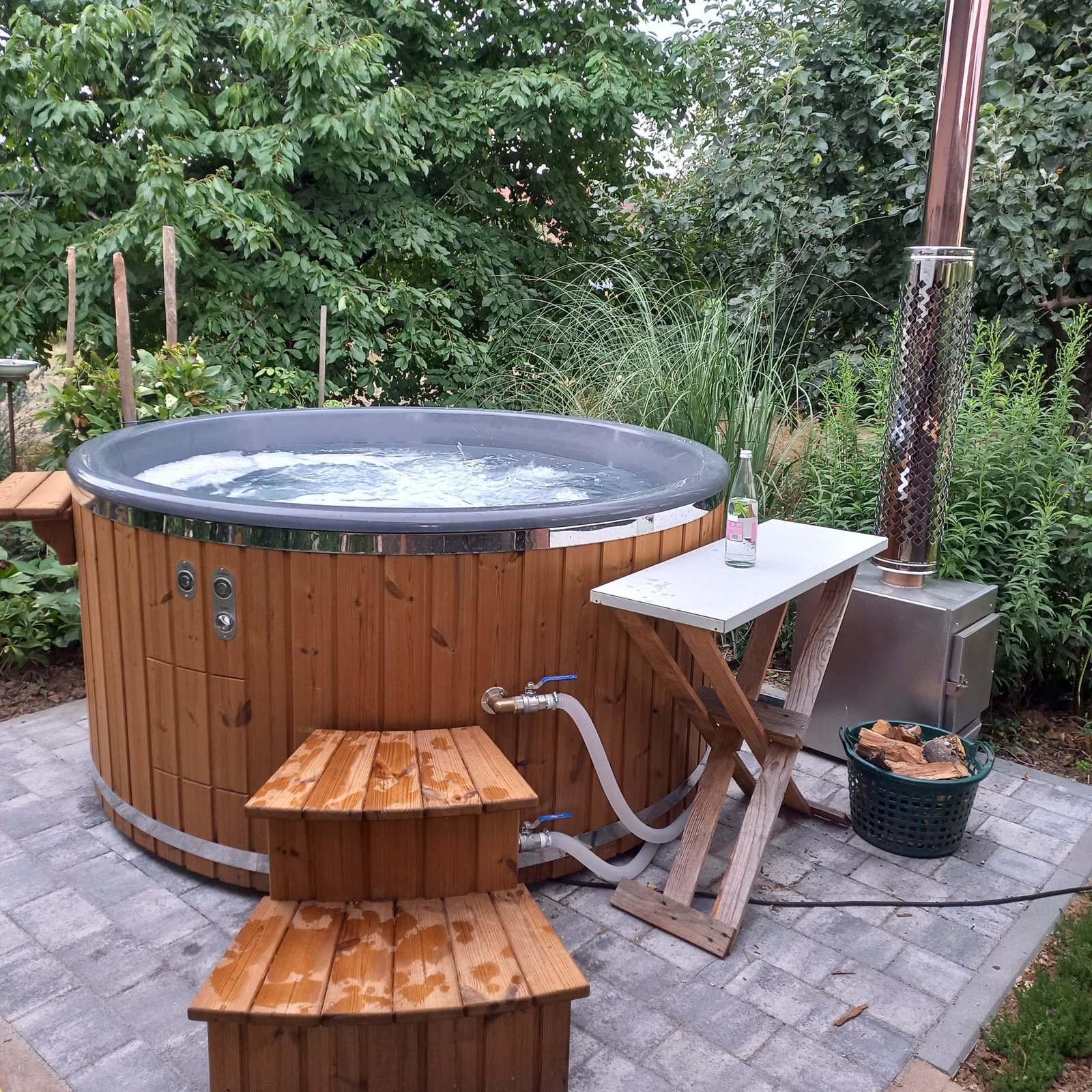
In an external water-jacketed heater, water travels between the tub and stove. An immersed internal heater transfers heat directly to the surrounding tub water. The outline below explains these principles; the operating level and commissioning sequence come from the exact heater manual.
The heat path, one stage at a time
- The tub is filled above the required heater connections. The stove must never be fired without the water condition specified by its manufacturer.
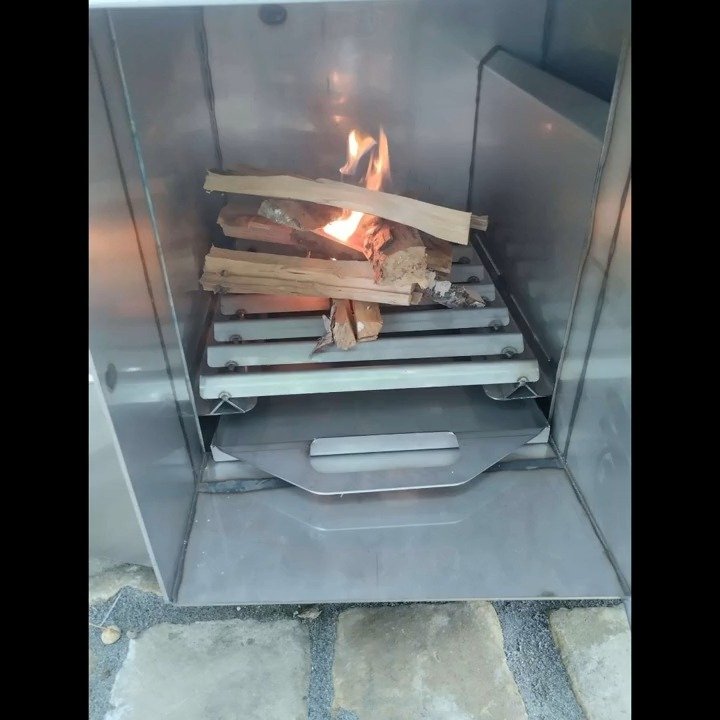
- A controlled fire heats the stove’s water jacket. Energy passes through the heater wall into the water. The water jacket and connection details described here apply to external water-carrying designs, not every internal stove.
- Water circulates. In a correctly designed passive system, warmer water rises back to the tub and cooler water returns. Other systems use a pump.
- The whole tub is mixed and measured. Water near the return can be hotter than the average, so temperature must be checked away from the outlet.
- The fire is reduced before the target. Heat remains in the fuel and metal after the flames fall, so late firing can overshoot.
Internal, external and integrated heaters change the experience
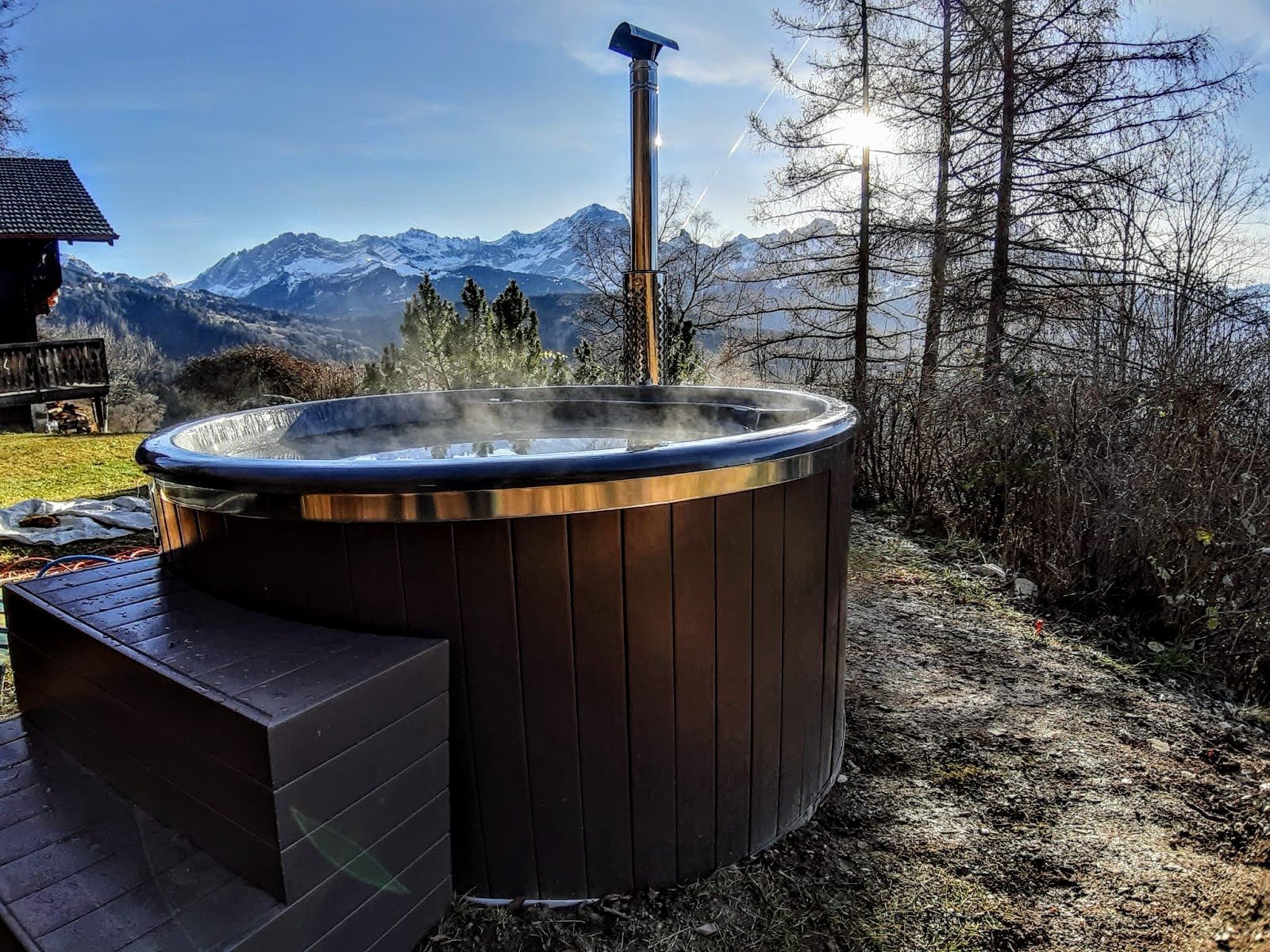
An internal or snorkel stove sits in the bathing vessel behind an approved guard. The short heat path can be compact, but the heater occupies water and seating space and needs careful loading around bathers. An external stove preserves the interior layout and is easier to approach from outside, although its connecting pipes, distance and height relationship must be correct.
An integrated stove is built into the tub’s outer form. It can give a tidy footprint and convenient loading, but it is not the same as an internal heater: construction, circulation and service access depend on the model. Compare the final water volume and usable seating, not just the outside diameter.
Natural circulation is simple, but not casual
Thermosiphon flow relies on the density difference between warmer and cooler water. It works only when the heater and pipework are designed for it: restrictions, air locks, unsuitable hose, incorrect slope or an over-long route can reduce flow. A pump should not be added as an improvised cure unless the heater system is approved for pumped circulation and has the required controls.
Powered filtration is a separate question. A log stove can provide the heat while a pump circulates water through a filter, and massage or lighting can add further electrical loads. This is why some wood-fired tubs work without mains electricity and others do not. The final options schedule is decisive.
What controls the heating time?
The water volume and temperature rise set the basic energy requirement. A larger tub filled with cold water needs more energy than a small tub starting mild. The useful heat reaching the water then depends on the stove, fire, circulation and losses to the air. Wind, an uncovered surface and wet fuel can turn a headline estimate into a much longer session.
- Configured water volume: bench shape and heater position can change it substantially.
- Starting and target temperature: compare claims using the same two figures.
- Dry fuel and fire management: split, seasoned logs burn more predictably than damp, oversized pieces.
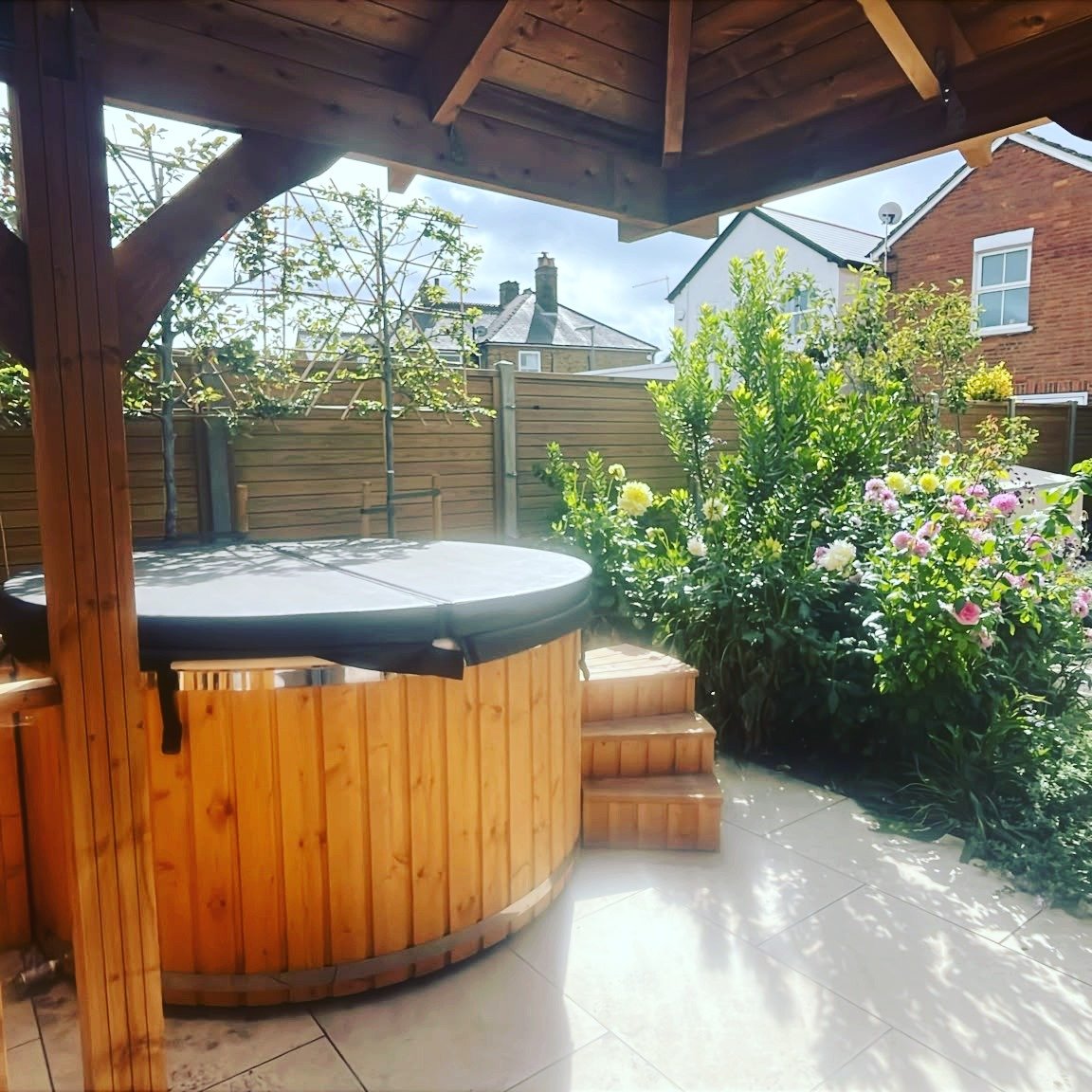
- Cover: use the approved cover during heat-up when the manufacturer allows it, while maintaining the required flue clearance.
- Mixing: confirm the whole volume is warm rather than measuring a hot layer beside the return.
From cold fill to bathing: a practical routine
Inspect the stove, flue, guard and connections before filling. Fill to the prescribed level, vent trapped air where required and prove circulation. Light a small fire first and check for leaks, smoke spillage and an improving return temperature. Build the fire gradually, keep the bathing area supervised and stir or circulate the water before each measurement.
Stop adding fuel early enough for residual heat. Confirm a comfortable, even temperature before anyone enters, then keep children and guests away from hot metal and the flue. After bathing, follow the manufacturer route for burning down, water treatment or drainage. Never drain while the stove or embers can still heat an empty jacket.
Water care is independent of the fuel
Wood heat does not disinfect the complete water volume. The care plan depends on bather load, retention time, filtration and the approved treatment method for the tub materials. A simple fill-and-drain routine may suit occasional private use; retained warm water needs deliberate circulation, testing and treatment. Business-use tubs require the risk assessment and monitoring appropriate to the operation.
Make sense of your first heating session
If you are comparing products, the wood-fired hot-tub range owns model and configuration choices. For an existing tub, keep the manual beside your first-heating record and note how evenly the water warms.
Use the heating-time calculation to put a slow heat-up in context, or the external connection checks if the pipe layout is uncertain. Electrical requirements are covered separately in which hot-tub components need power.
Why is the return hot while the tub is cool?
The return is where newly warmed water enters; it is not a representative reading of the whole vessel. Mix and measure by the manufacturer’s method. Boiling noises, suspected loss of flow or an unusually hot connection are reasons to stop adding fuel and follow the heater’s shutdown procedure, not to build a larger fire.