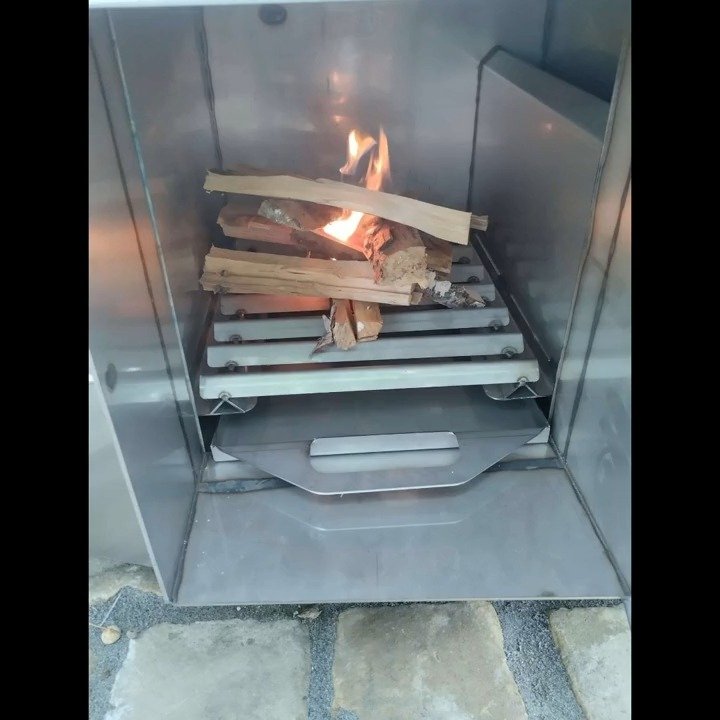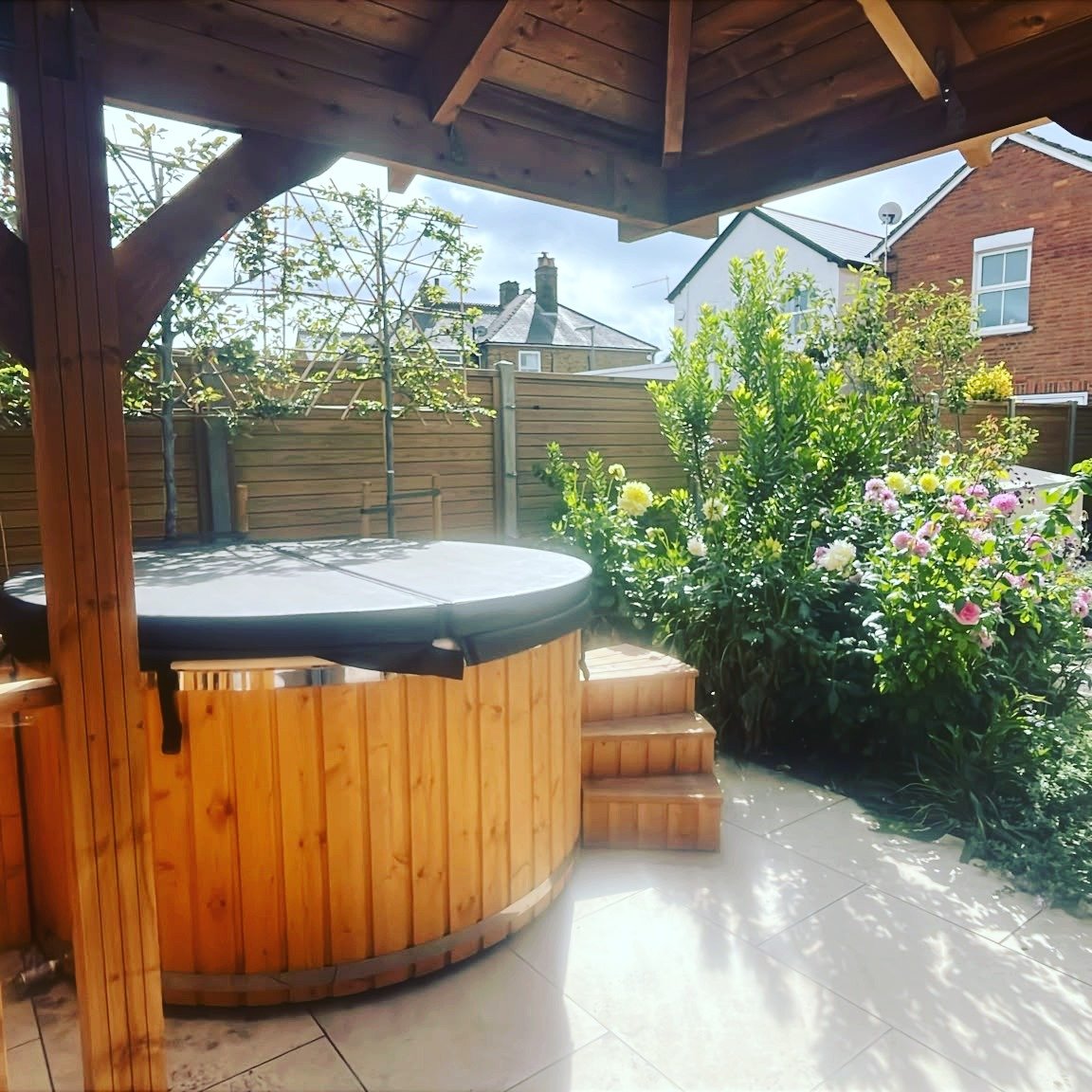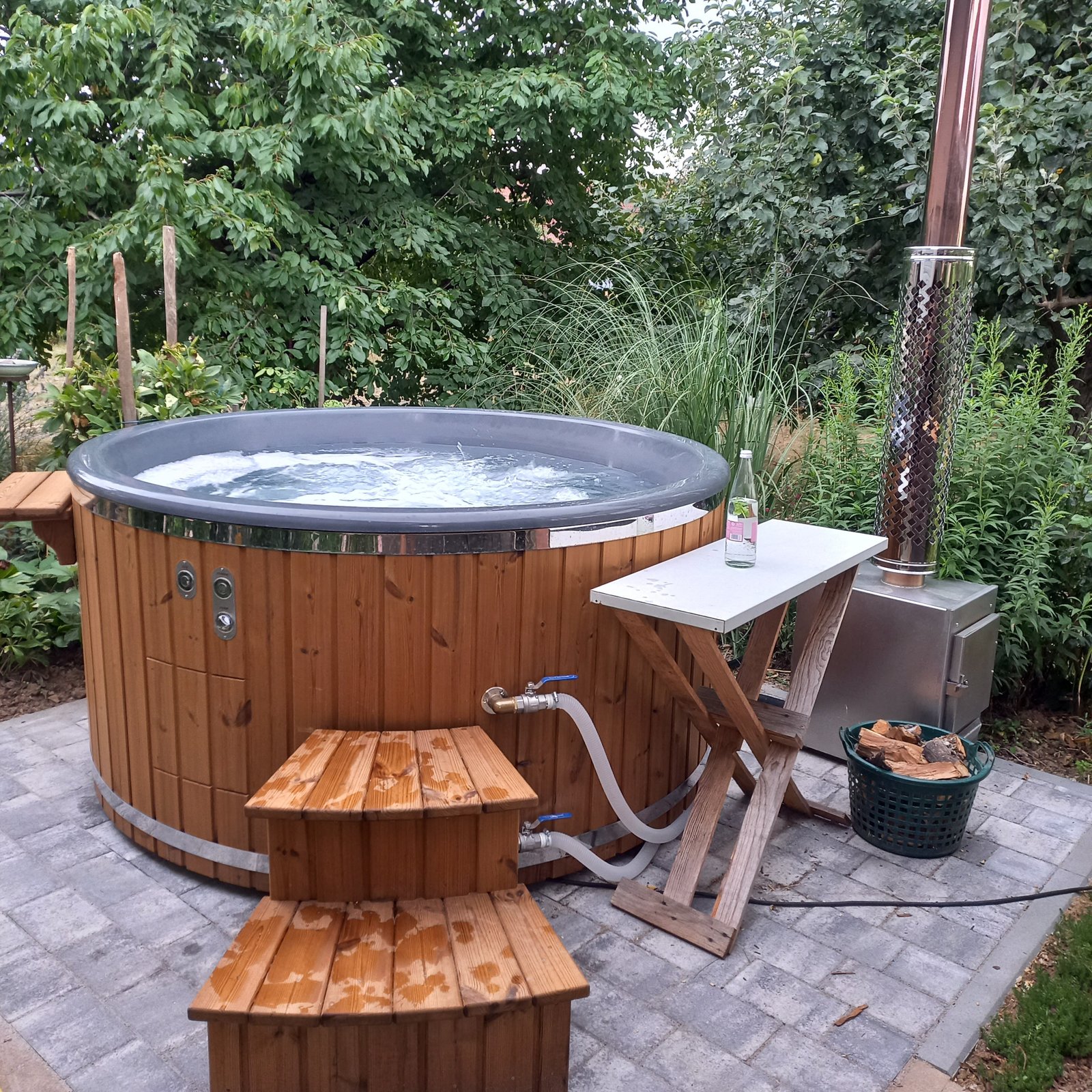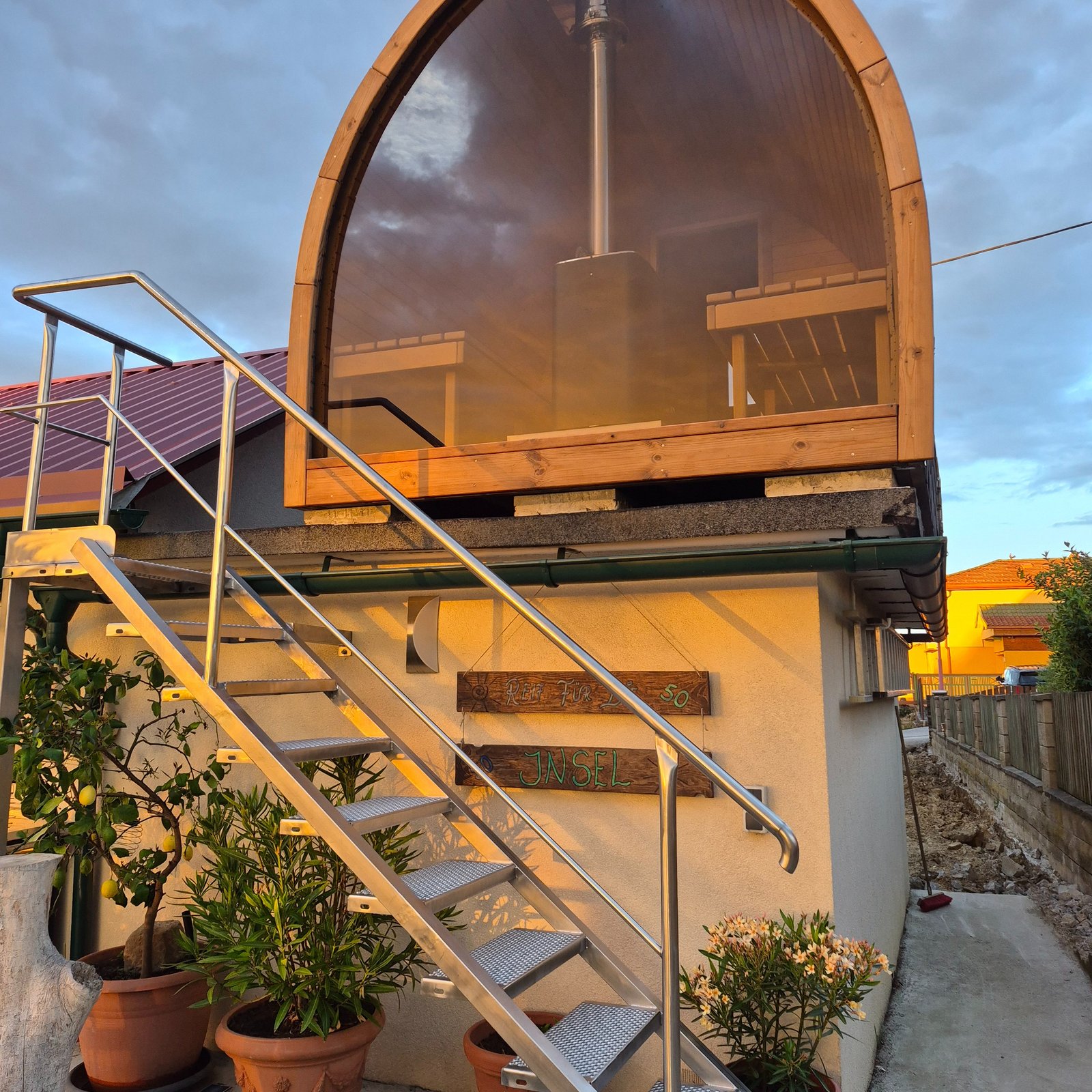

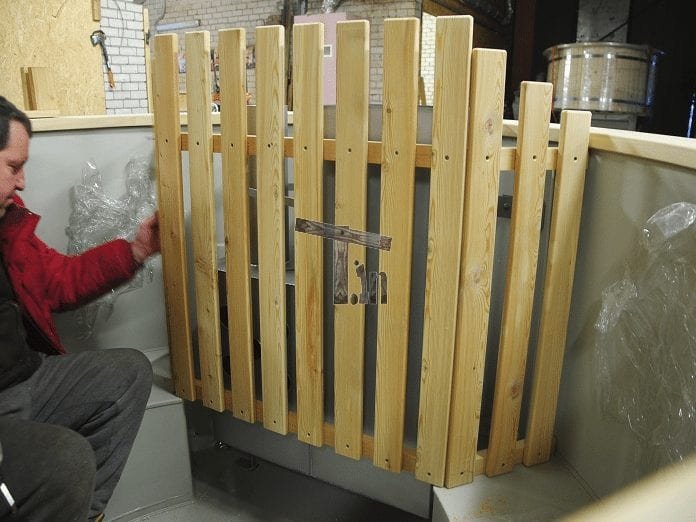
A log fire continues heating after the last piece of wood is added. In a hot tub, that makes water level, an open circulation path and active supervision critical. Use the checks below alongside the exact appliance instructions; they are not a blanket assurance that every tub or garden installation is safe.
Nominate one responsible adult to control lighting and refuelling, monitor the water and keep the hot zone clear. Hand over that responsibility explicitly if another person takes over. A timer, phone app or quick look from indoors is not supervision of a burning stove.
The pre-lighting walk-around
- Confirm that tub, heater and steps remain stable on their intended bases.
- Fill to the model’s operating level and inspect every water-side connection.
- Open the complete circulation path and vent trapped air; prove pump flow where fitted.
- Inspect the cold firebox, door, guard, flue joints, cap and surrounding clearances.
- Remove covers, furniture, fuel stores and vegetation from the defined hot zone.
- Prepare suitable fire-control equipment and keep children and pets away from the loading route.
Why water circulation is safety-critical
The heater’s water jacket receives intense local heat. If a valve is closed, a hose is kinked, air is trapped or a pump stops, water can boil locally even while the tub feels cool. Kettling, weak return flow, unusual pipe movement or one abnormally hot connection requires an immediate stop to fuelling and the shutdown response in the manual.
Do not test flow by touching metal or opening a hot union. Allow the appliance to cool and investigate water level, valves, pipe route and blockage in a safe state.
| Stop-use sign | Safe next step |
|---|---|
| Weak, absent or noisy circulation | Stop adding fuel, keep people away and diagnose after cooling |
| Smoke escapes at a joint or loading door | End the firing safely and have flue assembly/draught assessed |
| Scorching, distortion or unusual hot smell | Isolate the area and inspect clearances, guards and components |
| Temperature keeps rising beyond control | Stop bathing, mix/measure safely and apply the heater’s overheat procedure |
| Visible leak or damaged heater wall | Do not relight; obtain manufacturer or competent technical advice |
Use fuel that produces a predictable clean burn
Burn only the type and size allowed by the heater maker. DEFRA’s Ready to Burn scheme identifies firewood sold in small volumes in England at 20% moisture or less. Wet wood spends useful heat evaporating water, increases smoke and encourages deposits. Never burn painted, preserved, glued or waste timber.
Do not close the air excessively to make a load last. A slow smoky fire can cool the flue, form tar-like condensate and reduce predictable heat transfer. Equally, over-firing to solve poor heating can damage the appliance. Correct fuel, draft, airflow and circulation instead.
Manage temperature before bathers enter
Water can stratify while heating, especially without strong pumped mixing. Stir or circulate as the instructions allow and measure a representative bathing temperature rather than the surface beside the return. Reduce fuel early because metal and embers continue transferring heat.
Secure steps and handholds, keep the surrounding surface non-slip and prevent contact with the stove, flue, pipes and guard. Users should leave immediately if they feel faint, unwell or excessively hot. Children require continuous close supervision; a cover is not a substitute for access control.
Carbon monoxide and smoke do not become harmless outdoors
HSE explains that incomplete burning of wood can produce carbon monoxide, a colourless and odourless poisonous gas. Use the stove only in the environment and ventilation conditions for which it is designed. Never move an outdoor heater into a gazebo, enclosed room or tightly screened area. Persistent smoke, poor draft or soot leakage needs correction before further use.
Private family use and paid accommodation need different controls
Clear water and wood heat do not establish hygienic bathing conditions. Use the water-care guidance with the treatment and equipment instructions for private use. If the tub is supplied as part of a business, such as holiday accommodation, HSE spa-pool guidance addresses documented risk management, testing, monitoring and maintenance. A domestic checklist cannot replace that operating system.
After the fire
Follow the model’s cover and shutdown instructions while components remain hot. Inspect for new leaks, soot tracks or movement. Remove ash only when fully cold and place it in a suitable non-combustible container away from buildings and fuel. For a shutdown before frost, drain the heater and every low point completely.
Recheck the installation when the garden changes
Keep the final connection drawing and clearance measurements with the operating instructions. Recheck them after decking, fencing, planting or a shelter changes. A photograph is useful for identifying a stove but cannot certify the clearance to nearby materials.
For water-side questions use the external-stove connection guide. Model layouts are compared in the wood-fired hot-tub range; this safety checklist does not rank models.