
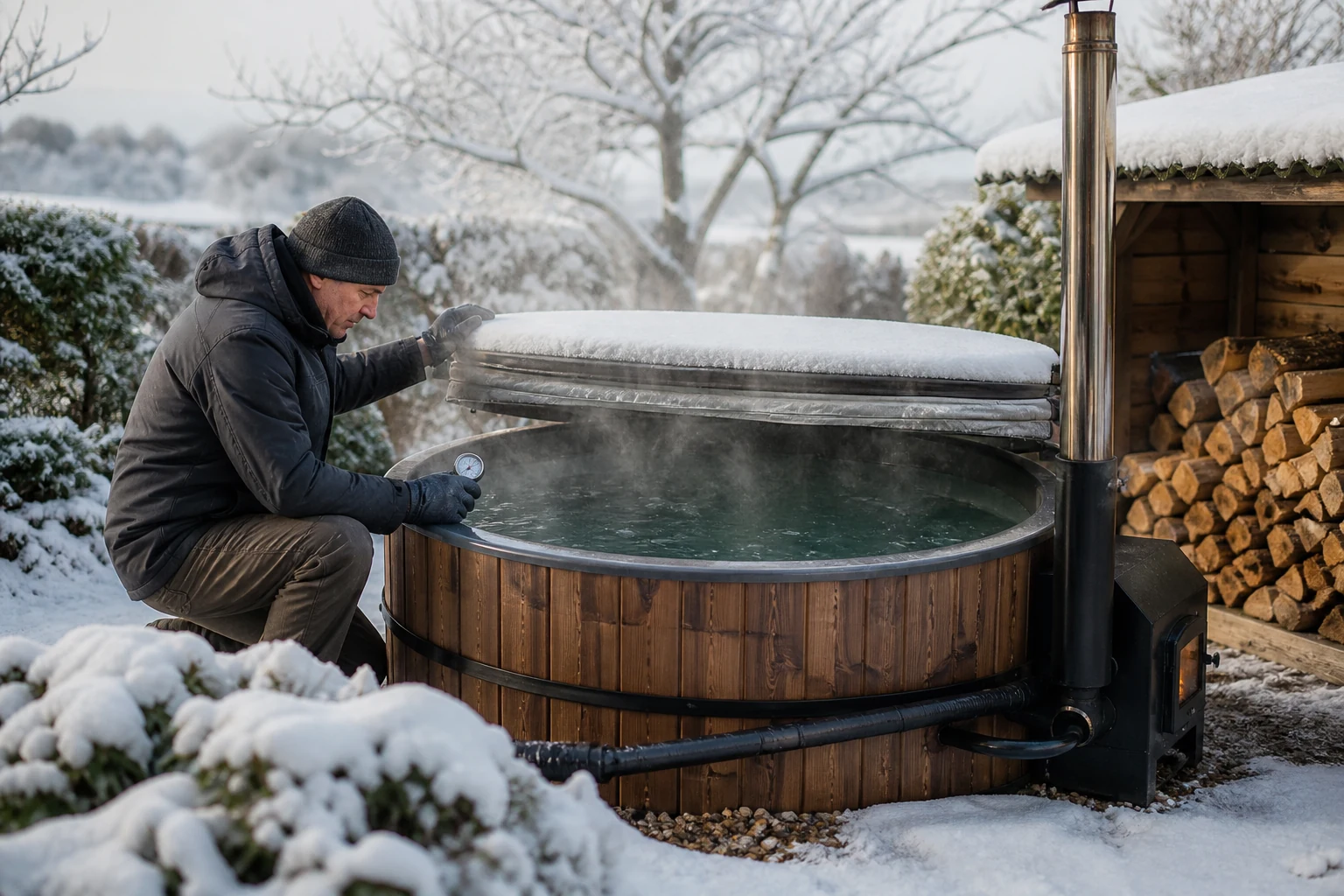
Winter damage usually happens in the parts you cannot see: a low pipe, pump housing, heater jacket or filter body that still contains water. The safe strategy is not to “mostly drain” a hot tub. Decide before frost whether the complete system will remain operating under an approved winter routine or will be fully shut down and drained according to its model instructions.
| Winter route | What it requires | Main failure to plan for |
|---|---|---|
| Keep operating | Reliable heat/circulation, treated water, fitted cover, inspections and power/fuel continuity | Power, pump, heater or fuel interruption during freezing weather |
| Full winter shutdown | Complete model-specific drain-down, clearing trapped water, dry equipment and protected openings | A hidden pocket of water left in pipework or a component |
| Occasional cold-weather use | A written choice after each session: return to protected operation or drain completely | Assuming residual warmth will protect an idle tub overnight |
Route one: keep the tub genuinely operational
Use only a freeze-protection routine supported by the manufacturer for the exact configuration. Electric systems may use automatic circulation and heating, but those functions depend on power, correct water level, open flow paths and healthy equipment. A wood-only stove does not automatically protect pumps, filters or distant pipework after the fire goes out.
Maintain the water at the specified level and quality, keep the filter and circulation path clean, and inspect the tub more frequently during severe weather. Clear snow without damaging the cover, keep access to controls and isolation, and prevent meltwater pooling around the base or technical bay. Do not wrap powered equipment in improvised insulation that traps moisture or blocks ventilation.
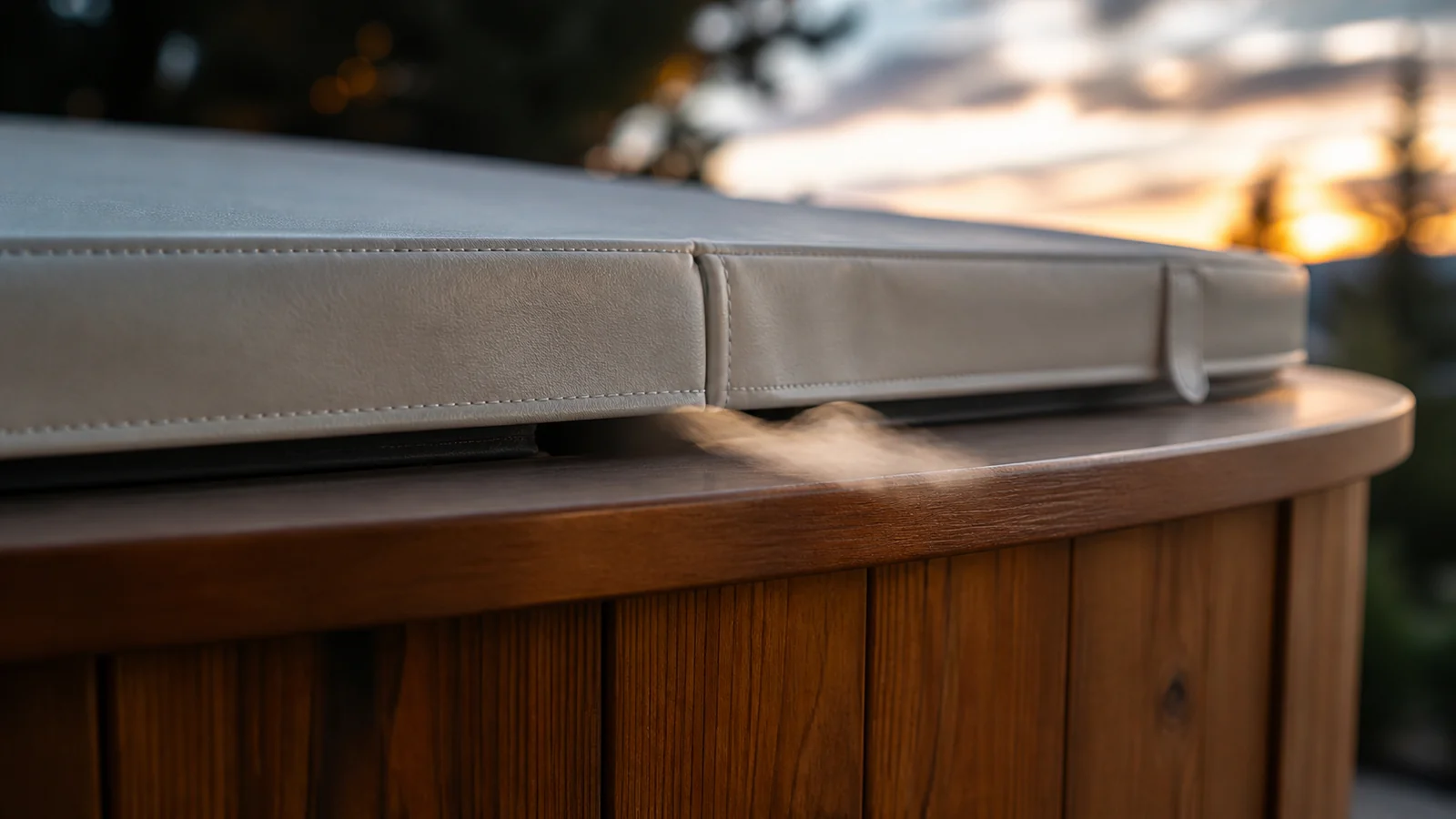
Write a response for loss of power or heat
Know how long the site can be left unattended, who receives an alarm and who can reach it safely. A power cut can stop the circulation that protects exposed pipes even when the bulk water remains warm. If the fault cannot be restored within the manufacturer’s safe window, move to the approved emergency drain-down rather than waiting for visible ice.
For holiday accommodation, assign the task to a named person and keep instructions at the property. Guests should not be expected to diagnose pumps or drain technical equipment. If automatic monitoring is used, test its connection and escalation route before winter.
Route two: a complete shutdown
Follow the product manual because drain points, non-return valves, jets, air blowers, heat exchangers and filters create different low spots. The general sequence is to isolate energy safely, let any fire and hot metal become completely safe, drain the vessel, then clear every component and pipe named by the manufacturer. Open unions or plugs only where the instructions require it and store removed parts so they can be refitted correctly.
- Drain pumps, heater jackets, filter housings and external pipe runs, not only the visible tub.
- Clear jet and air lines using the approved method; never apply unregulated pressure.
- Clean and dry accessible surfaces and leave specified valves or plugs in their storage position.
- Protect openings from rain, pests and debris without sealing dampness inside.
- Label isolation and keep the restart checklist with the removed components.
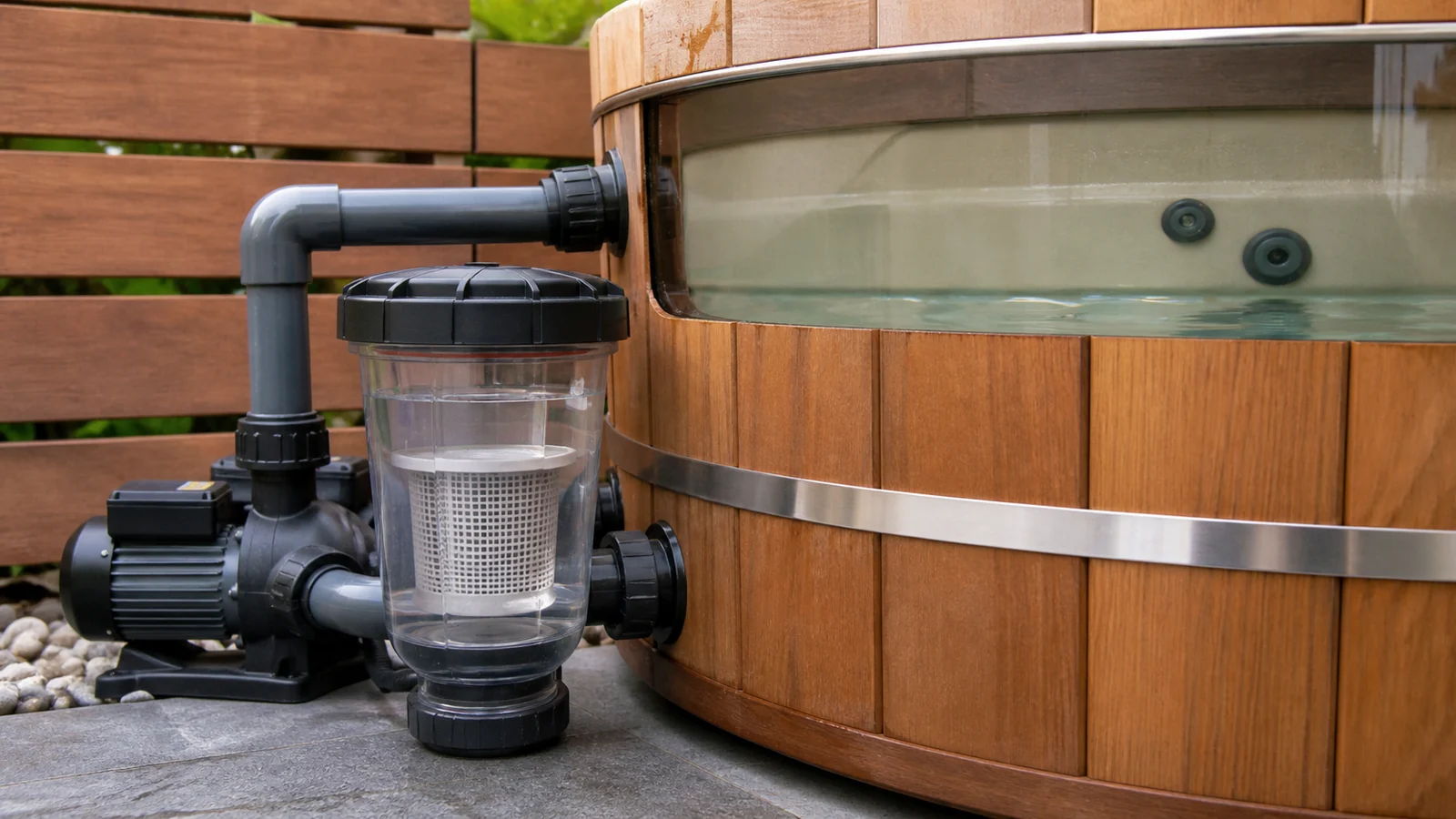
Traditional timber tubs need their own storage decision
A solid-timber tub relies on its staves and bands behaving as designed. Long dry storage can allow timber to change dimension, while leaving water in freezing conditions can damage the vessel and fittings. Follow the maker’s winter instructions for the specific timber and construction; do not transfer the routine from a lined polypropylene or glass-fibre tub.
Inspect bands, staves, floor and fittings before shutdown and again before refilling. Never use a fire to force a leaking or partly filled timber tub to seal. Allow the approved wetting and inspection process, and address structural concerns before heating.
Water care still matters in cold weather
Cold air does not make retained warm water self-sanitising. Test and treat it to the approved regime, maintain circulation and manage bather load. Covers reduce debris but do not replace filtration or disinfection. Drain water through a planned route that complies with local requirements and does not create ice across paths, roads or neighbouring land.
Recommission slowly in spring
- Inspect the base, vessel, cover, pipework, unions, equipment and cables before closing access panels.
- Refit drain plugs and components against the stored checklist.
- Fill to the correct level and inspect under static pressure before energising equipment.
- Prime and prove circulation, then commission filtration, heater and accessories one function at a time.
- Check for leaks during the first full heating cycle and after the system cools.

Use the fill-and-drain sequence for routine handling and the wooden hot-tub maintenance guide for material-specific inspections.