
Charles — London, United Kingdom
TimberIN Nordic™ Thermowood Deluxe
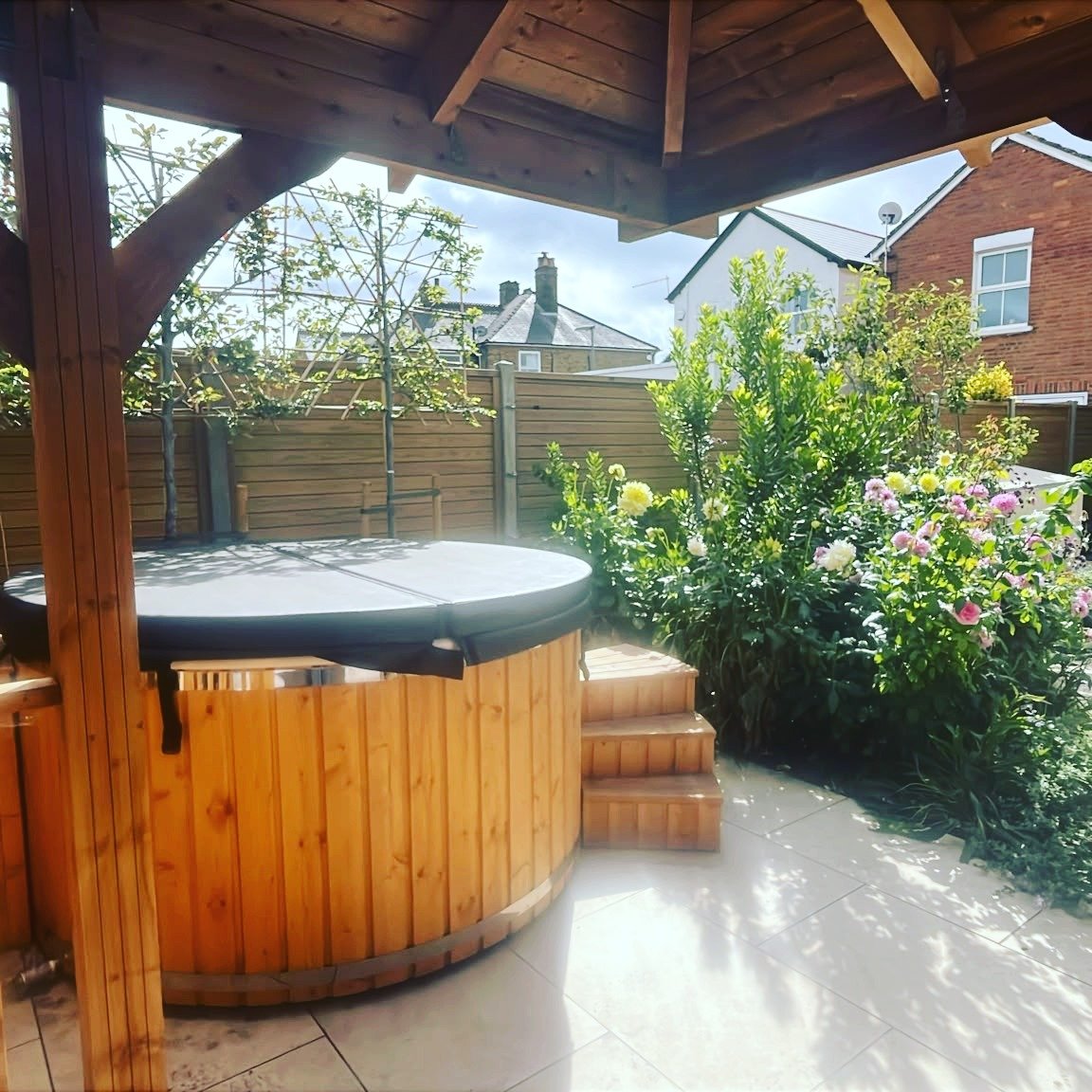
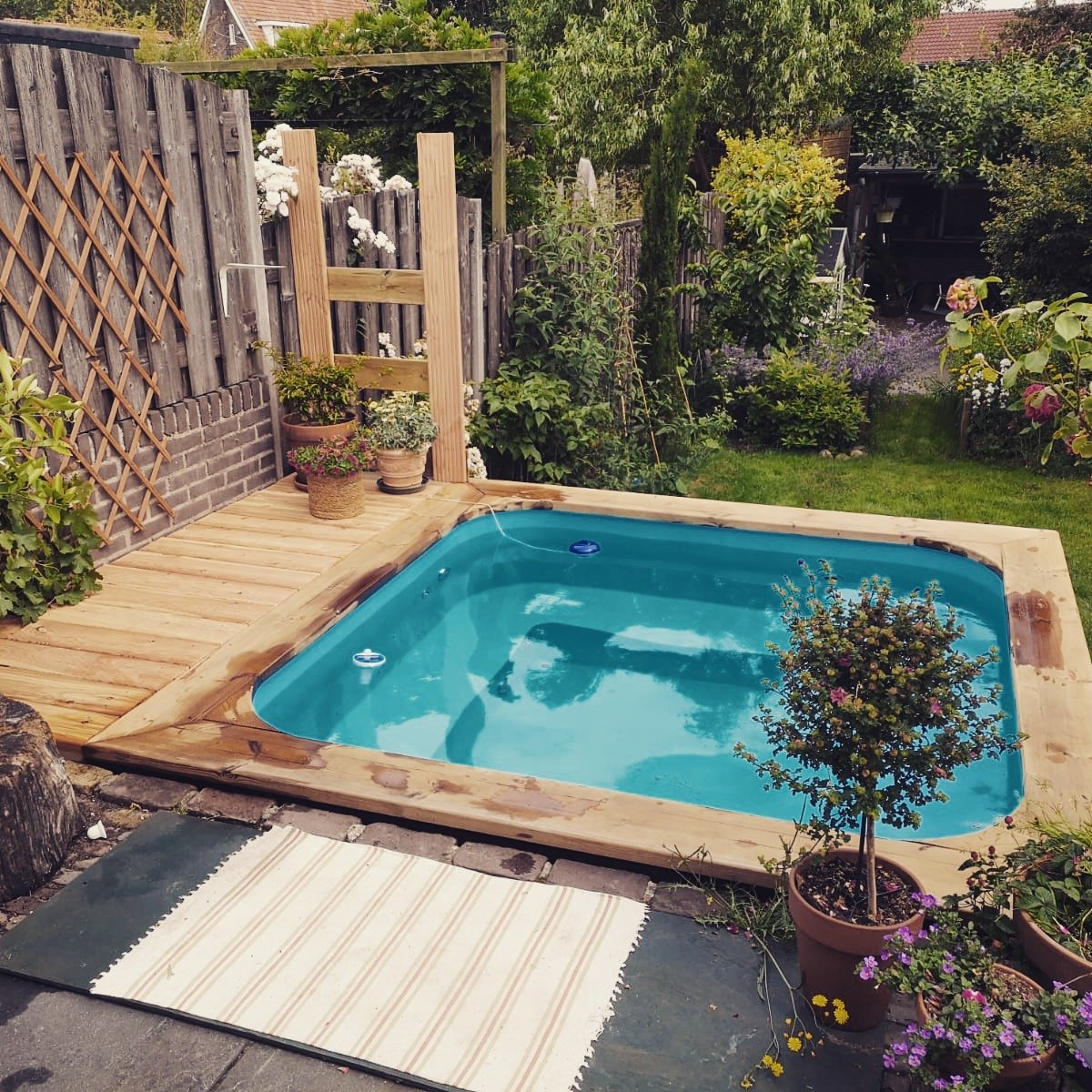
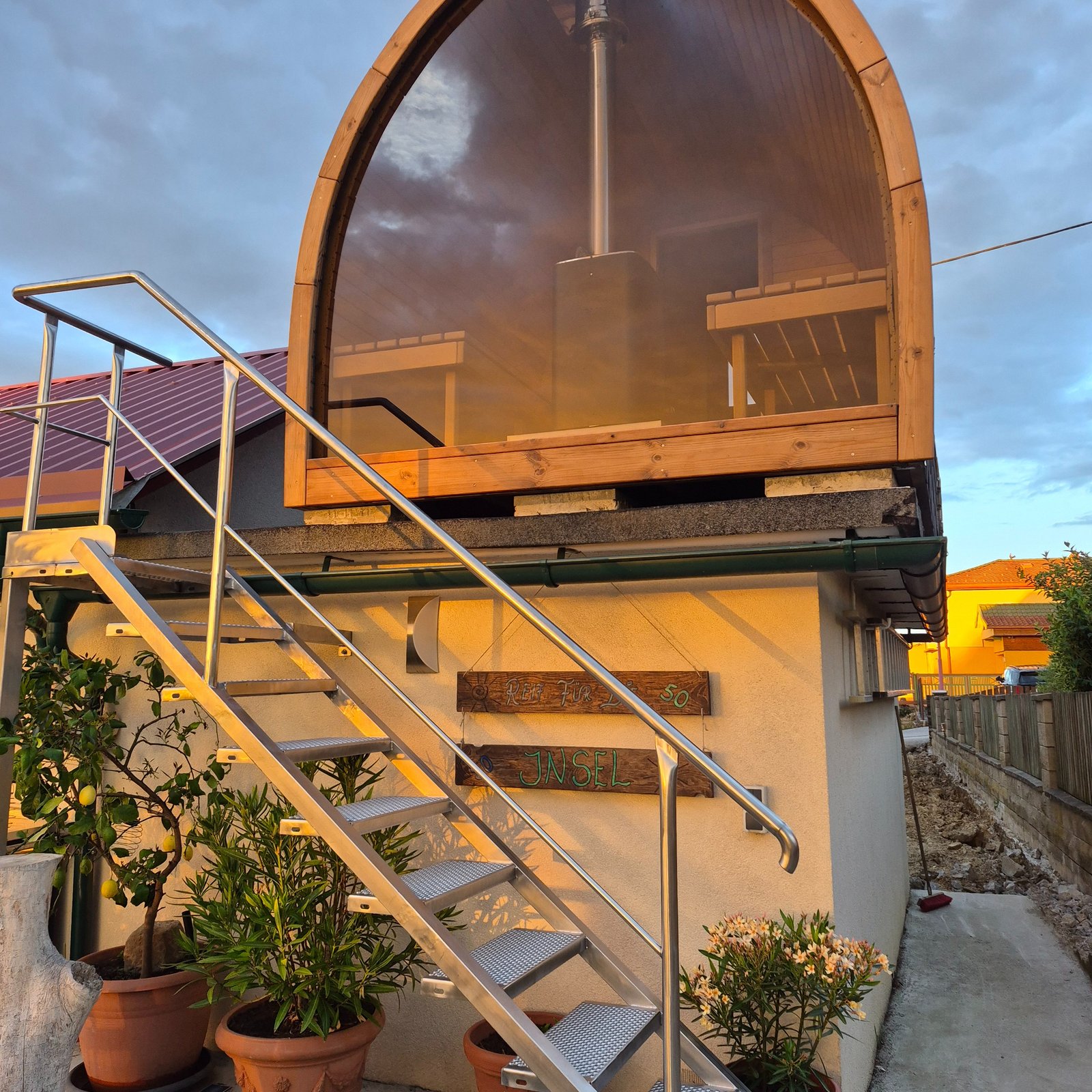
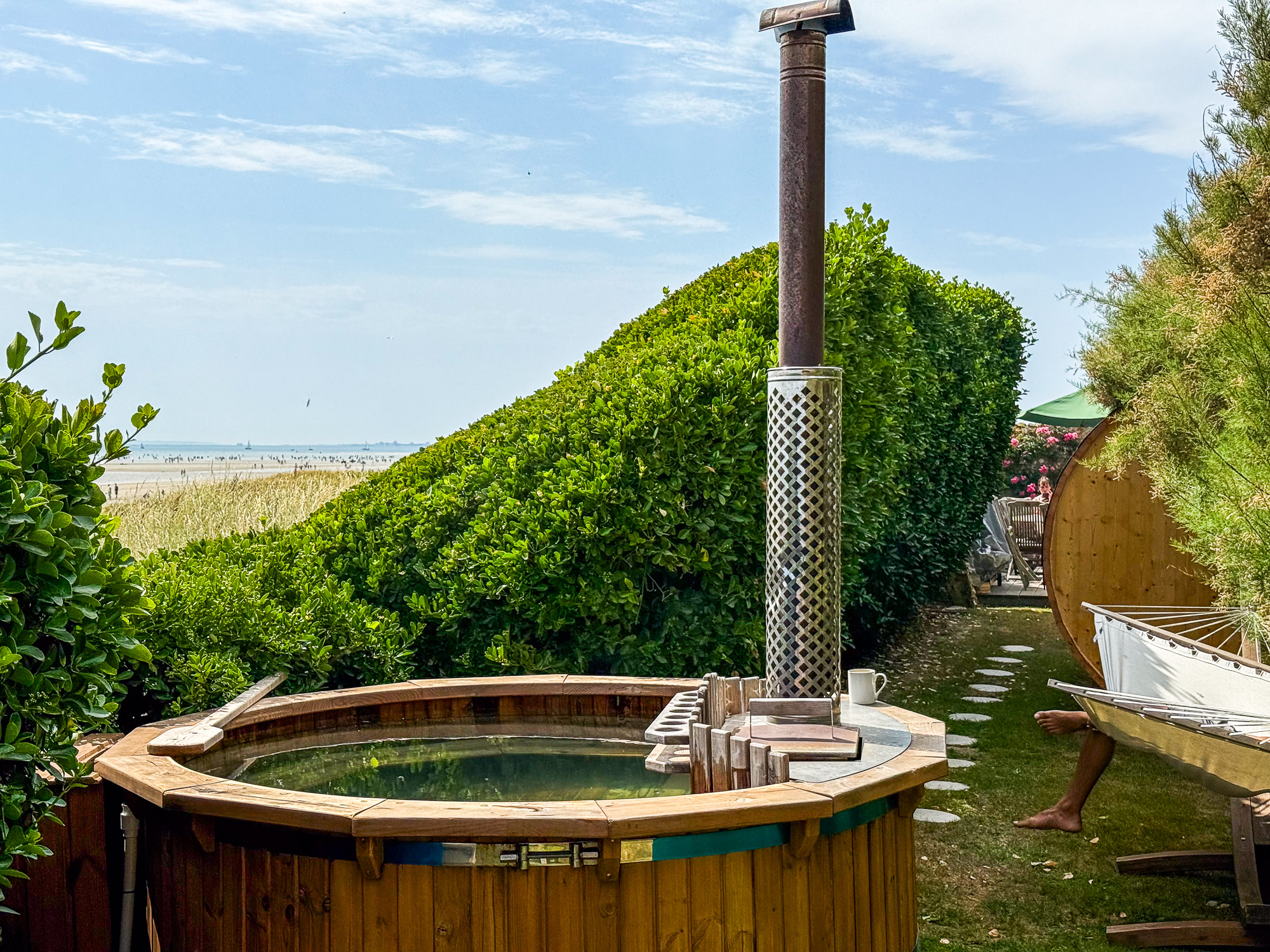
Review and installation photos →Hi, you can see the hot tub in these pics at our retreat.
Fire, water and a well-planned garden
A good wood-fired hot tub turns preparation into part of the pleasure: stack dry logs, light the stove, watch the temperature rise and step into hot water outdoors. That simplicity is real, but only when the tub, heater, water volume and garden have been planned as one system.
Begin with the people who will use it most often. Then decide how much involvement you want before each bath, where the firebox can be operated safely and whether you will replace the water frequently or maintain it between sessions. Those answers narrow the field far more effectively than a headline heat-up claim.
Wood-fired and wood burning hot tubs are two names for the same idea: a log stove, rather than an electric element, heats the water. This guide explains how the stove works, how long heating usually takes, how running costs compare with electric tubs and what to check about planning permission in the UK.
From our customers
Customer projects matched to the products listed on this page. Earlier specifications and selected options may differ.
Customer projects from United Kingdom.
TimberIN Nordic™ Thermowood Deluxe
Review and installation photos →Hi, you can see the hot tub in these pics at our retreat.

Hi Albertas, as promised, I’ve attached some photos of our Hot Tub. We’re not on Facebook or the other social media platforms, but we’re happy for you to use any you might want for your website. It arrived Friday morning…
Hi Albertas, as promised, I’ve attached some photos of our Hot Tub. We’re not on Facebook or the other social media platforms, but we’re happy for you to use any you might want for your website. It arrived Friday morning 4th April and we were in the water and enjoying it on Saturday evening. We’ve been in it every night since! A big thank you to you and your team. The specification is exactly as planned, and the workmanship is excellent. You might welcome some feedback on a couple of relatively minor issues, which I hope you will find helpful. We only received 4 pictures of the hot tub, but in all honesty, these weren’t really enough for us to confirm that we would be happy with the product before making the final payment. We trusted the process and made payment, but it would have been better if we could have seen images of the liner and also inside the electric cupboard and the insulation. Just something to be aware of. The other minor point relates to the sand filter and UV-C. both of them came with European plug fittings that required changing. I would have thought that a UK specification would come with a UK plug. Again, this is not a huge point, but it was inconvenient to have to change these. Apart from those minor niggles, everything was great. So, once again, a big thank you to you and your team. Best of luck and continued success in the future.

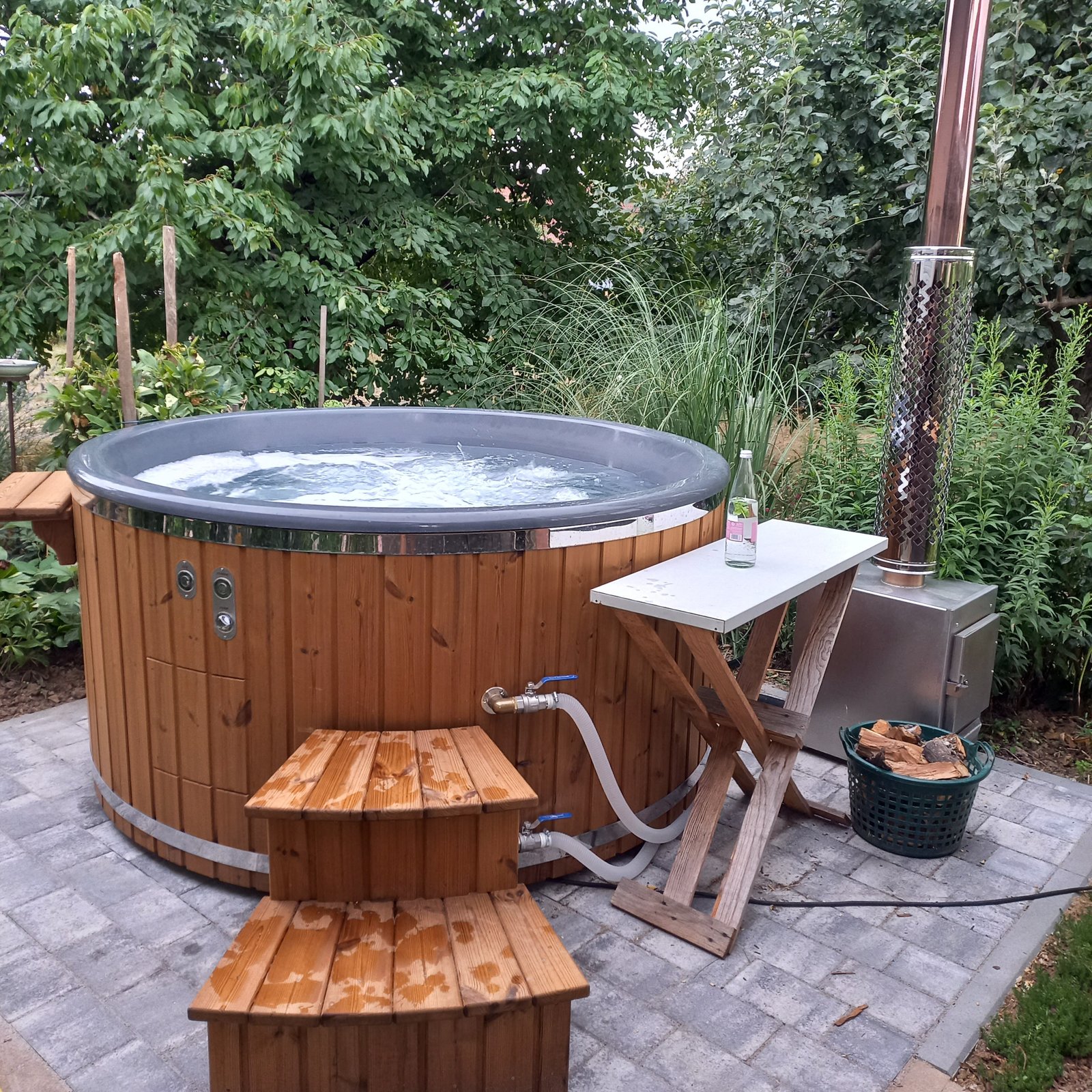
Review and installation photos →Hi, we have finally moved into our house & hot tub is amazing! Attached photo (feel free to use!)
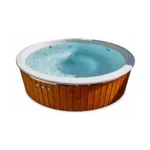
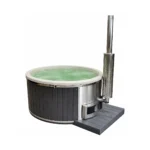
These model families offer a wood-fired configuration. Open a model to confirm the stove, size and included equipment; a no-heater starting configuration is not a complete heated tub.
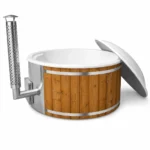
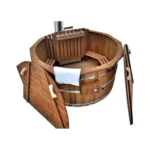
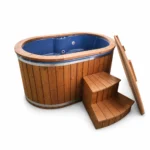
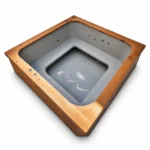
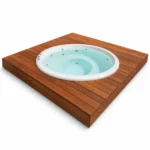
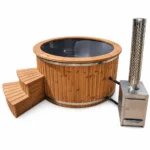
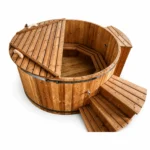
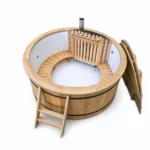
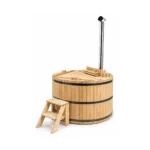
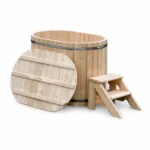
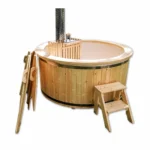
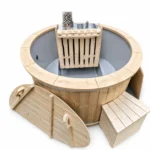
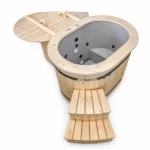
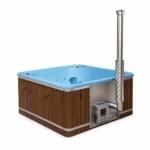
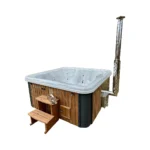
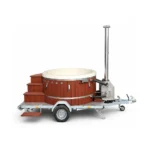
Compare these alternative heating systems separately from a log-fired setup.
The honest starting point
Wood-fired bathing is not automatic spa ownership with a rustic-looking chimney. You light the stove, supervise the burn, mix and check the water, and decide when the bath is ready. Many owners enjoy that deliberate pace. If you want a hot tub to remain at temperature with little preparation, an electric or hybrid arrangement may fit better.
The reward is a direct, memorable ritual and the possibility of a simpler system. A basic natural-circulation tub may operate without mains electricity; filters, lights, jets, blowers and electric backup normally require power. Decide which experience you want before adding equipment.
Position changes the whole layout
The three arrangements can all heat effectively when correctly matched and installed. The practical differences are bathing space, overall footprint, circulation route and access for firing, cleaning and winter drainage.
Preserves the complete bathing area and keeps the firebox easy to reach. Cooler water enters through the lower connection and warmer water returns above it, so pipe height, diameter and route matter when circulation relies on thermosiphon.
Creates a compact, tidy silhouette without placing the stove fully inside the bathing space. The installation still needs ventilation and a service route for ash removal, inspection and complete drain-down.
Reduces the exterior footprint and transfers heat directly from a guarded stove. It occupies part of the tub, so advertised diameter alone does not describe the real space available to bathers.
Need more technical depth? Read the wood-fired hot-tub heater guide.
Logs in, warm water out
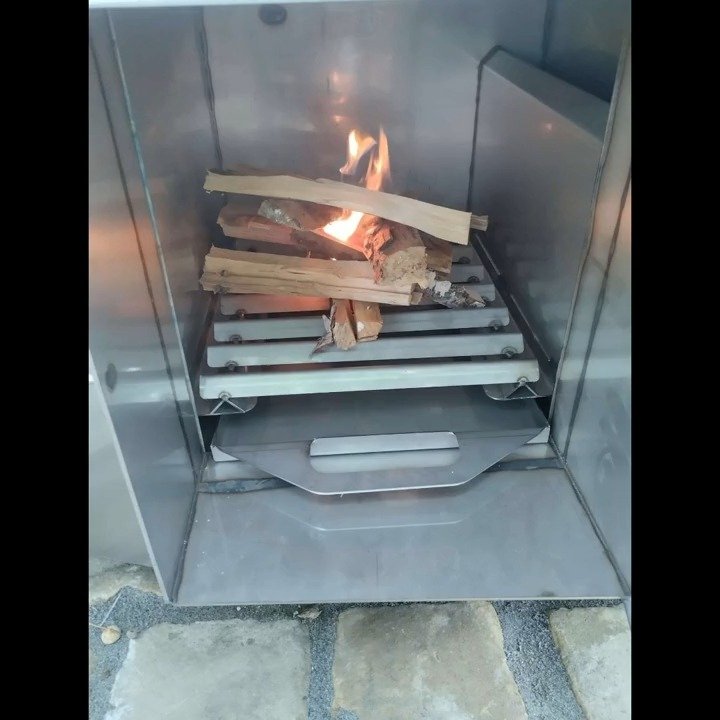
A wood burning hot tub heater is a small firebox surrounded by water. Logs burn inside a closed steel chamber and the heat passes through the stove walls into the water around them. Smoke leaves through a chimney that should rise clear of bathers and anything combustible.
With an external or integrated heater, water moves through two connections. Cooler water from the bottom of the tub enters the stove through the lower pipe, warms, becomes lighter and rises back into the tub through the upper pipe. This natural circulation, known as thermosiphon, needs no pump, which is why a basic wood burning hot tub can run without mains electricity. With an internal stove, the firebox sits behind a guard inside the tub and heats the surrounding water directly.
Numbers without the sales shortcut
No responsible universal time can describe every wood-fired hot tub. A covered, insulated 700-litre tub starting on a mild day is a different task from 1,500 litres of cold water in winter. Useful heat output, fuel moisture, combustion, wind and the frequency of mixing all change the result.
The theoretical energy added to the water can be estimated as:
litres × temperature rise in °C × 0.001163 = theoretical kWh
This is the energy in the water before system losses. Actual fuel input must be higher because heat also leaves through the surface, walls, pipework and chimney.
As a guide from our hot-tub FAQ, an 1,800 mm tub typically reaches the recommended 38°C in around 2 to 2.5 hours during the warmer months. Smaller tubs can be quicker. Larger volumes, cold tap water, winter air, wind, damp logs or heating without the cover all take longer. Treat this as a planning figure rather than a guarantee, and light the stove well before you want to bathe.
Examples assume a rise from 10°C to 38°C and show theoretical heat in the water before losses.
Choose for ordinary evenings
A larger tub gives guests more room, but it also increases water volume, wet weight, heating demand and the area that must be covered. Select around normal use and make occasional guests the secondary consideration.
Ideal for couples and compact gardens. Check internal length, foot room and whether the heater reduces the seating area.
A versatile household size. Confirm that four adults can sit naturally rather than relying only on the nominal capacity.
Suited to families and regular social use. Water volume, heater match and foundation become more significant.
Designed for larger groups or hospitality. Plan fuel, water care, access and operating procedures for the higher workload.
See the dedicated 2-person, 4-person, 6-person and 8-person hot-tub guides, or compare small hot tubs where space is restricted.
Build one coherent system
A traditional all-wood vessel gives direct contact with timber and requires a suitable swelling, drying and water-care routine. Fibreglass, polypropylene and acrylic or composite shells provide a smooth surface and usually make cleaning and dry storage more straightforward.
Wall and base insulation matter, but the exposed water surface is a major source of heat loss. A well-fitted insulated cover and protected pipework can matter more than simply choosing a larger stove. Ask how the entire thermal envelope works.
Occasional private soaking may suit frequent replacement and manual cleaning. Retained water requires testing, compatible treatment and often filtration. Jets and air systems add hidden pipework that also needs circulation and cleaning.
Hydromassage jets provide targeted water pressure; air bubbles create gentler movement; lighting changes the evening atmosphere. Each option adds power, controls and future maintenance. Choose the features you will use, not every available box.
The rhythm of a safe session
Check the water level, circulation route, heater, chimney and area around the firebox. Use dry untreated firewood.
Follow the model instructions and supervise the stove continuously. Never fire a heater when circulation may be blocked.
Stir or circulate the water so the temperature reading represents the whole tub. Do not judge only by the warmest layer.
Keep the route non-slip and the fire area controlled. Children and guests need appropriate supervision.
After use, follow the water-care routine and fit the clean cover correctly. Prepare vulnerable components for frost when required.
The garden is part of the specification
One litre of water weighs approximately one kilogram. Add the empty tub, heater, cover, equipment and bathers before a professional assesses a slab, engineered paving base, platform or deck. The support must be level, stable and compatible with the product’s complete footprint.
Drainage should manage rain, splash water and a full emptying without leaving timber or equipment in standing water. External heaters, pumps, filters, valves and drains must remain reachable after landscaping. A tightly boxed-in installation may look finished but can make ordinary inspection or repair needlessly difficult.
Measure the journey from the delivery vehicle to the final base: road access, gate width, turns, walls, steps, overhead cables and ground conditions. Where direct access is impossible, confirm the crane or telehandler position and who is responsible for unloading and final placement.
Compare like with like
Current model prices are shown in the catalogue above. For any wood-fired hot tub for sale, compare the same scope: tub and seating, heater and chimney, insulation and cover, filtration or other water equipment, foundation, drainage, electrical work, transport, unloading and landscaping.
Production and delivery timing depends on the selected model, options, factory schedule and route. Confirm the working estimate for the exact configuration in the written quotation and treat it as an estimate rather than a guaranteed date. You can also compare the wood-fired hot-tub price guide and the complete hot-tub collection.
Wood or electric
There is no single answer, because running cost depends on how you use the tub. A wood burning hot tub uses firewood for heat, and a basic natural-circulation model needs no electricity at all; filtration, jets, air bubbles and lights add electricity on any tub. An electric hot tub costs the kWh it actually uses multiplied by your tariff, including the energy needed to keep the water warm between sessions.
Compare your own local firewood price and electricity tariff for the way you expect to bathe. The electric wooden hot-tub guide shows how to calculate electric running costs, and the price guide covers the full project budget.
Check before you build
A freestanding hot tub placed in a private back garden often does not need planning permission on its own, but that is general guidance rather than a ruling for your property. The surrounding work can change the position: a raised deck or platform, a roofed shelter or enclosure, a chimney close to a boundary, a front-garden location, a listed building, a conservation area or a property where permitted development rights have been removed. Flats and leasehold homes may also need consent from a landlord or freeholder.
Rules differ between England, Wales, Scotland and Northern Ireland. Describe the whole project, including base, platform, shelter, flue and services, and check with your local council before work starts. For England, the Planning Portal’s outbuilding guidance is a useful starting point. With a wood burning stove, also ask about any local smoke rules and position the chimney with neighbours in mind. See garden hot tubs for more on placing a tub in a UK garden.
Clear answers before you commit
There is no reliable universal time. Water volume, starting and target temperatures, useful heater output, fuel moisture, insulation, cover and weather all affect heat-up. Compare the exact model under stated conditions. As a rough guide, an 1,800 mm tub typically reaches 38°C in around 2 to 2.5 hours in the warmer months; colder conditions take longer.
A basic natural-circulation heater may not. Filtration, hydrotherapy jets, air bubbles, lighting, digital controls and electric backup normally require a suitable electrical supply.
External heaters preserve bathing space and are easy to access. Integrated heaters create a compact overall form. Internal heaters reduce the exterior footprint but occupy part of the tub. The best arrangement depends on the site and the usable capacity you need.
Yes, on compatible models. The wood stove heats the water while electric pumps or blowers operate massage equipment, so both the hydraulic and electrical systems must be planned.
Yes, when operated correctly and protected from freezing. Water trapped in a heater, pump, filter or low pipe section can freeze and split components, so follow the exact winter and drain-down procedure.
The routine depends on whether water is replaced or retained, the bathing load, filtration and the vessel material. Test rather than guess, never mix chemicals, and use treatments compatible with the shell or timber, seals, metalwork and heater.
Yes. Both terms describe a hot tub heated by a log stove instead of an electric heater. The stove can stand outside the tub, be integrated into the body or sit inside the water behind a guard.
It depends on how you use it. A wood burning tub costs the firewood you burn and, for a basic model, no electricity, which often suits occasional bathing. For frequent use with water kept warm, compare an insulated electric tub using your own tariff. A good cover and dry fuel cut costs on either.
Often not for a freestanding tub in a back garden, but decks, shelters, chimney position, listed buildings, conservation areas and leasehold terms can change that, and the rules vary across the UK nations. Check with your local council before you build.
Make the ritual easy to enjoy
Tell us how many people will normally bathe, where the tub will stand, which heater arrangement appeals to you and how you expect to manage the water. That gives us a sound basis for comparing suitable models and preparing a complete configuration.