
Outdoor Sauna Prices UK: Costs, Options and Buying Advice
An outdoor sauna is priced as a complete garden project, not only as a timber cabin. The model, size, heater, glazing, roof finish, delivery route, base and electrical or flue work all affect the final amount you will spend.
Current TimberIN models on this page begin at just over £4,000, while larger or more highly specified designs move beyond £8,000 before optional equipment and site work. The live product cards below show today’s starting prices; the guide explains what those figures include, what commonly sits outside them and how to compare quotations fairly.
Short answer: set a budget for the sauna, heater and controls first, then reserve a separate allowance for the base, delivery, installation, electrical or flue work and the route from the lorry to the final position.
What does an outdoor sauna cost in the UK?
The purchase price varies because “outdoor sauna” covers everything from a compact upright cabin for one or two people to a family barrel, pod, oval or glazed garden room. A smaller standard model with a straightforward heater normally sits at the lower end of the catalogue. More floor area, a porch or changing zone, panoramic glazing and bespoke joinery move the price upwards.
Starting prices are useful for shortlisting, but they are not automatically installed prices. Check whether the figure is for a base model, which timber and roof finish are included, whether a heater is part of the selected configuration and how VAT and delivery are displayed. The safest comparison is a written specification for the same occupancy, heater type and level of finish.
| Budget component | What usually changes the cost | What to request in writing |
|---|---|---|
| Sauna building | Size, profile, timber, wall construction, glazing and porch | Exact model, external dimensions and standard inclusions |
| Heating | Electric output, wood stove, stones, controls and chimney package | Heater model, power, control type and supplied components |
| Site preparation | Ground conditions, access, drainage and foundation design | Base drawing, loading information and installer responsibility |
| Delivery and placement | Distance, vehicle access, unloading, crane or specialist handling | Delivery boundary, unloading method and excluded work |
| Commissioning | Electrical connection, flue installation and local trade rates | Who connects, tests and signs off each system |
Current outdoor sauna models and starting prices
These products and prices are loaded directly from WooCommerce. Open a model to see its current dimensions, heater choices and configurable equipment. A starting price is a comparison point rather than a promise that every photographed feature is included.
-
Custom pod
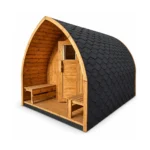
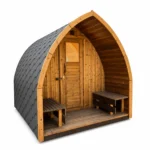
 TimberIN Nordic Pod™ CustomFrom: £4,327
 -
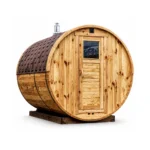
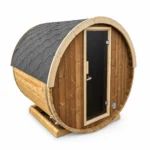
Classic barrelTimberIN Nordic Barrel™ ClassicFrom: £4,106
-
Product on saleSave up to 19%TimberIN Nordic Pod™ PorchFrom: £5,957From: £5,006 -
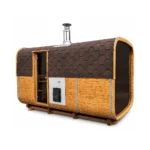
Square barrelTimberIN Nordic Square Barrel™From: £6,056
-
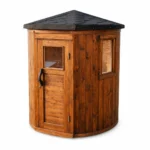
Space-savingTimberIN Nordic Vertical™From: £4,127
-
2-person electricTimberIN Nordic Terrace™ 160 ElectricFrom: £5,192
-
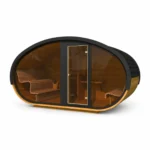
Panoramic glazingTimberIN Nordic Hobbiton™ GlassFrom: £7,348
-
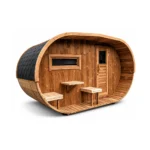
Terrace modelTimberIN Nordic Oval™ TerraceFrom: £7,590
-
Panorama for 4TimberIN Nordic Barrel Panorama™£8,085
Why two similar-looking saunas can have different prices
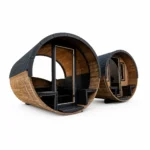
Photographs do not reveal every construction difference. Timber species and grade, wall thickness, bench design, glazing specification, door hardware and weather protection all influence material and production cost. A porch may look modest in a photograph but adds structure, roof area, flooring and joinery.
The heater package can also change the total considerably. Electric systems need an output suited to the heated volume and glazing; some include an integrated controller, while others need a separate control unit. Wood-burning systems require a compatible stove, stones, heat shielding and a correctly specified chimney route. Compare named components, not generic phrases such as “heater included”.
Choosing the right size without paying for unused space
Choose capacity for normal use rather than the largest gathering you can imagine. A compact sauna may warm more quickly and use less garden space, but it must still provide comfortable bench length, safe heater clearances and room to enter without crowding. A family model can improve seating and circulation, yet increases the volume that must be heated.
Ask for the internal heated volume and bench layout as well as the advertised person count. Large glass areas can affect heater sizing. If users want to lie down, cool off under a porch or change clothes inside, those needs should shape the plan before the model is priced.
Electric versus wood-fired sauna costs
An electric heater is convenient and avoids storing firewood, but the installation may need a dedicated circuit and suitably qualified electrical work. The household supply, cable route, protective devices, heater output and controller location all need checking before the sauna arrives. Operating cost depends on the heater’s demand, warm-up time, session length, insulation and electricity tariff.
A wood-burning stove replaces most of that heating demand with logs, but it introduces a chimney, hot-surface clearances, ash handling and dry fuel storage. Installation cost depends on the exact flue route and site. Neither system is universally cheaper: the better choice is the one that suits your utilities, local constraints and realistic pattern of use.
For a deeper comparison, read the guides to electric outdoor saunas and wood-fired outdoor saunas.
Base, access and delivery costs
The sauna needs a stable, level and suitably designed foundation. The correct solution depends on the model, ground conditions and local construction requirements. Preparing the base before delivery is normally more economical than trying to correct settlement or poor drainage afterwards.
Delivery planning begins at the road, not at the garden gate. Measure widths, heights, corners, slopes and overhead obstructions along the complete route. Confirm whether the sauna arrives assembled, in sections or as a kit; who unloads it; what lifting points are available; and whether a crane, telehandler or additional labour is required. A low product price can become expensive if access has not been surveyed.
Electrical, flue and installation work
Site work is usually quoted separately because every property is different. For an electric sauna, obtain the chosen heater’s technical information before asking an electrician to assess supply capacity and cable routing. Include lighting, controls and any accessories in the total load rather than pricing only the heater.
For a wood-fired sauna, the stove and chimney must be installed to their documented requirements, with appropriate distances from combustible materials and safe access for loading and cleaning. Do not buy a generic flue package before the final position and roof penetration are agreed. Ask who is responsible for commissioning and which documents will be supplied at handover.
Planning, permissions and neighbour considerations
Planning and building requirements depend on the property’s location, the sauna’s dimensions and position, how it is used and whether the site has special restrictions. Rules also differ across the UK. Before ordering, check with the relevant local authority and tell the supplier about listed buildings, conservation areas, boundaries or unusual site conditions.
Even where formal permission is not required, position matters. Consider overlooking, smoke or steam, noise from social use, external lighting and the route users take between the house and sauna. Resolving these points on a plan is cheaper than moving an installed building.
Running costs and routine ownership
Running cost is influenced by climate, warm-up time, session frequency, target temperature, door opening, glazing and ventilation. For electric models, record heater input and your tariff; for wood-fired models, record log consumption and local fuel cost. A few months of actual use provides a better forecast than a universal hourly claim.
Allow for cleaning, surface treatment where required, replacement stones, chimney sweeping or inspection, electrical checks and occasional hardware adjustment. Keep ventilation openings clear and follow the manufacturer’s drying routine after use. Planned care protects the timber and makes operating costs more predictable.
Home, holiday-let and commercial budgets
A private owner can optimise the sauna around personal habits. A holiday let or commercial site needs a more operational budget: staff time, guest instructions, cleaning records, inspections, downtime and replacement parts matter alongside the purchase price. The heater and controls should be simple enough for the people expected to operate them.
For paid accommodation, ask the insurer, local authority and relevant advisers which duties apply to the intended use. Do not assume that a domestic specification and maintenance routine are adequate for frequent guest turnover. Our commercial outdoor sauna guide covers the additional planning questions.
How to compare outdoor sauna quotations
Place quotations side by side only after normalising the scope. One may include the heater, roof covering and delivery while another lists them as options. Confirm whether images show upgrades, whether installation is included and how exchange-rate or material changes are handled before production.
| Quotation question | Why it matters |
|---|---|
| What exact model, dimensions and timber are included? | Prevents comparison between different structures or specifications. |
| Which heater, controller, stones and chimney parts are supplied? | Defines the usable heating package rather than a vague allowance. |
| Which photographed features are optional? | Separates the base model from glazing, porch, lighting or finish upgrades. |
| Where does delivery end and who unloads? | Exposes crane, handling and placement costs before the delivery day. |
| Who prepares, connects and commissions the sauna? | Assigns responsibility for the base, electrics, flue and final checks. |
| What warranty, manuals and aftercare are provided? | Clarifies support and maintenance expectations after purchase. |
Complete outdoor sauna cost checklist
- Sauna model, size, timber, glazing, benches, door and roof finish.
- Electric heater and controls, or wood stove, stones, shielding and chimney.
- Foundation design, materials, labour and drainage around the base.
- Delivery distance, vehicle access, unloading, lifting and final placement.
- Electrical cable route and connection, or flue installation and commissioning.
- Lighting, porch, changing space, accessories and weather-protection finish.
- Planning checks, professional advice and any site-specific permissions.
- Cleaning equipment, replacement stones, fuel or electricity and planned servicing.
Send the same checklist to every supplier. A complete, transparent quotation is more valuable than the lowest headline figure because it reduces the number of costs that appear after you have committed to a model.
Frequently asked questions
How much is an outdoor sauna in the UK?
Current TimberIN models on this page start at just over £4,000 and extend beyond £8,000 before optional equipment and site work. The final project cost depends on size, heater, glazing, delivery, foundation and installation.
Does the starting price include a heater?
It depends on the selected model and configuration. Open the product page and request a written quotation that names the exact heater, controls, stones and any required chimney components.
Is an electric or wood-fired sauna cheaper?
Neither is always cheaper. Electric models may need substantial electrical work and use metered electricity; wood-fired models need a stove, chimney, safe installation and logs. Compare the complete installed and operating cost.
How much should I allow for delivery and installation?
There is no reliable universal allowance because distance, access, assembly method, lifting, base work and utilities vary. Provide photographs and measurements so each element can be quoted for your site.
Can I install an outdoor sauna myself?
Some structural work may be suitable for an experienced owner, but electrical connections, stove and chimney work and local compliance checks need the appropriate competence. Follow the manufacturer’s documents and assign every task before delivery.
Price the complete sauna project
Choose a model for normal occupancy, then specify the heater, controls, timber, glazing, roof, delivery route, base and installation responsibilities. We can use those details to prepare a quotation that is meaningful for your garden rather than a generic headline price.