
Garden Hot Tubs UK: Siting, Access and Installation Guide
A garden hot tub works best when it is planned as part of the outdoor space rather than placed wherever an empty corner appears. The tub, heater, steps, cover, privacy, drainage, access route and maintenance area all need to work together in wet weather and after dark.
This UK guide helps you choose a model and create a practical layout for small gardens, patios, decks and larger wellness areas. It covers wood-fired and electric heating, foundations, neighbours, delivery, built-in designs, winter use and the information contractors need before work begins.
Plan the operating space: mark the tub, heater, open cover, steps and clear service route at full size. The shell footprint alone is not the space the finished project needs.
What counts as a garden hot tub?
“Garden hot tub” describes the location, not one construction or heating system. It can be a wood-fired round tub, an oval two-person model, a square spa-style tub, a traditional wooden vessel or a moulded insert with timber cladding. Some buyers also search for a garden Jacuzzi, but Jacuzzi is a brand name rather than a generic type.
Choose the physical and technical system from the intended sessions. Decide whether the priority is a fire-led soak, controlled heat, hydromassage, family seating or a compact sauna companion. Then check that the garden can support its full weight, utilities and operating routine.
Current hot-tub models for UK gardens
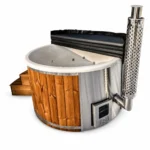
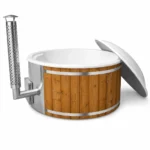
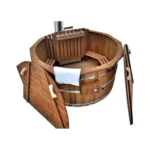
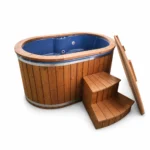
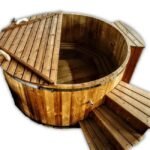
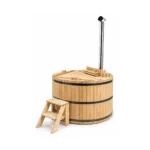
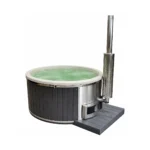
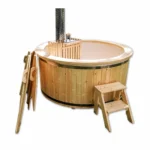
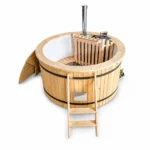
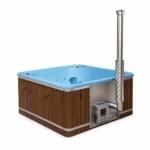
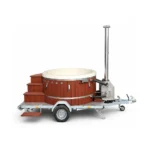
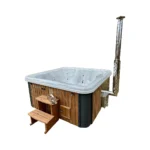
The current range appears below. Open a model to check dimensions, seating, body construction, heating choices and compatible options. Use those facts in the site plan before requesting the final delivered quotation.
-
Product on saleSave up to 16% Wood Fired Hot Tub with Jets – TimberIN Nordic Rojal™ (4–8 Person)
From: €6,954From: €6,021 -
Modular coreTimberIN Nordic Core™From: €3,371
-
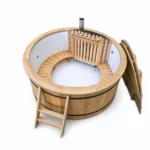
ThermowoodThermowood Hot Tub – TimberIN Nordic™ Deluxe (Wood-Fired, 4–8 Person)From: €3,280
-
2-person model2 Person Wood Fired Hot Tub – TimberIN Nordic DuoFrom: €2,481
-
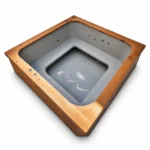
Square modelSquare Wood Fired Hot Tub – TimberIN Nordic Square™ (160–220 cm)From: €2,934
-
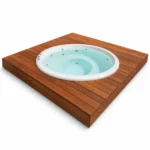
In-ground modelTimberIN Nordic™ InGround Comfort – Sunken & In-Ground Hot Tub SystemFrom: €1,704
-
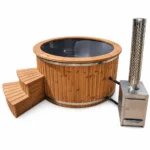
External stoveWood Fired Hot Tub with External Stove – TimberIN Nordic™ External ComfortFrom: €3,382
-
PolypropylenePolypropylene Hot Tub – TimberIN Nordic Flex™ (160–220 cm, Configurable)From: €2,600
-
Traditional timberWood Fired Wooden Jacuzzi – Traditional Timber Hot TubFrom: €2,820
-
Spruce value modelWooden Hot Tub Basic – TimberIN Nordic™ (Affordable Wood Fired Model)From: €2,333
-
App-controlled pelletsTimberIN Nordic™ Pellet Comfort – Wood Pellet Heated Hot TubFrom: €5,483
-
Compact for 44 Person Wood Fired Hot Tub – Compact Snorkel Stove DesignFrom: €2,963
-
Product on saleSave up to 17%Affordable Wooden Hot Tub for Your Garden – TimberIN Nordic Value™From: €3,269From: €2,931 -
8-person modelLarge 8 Person Wood Fired Hot Tub – TimberIN Nordic Elite™ SquareFrom: €4,397
-
Trailer modelMobile Wood Fired Hot Tub on Trailer – TimberIN Nordic Mobile™From: €5,797
-
Acrylic luxuryTimberIN Nordic Square™ Acrylic Hot Tub – External or Integrated Wood Stove (Luxury Marble Edition)From: €6,957
Choose the best position in the garden
| Site factor | What to inspect | Design response |
|---|---|---|
| Access from the house | Steps, lighting, wet feet and winter route | Create a stable, non-slip path with safe illumination |
| Privacy | Neighbouring windows, boundaries and sight lines | Use orientation and screening without blocking ventilation or service access |
| Weather | Prevailing wind, falling debris, shade and exposed edges | Protect the users and cover while keeping smoke and moisture routes safe |
| Utilities | Electricity, water filling, drainage and fuel storage | Plan compliant routes before the base or enclosure is built |
| Maintenance | Stove, pumps, filters, drain and external finish | Leave enough room to inspect, clean and replace components |
A position close to the house can make frequent use easier, but noise, steam, smoke and the view from internal rooms still matter. A remote corner may feel private while creating a longer electrical route and difficult winter access. Walk the proposed route carrying towels and imagine opening the cover and tending the heater in rain before committing.
Small-garden hot-tub layouts
In a small garden, choose from the complete footprint rather than the advertised tub width. An oval two-person hot tub can fit a narrow area, while a compact round tub may integrate better with curved seating or a sauna. Heater placement can make more difference than shell shape.
Avoid packing the tub tightly between fences. You need to reach the drain, pipe connections, external cladding and any pump or filter. The cover also needs somewhere clean and stable to go. If screening is added, make it removable or position it outside the maintenance route.
Wood-fired or electric garden heating?
A wood-fired garden hot tub makes fire preparation part of the experience and avoids a large dedicated water-heater electrical load. It still needs a safe stove position, chimney route, clearances, dry fuel, ash handling and considerate operation near neighbours.
An electric wooden hot tub offers controls and can suit regular use, but a competent electrician must assess the exact heater, pumps, filters, jets and lighting against the property supply. Some approved configurations combine wood and electric support; treat this as two systems, not as an automatic upgrade.
Capacity, seating and garden scale
A tub should be sized for normal occupancy. Person counts are only a guide, so request internal dimensions, usable bench length, seat depth and heater intrusion. A large tub can dominate a modest garden and requires more water; a model that is too small can make regular users uncomfortable.
Mark the outer dimensions with tape or battens and place garden chairs where users would sit. Check circulation around the area and the view from the house. This simple mock-up often reveals whether steps, a stove or a cover lifter will obstruct a path.
Foundation and the full wet load
The foundation carries the tub, operating water, heater and bathers. Obtain the final model’s support drawing, empty weight and water volume before a slab, patio or deck is designed. The base must remain level and should not trap water against the timber or conceal components that require access.
Raised decks and terraces need structural assessment for the actual load path, not a guess based on area alone. A decorative deck can be built around an independently supported tub, but the design should preserve ventilation, drainage and removable access panels.
Drainage, filling and surface water
Plan how the tub will be filled and where water can lawfully be discharged. The route must handle the volume without flooding buildings, neighbouring land, paths or soft garden areas. Water temperature and treatment affect the appropriate disposal method, so follow local guidance and the product instructions.
Rainwater should also leave the base and surrounding surface. Falls, channels or permeable areas need to work without creating a slip hazard at the entry. Keep the drain reachable after landscaping and do not bury valves behind permanent decking.
Privacy without creating a maintenance trap
Fences, planting, screens and pergolas can make the tub feel private, but they should not block the stove, chimney, equipment access or natural air movement. Plants can drop leaves and pollen into the water, and dense evergreen screens may keep exterior timber damp.
Consider sound as well as sight. Pumps, air blowers, conversations and late-night use can affect neighbours. Place noisy equipment and user seating thoughtfully, agree reasonable hours for a holiday property and avoid sending wood smoke towards nearby doors or windows.
Delivery from the road to the base
Survey gates, alleys, corners, walls, steps, slopes, soft ground, overhead cables and parking restrictions. Send photographs and the narrowest measurements, then compare them with the packed dimensions and lifting points of the selected configuration.
Confirm whether delivery stops at the kerb, driveway or prepared base and who supplies unloading or lifting equipment. If a crane is needed, identify safe set-up space and any access or road requirements before dispatch. Do not finish fences or pergolas that block the agreed route.
Sunken, decked-in and built-in installations
A built-in tub can look integrated, but it must not become unserviceable. Preserve access to drains, pipework, heater connections, pumps, filtration and exterior surfaces. Provide safe steps or an entry ledge and prevent users from stepping onto unsupported edges.
Below-ground pits need drainage and ventilation, and retaining structures must be designed for the site. A standard above-ground tub should not be buried merely for appearance. Use a model intended for the arrangement or obtain written manufacturer approval. The sunken hot-tub guide covers this in detail.
Shelters, pergolas and local checks
A shelter can improve comfort and cover handling, but roof height, chimney clearances, ventilation, condensation and wind loading need coordination. Never route a hot flue through a new structure without an approved system and competent installation.
Planning and building requirements vary across UK nations and by property. Enclosures, raised platforms, chimneys, protected buildings and commercial use can affect the position. Check the actual proposal with the local authority, insurer and appropriate trades before ordering permanent structures.
Water care, jets and service access
Choose between a fill-and-drain routine and filtration based on frequency and bathing load. Jets, air systems and lighting can improve the experience but add pumps, controls, pipework and electricity. Every component needs a dry, reachable service route and a winter procedure.
Place equipment where it can be isolated without moving landscaping. If hydromassage is important, compare useful jet positions and maintenance rather than quantity alone. See the jetted hot-tub guide before selecting a spa package.
Winter use in a UK garden
A fitted insulated cover, protected pipes and a clear freeze plan matter more in cold weather. Decide whether the tub will be kept ready, used occasionally or drained. Follow the selected heater, pump and filtration instructions; trapped water can freeze even when the shell appears empty.
Keep the path, steps and operating area free from ice and provide lighting that does not dazzle users. Store dry firewood under ventilation, not against the hot stove. Inspect covers, seals, electrical equipment and chimney parts after severe weather.
Garden hot-tub project checklist
| Stage | Decision to complete | Evidence to keep |
|---|---|---|
| Use | Normal users, heating style, jets and water-care routine | Written requirements and model shortlist |
| Site | Operating footprint, privacy, exposure, utilities and drainage | Measured plan and photographs |
| Structure | Foundation, deck, enclosure and service openings | Final model drawing and contractor design |
| Delivery | Vehicle, route, unloading, lifting and placement | Agreed delivery boundary and access survey |
| Installation | Electrical or stove work, commissioning and safe-use setup | Certificates, manuals and handover record |
| Ownership | Water, cleaning, winter, inspection and maintenance schedule | Model-specific routine and service history |
Frequently asked questions
Where is the best place for a hot tub in a garden?
The best position combines a suitable foundation, safe access, privacy, drainage, utilities, delivery and maintenance space. It should also manage noise, weather and any wood smoke without creating problems for neighbours.
How much space should I leave around a garden hot tub?
There is no one clearance for every model. Add the heater, steps, open cover, manufacturer clearances and enough room to service drains, pumps, filters and exterior surfaces.
Can I put a hot tub directly on a patio?
Only when the patio and sub-base are level, stable and capable of carrying the complete filled load at the model’s support points. Have uncertain or raised structures assessed before installation.
Does a garden hot tub need planning permission?
The tub alone may be treated differently from decks, shelters, chimneys or commercial use. Rules vary by UK nation and property, so ask the local authority about the complete proposal rather than assuming an exemption.
Can a garden hot tub be used all year?
Yes, when the selected configuration, cover, water system, access and winter routine are suitable. Follow model-specific freeze protection and do not leave water trapped in exposed components.
Plan the garden before fixing the model
Share a measured site plan, photographs from the road to the base, regular user count and preferred heating. The right model can then be configured around real access, utilities and maintenance rather than squeezed into a finished layout.