

A credible hot-tub heat-up time begins with three facts: the configured water volume, the starting temperature and the target temperature. Heater type comes next. Without those conditions, “heats in two hours” and similar claims cannot be compared and may describe a smaller tub, milder water or an ideal test rather than your garden.
Calculate the ideal energy first
The heat stored in the water can be estimated with:
Water energy (kWh) = volume (m³) × temperature rise (°C) × 1.16
A 1,500-litre tub is 1.5 m³. Raising it from 10°C to 38°C is a 28°C change:
1.5 × 28 × 1.16 = approximately 48.7 kWh in the water
If an electric system delivered a continuous 6 kW usefully into the water, the loss-free minimum would be about 8.1 hours. Real heating takes longer because the water surface, shell, pipework and equipment lose heat throughout the process. This example is a method, not a promise for a particular model.
| Input | Why it matters | What to use |
|---|---|---|
| Water volume | Energy rises directly with litres | Configured operating volume, not outside dimensions |
| Temperature rise | Cold winter fills need more energy | Measured start and chosen target |
| Useful heater input | Nameplate or stove output may not all reach the water | Manufacturer data with test conditions where available |
| Heat loss | Wind, cover, air temperature and exposed area extend time | A realistic allowance based on site and season |
| Circulation | Poor flow creates local heat without warming the full volume evenly | Approved pipework, pump setting and mixing method |
A smaller temperature rise changes the starting estimate
For the same 1,500 litres, a 14°C rise instead of 28°C halves the ideal water energy: 24.36 kWh rather than 48.72 kWh. At a constant useful 6 kW, the corresponding loss-free time is 4.06 hours rather than 8.12 hours. These figures are arithmetic examples, not heater specifications.
Real time does not have to halve. Heat loss changes with the difference between water and air temperature, and a log fire’s output changes during the burn. A nominal stove rating may describe a different test or output boundary from heat actually reaching the tub.
Why wood-fired time is a range rather than a fixed rate
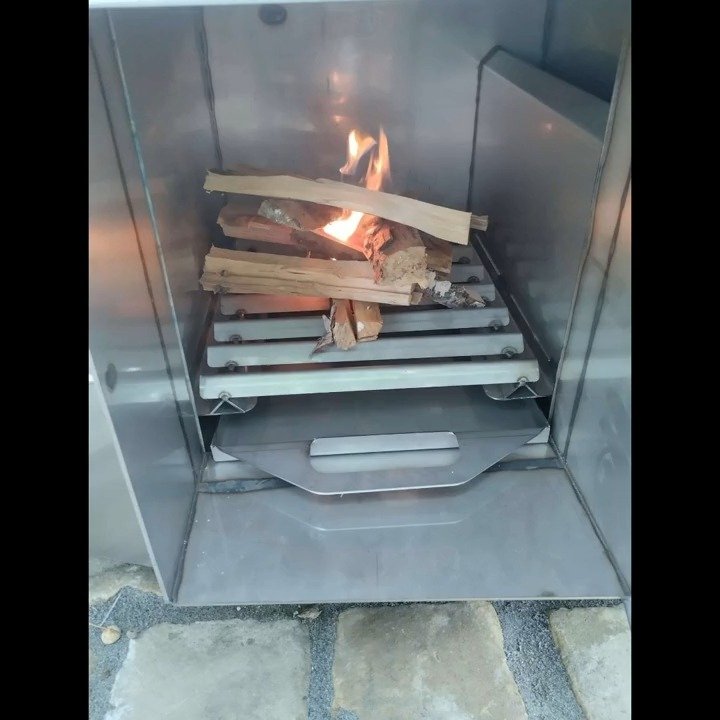
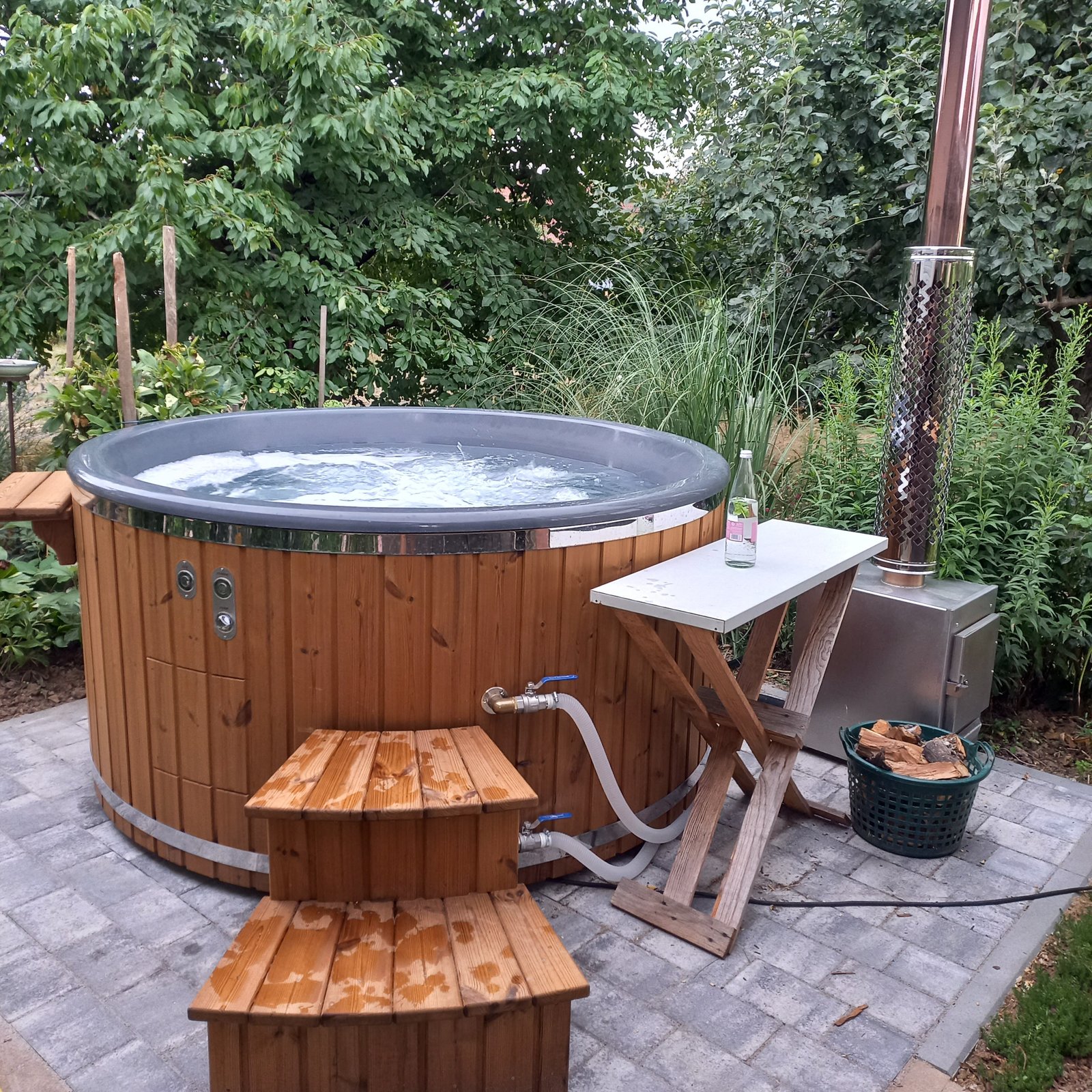
A log stove’s useful output changes during lighting, full burn and burn-down. Dry split fuel, a clean stove, good draught and correct water circulation improve consistency. Damp logs spend energy evaporating moisture and can produce a weak, smoky fire. Over-fuelling does not safely compensate for restricted water flow or an unsuitable chimney.
Manufacturer stove ratings are useful for selecting compatible equipment, but the figure should not be inserted into the ideal electric calculation without knowing what it represents. The tub receives only the heat transferred into the circulating water after combustion and flue losses.
Why electric heating can be slow but predictable
An electric heater normally provides a steadier input when the circulation and controls are satisfied. Predictability is useful for schedules, but a small heater still has to supply the full calculated energy. Increasing the rating may shorten heat-up only if the property’s supply, controls, circulation and product are designed for it.
Some systems are intended to maintain temperature rather than recover a large cold fill quickly. For frequent use, holding a lower standby temperature and scheduling the final rise may be more practical than reheating from cold. For occasional use, the standing losses can outweigh that convenience. Compare the routine as well as the first heat.
The cover is part of the heating system
An uncovered warm surface loses heat through evaporation and convection. Use the correct cover during heating when the product instructions permit it, and keep the required clearance from a chimney or hot component. A cover that is waterlogged, distorted or too small can look present while allowing a substantial warm-air path.
Turn a first-session estimate into your own forecast
- Record the actual filled volume and measure the mixed starting temperature.
- Record weather, wind exposure, cover use and the target temperature.
- For wood, weigh or consistently count the same dry log size; for electric, record heater runtime or metered energy where available.
- Measure the mixed water at regular intervals away from the hot-water return.
- Note pauses, fuel additions, pump changes and the time the final target is stable.
Two or three sessions will reveal far more than a generic online estimate. If performance suddenly changes, inspect cover fit, water flow, air locks, scale, filter condition, fuel and controls before assuming the heater is undersized.
Keep a short heat-up record
| Record | Useful detail |
|---|---|
| Fill and temperature | Actual operating litres; mixed starting and target temperatures |
| Conditions | Air temperature, wind exposure, cover position and any rain |
| Heat source | Heater model; fuel condition and additions, or metered electrical input if available |
| Progress | Time and mixed-water readings using the same safe measurement method |
| Changes | Refuelling pauses, cover opening, unusual flow, faults or control interruptions |
Compare sessions with similar inputs. A sudden change is a reason to inspect the system safely; it is not proof that a bigger heater is needed.
How to compare quotations
Ask each supplier for an estimated range using the same volume, 10°C-to-38°C example or another start/target that matches your site, and the same winter or summer conditions. Require the selected heater, cover and insulation to be identified. A precise time without its assumptions is weaker evidence than a sensible range with them.
For ownership cost, continue to the wood-fired running-cost calculation. For the wider choice, compare wood-fired and electric hot tubs.