
Hot Tubs with Jets: Wood-Fired and Electric Options for UK Gardens
A hot tub with jets combines warm-water bathing with powered water or air movement. That sounds simple, but the quality of the experience depends on more than the number of nozzles in the shell. Seating position, pump performance, pipe layout, controls, filtration and access for servicing all matter. The heating system is a separate decision.
This distinction is especially important when comparing a wood-fired hot tub with jets. The stove can heat the water without a conventional electric heater, but hydro-massage pumps, air blowers, filtration and lights still normally need electricity. A useful quotation should therefore describe the heating and massage systems separately, together with their installation requirements.
TimberIN offers configurable hot tubs rather than one fixed jet package for every buyer. This guide explains the choices in practical terms, including hydro jets versus air bubbles, wood-fired and electric heating, jet placement, water care, winter use and the information needed before production.
Start with the experience: decide who will use the tub, where they will sit and whether they want focused massage or gentle bubbling. Then specify the pump, jets, controls and heater around that use.
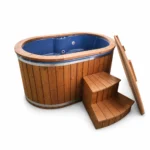
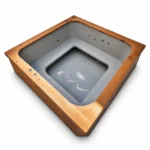
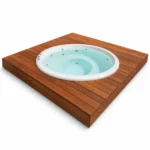
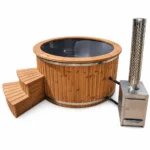
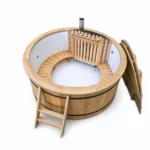
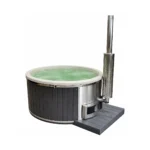
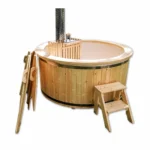
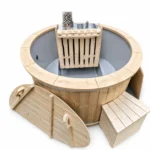
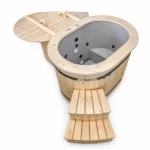
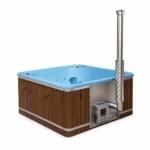
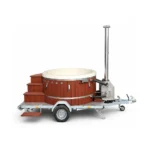
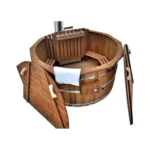
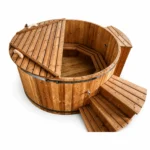
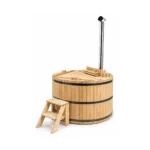
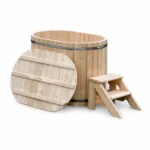
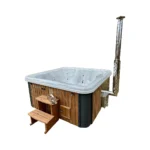
Current hot tubs with jet-compatible configurations
The products and prices below are loaded from WooCommerce. A displayed base model does not necessarily include hydro jets, air bubbles, filtration or lighting as standard. Open the product page and check the selected options and written quotation.
Hydro jets, air bubbles or both?
Hydro jets move water through shaped outlets and are usually chosen for a more directed sensation. An air system pushes air through smaller outlets, creating widespread bubbling and surface movement. Some buyers enjoy both; others prefer a quiet soaking tub with no powered massage. There is no universally superior system.
| System | What it feels like | What to check |
|---|---|---|
| Hydro-massage jets | Focused streams aimed at selected seating positions | Pump flow, nozzle type, useful placement, adjustability and service access |
| Air-bubble system | Softer bubbling across a wider part of the tub | Blower position, air-line drainage, noise and winter procedure |
| Combined system | Choice of directed water movement, bubbles or both | Electrical load, controls, pipework complexity and maintenance space |
| Simple soaking tub | Still, quiet water without powered massage | Whether the lower complexity better suits the intended routine |
Do not buy by jet count alone. Ten well-positioned outlets supplied by a correctly matched pump can be more useful than a larger number that divides the available flow. Ask which seats receive jets, whether individual outlets can be adjusted, and where the pump, blower and controls can be reached after installation.
Wood-fired hot tubs with jets
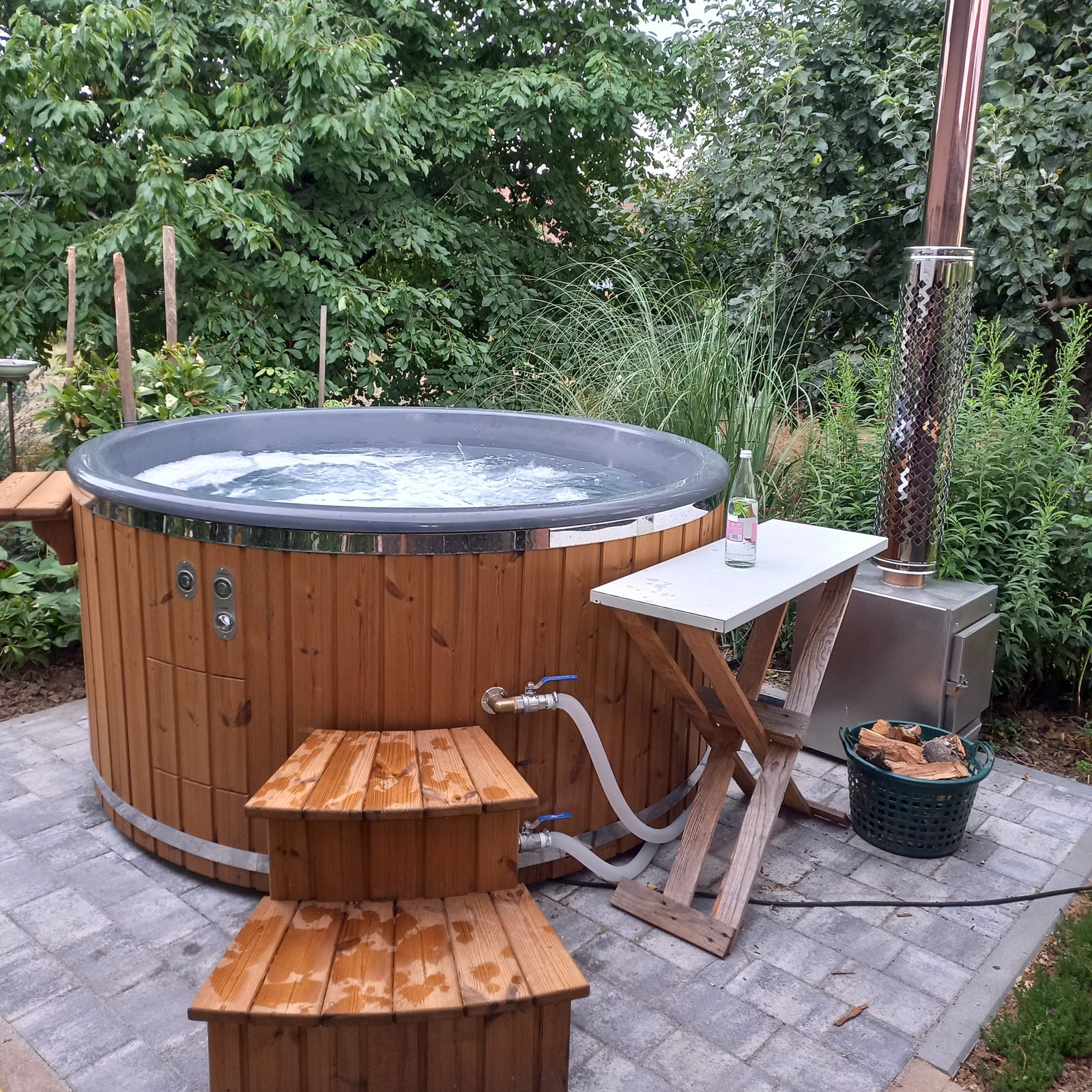
A wood-fired model offers the ritual and independence of heating with logs while retaining modern massage options. The stove may be external, integrated into the tub wall or, in some designs, positioned within the bathing vessel behind a guard. Each arrangement affects seating, access, heat-up routine and the space required around the tub.
The jets do not normally run from the fire. A hydro pump and air blower use electricity, as do most filtration systems and LED lights. The electrical installation must be planned for an outdoor wet environment by a suitably qualified professional. If completely off-grid use is essential, a simple wood-fired soaking configuration may be more appropriate than a full jet package.
For the heating side of the project, compare the wood-fired hot-tub heater guide and the main wood-fired hot-tub range. The stove must suit the water volume and circulation arrangement; the massage pump should not be treated as a substitute for the required heater circulation.
Electric and hybrid configurations
An electric heater is convenient for buyers who want controlled, repeatable heating and have a suitable supply. A hybrid configuration can combine a wood stove for primary heat with electric support for temperature maintenance, depending on the exact model. In every case, the total electrical demand must include the heater, hydro pump, blower, filtration, lights and controls that can operate together.
Ask an electrician to assess the property and cable route before finalising the equipment. The product specification should identify supply requirements, protective devices and control locations for the selected configuration. Outdoor installation, bonding and local requirements cannot be settled by a generic online guide.
Jet placement, seating and control
Useful jets meet the body where people actually sit. Before choosing a layout, look at the clear seat depth, water level and likely height of the users. A nozzle that appears correctly positioned in an empty shell may sit too high or low once the tub is filled and occupied. Families may also prefer adjustable jets or separate zones so that not every seat receives the same pressure.
- Confirm the seats or bench areas served by hydro jets.
- Ask whether flow or air induction can be adjusted at the tub.
- Check pump and blower noise, vibration isolation and ventilation.
- Keep controls reachable without leaning over the water or heater.
- Leave removable access panels clear after decking or landscaping.
Filtration, pipework and water care
A jetted tub contains more pipework than a simple soaking tub. Water can remain in manifolds and jet lines when the main vessel is drained, so cleaning and winter procedures must cover the complete system. Filtration helps remove particles but does not replace testing, disinfection, water replacement and physical cleaning.
The appropriate routine depends on bathing load, water source, operating temperature, filtration and whether the tub is private or used by paying guests. Commercial and holiday-let operators need a documented system that meets their applicable responsibilities. Confirm compatible water-care products with the tub, pump, heater and liner materials.
Foundation, drainage and service access
The base must support the filled tub, users, heater and equipment on a stable and level surface. Plan a safe route for water released during draining and keep electrical equipment away from standing water. The exact foundation should follow the model drawing and site conditions.
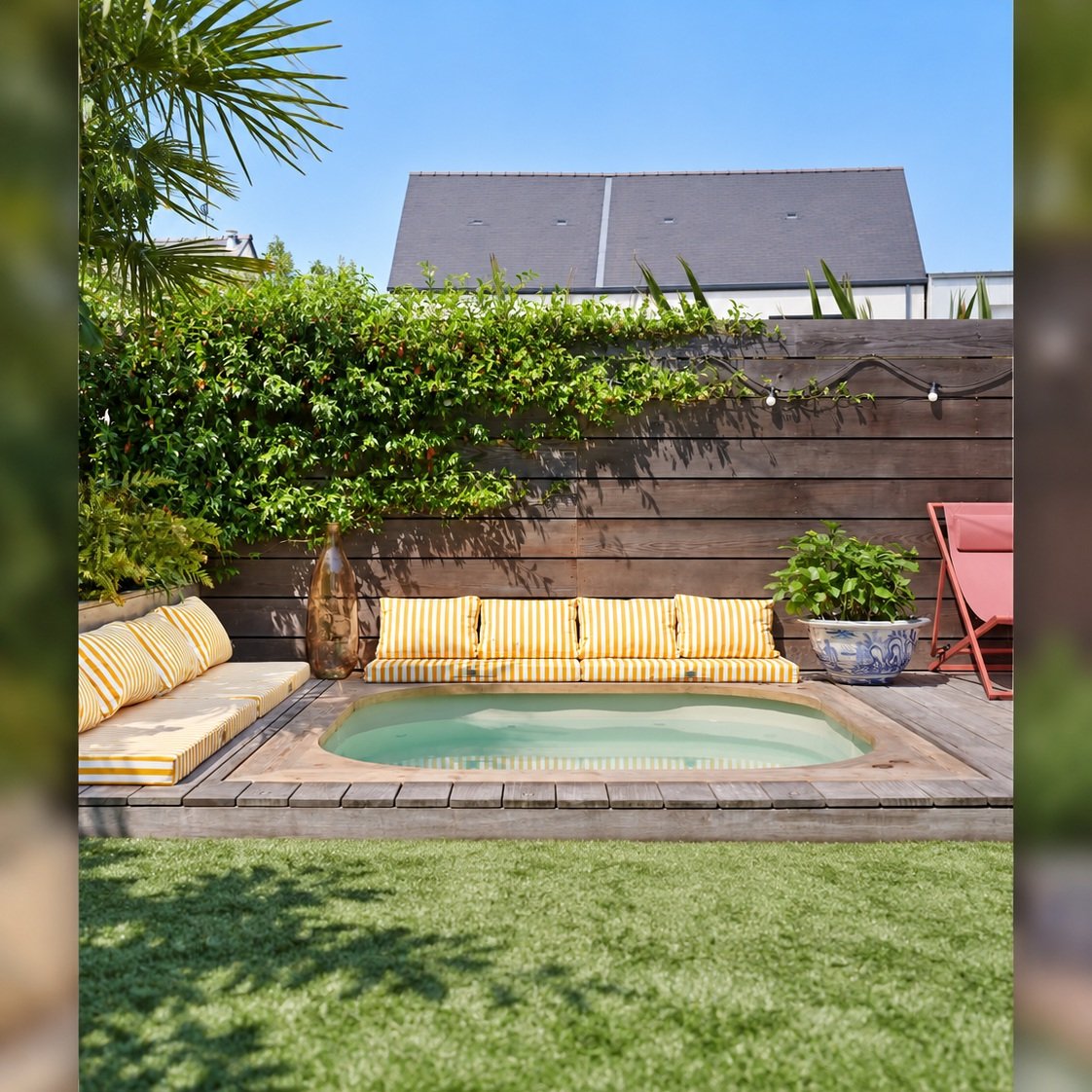
Equipment access is easy to lose when a tub is recessed into decking. Pumps, blowers, filters, unions, drains and controls need enough working space for inspection, winterisation and replacement. If a sunken installation is planned, the service void and drainage should be designed before the tub arrives. See the in-ground hot-tub guide for the additional considerations.
Winter use and drain-down
Freezing water can damage pumps, filters, manifolds, jet bodies and air lines. A winter plan should state whether the tub remains filled and protected in regular use or is completely drained when unattended. Simply opening the main drain may not empty every low point in a jetted system.
Follow the written procedure for the selected equipment and arrange professional help where necessary. Keep the cover secure, inspect exposed pipes and do not light a wood stove unless the required water level and circulation path are established.
What affects the complete price?
| Cost area | Typical variables | Confirm in writing |
|---|---|---|
| Base tub | Size, liner, timber cladding, seating and cover | Exact model, dimensions and included equipment |
| Massage system | Hydro pump, jet number and placement, air blower and controls | Selected package, electrical load and access panels |
| Heating | Wood stove, electric heater or hybrid arrangement | Heater model, chimney or electrical requirements and controls |
| Water care | Filter, pipework, valves and treatment equipment | Included components and owner maintenance |
| Site work | Base, delivery, lifting, power, drainage and landscaping | Who supplies and completes each item |
Compare complete written specifications rather than a headline price or jet count. If you are still deciding between product families, use the outdoor hot-tub buying hub; when requesting a quotation, include the postcode, normal number of users, preferred heater, desired jet sensation and access constraints.
Hot tub with jets FAQs
Do jets work without electricity in a wood-fired hot tub?
The stove can heat the water using wood, but hydro-massage pumps and air blowers normally require electricity. A completely off-grid setup usually means choosing a simpler soaking configuration or arranging a suitable independent power system.
Are more hot-tub jets always better?
No. Useful placement, nozzle design, pump flow and balanced pipework matter more than the raw number. Ask which seats receive jets and how the flow can be adjusted.
What is the difference between hydro jets and air bubbles?
Hydro jets direct pumped water at selected seating positions. Air systems use a blower to create gentler bubbling across a broader area. Some configurations combine both systems.
Can a jetted hot tub be installed in decking?
It can, provided the structure supports the complete load and the design preserves safe drainage and service access to pumps, filters, unions and controls. Plan this before construction.
Do hot-tub jets provide medical hydrotherapy?
Jets provide water movement and may feel relaxing, but a consumer hot tub should not be presented as medical treatment. Anyone seeking help for a health condition should obtain appropriate professional advice.
Specify the complete system, not just the nozzles
Tell us how many people normally use the tub, where they want the massage effect, how the water should be heated and what power and access are available. We can then identify suitable models and options for a clear written quotation.