
Second-Hand Outdoor Saunas UK & Ireland: Used Sauna Buying, Inspection & Cost Guide
A second-hand outdoor sauna can look like a way to reduce the purchase price, but the real decision is whether the structure, heater, electrics or chimney, benches, glazing, roof and transport plan still make economic and practical sense. Moving a used sauna is not the same as moving indoor furniture: it may be a weathered building with hidden moisture, heavy components, site-specific services and a delivery route that was never designed for a second installation.
This guide is for UK and Republic of Ireland buyers researching used, pre-owned or second-hand garden saunas. TimberIN does not imply that it has used sauna stock available unless a specific used item is explicitly listed. If you want a new sauna, use the outdoor saunas for sale and outdoor sauna owners. This page is about due diligence before buying someone else’s sauna.
Best buying principle: value a used sauna as a complete relocation project—structure, heater, electrical/chimney system, dismantling, transport, reassembly and remedial work—not just as the seller’s asking price.
When a second-hand sauna can make sense
A used outdoor sauna can be attractive when the building is relatively young, has a clear manufacturer/model identity, has been kept dry, includes usable technical documentation, can be moved without destructive dismantling and fits the new site. A local buyer may also benefit when a factory-assembled sauna can be lifted directly from one accessible property to another.
The economics become weaker when the sauna has unknown water ingress, improvised electrics, a damaged roof, rotten lower timbers, obsolete heater components, no documentation or an access route that requires expensive dismantling and reconstruction. A low purchase price can disappear quickly once transport, crane work and repairs are added.
Used sauna red flags before you travel to inspect it
- Seller cannot identify the manufacturer, model, approximate age or heater.
- No clear reason for sale or inconsistent history of where the sauna has been installed.
- Persistent damp smell, visible mould, blackened lower walls or soft timber.
- Roof leaks, failed flashings or evidence of repeated patch repairs.
- Electrical cables, controls or junctions added without documentation.
- Wood stove or chimney altered with unverified components.
- Cracked glazing, damaged door hinges or a door that no longer closes correctly.
- Benches that flex, show deep scorching or have hidden repairs.
- Sauna is boxed in by landscaping and cannot be lifted or dismantled cleanly.
- Seller expects the buyer to remove it without a defined transport method.
Start with identity and documentation
Ask for the manufacturer, model, year, original invoice if available, heater model, manuals, technical drawings and any installation documents. A known product is easier to assess because you can compare the current structure with the intended design and identify replacement parts. Unknown custom builds are not automatically poor, but they require more inspection because there is no reliable baseline.
| Document / identity item | Why it helps | If missing |
|---|---|---|
| Manufacturer and model | Allows dimensional, heater and parts research. | Treat measurements and compatibility as unknown until verified. |
| Original invoice/order | Shows age and originally supplied options. | Do not assume visible accessories were original or approved. |
| Heater manual | Provides clearances, wiring/chimney and stone guidance. | Have the exact heater identified before reuse. |
| Electrical certification/history | Shows how the circuit was installed and tested. | Plan a full inspection and new-site design by a qualified electrician. |
| Chimney/stove documentation | Helps identify approved flue components and clearances. | Do not reuse an unknown system without competent assessment. |
| Assembly drawings | Makes dismantling and reassembly safer. | Budget more time and risk for removal. |
Inspect the roof before admiring the interior
Water usually causes more structural trouble than normal sauna heat. Start outside. Look for failed roofing, loose flashings, standing water, clogged drainage paths, stains below roof edges and vegetation against the structure. Then inspect the top of walls and ceiling inside for discolouration or softness.
- Check roof covering, ridge, flashings and penetrations.
- Inspect around chimney exits for heat damage and water ingress.
- Look under eaves and at wall-to-roof joints.
- Check whether gutters or runoff send water against the base.
- Inspect the lower wall and floor edges for splash-back damage.
- Use moisture assessment where appropriate rather than judging colour alone.
Lower timber, floor and base are critical
The bottom of an outdoor sauna receives rain splash, trapped moisture and the consequences of a poor foundation. Probe visually accessible lower timbers, support rails and floor edges. Look for softness, cracking, fungal growth, compression around support points and uneven settlement.
Ask how the sauna is supported. A structure that has spent years on a well-drained, level base may relocate better than one sitting directly on wet soil or an improvised deck. If the seller cannot expose the important support areas, price the uncertainty rather than assuming they are sound.
Benches and interior surfaces
Sauna benches must be structurally sound and comfortable because users sit close to hot surfaces. Check fasteners, supports, splits, excessive movement, dark scorching and areas that stay damp. Cosmetic staining is different from structural damage, so identify the cause before deciding.
| Interior item | Inspect for | Possible response |
|---|---|---|
| Upper benches | Movement, cracks, failed supports, deep staining. | Repair/replace before use if structural integrity is doubtful. |
| Lower bench/steps | Loose fixings and unsafe step geometry. | Rebuild to a stable layout if necessary. |
| Wall/ceiling lining | Water stains, mould, warping, heat damage. | Trace moisture/heat source before cosmetic work. |
| Floor | Soft spots, drainage problems, trapped water. | Repair substrate and drainage before reinstallation. |
| Door | Alignment, hinges, handle and safe opening. | Replace damaged hardware and confirm easy exit. |
| Glazing | Cracks, edge damage, failed fixings. | Use correct safety glazing and approved replacement method. |
Electric heater: do not inherit the old installation
Even if the electric heater itself is reusable, the new property needs its own electrical design. Cable length, protective devices, isolation, control location and supply capacity are site-specific. Do not simply copy the old cable or connect a sauna heater to an ordinary socket because the previous owner says it worked.
- Record the exact heater model and rating.
- Check heater casing, element condition, terminals and control equipment.
- Inspect stones and replace damaged/contaminated stones as appropriate.
- Obtain the installation manual and required safety clearances.
- Have a qualified electrician design and test the new circuit.
- Replace improvised or heat-damaged electrical components rather than reusing them.
Wood-fired heater and chimney inspection
A used wood stove creates a different set of risks. Check the firebox, door, grate, baffles, stone cage if applicable, chimney sections, roof penetration and heat shields. Corrosion, distortion, cracks or mixed flue components need competent assessment. The new site may also need a different chimney height or arrangement.
| Component | Inspect | Why it matters |
|---|---|---|
| Firebox | Corrosion, cracks, deformation and door seal. | Structural failure or poor combustion can create safety problems. |
| Heater guard | Completeness, clearances and secure fixing. | Protects users from hot surfaces. |
| Flue sections | Correct matching parts, corrosion and locking joints. | Unknown/mixed components should not be assumed compatible. |
| Roof penetration | Heat protection and weather sealing. | Must manage both fire clearance and rain ingress. |
| Hearth/wall protection | Condition and suitability for the new layout. | The new site may need a redesigned protective zone. |
| Fuel area | Dry storage and safe loading route. | Reduces unsafe clutter around the stove. |
Ventilation cannot be assessed by “it gets hot”
A sauna can reach a high temperature and still have poor ventilation. Identify the designed inlet and outlet and check that previous owners have not blocked or modified them. When a used sauna is moved, the new heater, door orientation and external conditions can affect how ventilation should be arranged.
Persistent odour, condensation, slow drying and mould can indicate ventilation or moisture problems. Do not solve them by sealing the room more tightly.
Dismantling risk: assembled, modular or flat-pack
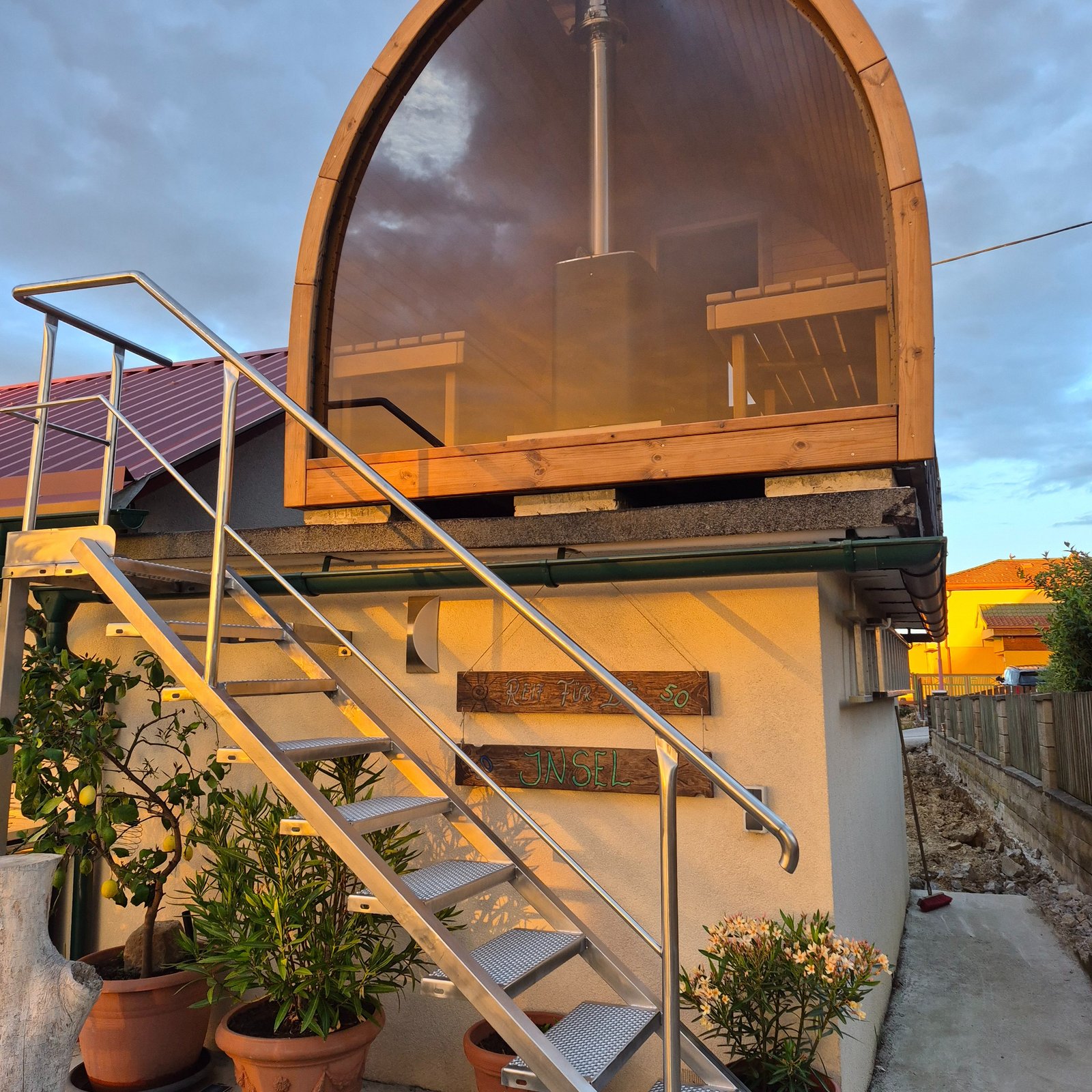
Before buying, establish how the sauna was built and how it can be moved. A factory-assembled barrel or cabin may be designed to lift as one unit, while another structure may need partial dismantling. Repeated disassembly can damage tongue-and-groove boards, roofing, seals and hidden fasteners.
| Removal method | Potential advantage | Risk / cost |
|---|---|---|
| Lift complete unit | Fast and preserves original assembly. | Requires verified lifting points, weight, crane/telehandler and access. |
| Partial dismantling | Can reduce size for restricted access. | More labour and risk of damaging roof, trim, wiring or seals. |
| Full dismantling | May reach very narrow sites. | Highest labour, labelling, weather exposure and reassembly risk. |
| Cutting/modification | Can solve a blocked route in extreme cases. | Often destroys value and should be avoided unless professionally planned. |
Transport and crane cost can change the deal
Get transport and lifting quotations before paying for the sauna. Measure both properties, not just the destination. A seller may have built fences, extensions or landscaping after the sauna was installed, making removal harder than original delivery.
- Measure the sauna and determine its realistic transport state.
- Confirm approximate transport/lifting weight from reliable documentation where possible.
- Survey the seller’s extraction route and the buyer’s delivery route.
- Check crane or telehandler reach, ground bearing and overhead restrictions.
- Agree who disconnects electrics, chimney and any lighting.
- Protect the unit from rain during dismantling and transport.
- Prepare the destination base before moving day.
Foundation at the new site
Do not copy the old foundation automatically. The new ground conditions, drainage and landscaping are different. Design a level, stable, drained base around the sauna’s support points and complete installed load. If the used sauna has distorted because of poor support, correct the structural issue before putting it on a new base.
An engineer or competent contractor may be appropriate for heavy cabins, raised decks, unusual ground or commercial installations.
Planning, neighbour and insurance checks
A sauna that was acceptable at the seller’s property is not automatically acceptable at yours. Check the new site for planning rules, boundary position, height, protected status, covenants, smoke considerations and electrical/fire requirements. In the Republic of Ireland, use the local property and authority context rather than assuming UK rules apply.
Holiday-let or commercial use requires a higher level of documented safety, cleaning, electrical/fire procedure and insurer acceptance. A private used sauna does not become a commercial-grade installation merely because it can seat several people.
Warranty: assume less, verify everything
Manufacturer warranties may be limited to the original purchaser, original site, defined maintenance or a specific time period. Moving, dismantling or modifying the sauna can affect coverage. Ask for the written terms and written confirmation if warranty transfer matters to your purchase.
Even where the structure has no remaining warranty, branded heaters and controls may have identifiable replacement parts. That serviceability can be more valuable than a vague promise that “everything works”.
Used price vs complete project cost
Compare a second-hand sauna with a new project on a total-cost basis. The used purchase price may be low, but add inspection, electrician or chimney professional, dismantling, transport, crane, repairs, roof work, replacement heater parts, new foundation and reassembly.
| Cost line | Used sauna | New sauna comparison |
|---|---|---|
| Purchase price | Usually lower. | Higher, but defined new specification. |
| Inspection/remedial work | Potentially significant and uncertain. | Usually lower before first installation. |
| Removal | Buyer may fund dismantling/crane. | Not applicable at seller site. |
| Transport | May require one-off specialist route. | Planned as part of current order. |
| Foundation | Still required at new site. | Still required. |
| Electrical/chimney | Often needs redesign and inspection. | Designed for selected current heater. |
| Warranty | May be expired/non-transferable. | Current written warranty applies to new sale. |
| Parts/documents | Can be incomplete on older/custom units. | Current documentation and order record available. |
When buying new is the better value
New can be better value when you need a specific size, current heater, confirmed warranty, clean technical documentation, predictable delivery planning or a layout that suits the site without major adaptation. It can also be safer where the used unit has uncertain electrics, structural moisture or no clear removal plan.
Compare the current outdoor saunas for sale and outdoor sauna price guide before assuming second-hand is cheaper. A used bargain should survive a like-for-like project-cost comparison.
Second-hand outdoor sauna inspection checklist
- Identify manufacturer, model, age and original configuration.
- Collect invoice, manuals, drawings and heater information.
- Inspect roof, flashings and chimney penetration.
- Inspect lower walls, support rails and floor for moisture damage.
- Check benches, steps, door and glazing.
- Record electric heater or wood stove model and condition.
- Do not reuse an old electrical installation without a new-site design/test.
- Inspect chimney/flue components and heat protection on wood-fired units.
- Identify ventilation inlet/outlet and signs of poor drying.
- Confirm whether the sauna can move complete or needs dismantling.
- Measure removal route and destination route.
- Price crane/telehandler and transport before purchase.
- Design the new foundation and drainage.
- Check planning/property/insurance requirements for the destination.
- Verify warranty transfer and spare-parts availability.
- Build a complete cost estimate including repairs and trades.
- Agree exactly what accessories/components are included before paying.
Questions to ask the seller
- Why are you selling the sauna?
- Who manufactured it and what exact model is it?
- When was it installed and has it ever been moved?
- Has the roof or lower timber ever leaked or been repaired?
- What heater is fitted and has it been replaced or modified?
- Who installed the electrical or chimney system?
- Are manuals, drawings and invoices available?
- What maintenance has been done to the exterior timber and roof?
- Has any mould, rot or persistent condensation occurred?
- How do you expect the sauna to be removed from the property?
- Is anything shown in the photos excluded from the sale?
- Is any warranty transferable?
Frequently asked questions about second-hand outdoor saunas
Is a second-hand outdoor sauna worth buying?
It can be when condition, documentation, removal and total relocation cost are favourable. The asking price alone is not enough to decide.
What is the biggest risk with a used garden sauna?
Hidden moisture/structural damage and unplanned relocation cost are major risks. Electrical or chimney modifications can also create important safety questions.
Can I reuse the existing electric heater?
Potentially, if the heater is in suitable condition and approved for the final room, but the new property still needs a correctly designed and tested electrical installation.
Can I reuse a wood stove and chimney?
Potentially after competent assessment, but the new site may require different flue components, clearances, hearth or weather sealing. Do not assume an old mixed chimney is reusable.
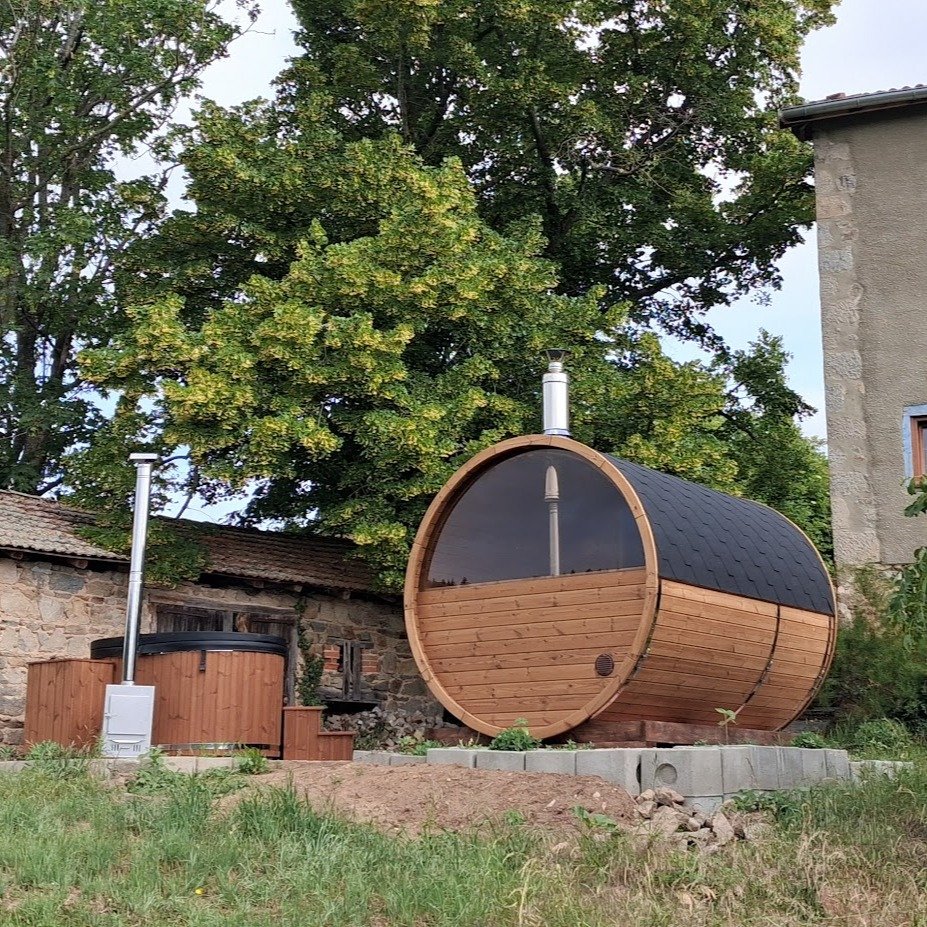
Can a barrel sauna be moved in one piece?
Some can, depending on construction, condition, weight and access. Verify lifting points and transport method with competent professionals before committing.
Does a used sauna keep its warranty?
Not necessarily. Warranty transfer, duration and conditions vary. Obtain written confirmation from the responsible seller/manufacturer if it matters.
Should I buy a used sauna without documents?
That increases uncertainty. You may still proceed after thorough professional assessment, but budget for identifying heater, materials, structure and installation requirements from scratch.
Does TimberIN sell second-hand saunas?
This guide does not claim used TimberIN stock is available. Used stock should only be treated as available when a specific item is explicitly listed.
What should I compare against a used price?
Compare with a current new sauna including delivery, heater, foundation and services, then add all used-unit removal, transport, repair and recommissioning costs.
What pages should I use if I want a new sauna?
Use the outdoor sauna for-sale page for current buying options and the price guide for total-project budgeting.
Treat a used sauna as a building relocation, not a bargain appliance
The best second-hand purchase is one you can identify, inspect, move, repair and recommission with a clear cost plan. If important facts remain unknown, make the uncertainty visible in your budget. A new sauna may cost more at the start but can be cheaper than rescuing a poorly documented structure after transport.