

Yes, an outdoor sauna can work throughout a UK winter. Cold weather does not change the principle of sauna bathing; it increases the temperature difference the cabin and heater must overcome. Reliable winter performance comes from matching the heater to the finished room, limiting uncontrolled heat loss and drying the building completely after every session.
What cold weather changes
The heater must warm cold air, benches, walls, stones and glazing while the cabin continuously loses heat outside. Wider glazing, an exposed base, strong wind, unintended gaps and frequent door opening increase the load. A warm-up time measured on a mild factory test is therefore not a promise for a January garden.
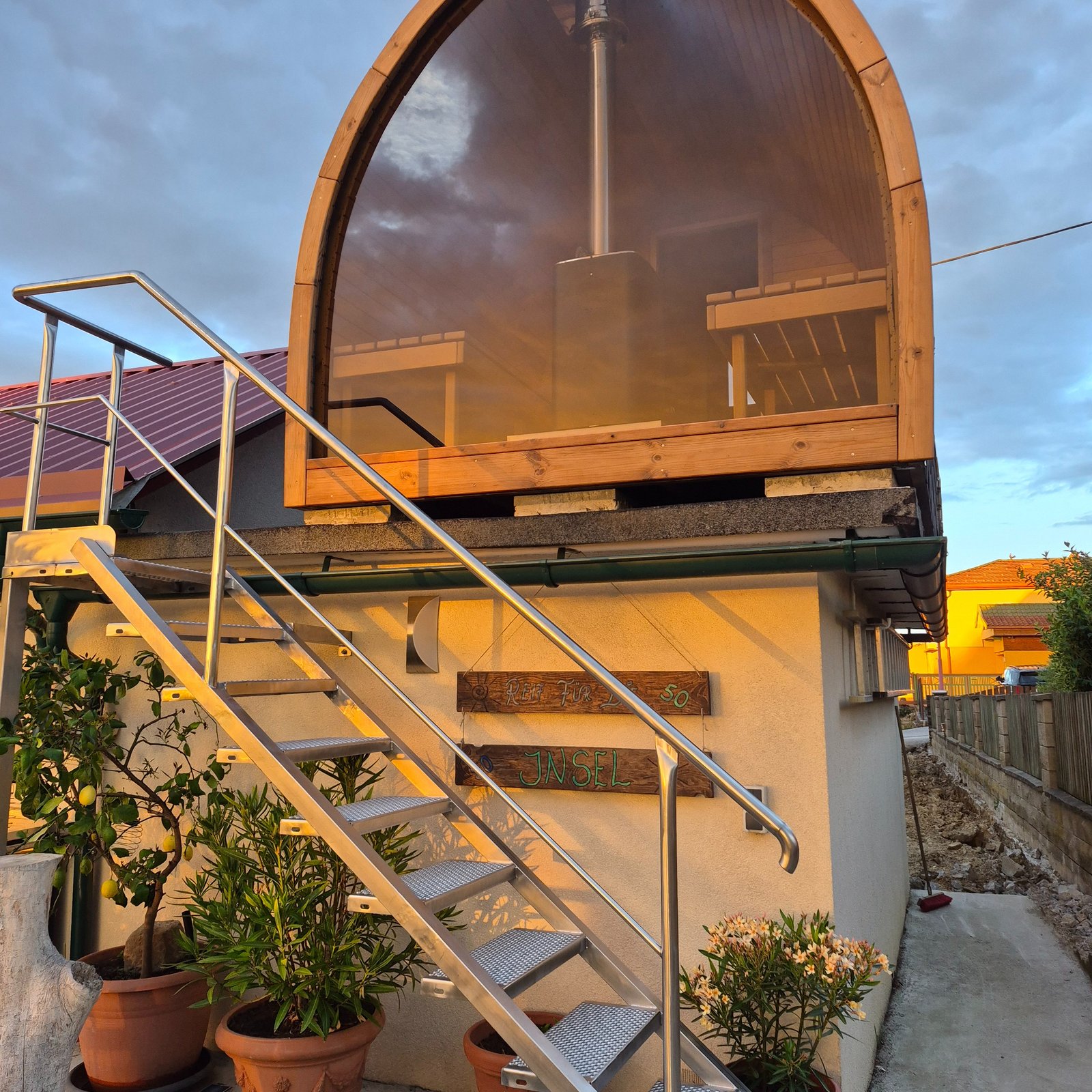
Ask for the finished internal volume, glazing area, insulation build-up and the heater approved for that exact configuration. Heater selection based only on floor area or the cabin’s outside dimensions can miss the effect of a curved roof, panoramic window or changing room.
| Winter symptom | Investigate | Do not do |
|---|---|---|
| Warm-up suddenly takes longer | Fuel or electrical supply, stones, door fit, damp cabin, wind and heater operation | Block vents or exceed heater settings |
| Water remains on glass or corners | Drying routine, airflow, roof/flashing and cold bridge | Close the damp cabin and disguise the smell |
| Door begins to rub | Ice at threshold, base level, hinge condition and timber movement | Force or lock the door |
| Smoke enters a wood sauna | Flue blockage, fuel, draught and combustion air | Continue the session or alter vents by guesswork |
| Electric heater trips | Record the fault and any moisture/weather link | Keep resetting or change protection |
Wood and electric heaters can both perform well
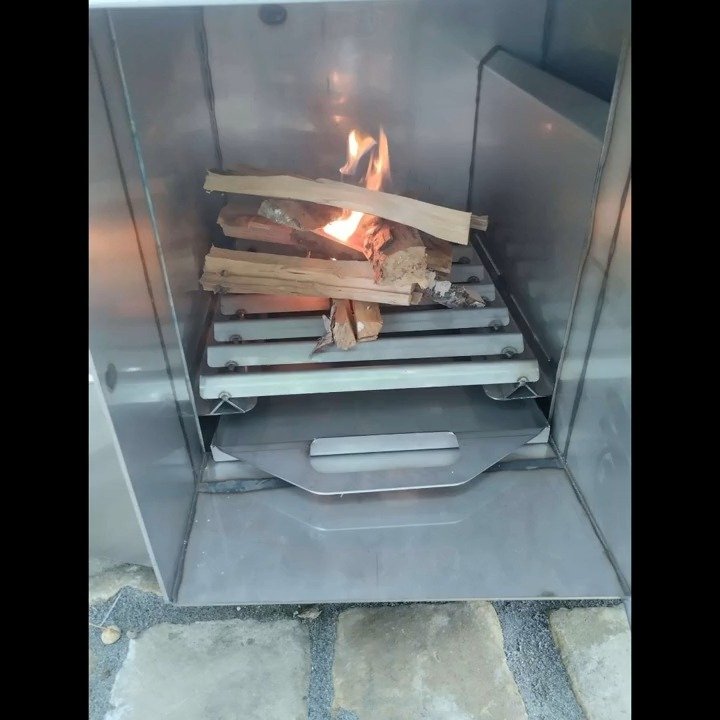
A wood-burning heater needs dry suitable fuel, a sound and clear flue, reliable combustion air and the clearances stated by its manufacturer. Fuel stored outdoors should be protected from rain while retaining airflow. Allow extra time for a cold stove and flue to establish normal draught, and stop if smoke enters the cabin.
An electric heater provides consistent controlled input when the supply, controls and installation are correct. Cold weather does not justify a larger breaker, bypassed limit or improvised portable heater. If performance changes, the heater technician and electrician should compare the actual load, supply and control history with the manufacturer’s data.
A winter session starts with an exterior inspection
Clear and light the path without piling snow against cladding or vents. Check steps, threshold, roof edges, branches, drainage and the area around the flue. Remove snow only by a method safe for the roof and covering; do not climb onto an icy curved sauna roof. Confirm that wind has not moved a cap, flashing, cable or loose item.
Inside, check the heater, guard, stones, benches and door. Warm the empty cabin and observe normal controls, airflow and draught before bathing. A thermometer may help compare sessions, but comfort and safe heater operation matter more than chasing one headline temperature.
Record the roof’s snow-load and inspection instructions in the winter file. Snow depth alone cannot establish weight or whether the structure is safe. After heavy snow, drifting, thawing or visible distortion, restrict access and obtain appropriate help; do not climb an icy roof or attack the covering with a hard tool.
Drying is more important when the structure starts cold
After bathing, warm humid air meets cold glass and outer surfaces. Remove wet textiles, wipe standing water and use the specified residual-heat and ventilation routine until benches, floor and corners are dry. Do not turn the sauna into a drying room for piles of wet coats or boots; that adds moisture just as the heater is switched off.
Short-lived condensation can be normal. Water that remains, returns at the same roof edge or produces a musty smell needs investigation. Check vents, airflow beneath benches, roof and chimney flashing, base drainage and insulation continuity.
Plan the human transition as carefully as the cabin
Move between the house, sauna and cooling area on a stable illuminated route. Ice, bare feet and a sudden temperature change can make an attractive winter ritual unsafe. Keep a dry robe and footwear within easy reach and never leave children unsupervised. Avoid alcohol and leave the sauna immediately if you feel dizzy, nauseous, confused or otherwise unwell.
Compare winter sessions with a short record
Keep a winter-session record with the starting room temperature, outdoor conditions, heater setting or fuel, warm-up time and whether the cabin was dry. Compare similar sessions. A sudden deterioration deserves investigation; an unsupported universal warm-up time does not establish a fault.
Before leaving, confirm that the specified drying routine is complete, the heater is in its proper shutdown state and the route will remain safe as water freezes. A second check of bench ends, floor edges and the door threshold is more useful than leaving extra heat running without a plan.