
The function of the timber comes before its colour
Wood types for hot tubs: construction, cladding and care
Comparing species only makes sense once you have identified the role of the timber. In a traditional tub, it forms part of the water-holding vessel; around a polypropylene or fibreglass shell, it mainly provides cladding, steps or the rim. Moisture cycles, joints and maintenance are therefore different.
Lifespan cannot be inferred from the name of a species. Ventilation, drainage, exposure, finish, checking fixings and construction quality may matter more. For a genuinely wooden vessel, start with the solid-wood hot tub page; for a moulded shell, examine its inner material and cladding separately.
To choose logs to burn in the stove, see the guide to hot tub firewood: moisture and storage. The criteria below concern construction and cladding timber.
Four questions before choosing a species
- What does the timber do? It holds water, clads a shell, forms a step or protects a hot area.
- How does it dry? Rain, splashes, ground contact and airflow vary with the detail.
- What appearance will you accept? UV, finish, age and natural differences within the batch change the colour.
- What maintenance is realistic? Cleaning, inspection and surface renewal must suit how the site is used.
Thermally modified timber: stability and a brown colour
Thermal modification reduces timber’s sensitivity to changes in moisture and generally gives it a darker colour. This stability is useful outdoors, where rain, drying and heating alternate.
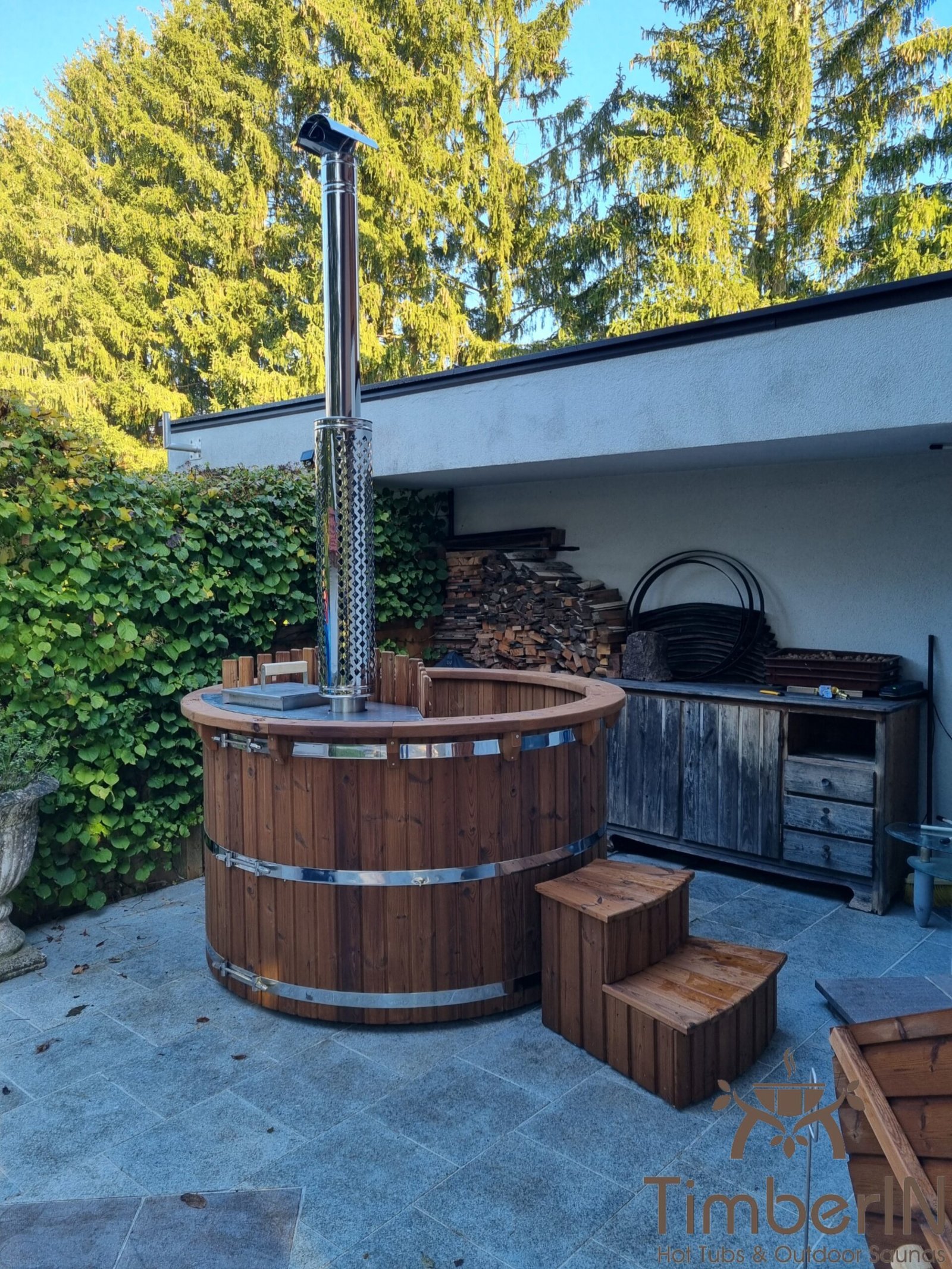
The treatment does not replace sound construction details. Cuts, fixings, the bottom of the cladding and areas where water collects still need attention. UV changes the colour unless a compatible finish is maintained. The Thermowood hot tub guide helps distinguish a thermally modified wooden vessel from cladding alone.
Spruce: a light-coloured option that needs regular checks
Spruce shows its growth rings, knots and variations in tone. This natural appearance suits a light Nordic aesthetic and often offers a more affordable starting point. In return, the design must prevent water from remaining at the bottom of the boards, and the outer surface must be checked according to its exposure.
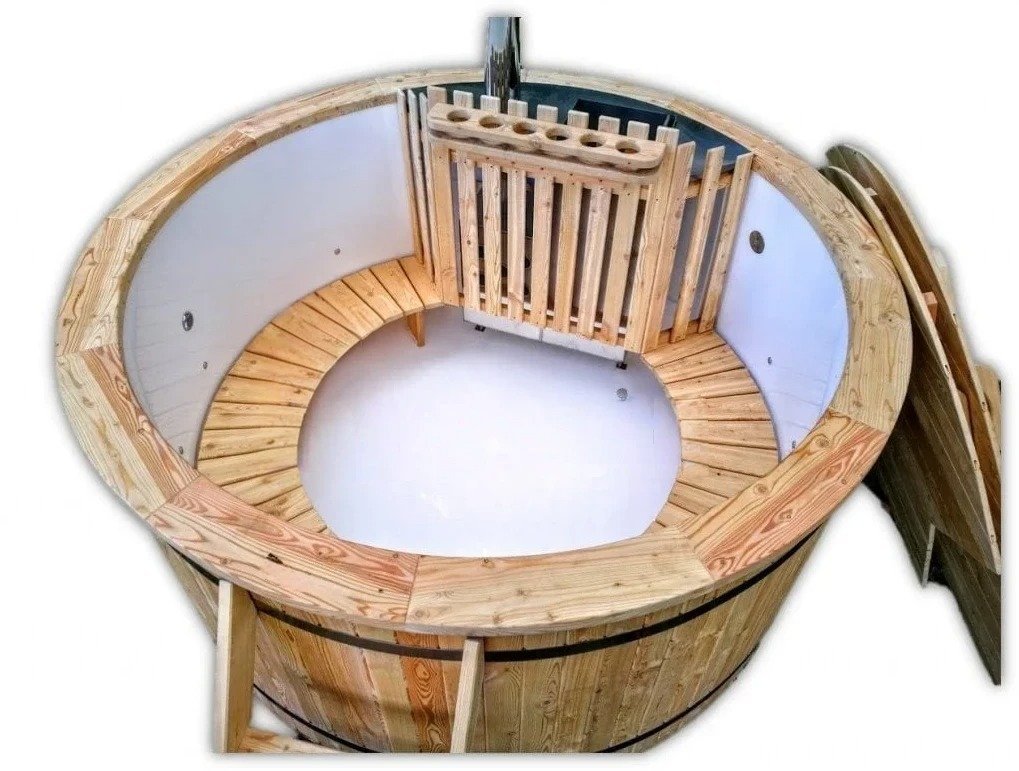
In a wooden vessel, filling, staves and hoops are part of how the product behaves. With cladding, the main aim is to let the boards dry while keeping the shell and equipment accessible. These routines are not interchangeable.
Larch: pronounced grain and warm tones
Larch is valued for its distinctive grain and shades ranging from warm yellow to reddish brown. Its natural properties make it interesting for outdoor components, but they do not remove the need for ventilation or attention to end grain, fixings and repeated splashing.
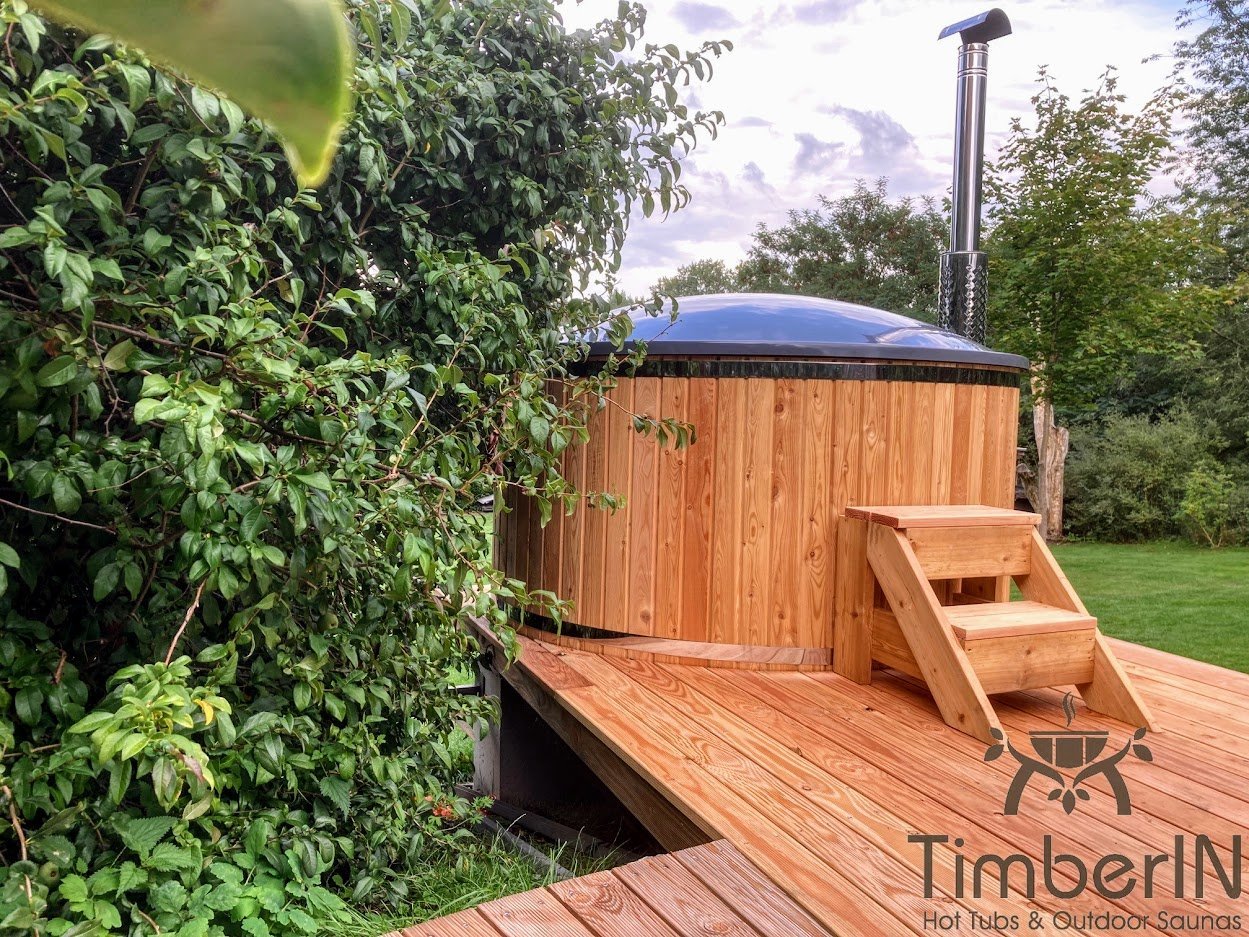
A pigmented finish can slow colour changes if it is approved and maintained. A grey patina can also be accepted, provided the surfaces dry evenly and no black, soft or constantly wet areas are concealed.
Compare what the three timbers actually change
| Species | Visual guide | Main benefit | What to check |
|---|---|---|---|
| Spruce | Light, with visible knots and growth rings | Traditional appearance and generally lower starting price | Drying, surface protection and areas near the ground |
| Larch | Pronounced grain, warm tones | Well suited to carefully designed outdoor components | End grain, joints, resin and ventilation |
| Thermally modified timber | More even brown colour | Dimensional stability and reduced moisture absorption | Cuts, UV, fixings and standing water |
The price must account for the timber’s function, thickness, processing, finish and planned maintenance. A more expensive species does not correct a wet base or cladding that cannot be removed. The price guide helps place this choice within the whole project.
Maintain without hiding a fault
- identify the species, its function and the finish actually supplied;
- clean gently and allow to dry before applying protection;
- inspect cuts, active cracks, fixings, hoops and the bottom of the cladding;
- use only a compatible product on approved surfaces;
- deal with leaks, standing water or insufficient ventilation first;
- consider the condition of the timber alongside the cover and water management.
Oil changes the appearance and needs renewal. It does not repair a damaged part, a leak or a design that traps moisture. The hot tub maintenance guide adds checks for each type of construction.
Choose based on use, not a photograph
Ask for written confirmation of whether the timber forms the vessel or the cladding, which species are available for the model at the quotation date, which finish is applied and which surfaces may be maintained. Add the site’s exposure, the patina you accept and the time you want to spend on checks.
These answers allow TimberIN to confirm an actually available material and its function. They can accompany your enquiry during the buying process, without turning an old or overseas photograph into a promise of supply.