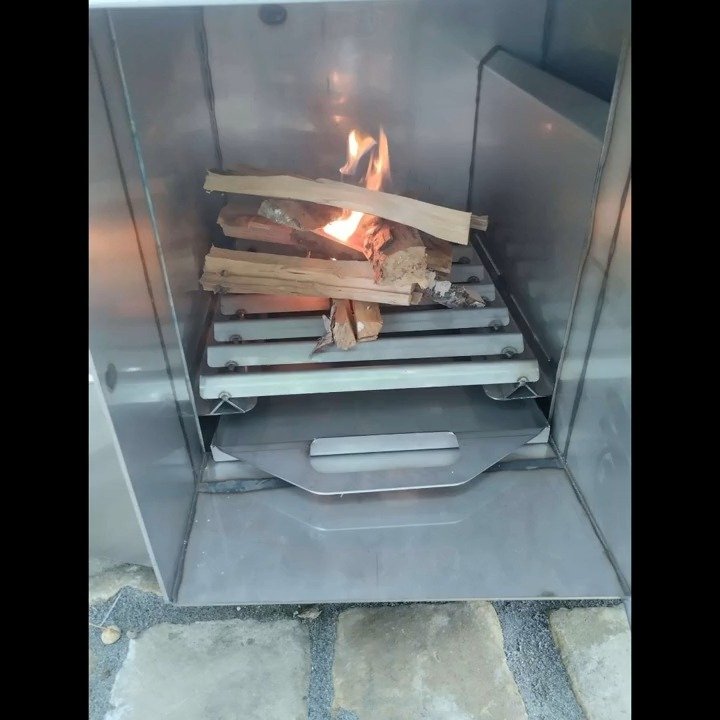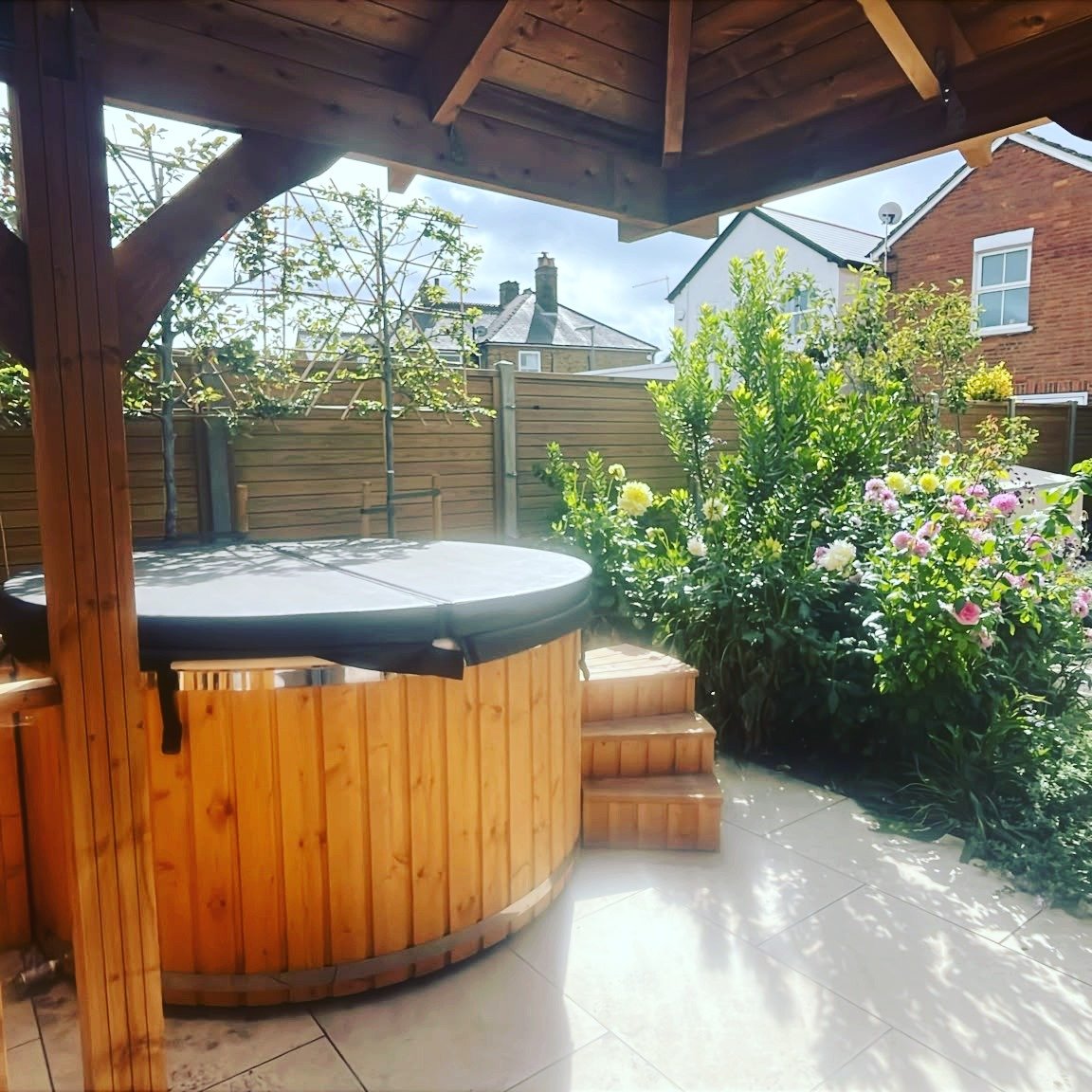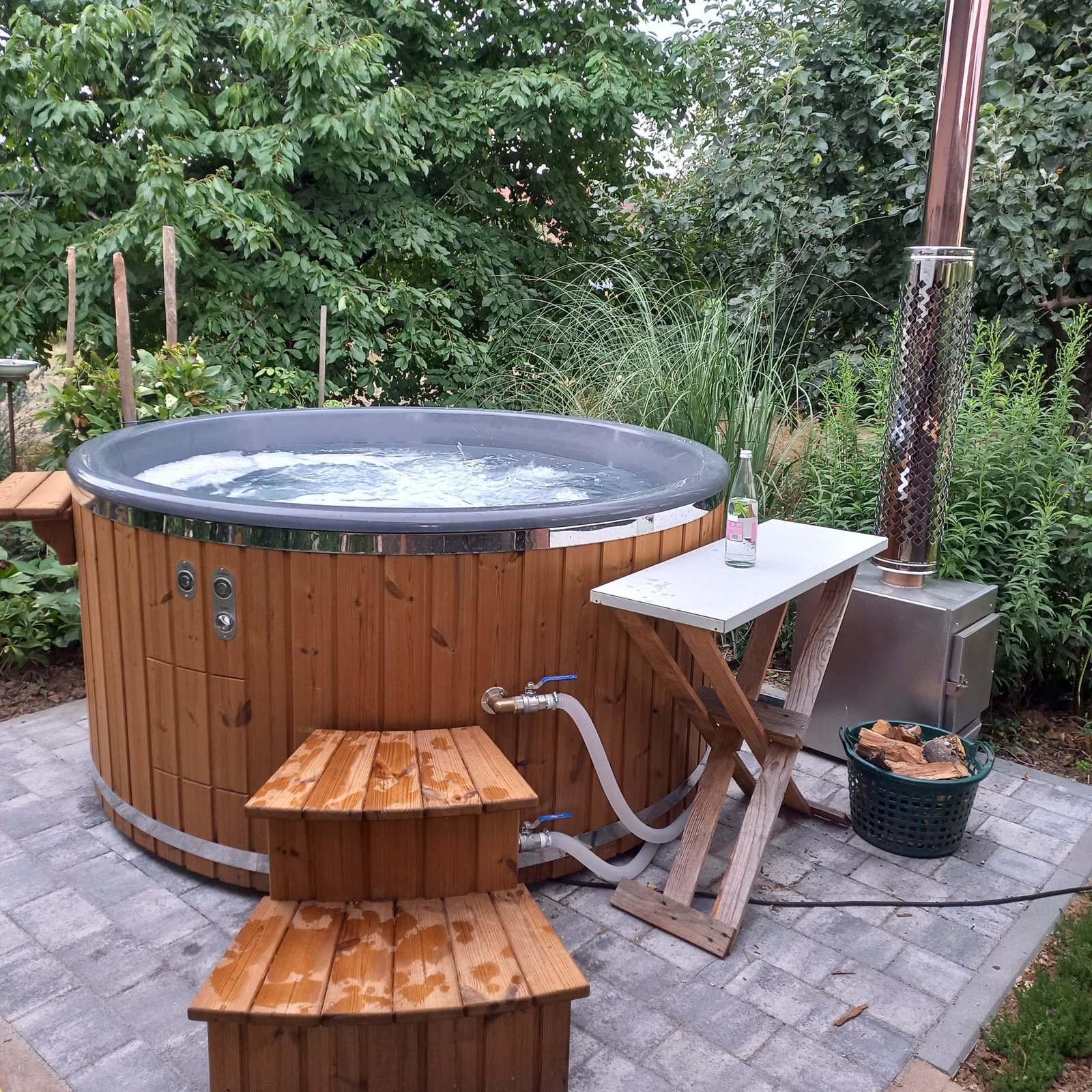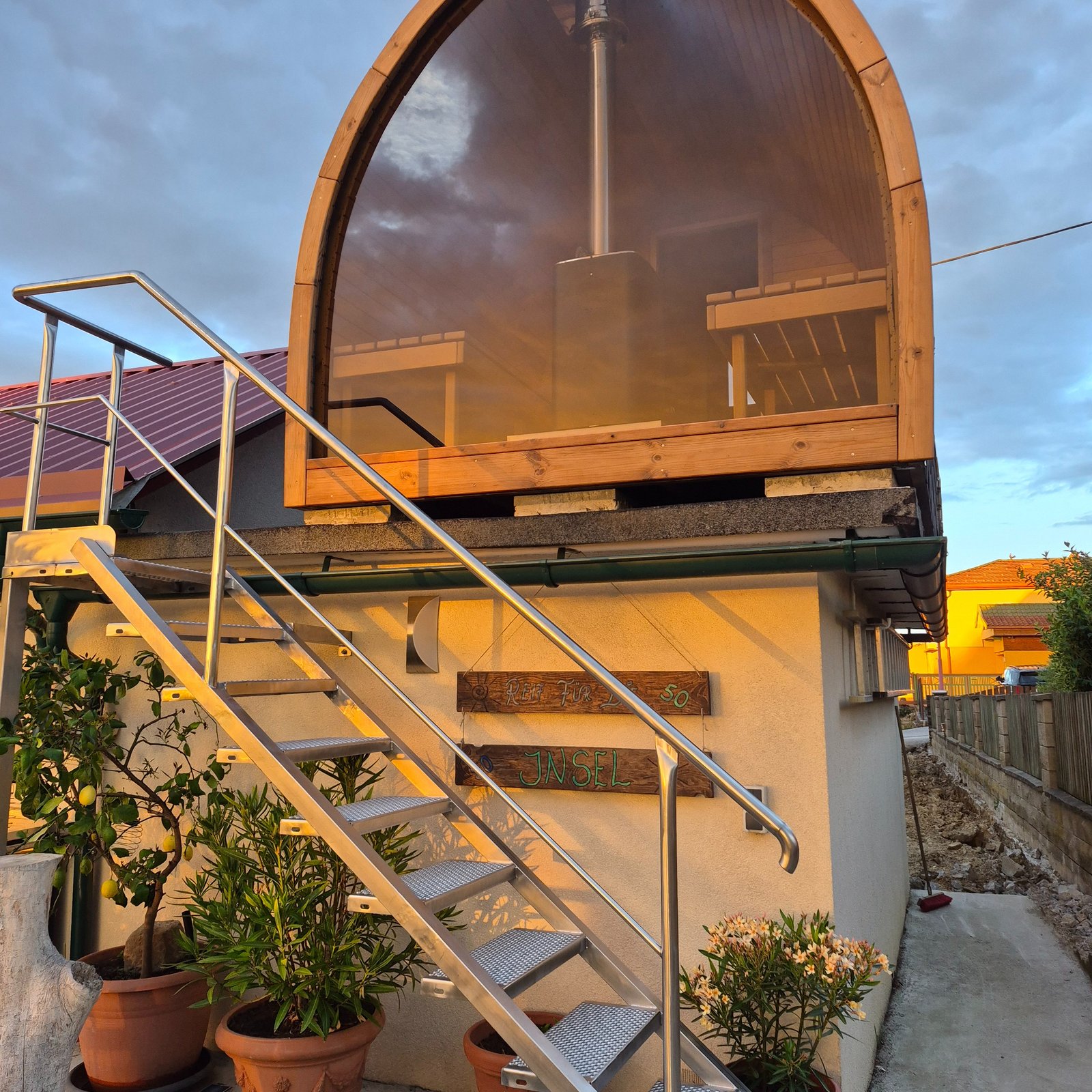

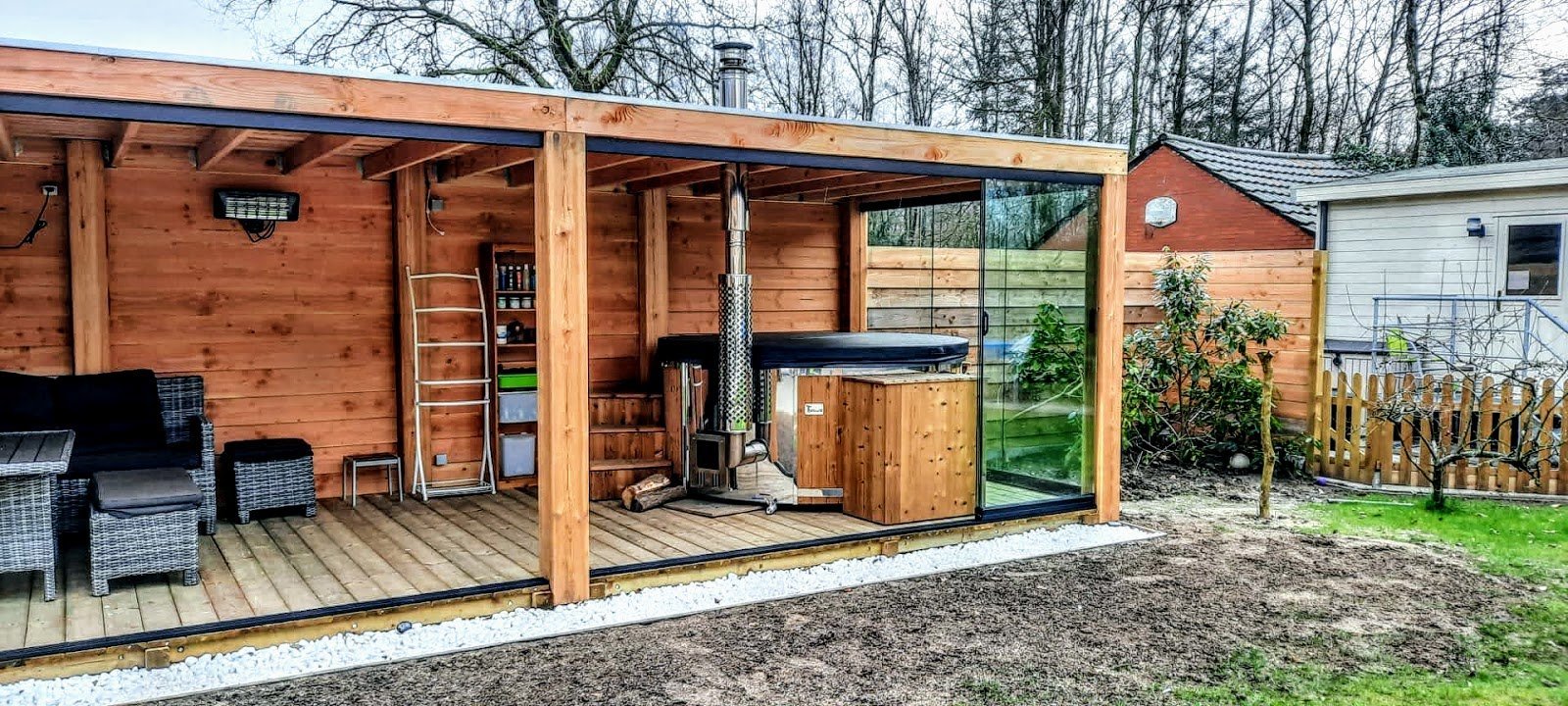
A wood-fired hot tub does not automatically mean an electricity-free hot tub. The fire may be the main heat source while filtration, massage, lighting, pellet feed, controls or an electric backup still require power. The answer belongs to the final equipment schedule, not to the product-family name.
What can genuinely work without mains power?
The simplest arrangement is a manually filled tub, an approved wood stove and a passive circulation loop. Warm water rises from the heater and cooler water returns without a pump. That requires the correct heater, port heights, pipe diameter, slope and distance. A stove pictured beside a tub is not evidence that the chosen installation will thermosiphon safely.
Without power there is no powered filtration, massage, lighting or automatic temperature holding. The owner therefore needs a realistic water-change and treatment routine, safe non-electrical site lighting, fuel storage and a complete freeze plan.
| Selected equipment | Typical power position | Question for the written order |
|---|---|---|
| Log stove with approved passive circulation | May heat without mains power | Does this exact heater and connection drawing require a pump? |
| Cartridge or sand filtration | Needs a circulation pump | What flow, load, controls and service space are required? |
| Air or hydro massage | Needs one or more powered pumps/blowers | What is the complete connected load and intended duty? |
| LED lighting | Needs an approved supply and controls | Which components and cable route are included? |
| Pellet heater | Normally needs power for feed, ignition, fan and controls | What happens after power or network loss? |
| Hybrid electric support | Needs power for heater, controls and usually circulation | Can both heat sources run together, and how is flow proven? |
Why filtration changes the off-grid discussion
A filter only treats water that moves through it. If long water retention and frequent bathing are expected, powered circulation may be a practical improvement even when the main heat is wood. A completely unpowered tub can still be managed, but that may mean shorter retention, deliberate treatment, more frequent draining and a clear discharge route. It should not mean leaving warm untreated water because the tub is “natural”.
For guest accommodation or other business use, the water system needs the risk assessment, monitoring and records appropriate to HSE spa-pool guidance. Off-grid heat does not remove those duties.
Turn the options list into a power checklist
Read the equipment schedule line by line. A manual log stove, electric support heater and pellet burner have different controls. Heating the water with logs does not tell you whether the installed filtration, lighting or massage equipment needs a supply.
For each component, record whether it is fitted, how it is powered, its rating, the document that confirms this and who connects it. Mark an unknown entry as unresolved rather than treating an omitted rating as zero. Include a separately purchased filter or later accessory.
Plan the final load with an electrician
Give a competent electrician the exact ratings and manufacturer instructions for heater, pumps, filter, lighting, controls and future options. Electrical Safety First recommends RCD protection for outdoor electrical equipment and advises that circuit type, cable rating and load be assessed by a registered electrician. Cable route, isolation, weather protection and equipment access must suit the wet outdoor site.
An extension lead, indoor multi-socket or cable through a window is not a permanent hot-tub supply. Do not landscape over the route or seal controls and pumps inside an unventilated box.
Questions for a true off-grid plan
What happens when the supply stops?
For each powered function, ask what stops, what heat remains and how the equipment restarts. A burning log charge does not disappear when a pump loses power. A pumped heater circuit needs its manufacturer’s safe power-loss procedure; do not assume an app or thermostat makes that response automatic.
Record separately how water quality and freeze protection will be maintained during an interruption. If the required routine depends on reliable power, the complete installation is not electricity-free even when its principal heater burns logs.
How to read a quotation
The finished checklist should account for every fitted component and every external dependency. Ask the supplier to resolve missing ratings against the delivered equipment labels before connection. The UK electrical planning guide explains what to pass to the electrician; the wood-fired range remains the place to compare available configurations.