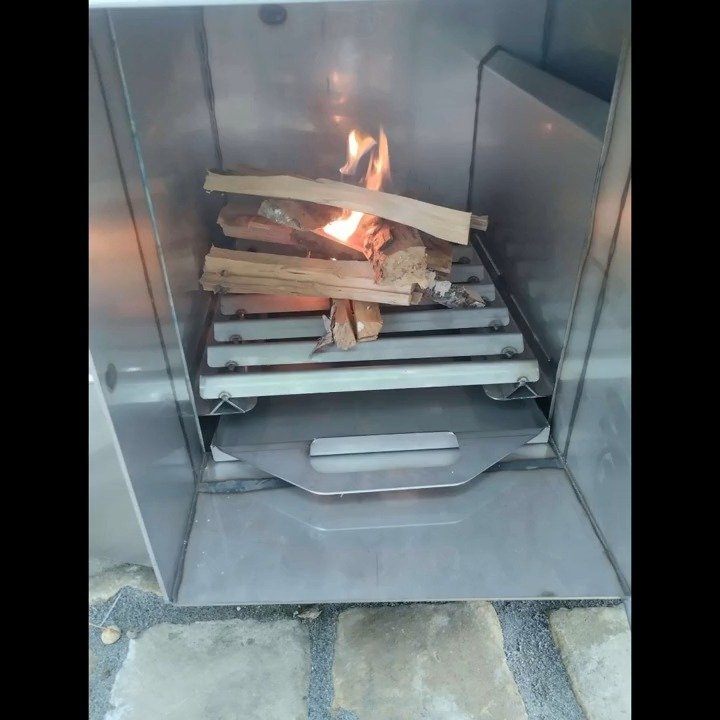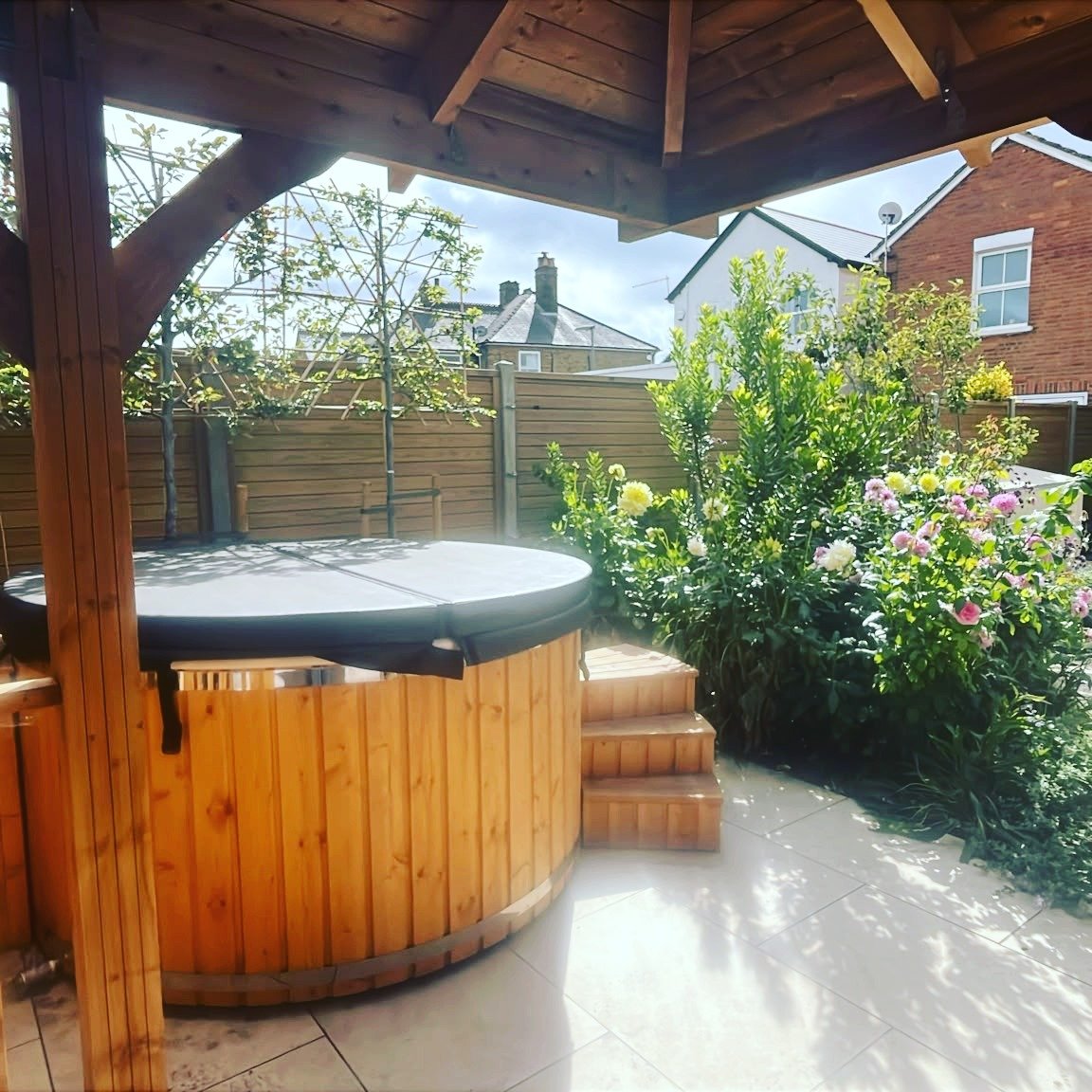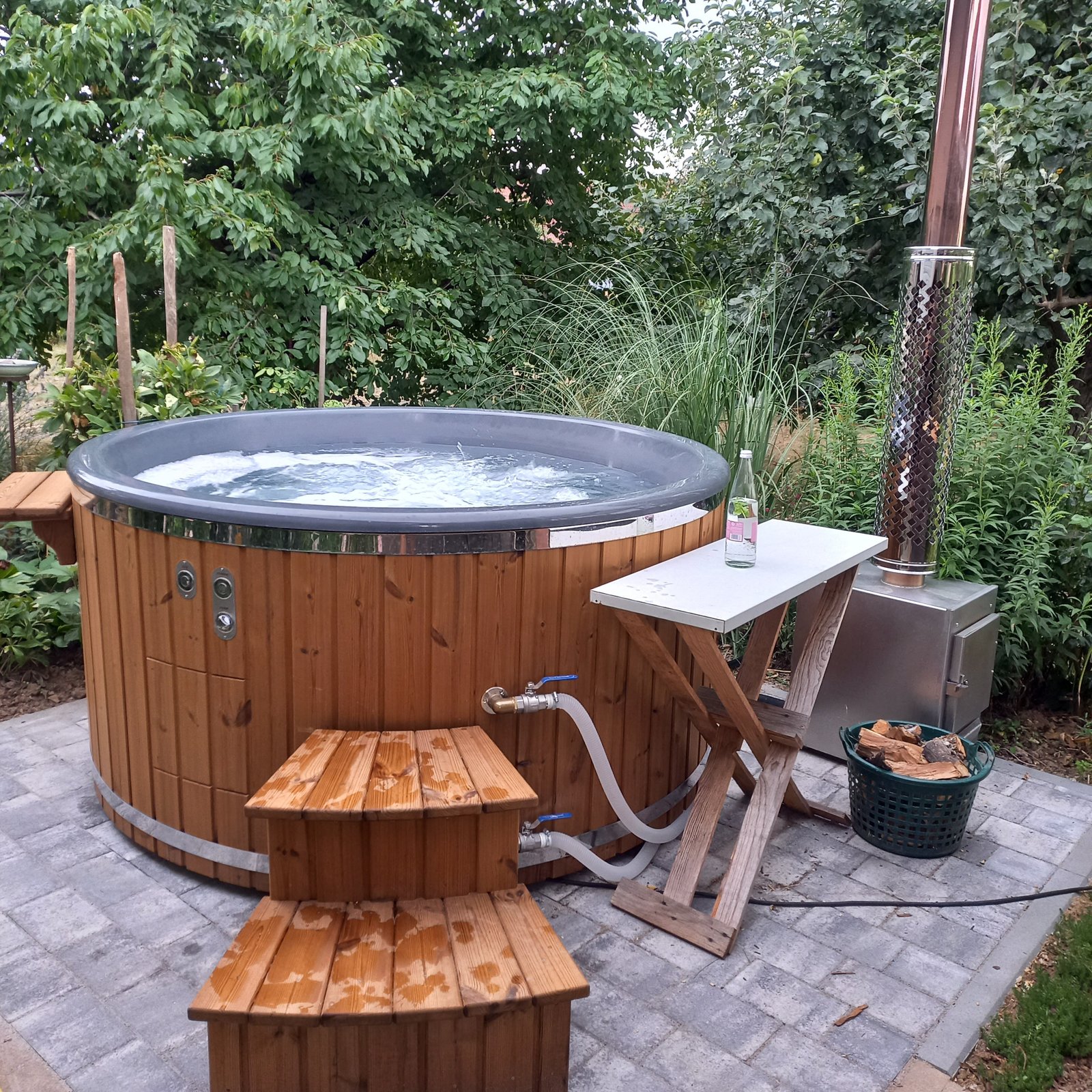

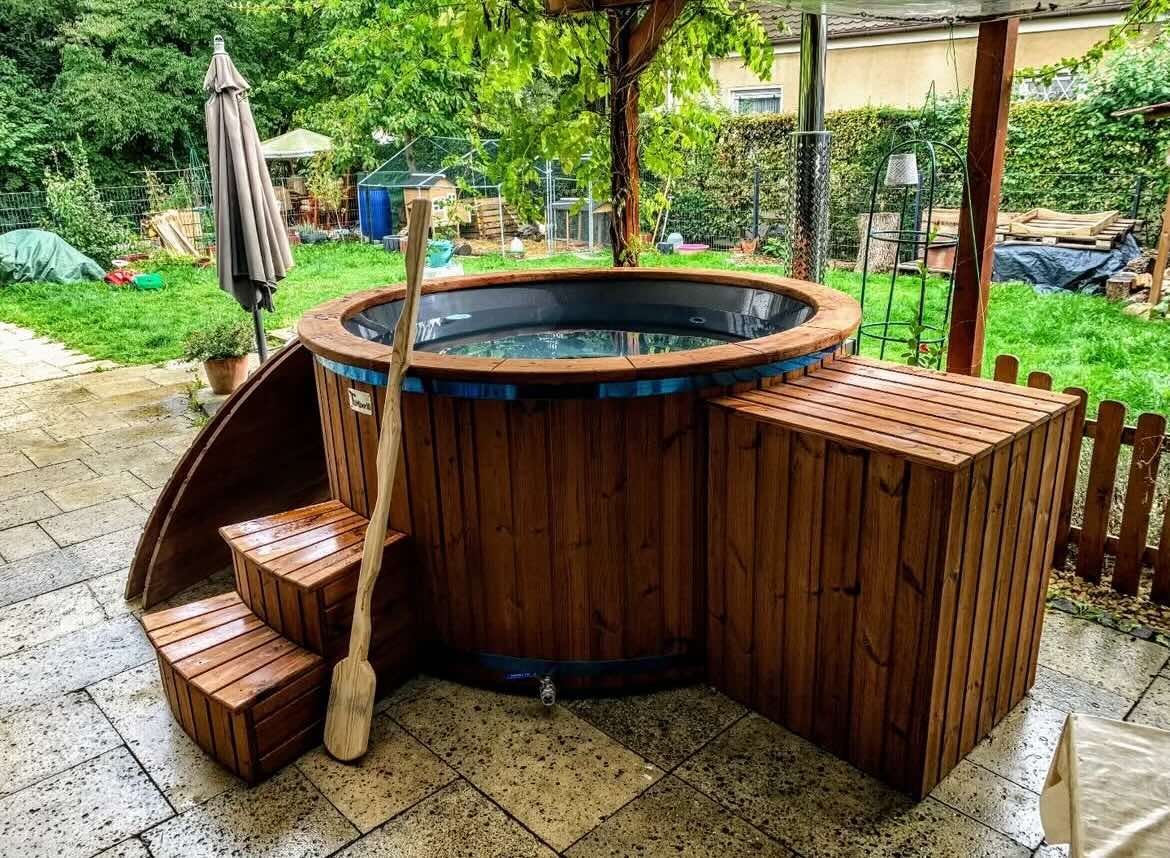
Switching from a wood fire to electric support is safe only when the tub was designed and commissioned for both. A hybrid installation needs a written operating sequence that keeps water moving through each heater as required. The remaining heat in a stove matters even after fuel additions stop.
Give each heat source a written role
An occasional weekend tub and a holiday property do not need the same routine. In many private installations, the owner lights the stove for the large temperature rise and brings the fire down before the target. Electric heat then maintains or recovers a smaller difference. A pellet heater may automate more of the main rise but still requires electricity, fuel and cleaning.
Some designs permit both sources to run together; others do not. The answer depends on water flow, heat-exchanger arrangement, sensors and controls. It must appear in the approved specification, along with the safe response if a pump stops while the solid-fuel heater still contains stored heat.
| Decision | Why it changes the design |
|---|---|
| Which source performs the main warm-up? | Sets the normal fuel, supervision and electrical demand |
| Can both heaters operate at once? | Changes required flow, control interlocks and maximum heat input |
| Where are temperature and flow sensed? | Determines whether controls see the real condition of each heater |
| What happens after loss of power? | A fire cannot stop instantly even when pumps and electric controls do |
| Will the tub be recessed? | Every heater, pump, valve and union still needs safe service access |
Calculate the complete electrical load
The electrician needs the final equipment list, not only the electric-heater rating. Include circulation and massage pumps, filtration, lighting, controls, pellet-feed equipment and any future provision. Electrical Safety First recommends RCD protection for outdoor equipment and advises that a registered electrician assess load, circuit type and cable rating. The installed design and test results for the wet outdoor location remain decisive.
Do not plan a hybrid tub around an extension lead or an existing garden socket whose capacity is unknown. Decide cable route, isolation and equipment location before the base and decking make them difficult to change.
The hydraulic plan is equally important
Both heat sources need the water condition their manuals require. A solid-fuel circuit may rely on gravity circulation or an approved pump; an electric heater often depends on pump flow and an interlock. Valves must not create a mode in which one heater is isolated while active. Pipe size and sensor position cannot be improvised after the terrace is built.
During commissioning, test each permitted mode separately: stove only, electric only and the approved combined sequence. Record flow, temperature rise, control messages and normal pump sound. A baseline makes a later trip, slow return or local boiling much easier to recognise.
A sensible everyday sequence
- Confirm water level, open circulation path, clean filter and normal pump operation.
- Use the primary source for the main temperature rise under the supervision required by its manual.
- Reduce solid-fuel input early; the water can continue gaining heat after the last fuel is added.
- Enable electric support only in the mode approved for the system and chosen ownership routine.
- After bathing, apply the written hold, shutdown or winter plan rather than changing strategy each session.
Winter support has a boundary
Electric standby heat can assist freeze protection only while power, controls and circulation remain available. It does not protect a closed external-stove valve, an unheated dead leg or a property during a long power failure. Mark every vulnerable section and write the response for loss of power or a planned absence. Where reliable operation cannot be maintained, fully drain all water-holding parts by the approved method.
Keep the approved modes beside the controls
Keep a mode card beside the controls: the permitted source, required pump state, approved valve positions, checks before starting and shutdown response. The installer should demonstrate each allowed mode. If simultaneous heating is not explicitly approved, do not assume it is available.
After service, a water change or a control replacement, confirm whether recommissioning is needed before returning to mixed operation. A replacement part with the same power rating may have different sensing or control requirements. Record persistent alarms and stop use until they are resolved.
What the handover must resolve
Keep the circuit drawing and the wood and electric heater manuals together. They should identify all permitted modes, where flow and temperature are sensed, and the response to loss of electricity while heat remains in the stove. If the documentation conflicts, ask the supplier to resolve it before operating the disputed mode.
The wood-fired and electric routine comparison explains the daily differences. The UK hot-tub range establishes available configurations; this article does not imply that any existing tub can be converted by adding a second heater.