
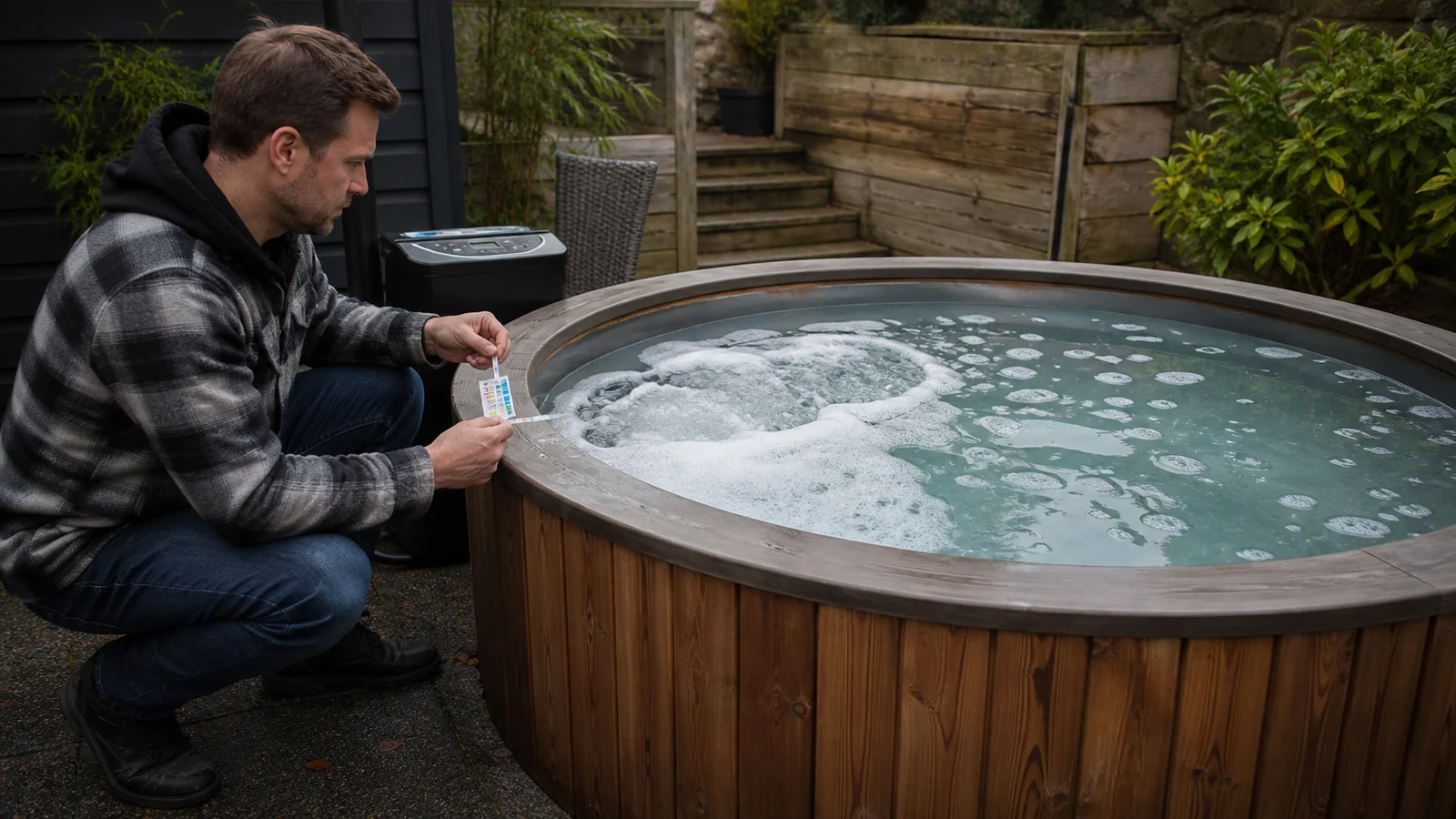
Bubbles from air jets may disappear when the air stops; a stable layer of foam suggests something else has entered or changed in the water. End bathing when foam persists or quality is uncertain. Record when it started before adding anything: that timing is often the best clue to the cause.
Most foam traces back to the water balance or bathers’ products, so check your routine against our hot tub water care guide first.
Distinguish temporary bubbles from persistent foam
Air-injection jets naturally create bubbles. In clean, correctly managed water, many of them collapse soon after the air stops. Foam that piles up, holds its shape, carries a grey or oily film, or returns quickly suggests surfactants or a high organic load.
Record when it began: after a large group, after washing the cover, after adding a product, after refilling, or only when one jet circuit runs. This timing is often more useful than the colour of the foam.
Common source 1: swimwear detergent and cosmetics
Detergent and fabric conditioner can remain in swimwear. Body lotion, hair products, makeup and oils add further surfactants. Ask bathers to shower and rinse swimwear thoroughly without adding extra softener. A quick foot rinse does not remove products from the whole body.
Do not use washing-up liquid, household bathroom spray or an unknown scented cleaner on the shell or cover. Even a small residue can produce a disproportionate amount of foam when jets aerate the water.
Common source 2: high bather load and filter stress
After a large group, compare current water readings and return flow with the normal clean condition. Inspect the owner-serviceable filter by its instructions. More bathers can add contamination faster than the usual routine controls it.
A blocked filter may reduce removal, while an overdue water change can leave dissolved material concentrated even when the water looks clear at rest.
Common source 3: water balance and incompatible products
Use the approved test method for pH and other required parameters. Do not infer chemistry from foam alone. Some treatments, fragrances, clarifiers and algaecides may be incompatible with one another, the filter medium or the shell. Follow the product label and supplier compatibility guidance.
Never mix concentrates and never add a corrective product while people are bathing unless its label explicitly permits that use. More products can create more foam and make the original cause harder to identify.
A safe diagnostic sequence
- End bathing and switch jets to their normal safe rest state.
- Observe whether foam collapses and note odour, colour and clarity.
- Remove debris and inspect the strainer, filter and circulation.
- Test the parameters required for the treatment system.
- Review recent bathers, cleaners, water-care products and top-ups.
- Make one approved correction at a time and document the result.
When a water change is the better answer
Replace the water where the source is unknown, dissolved contamination is likely, treatment values cannot be stabilised, or foam returns after correct filtration and measured adjustment. Follow the drainage and environmental instructions, clean the shell with a compatible product, rinse thoroughly and refill through the approved route.
A refill does not correct a dirty filter, damaged cover or recurring source of detergent. Address the cause before inviting the same contamination back.
Diagnostic table
| Pattern | Possible source | Next check |
|---|---|---|
| Foam begins after a group | Cosmetics, detergent and organic load | Filter, measurements and bather routine |
| Foam begins after cleaning | Household or poorly rinsed cleaner | Product used and surface rinse |
| Foam only under air jets | Surfactants revealed by aeration | Recent inputs and water age |
| Foam with cloudy or smelly water | Water-quality control failure | Close the tub and follow the treatment procedure |
Why suppressing bubbles may not solve the problem
Anti-foam can suppress visible bubbles without removing the material that caused them. Use it only if the compatible treatment plan permits it, and do not use the cosmetic result as permission to reopen the tub. A normal-looking surface and a single test reading do not settle an unexplained recurring contamination problem.
If foam returns after a correctly completed water change, review the filter, pipe cleaning, cover, swimwear and recently used products with the supplier. Keep the batch or product names and photographs. Correcting the recurring input is more useful than repeatedly treating its appearance.
Business operation and chemical decisions
Holiday accommodation and other business systems require a written control scheme; see HSE HSG282. This symptom does not establish a chemical dose or replace the installed system’s test and re-entry requirements.