



What Salty Barrel currently describes
Checked on 23 September 2026, the named Salty Barrel portable product is described by its maker as a collapsible tarpaulin vessel with a stainless-steel heating coil. Its published figures are 27 kg packed weight, 150 cm diameter and 60 cm depth, with stated capacity for four or five adults. These are manufacturer specifications for that product, not our test results.
The manufacturer’s FAQ describes circulation by thermosyphon without an electric pump. Read the current manual for the exact assembly and operating requirements. The comparison here concerns that packable format; TimberIN’s rigid products are different designs, not interchangeable versions of it.
What a rigid TimberIN hot tub is designed to do
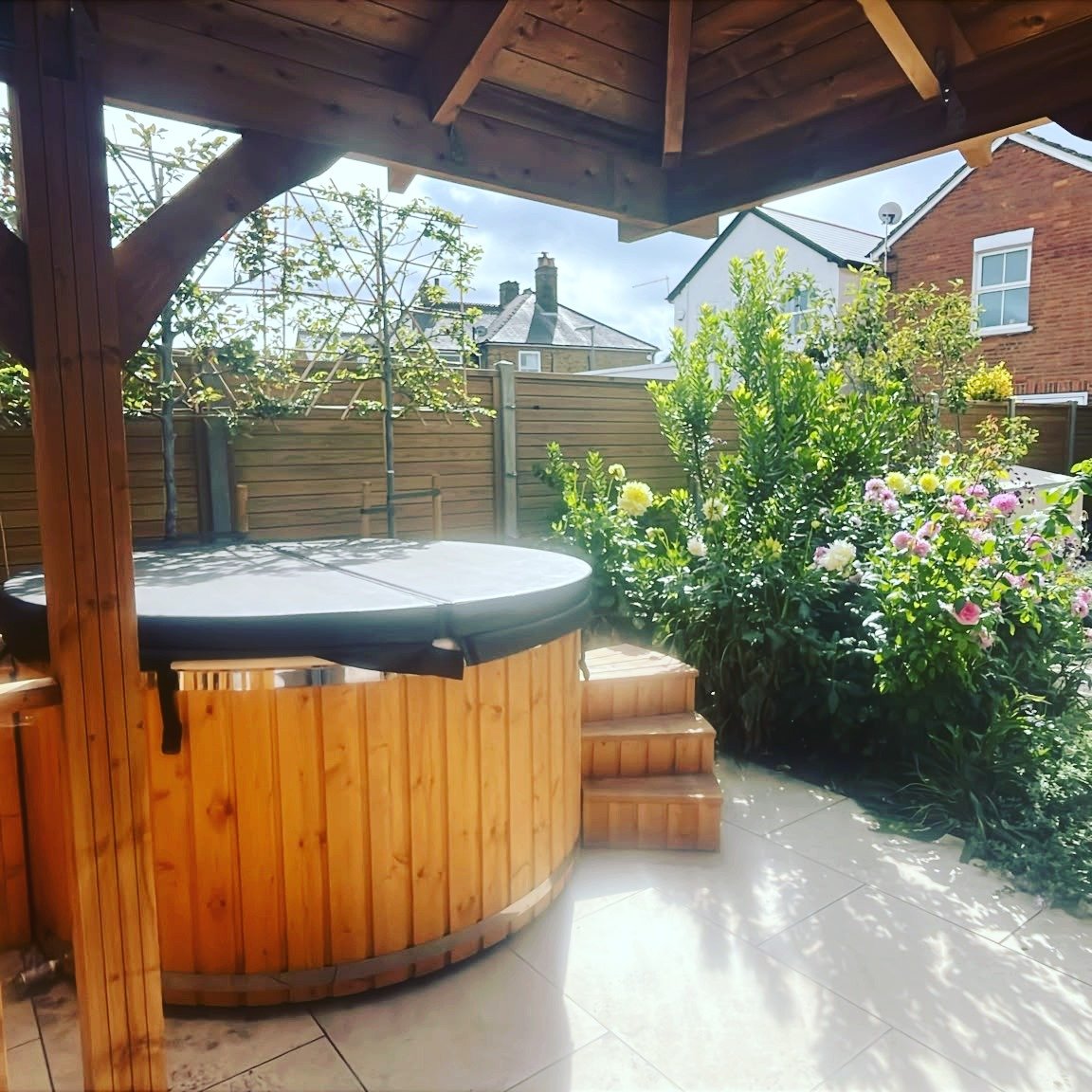
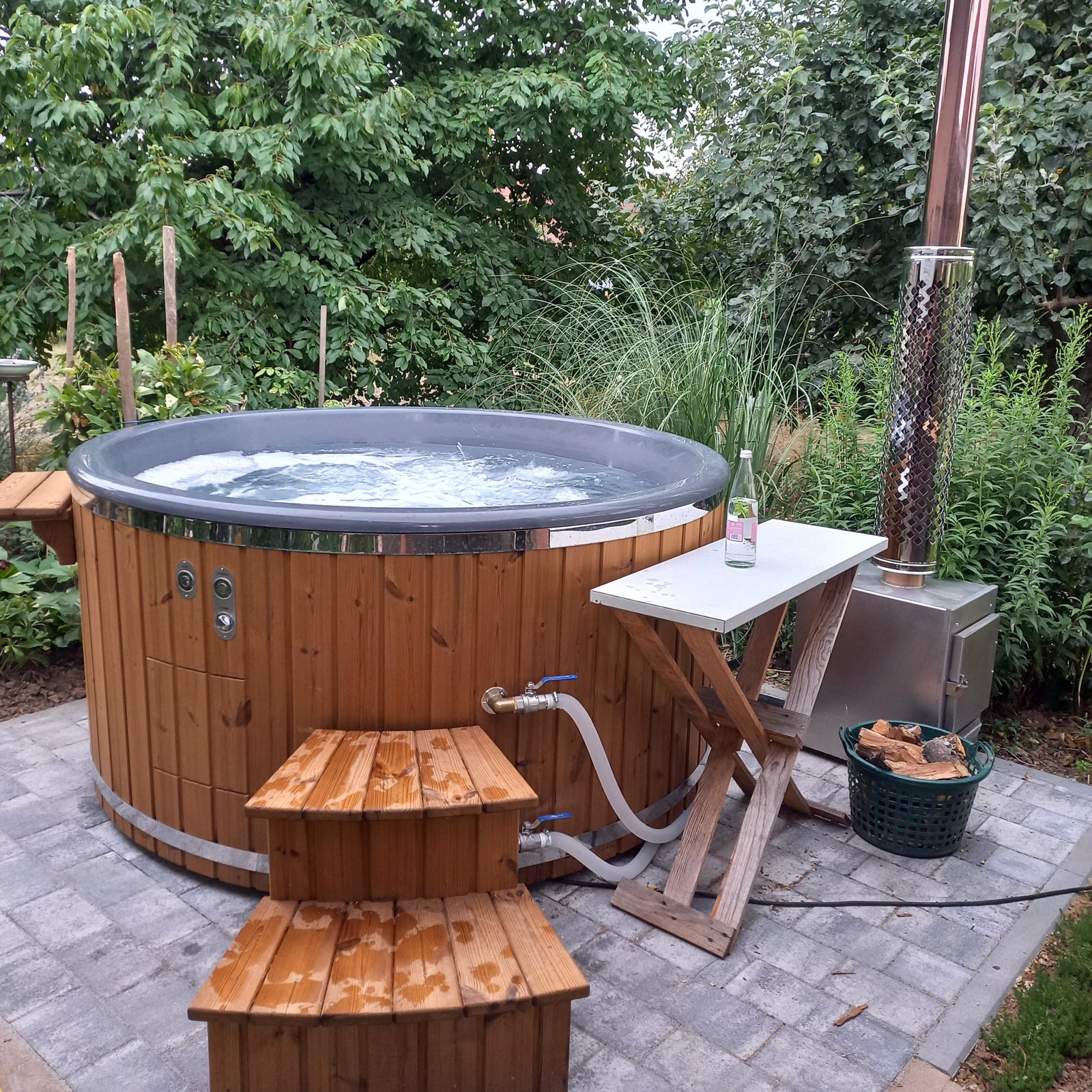
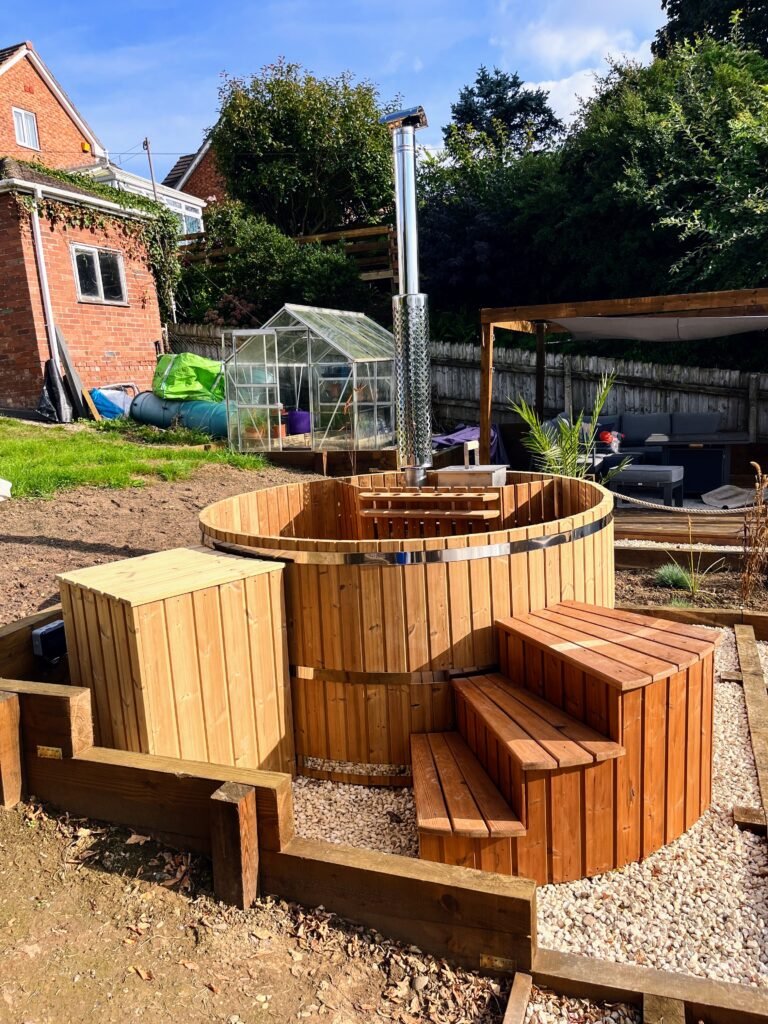
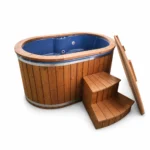
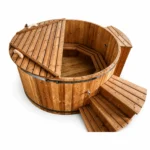
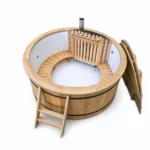
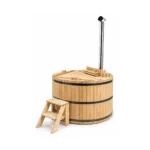
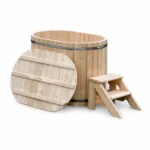
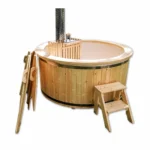
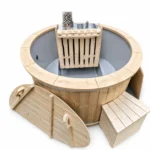
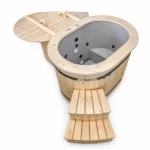
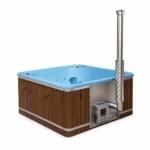
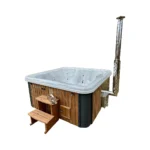
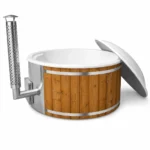
A rigid TimberIN hot tub is supplied as a model configuration for a prepared garden, terrace, commercial site or mobile trailer. Depending on the product, buyers can choose a smooth liner or timber bathing surface, external, integrated or internal stove, insulation, cover, filtration, lights, bubbles or hydromassage. These options add weight, utilities and maintenance but support a different ownership pattern.
The TimberIN Nordic Mobile™ is transportable on its road trailer; it is not a collapsible camping tub. The compact Duo and Compact models are rigid small-footprint alternatives for a prepared site. That distinction should remain clear throughout the comparison.
Portable Salty Barrel type versus rigid TimberIN type
| Decision | Packable coil-heated tub | Rigid TimberIN tub |
|---|---|---|
| Primary use | Temporary setup, camping or storage between sessions | Prepared garden site or purpose-built road trailer |
| Body | Pack-down vessel | Rigid wooden, fibreglass, acrylic or polypropylene construction by model |
| Heating | Separate coil and fire arrangement: follow its manual | Approved external, integrated, internal, electric, pellet or hybrid arrangement by model |
| Seating | Flexible floor or portable-tub posture | Defined benches or moulded seating |
| Movement | Check packed dimensions and carrying requirements | Requires handling equipment, or travels as the complete trailer model |
| Systems | Simple off-grid core; confirm any optional insulation or accessories | Can add filtration and powered comfort systems where compatible |
| Best buyer evidence | Packed size, setup manual, surface limits and shipping terms | Configuration, drawings, support plan, utilities and delivery duties |
Portability means two different things
Pack-down portability means carrying separate components, finding a suitable setup surface, sourcing safe water and fuel, assembling hoses and coil, heating, draining, drying and packing away. Vehicle space and the weight of wet equipment still matter. Never treat a lightweight empty product as evidence that a filled tub can be moved.
Trailer portability means towing a complete load and checking the applicable vehicle and trailer requirements, including compatibility, hitching, tyres, lights, brakes, payload and site positioning. It removes repeated tub assembly but adds road and trailer duties. For that route, use the mobile hot-tub planning guide and verify the exact trailer documents.
The heating system changes the safety plan
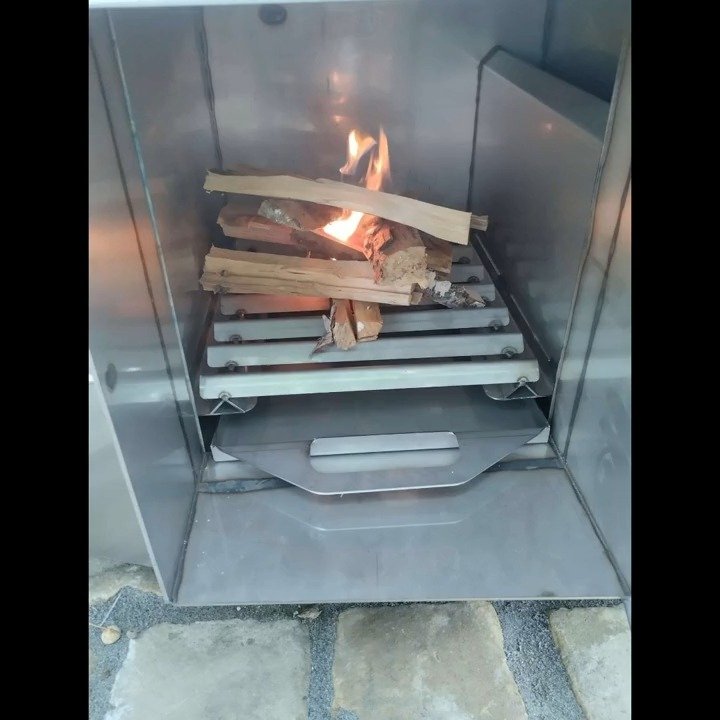
A separate coil-and-fire arrangement creates a different working area from a stove built into or connected to a rigid tub. A rigid TimberIN configuration may use an enclosed external stove, an integrated heater or a guarded internal heater. These systems are not interchangeable, and parts from one should not be adapted to another without written manufacturer approval.
For any wood-fired system, establish the required water level and unobstructed circulation before lighting. Keep users away from fire, hot metal, hoses and chimney surfaces. Do not dry-fire, block circulation or drain while the heater is hot. Choose a non-combustible, stable setting with the specified clearances and supervise the fire continuously.
Heat-up claims need their assumptions
A stated warm-up time is useful only with its assumptions. Ask each supplier to identify the water quantity, initial temperature, target temperature, fuel and ambient conditions behind an estimate. A smaller cold fill and a larger retained-water system are different heating tasks, even if the adverts use the same number of hours.
For the proposed site, consider wind exposure, permitted insulation and the fitted cover. Compare how the complete routine works: filling and setting up a portable system before each session may matter more than a modest difference in heating time. A rigid installation may need less assembly but still requires preparation, water care and attention during firing.
Capacity is more than the number of bodies
A flexible tub can accommodate people sitting or kneeling in different ways, while a rigid model uses fixed benches or moulded seats. Manufacturer person counts do not guarantee equal immersion, legroom or comfort. Ask whether the listed capacity means relaxed soaking, close social seating or simply physical occupancy.
Choose around normal use. Couples can compare the two-person hot-tub guide; larger households should inspect internal diameter, bench length, depth and heater intrusion rather than buying by headline capacity.
Ask how you enter, where your feet rest and how you leave when surfaces are wet. For a household sharing the tub, record the normal users rather than an occasional maximum gathering. A viewing or detailed seat drawing can answer questions that a wide-angle photograph cannot. Never infer accessibility from a low side wall or a generous person count alone.
Water source, treatment and drainage
“Off grid” removes dependence on mains electricity for the core heating cycle; it does not remove responsibility for safe source water, hygiene and discharge. Water from a river, lake or private source should not be assumed safe for bathing. Follow the product manual and obtain appropriate local advice before drawing from or returning water to the environment.
A portable fill-and-drain routine differs from retaining filtered water in a fixed tub. Washing before entry reduces introduced contamination but does not replace the approved water-care method. Commercial, rental and holiday-let use needs a formal risk-based process; the HSE spa-pool guidance covers recognised infectious-agent risks and business duties.
Surface, foundation and full water load
A temporary tub still carries the mass of its water and users. Choose a stable, level surface that the manufacturer permits, protect the vessel from puncture or heat and keep the fire system independently supported. Do not set up where drainage can erode the base, flood a tent or property, enter unsuitable drains or affect neighbouring land.
A rigid garden tub needs a designed base using its empty weight, water volume, users, stove and accessories. A mobile trailer needs ground firm enough for the complete parked load, safe levelling and any specified stabilisation. The correct foundation follows the product type.
Put the complete operating layout on the plan, including the person tending the fire, hose or pipe runs, entry area and a place for the cover. The bathing vessel’s diameter is only one part of the space needed. If the intended location cannot accommodate the equipment safely under its instructions, a smaller footprint in an advertisement will not resolve the problem.
Warranty and service are part of the comparison
The Salty Barrel warranty page, checked on 23 September 2026, describes limited lifetime cover and replacement parts for covered faults. It states that cover is non-transferable and excludes commercial or rental use, as well as matters including freeze damage, dry firing, incorrect setup and cosmetic wear. The page directs buyers to its full terms where wording conflicts.
For either supplier, ask who assesses a claim, which costs are covered and how parts reach a UK owner. Check labour, transport, return arrangements and maintenance evidence rather than comparing the warranty headline alone. Obtain TimberIN’s terms for the selected product and intended use, and retain the documents accepted with the order.
UK ordering and import questions
The Salty Barrel shipping policy, checked on 23 September 2026, includes the UK in its destination table. Its stated free-shipping destinations do not include the UK; other shipping charges are calculated at checkout, and the policy says import duties and taxes may fall to the customer. Confirm the actual UK delivered total and current availability directly before ordering.
For the comparison, request the seller’s identity, dispatch location, delivery responsibility, returns route and all applicable charges in writing. Ask TimberIN for a quotation to the same postcode and explain access and unloading. Avoid converting a foreign starting price and calling the result a UK installed price: the missing work may be substantial.
Compare the complete job, not the brand names
| Evidence to collect | Portable pack-down system | Rigid or trailer system |
|---|---|---|
| Product | Current manual, packed dimensions, vessel and coil specification | Model configuration, drawings, water volume and weights |
| Setup | Permitted surface, assembly, hose route and open-fire clearance | Foundation or trailer positioning, stove and chimney clearances |
| Water | Source, fill, hygiene, drain and drying process | Fill-and-drain or retained-water filtration and treatment |
| Transport | Vehicle space, carrying, wet packing and storage | Freight, unloading, lifting or legal towing requirements |
| Price | Product, international freight, taxes, accessories and returns | Configuration, delivery, site works, utilities and commissioning |
| Support | Warranty territory, parts route and exclusions | Warranty, service access, replacement parts and local trades |
Use the same weekend as the comparison
Imagine arriving on Friday evening, bathing twice and leaving on Sunday. For each option, write down the filling, setup, heating, supervision, cleaning and storage tasks, who does them and where the equipment goes afterwards. If the tub stays at home, repeat the exercise for an ordinary weekday evening. This makes the operating differences visible without inventing a brand-wide winner.
Then price only the configuration that fits that routine. A feature you will never use is not automatically good value, while an essential part omitted from a headline price remains part of the budget. Keep the supplier’s exclusions beside the quotation so delivery, ground preparation, electrical work and water arrangements are not forgotten.
Buyer checklist
- Decide whether pack-down, garden permanence or road-trailer mobility is essential.
- Verify the current first-party product page and manual.
- Compare usable posture and normal occupancy, not only diameter.
- Map the fire, coil or stove and every hot surface.
- Define safe source water, hygiene and discharge.
- Calculate the full water load for the proposed surface or base.
- Price shipping, tax, duty, unloading, accessories and returns.
- Read warranty eligibility and commercial-use exclusions.
- Keep the final specification and terms with the order.
Frequently asked questions
Is TimberIN affiliated with Salty Barrel?
No. Salty Barrel is a separate manufacturer and trademark. This page is a factual buying comparison based on public first-party information, with links so readers can verify current Salty Barrel claims.
Is the TimberIN mobile tub a collapsible alternative?
No. TimberIN Nordic Mobile™ is a rigid tub installed on a road trailer. It moves as a complete trailer system; it does not pack into a carry bag like the Salty Barrel product described by its manufacturer.
Does a portable wood-fired tub need electricity?
Check the particular product’s manual and every accessory. Water transfer, lighting or other equipment can introduce power requirements even where the heating circuit does not use an electric pump.
Can I use a Salty Barrel product for a holiday let?
Its current limited lifetime warranty page lists commercial or rental use among the exclusions. Business operation also creates formal water-safety duties. Ask the manufacturer, insurer and competent water-safety adviser before purchase.
Which option is cheaper?
There is no fair answer without a matched scope. Compare the product, shipping, tax, accessories, setup, foundation or trailer, water system, fuel, maintenance, warranty and expected service life for the actual UK use.
Choose the form of ownership before the finish
If carrying and storing the equipment between trips is essential, evaluate a packable system against that requirement first. If you want a permanent bathing place with defined seating and a chosen service arrangement, start with rigid garden models. If the tub needs to move between accessible sites as an assembled installation, investigate a purpose-built trailer and its full operating requirements.
The catalogue below keeps those TimberIN routes separate. Nordic Mobile leads the transportable option; the rigid wood-fired family follows; electric and smart-pellet models provide further alternatives for a different utility plan. None is presented as a carry-bag product or a like-for-like substitute for every Salty Barrel feature.
For a garden installation, send TimberIN the intended users, available space, access route and desired heating and water-care arrangement. For a trailer project, include how and where it will move and be positioned. Request a configuration for that use, then compare the written scope with the other supplier’s current documents. A sound choice follows the job you need the tub to do.
This is a supplier comparison, not an independent hands-on product test or a scored review. Salty Barrel is a separate brand; TimberIN is not affiliated with or endorsed by it. Source links allow you to check the published claims and terms again when you are ready to order.