
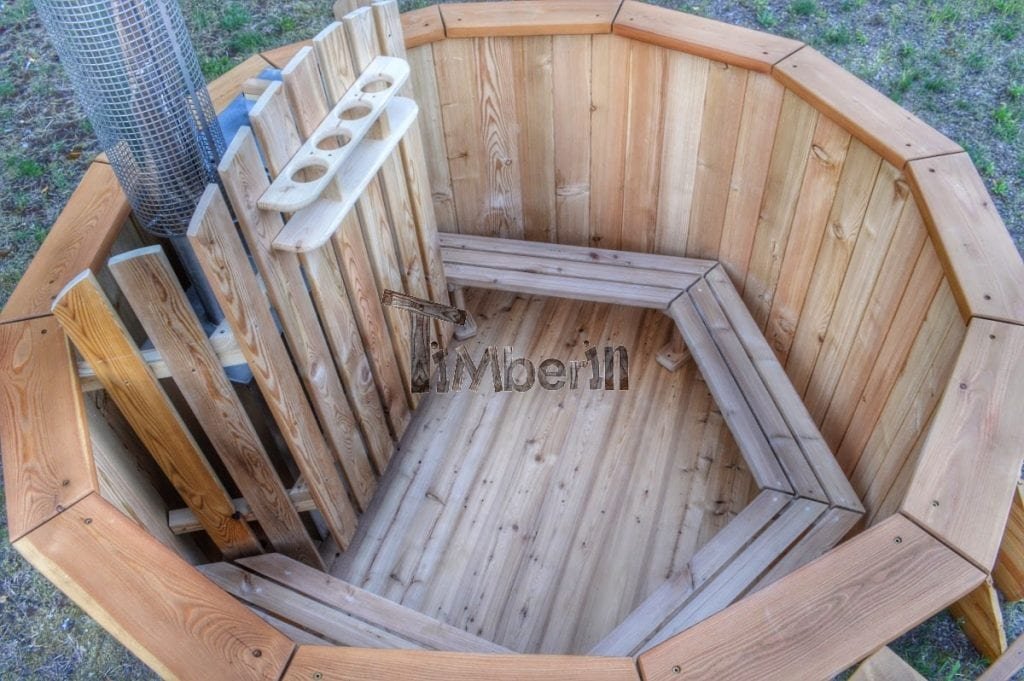
Start a maintenance visit by identifying what holds the water. Solid timber staves, a moulded liner and exterior wood cladding need different care, even when all three products are sold as wooden hot tubs. Inspect the structure and equipment first, then choose cleaning or treatment from the instructions for each surface.
Know which kind of “wooden hot tub” you own
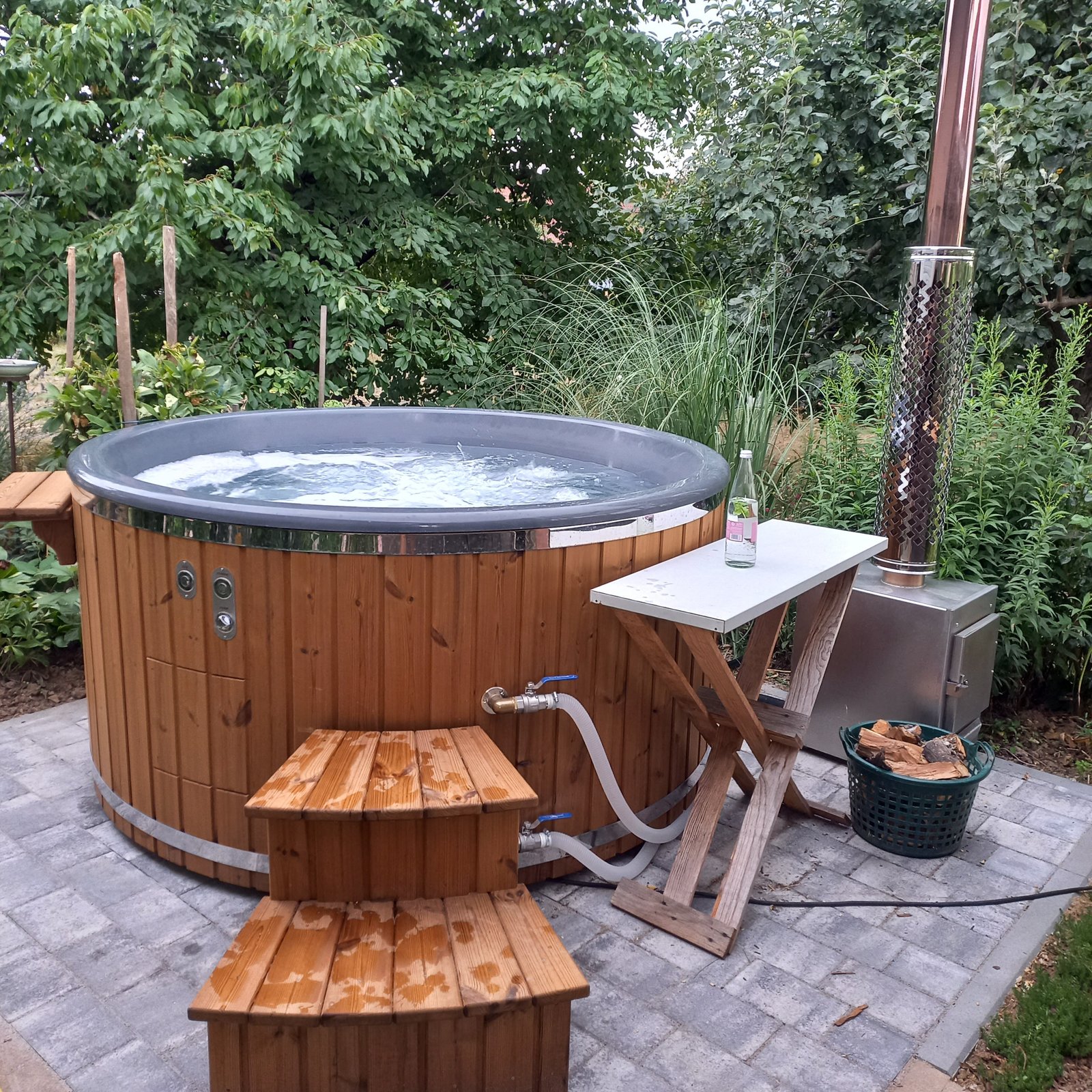
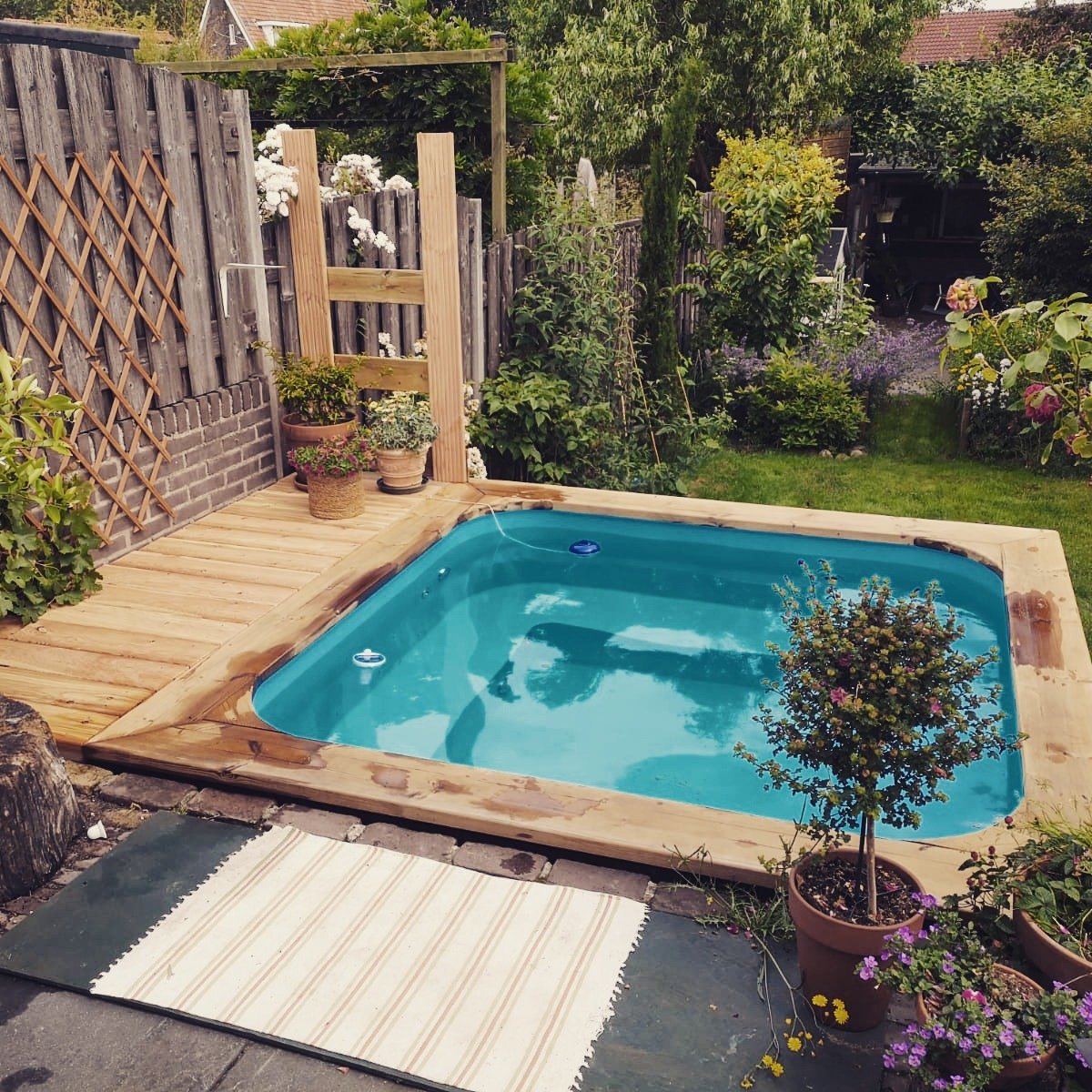
A traditional solid-timber vessel holds water with its staves and base. A lined hot tub may have timber only as exterior cladding around polypropylene or fibreglass. Those products do not share one cleaning method. The wet side, benches, seals and allowed chemicals follow the liner specification; exterior timber follows its finish specification. Never oil or seal an interior surface simply because the outside looks dry.
Record the model, timber or cladding material, liner if present, heater, filter and water-treatment equipment. Keep their manuals together. This prevents advice for an acrylic spa, a solid-wood tub and a sauna bench from being mixed into one unsafe routine.
The checks that take less time than reheating a problem
Before removing the cover, clear standing rainwater and debris so it does not fall into the tub. Look at cover seams, straps and shape. A cover that has become unusually heavy or permanently bowed may have absorbed water and lost insulation value.
With the heater cold, walk around the base and equipment area. Look for a new wet track, moved pipe, loose step, blocked drain or stored combustible material. Confirm the water level required by the heater and circulation system. Check that suction openings are clear and that valves needed for flow are in their operating position.
| Frequency trigger | Useful work | Escalate when |
|---|---|---|
| Before a bathing session | Inspect water clarity and level, access, cover, heater area and visible leaks; test water as required | There is unexplained odour, damaged electrics, failed flow or a structural change |
| After heavy use or a guest change | Remove debris, test and correct water, inspect/rinse the filter as specified, clean the waterline | Readings cannot be stabilised or water remains cloudy after the defined recovery routine |
| When flow or heating changes | Check water level, filter, valves and accessible cold connections | A pump hums without flow, a heater trips or a water-carrying stove may be starved |
| Seasonal or finish wear | Clean and re-treat exterior timber when the existing approved finish requires it | Timber is soft, deeply split, distorted or persistently wet |
Water care: measure first and use the real volume
Water treatment has its own measurements and equipment limits. Keep source-water details, test results and product additions in the hot-tub water-care record; do not replace that routine with a fixed weekly dose. Structural care does not establish whether water is safe for bathing.
For business use, the water-safety assessment and operating records need to address the actual use of the system. HSE HSG282 is relevant guidance for spa-pool infection control, including systems operated as part of a business.
Filters, pumps and pipework
Rinse a reusable filter at the interval indicated by pressure, flow, use and its manual—not with a pressure washer that can damage the media. Clean or replace it with the specified product when rinsing no longer restores performance. Inspect the filter housing seal and ensure no air is drawn into the pump after refilling.
A change in sound or return flow deserves attention before heating. A pump that hums without moving water may be airlocked, obstructed or faulty. Switch it off and diagnose rather than allowing it to run dry. On a gravity-circulated external stove, the pipe slope, diameter and open water path are equally important.
Care for exterior timber without sealing in a moisture problem
Wash loose dirt with a soft brush and a cleaner approved for the timber and existing coating. Allow the wood to dry as instructed before applying the specified breathable exterior treatment. Work a small test area first because oil changes colour. End grain, steps, lid components and sun-facing sides may weather at different rates.
Do not coat over softness, black staining that returns, a leaking joint or timber that cannot dry. Find the water source and restore drainage or ventilation first. Rigid paint or varnish is not a universal upgrade; an incompatible film can peel or trap moisture.
The wet side of a solid-wood vessel
Traditional tub interiors depend on the product’s timber and joint design. Clean gently with permitted tools and products, rinse thoroughly and follow the storage rules that prevent uncontrolled drying. Do not sand, seal or tighten bands simply because a joint is visible. If seepage begins after storage, use the diagnosis in the wooden hot tub leak guide to distinguish normal swelling from a fitting or structural fault.
Wood-fired heater care
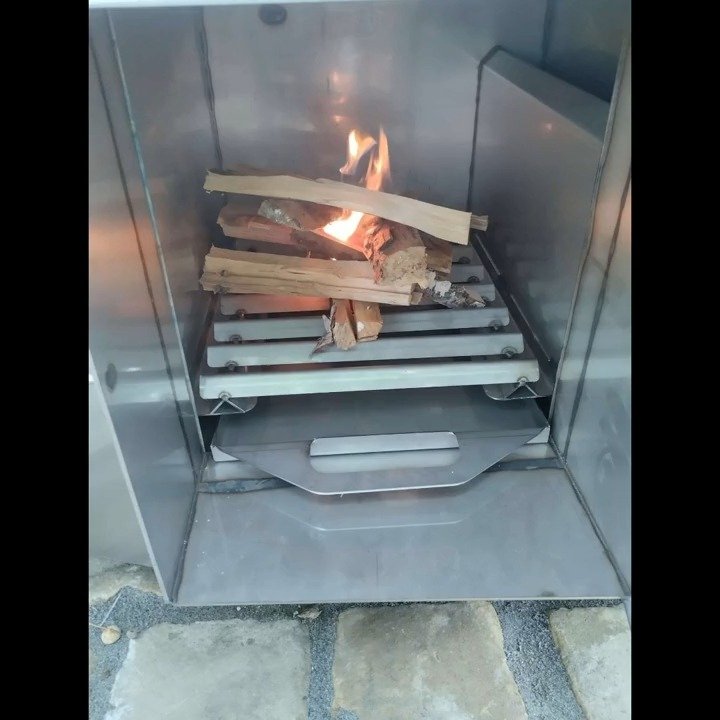
Remove ash only when it is fully cold and place it in a suitable non-combustible container away from buildings and combustible material. Inspect the firebox, door, water connections and visible flue joints. Burn only fuel approved for the heater; for domestic firewood in England, DEFRA’s “Ready to Burn” mark confirms a moisture content of 20% or less for small-volume sales. Wet fuel wastes heat in evaporating water and increases smoke and deposits.
Never light a water-carrying stove unless the tub is at the required level and the circulation path is open. A change in smoke, draft, brown flue liquid, heating rate or metal condition should be investigated rather than compensated for with a larger fire.
Winter is a decision, not one extra checklist item
If the system will operate through winter, its heating, circulation, cover, power and supervision must be capable of protecting every water-holding part during the expected conditions. If it will be shut down, drain the vessel and all low points, pumps, filters, heaters and accessories exactly as instructed. A tub that looks empty can still contain enough trapped water to split a fitting when it freezes.
Do not add automotive antifreeze to bathing-water equipment. Use only a product and method explicitly approved for the system. The full choice between winter operation and shutdown is covered in the winter hot tub care guide.
Build a record that makes change obvious
Use a dated condition record for the tub, distinct from the sauna and daily water log. Photograph the same base edges, cladding, bands, drain and heater connections so changes can be compared. An annual review brings the records together; it never replaces shorter equipment intervals or pre-use checks.
| Record field | What to write |
|---|---|
| Identification | Tub, liner/timber, heater and filter model; manual revision |
| Observation | Date, exact location, weather, water level and an overall/close photograph |
| Action | Cleaning product, part or approved adjustment; who carried it out |
| Priority | Stop use, arrange repair, or observe with a dated recheck |
| Closure | Result, outstanding concern and next check based on the manual and condition |
Include cover weight and fit, step stability, visible hose condition and fresh water tracks below cold equipment. Keep electrical enclosures closed; testing and internal repairs belong to a competent specialist. If the tub will stand unused, use the restart and recommissioning guide before the next heat.