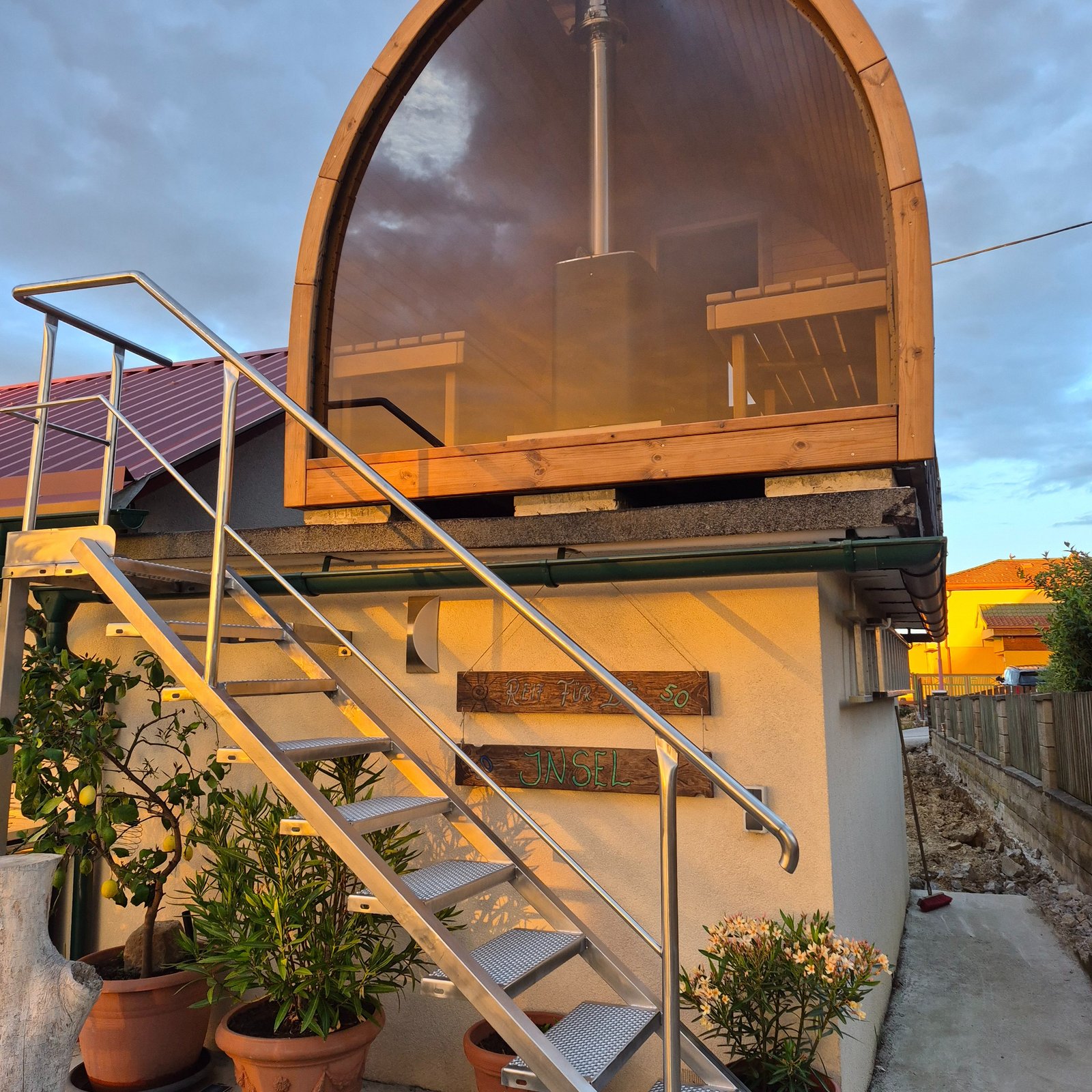


A clear water butt is not evidence that its contents are suitable for a hot tub. Roof runoff can collect microorganisms, particles and dissolved contaminants before it reaches storage. Use harvested rainwater only after its source quality, treatment and compatibility with the complete hot-tub system have been assessed. A leaf screen, first-flush device or UV lamp alone cannot make that decision.
Why rainwater behaves differently from mains water
Rain begins with few dissolved minerals, then changes as it passes through air, roof, gutter and storage. That makes local testing more useful than a generic claim that rainwater is “pure”. Low hardness may reduce some scale, yet very low alkalinity can allow pH to move quickly. Metals may come from roofing or fittings. Organic debris provides demand for sanitizer, and a warm storage tank can support microbial growth.
A wooden vessel does not remove those requirements. Timber, polypropylene, fibreglass, stainless steel, pumps and seals each have limits, and the chosen treatment system must work with all of them. Never assume fewer minerals means no disinfection or that “chemical-free” means risk-free.
Decide whether the catchment is suitable
Inspect the entire route. Avoid runoff from roofs or coatings that may release hazardous material, and do not collect where heavy bird activity, chimney deposits, industrial dust or pesticide spray can contaminate the surface. Keep gutters clean and fit leaf screens. A first-flush device diverts the initial runoff after a dry spell, when dust and droppings are most concentrated.
The tank should be opaque, covered and cleanable, with screened openings, managed overflow and a draw-off point that does not continually pull settled debris from the base. Prevent insects, small animals and surface-water ingress. Do not make an unprotected cross-connection between a rainwater system and the mains supply.
| Barrier | What it removes or controls | What it cannot prove |
|---|---|---|
| Clean roof, gutter screen and first flush | Leaves and part of the first dirty runoff | That the stored water is microbiologically safe |
| Covered, opaque storage | Light, animals and some new contamination | That existing sediment or biofilm has been removed |
| Coarse and fine filtration | Particles down to the filter’s rated size | Correct pH, alkalinity, dissolved metals or disinfection |
| Testing and approved treatment | Known water-balance and hygiene targets | Future safety without ongoing measurement and circulation |
Assess the source before committing to a fill
Start with the catchment and storage assessment, not a full tub waiting to be treated. Record the roof and gutter materials, nearby contamination sources, storage history and the way water is drawn from the tank. A water-treatment professional can use that information to select relevant laboratory tests and decide whether a suitable treatment route is practicable.
The Drinking Water Inspectorate’s rainwater-supply case study illustrates why different risks need different controls: improvements to microbiological treatment did not resolve a dissolved contaminant. It concerns a private water supply rather than a hot-tub design, but the distinction matters when someone proposes a single filter as a complete solution.
If the assessed source is unsuitable, do not fill first and try to rescue it with extra sanitiser. Use an acceptable supply instead. If it is suitable, obtain the approved fill, balance, disinfection and ongoing test procedure for the actual water volume and wetted materials before bathing.
Tests that answer different questions
A pH strip does not test for pathogens or dissolved metals. Clear appearance cannot rule them out either. Source testing must be selected for the catchment risks, and routine bathing-water tests must match the installed treatment system. These are related but different jobs.
A laboratory result describes the sample collected at that time. A changed roof, contaminated gutter, warm stagnant store or long dry period can change the next batch. Agree the sampling and inspection plan with the person assessing the supply rather than applying a generic “test once” rule.
Wood-fired heating to bathing temperature does not sterilise the fill. UV has no lasting disinfectant residual in the tub. Neither allows the source assessment or ongoing water-care plan to be omitted.
When rainwater is a poor choice
- The roof or storage material is unknown or visibly contaminated.
- The tank cannot be cleaned, screened or protected from surface runoff.
- Water remains warm and stagnant for long periods without a managed treatment route.
- Tests show recurring metals, unstable balance or microbiological problems that the system is not designed to correct.
- The fill is for a guest or commercial spa without a documented risk assessment and operating regime.
Will it save money?
The answer depends on roof area, local rainfall, storage already available, pump energy, filters, testing, cleaning and how often the tub is drained. A new tank, pump and treatment train may not repay itself through water charges alone. Rainwater harvesting is most convincing where it also serves irrigation or other permitted non-potable uses and where the owner is prepared to maintain one system properly.
Do not save water by keeping bathing water beyond the point at which the treatment system can control it. Good filtration, a close-fitting cover, pre-bathing showers and measured dosing can reduce unnecessary changes without pretending that water lasts indefinitely.
What to record for a repeatable fill
- Catchment and tank condition, first-flush operation and date of storage cleaning.
- Source appearance, odour and test results.
- Filters used, flow rate and any unusual deposits.
- Actual hot-tub volume and water-care additions.
- Filled-water readings before bathing and during use.
For the physical filling and draining sequence, continue with how to fill and drain an outdoor hot tub. For treatment choices, use the main hot-tub water-care guide.
Business use needs a separate assessment
A holiday let or other business hot tub needs a competent risk assessment and operating control scheme. HSE HSG282 addresses business spa-pool systems; a private-garden rainwater checklist cannot replace that assessment. Keep a rainwater system separate from the mains and obtain appropriate plumbing advice for backflow protection.