

A wood-fired hot-tub stove that sends smoke towards the door, pipe joints or bathing area needs a calm, safe diagnosis. The cause is not always a short chimney or “bad wood”. Damp fuel, a cold flue, restricted combustion air, excessive ash, an incorrectly assembled pipe and local wind can produce similar symptoms. The useful question is where the smoke appears, when it starts and whether it continues after the fire is established.
Stop immediately when the situation is unsafe
Do not continue troubleshooting around an uncontrolled fire. Keep the stove door closed unless the manufacturer’s procedure says otherwise, remove people from the area and call the fire and rescue service if flames escape unexpectedly, a component glows, nearby material catches fire or the situation cannot be controlled. Carbon monoxide is colourless and cannot be judged by the amount of visible smoke; outdoor location does not make a faulty installation harmless.
Never use petrol, spirits or another flammable liquid to improve lighting. Do not dismantle a hot chimney, cover its terminal, or improvise a baffle. On a water-jacketed heater, maintain the safe water level and circulation specified by the maker until the fire is fully out and the appliance is cold.
First distinguish chimney smoke from smoke leakage
A visible plume from the chimney terminal is different from smoke leaving the stove door or a pipe joint. Some visible exhaust can occur during a cold start, particularly in still weather, but the appliance and its connections should not release smoke into the user area. A persistent dark plume together with a lazy fire points towards poor combustion; smoke at a joint points towards an assembly, sealing or draught problem that needs separate attention.
Write down whether the issue happens only during lighting, when the door is opened to refuel, in one wind direction, or throughout the burn. Photograph the complete cold installation from several angles. These details are more useful to an installer than the general statement that the stove “smokes”.
Do not keep relighting a suspected blocked or damaged flue. Smoke at a joint, evidence of a chimney fire, loose or distorted parts, or recurrent poor draught needs inspection before another firing. Fuel checks can explain poor combustion, but cannot clear a damaged installation for use.
Check 1: firewood moisture, size and loading
Wet logs consume heat evaporating moisture, burn at a lower temperature and tend to produce more smoke and deposits. In England, small volumes of firewood sold for immediate domestic use must meet the Ready to Burn moisture standard; the government guidance uses a moisture content of 20% or less. Even when fuel comes from another source, testing several representative logs on a freshly split inner face provides a much better indication than testing bark or an exposed end.
Log dimensions and loading matter too. Oversized pieces can be difficult to establish, while an overfilled firebox may obstruct the designed air path. Follow the appliance instructions for kindling, initial charge and refuelling. Do not burn painted, treated, laminated or waste timber. The companion guide to firewood moisture and storage explains how to measure and stage fuel consistently.
Check 2: combustion air and the cold-start method
A fire needs an adequate supply of combustion air. Once the stove is cold, confirm that designed inlets are clear and that any manufacturer-provided control moves normally. Do not drill new openings or operate with the door permanently ajar unless the manual explicitly requires a brief lighting position.
A cold chimney can take time to establish upward draught. Use the specified lighting method with dry kindling and a modest first fuel load. Repeatedly building a larger fire is not a safe remedy for an installation that cannot establish draught. If the problem persists after the flue is warm, the full air and exhaust route needs assessment.
Check 3: ash, firebox and accessible flue sections
Excess ash can cover an intended air route. Remove it only when completely cold, using appropriate tools, and place it in a lidded metal container on a non-combustible surface. Inspect the firebox and accessible chimney sections for unusual soot accumulation, corrosion, distortion, loose fasteners or a foreign obstruction. Do not brush debris into a water passage or electrical component.
Chimney cleaning intervals depend on the appliance, fuel and use. Arrange competent inspection before further use if deposits are heavy, a blockage is suspected, there are signs of a chimney fire or the installation is damaged. Do not attempt inaccessible flue work yourself. Do not operate with cracked welds, distorted metal or a visibly damaged door seal.
Check 4: pipe joints, terminal position and clearances
With the system cold, compare every visible section with the product instructions. A slipped segment, incorrect orientation, damaged seal or unsupported extension can allow smoke to escape. Chimney height and terminal location influence draught, but adding a random section is not a diagnosis: it changes wind load, support and separation from nearby structures.
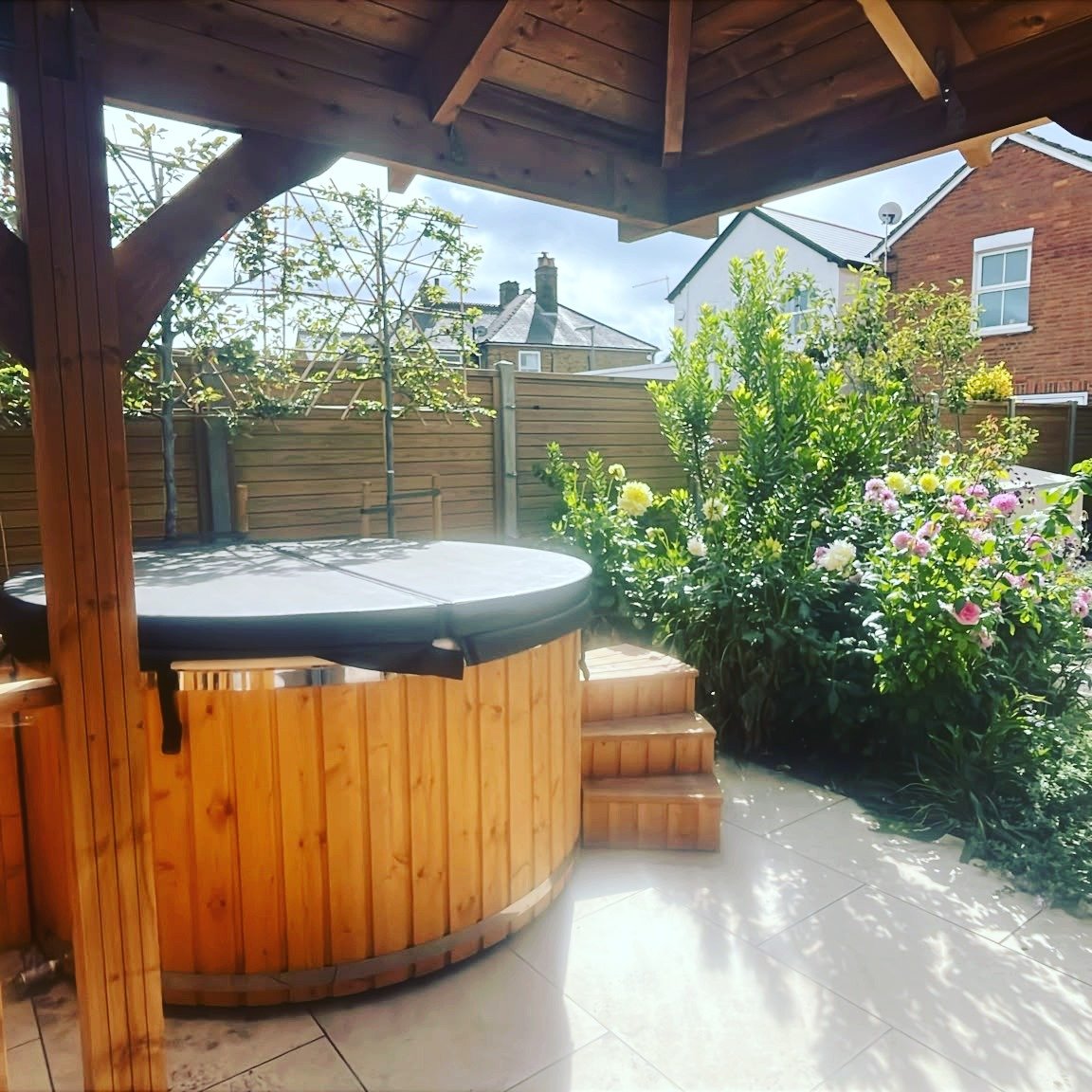
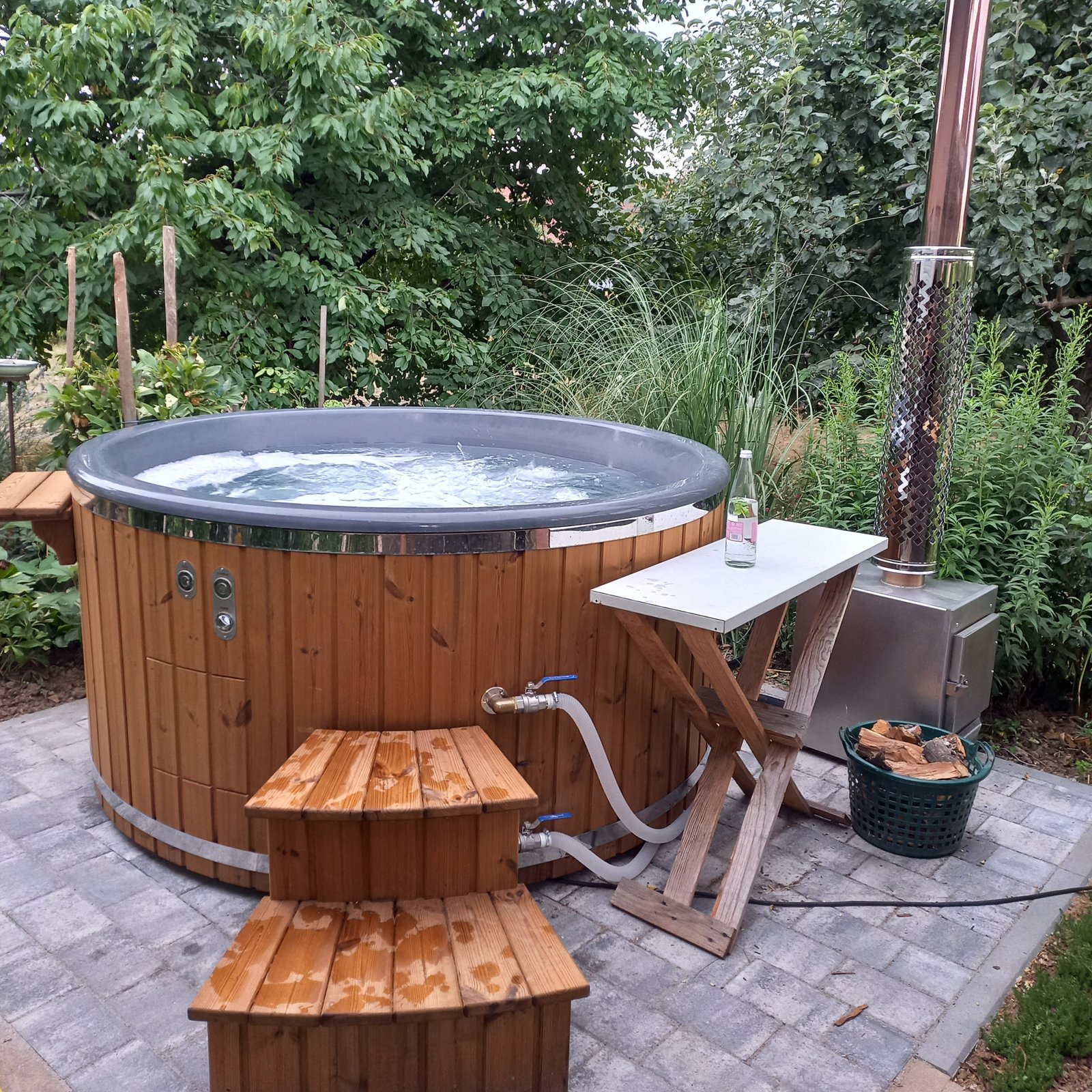
Keep covers, parasols, stored logs, fences, planting and fabric canopies outside the required clearances. The commercial overview of wood-fired hot tubs explains why external, integrated and internal heater positions require different layouts and access routes.
Check 5: wind, buildings and nuisance smoke
Downdraught around a wall, hedge or roof edge can push exhaust back towards the garden. Note whether the behaviour is linked to a particular wind direction. Do not build a temporary shield beside a hot flue; it may create a new fire hazard or worsen the airflow. Repeated wind-related failure needs a competent assessment of the appliance, terminal and site together.
In a smoke control area, additional rules can apply to the fuel and appliance. Even outside one, smoke must not create an avoidable nuisance. Check the current local authority requirements and the UK government’s smoke-control guidance before assuming that an outdoor installation is exempt.
Cold-stove diagnostic table
| Observation | Possible cause | Safe next step |
|---|---|---|
| Smoke appears when the door is opened | Door opened too quickly, weak draught or excessive fuel | Review the refuelling procedure; inspect the cold air and flue path |
| Dark smoke continues after start-up | Damp fuel or incomplete combustion | Measure freshly split logs; check charge size and designed air supply |
| Smoke escapes at a joint | Displaced, damaged or incorrectly assembled component | Do not relight; have the cold installation checked |
| Problem occurs only in one wind direction | Site-related downdraught | Document conditions and obtain a competent flue assessment |
What information to give the installer
Provide the exact heater model, manual, overall photographs, pipe diameter and route, joint details, terminal surroundings, fuel type and moisture readings, and the weather conditions when the problem occurs. State whether the water level and circulation were normal. This prevents a remote diagnosis from being reduced to guesswork.
Smoke and draught questions before relighting
Is white exhaust always caused by wet wood?
No. Water vapour can be visible in cold air. Persistent dense smoke, poor flame quality and rapid soot accumulation are stronger reasons to investigate the fuel, air path and installation together.
Can I extend the chimney myself?
Not without approval for the exact system. An extension changes draught, wind loading, support and required clearances. Ask the manufacturer or competent installer and check local requirements.
Why does smoke appear only when I add logs?
The door may be opened too quickly, the fire may have weak draught, or the new load may be too large. Follow the specified refuelling sequence. If smoke still escapes, stop using the stove until the flue route is checked.
Can extra air compensate for damp fuel?
No. More air does not make wet wood dry and may change the burn unpredictably. Use suitable dry logs and the air settings defined by the appliance instructions.
Combustion, flue and smoke-control references
This guide does not replace the heater manual, a fire-risk assessment or a competent inspection. Requirements differ across the UK and by installation.