

Wendy — Grimsby, United Kingdom
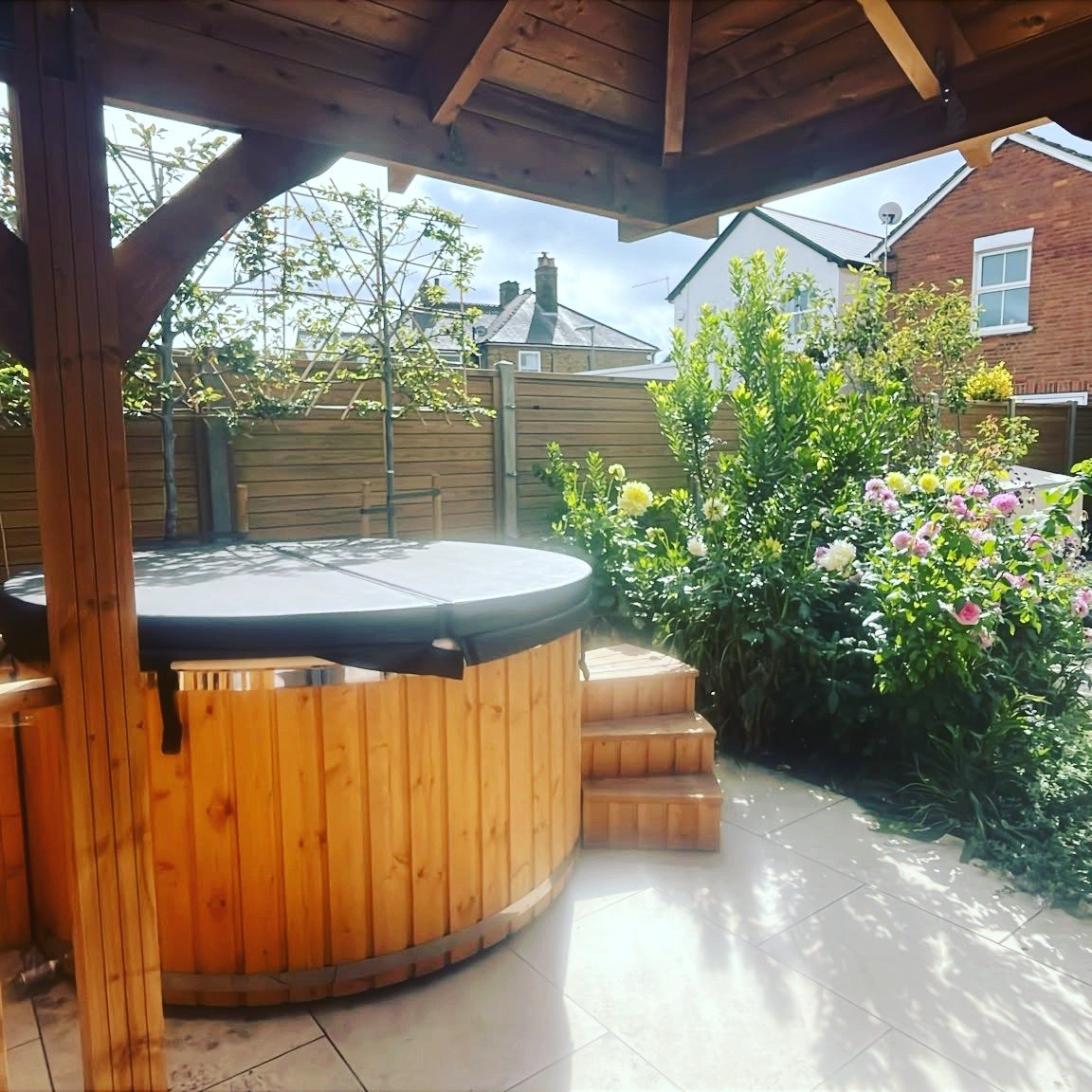
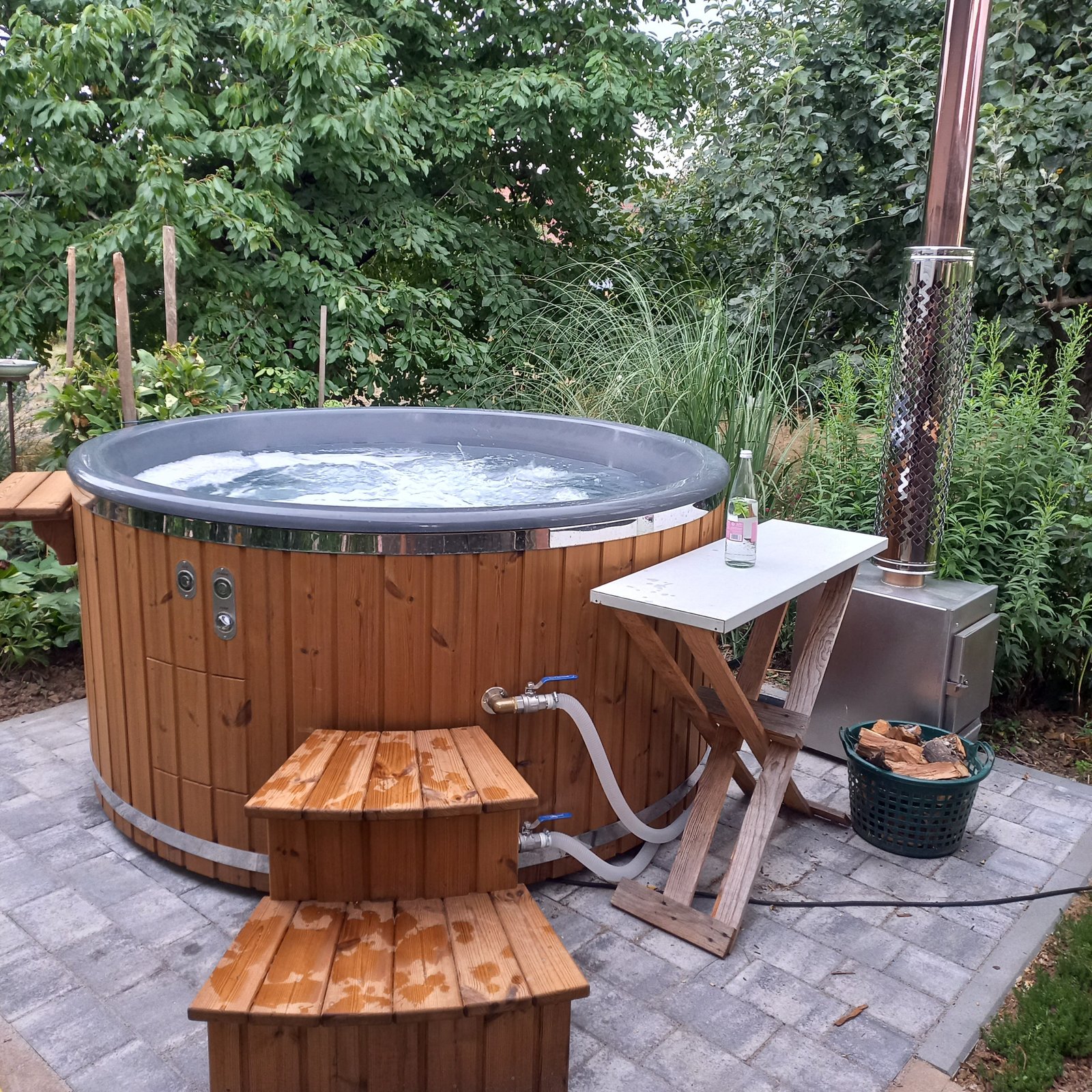
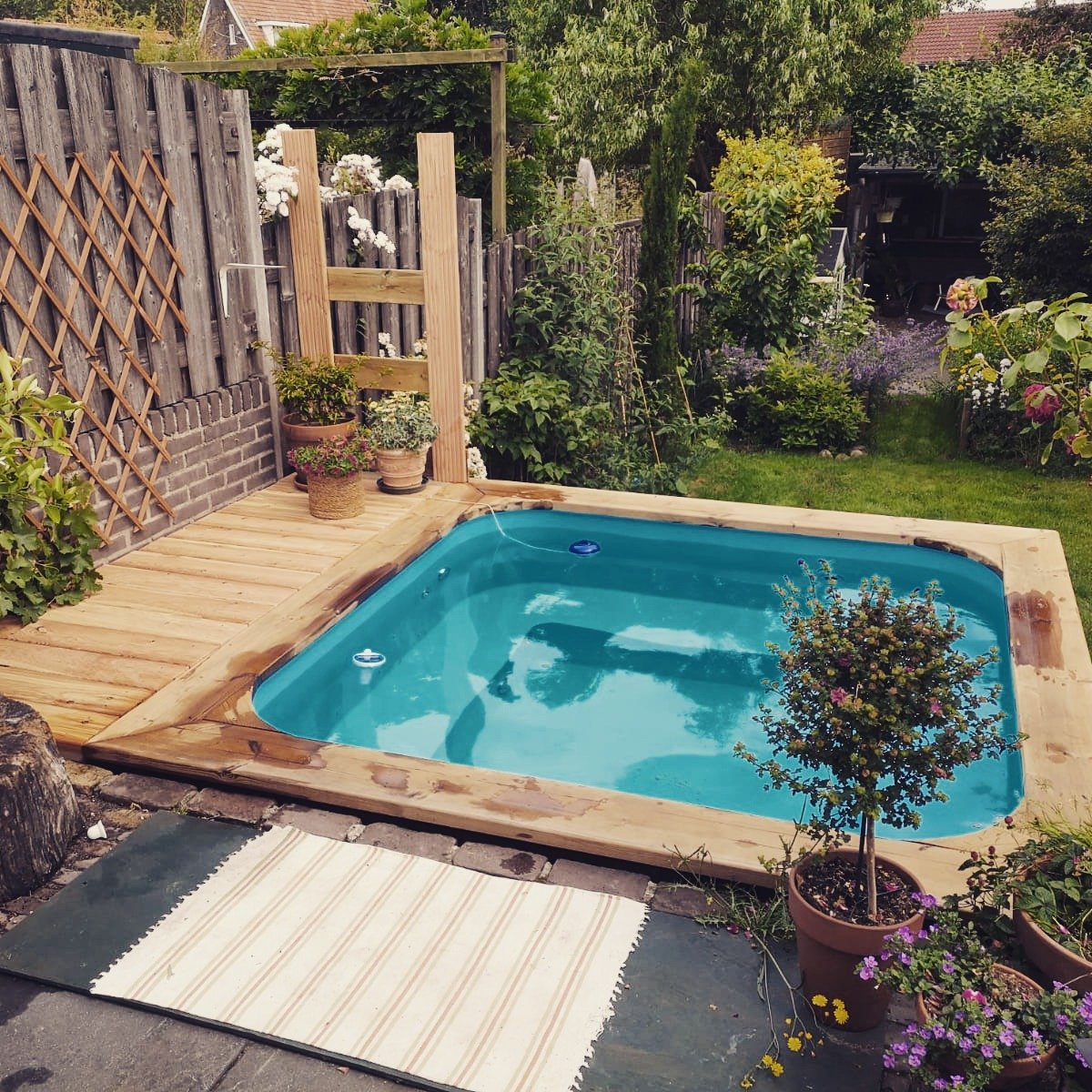
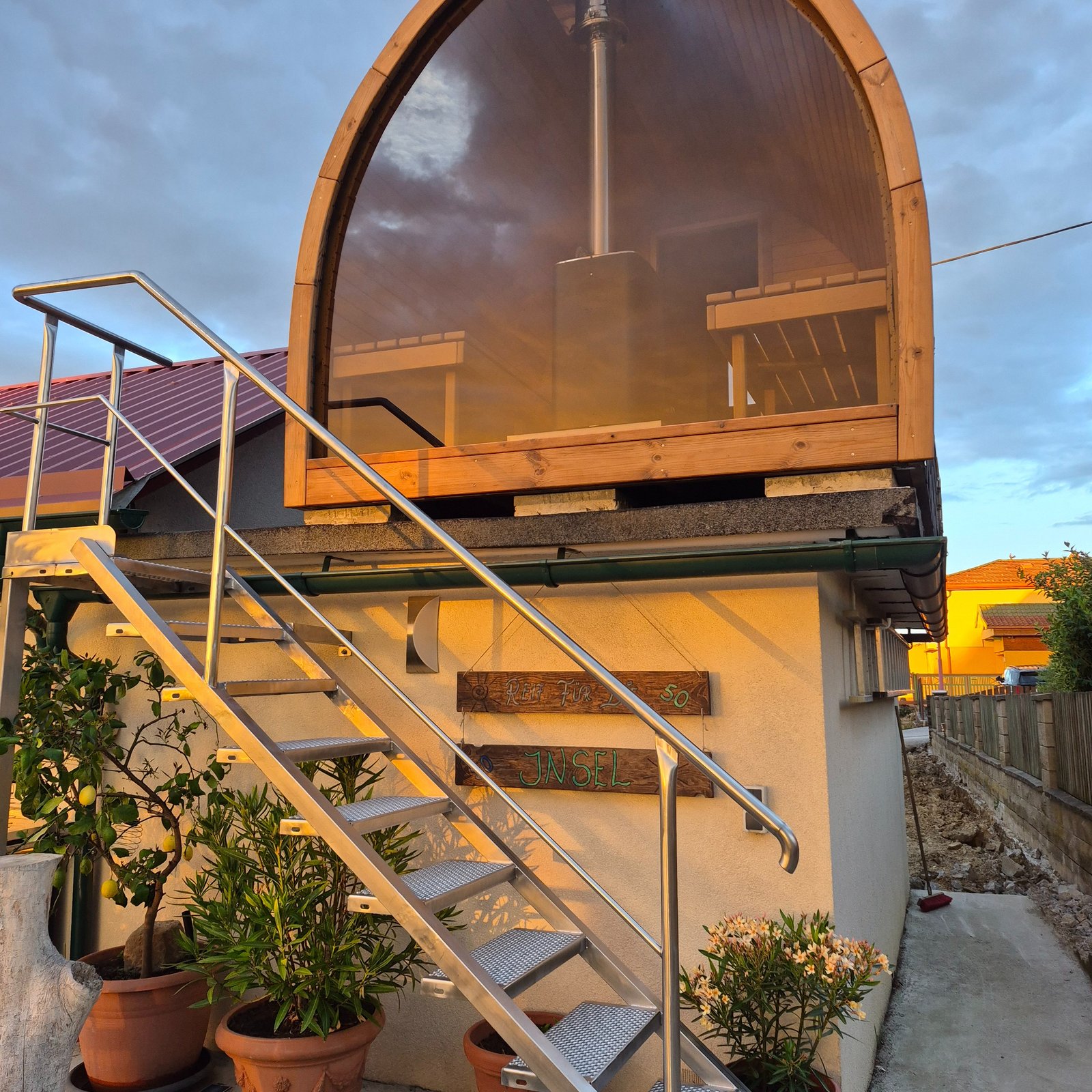
Review and installation photos →Hi, we have finally moved into our house & hot tub is amazing! Attached photo (feel free to use!)
Material sources checked 23 September 2026. For the woods offered across the TimberIN range, see types of wood for hot tubs and saunas. Product-specific availability still needs confirmation in the chosen model and quotation.
Cedar and thermally modified timber are both associated with premium outdoor products, but they are not interchangeable labels. “Cedar” can refer to different species, grades and parts of a tub. “Thermowood” is often used loosely, although ThermoWood® is a registered process and quality mark. A useful comparison must identify the actual material, its job and the complete vessel construction.
This guide compares Western red cedar and thermally modified timber for hot-tub bodies, cladding and trim. It also explains maintenance, weathering, water contact, fasteners, heating, sourcing and cost. TimberIN products shown below, like the wider wood-fired hot tub range, are current alternatives; TimberIN does not offer cedar hot tubs.
Material rule: ask “which exact species, grade and component?” before paying a premium for the word cedar, thermowood or wood.
It may mean a traditional water-retaining vessel made from cedar staves, a moulded liner surrounded by cedar cladding, or a tub with cedar trim only. Those products behave differently. A coopered vessel relies on timber joints, moisture and hoop compression; a lined tub relies on its shell or liner for water-tightness while the exterior wood provides appearance and weather protection.
Cedar is also not one single species. Western red cedar, yellow cedar and woods sold under other cedar names have different properties and supply chains. Ask for the botanical or recognised trade species, origin, grade, heartwood/sapwood content and intended component. A colour sample does not answer those questions.
The International ThermoWood Association describes ThermoWood® as timber modified at elevated temperature with steam under atmospheric pressure and without added chemicals. The process changes moisture behaviour, reduces equilibrium moisture content and improves dimensional stability and biological durability. The association distinguishes Thermo-S and Thermo-D classes for different applications.
ThermoWood® is a registered mark, not a generic synonym for every dark heat-treated board. Ask whether the material is certified ThermoWood®, another documented thermally modified timber, or simply heat-coloured wood. The International ThermoWood Association explains the process and classes.
| Question | Western red cedar | Documented thermally modified timber |
|---|---|---|
| Source of performance | Natural species properties, grade and heartwood content | Base species plus controlled modification process and treatment class |
| Dimensional behaviour | Known for relatively low shrinkage and good stability when correctly dried | Modification is intended to reduce moisture response and improve stability |
| Decay resistance | Heartwood can be naturally durable; sapwood and grade must not be assumed equivalent | Biological durability can improve, but class and intended use must be verified |
| Colour | Natural variation from pale to reddish and brown tones | Modification normally produces a darker through-colour that weathers outdoors |
| Specification risk | “Cedar” without species, grade and component is vague | “Thermowood” without producer, process or class is vague |
| Best decision basis | Exact product, detailing, maintenance and supply evidence | Exact product, modification record, class, detailing and maintenance |
The USDA Wood Handbook describes Western red cedar as lightweight, dimensionally stable and naturally decay resistant in its heartwood, while also documenting that wood properties vary by species and use. Neither source says that any board carrying a broad marketing name is automatically suitable for every hot-tub component.
Exterior cladding is exposed to rain, sun, splash and ventilation conditions but normally does not retain the bathing water on a lined model. Its movement and finish still matter, yet a cladding comparison cannot predict liner life, seat comfort or water-care compatibility. Ask for the liner material, support structure, insulation and service access separately.
In a solid-timber vessel, the timber is both structure and water-retaining surface. Species, moisture, stave profile, hoops, assembly and storage all become central. Do not transfer cladding maintenance advice to a coopered interior or assume a product designed as cladding can form a watertight tub.
Uncoated cedar and thermally modified timber can both weather towards grey as ultraviolet light and rain change the surface. Finish can slow or alter that process but creates a renewal schedule. Samples photographed indoors or freshly oiled do not show the long-term appearance at an exposed UK site.
Decide whether you want a natural weathered surface or a maintained colour. Obtain the approved preparation, coating, interval and compatibility with hot surfaces and splash. Shaded damp zones, lower edges and end grain need attention even when the wood has good inherent durability.
Timber lasts best when it can drain and dry. Avoid ground contact unless the detail and material are designed for it, ventilate cladding, protect vulnerable end grain and stop water being trapped behind trim. Use fasteners and fittings specified for the timber and wet outdoor environment; extractives and moisture can stain unsuitable metals or surrounding wood.
Ask how boards can be replaced without dismantling the complete tub. Service panels, stove clearances and the base edge should remain accessible. A premium species cannot compensate for trapped water, poor support or inaccessible equipment.
For cladding, maintenance normally means inspection, gentle cleaning, checking fixings and renewing the selected finish if colour retention is desired. For a solid-timber vessel, maintenance also includes moisture management, hoops, internal cleaning and the manufacturer’s rules for filling, drying and treatment. Use model-specific instructions.
A claim such as “maintenance free” should be tested against the whole product. Liners, seals, covers, stoves, pumps, filters and finishes all need care even if one timber can weather without coating. Request a written first-year and long-term schedule before comparing ownership cost.
Water volume and temperature rise create the basic heat demand. Heater output transferred to the water, cover, insulation, exposed surface, weather and circulation then influence the result. Timber thermal properties are only one part of the complete wall and floor build-up. Do not accept “cedar heats faster” or “thermowood is warmer” without matched constructions and test conditions.
Compare the specified insulation and cover as systems. A tub with attractive cladding but weak surface insulation can lose more heat than a plainer model with a better complete envelope.
A lined tub and a solid-timber tub may permit different treatment methods and concentrations. Do not choose chemicals from the exterior wood name. Follow the vessel, heater, seals, pipework and filtration instructions together. Retained shared water normally needs testing, filtration and treatment; fill-and-drain soaking has a different routine.
Cedar price varies with species, grade, dimensions, heartwood content, certification, transport and availability. Thermally modified timber varies with base species, process, class, producer and profile. A quotation must name the material precisely enough to replace or verify it later.
Compare the complete configured product rather than a per-board premium. A different material may change cladding, trim or vessel construction, but the heater, liner, cover, filtration, delivery and foundation can remain the larger project costs. TimberIN does not currently promise cedar through this page; the live configurator and written quotation determine available materials.
Building a watertight heated vessel is not ordinary garden carpentry. Stave geometry, hoops, floor joints, support, drains, heater circulation, water temperature and material movement interact. A documented kit can define those interfaces; an improvised project needs competent design and should never include an unverified stove or pressurised heated-water arrangement.
For owner-managed projects, focus DIY work on suitable site preparation or finishes while preserving manufacturer instructions and specialist electrical, lifting and heater responsibilities. The DIY wood-fired hot-tub guide sets safer boundaries.
Guests do not benefit from an attractive species if the tub is difficult to clean, inspect or service. Business buyers should compare water-control systems, staff routines, hot surfaces, fault isolation, spare parts and warranty terms. Record the exact finish and approved cleaning products so maintenance does not depend on memory.
From our customers
Customer projects matched to the products listed on this page. Earlier specifications and selected options may differ.
Customer projects from United Kingdom.
Review and installation photos →Hi, we have finally moved into our house & hot tub is amazing! Attached photo (feel free to use!)
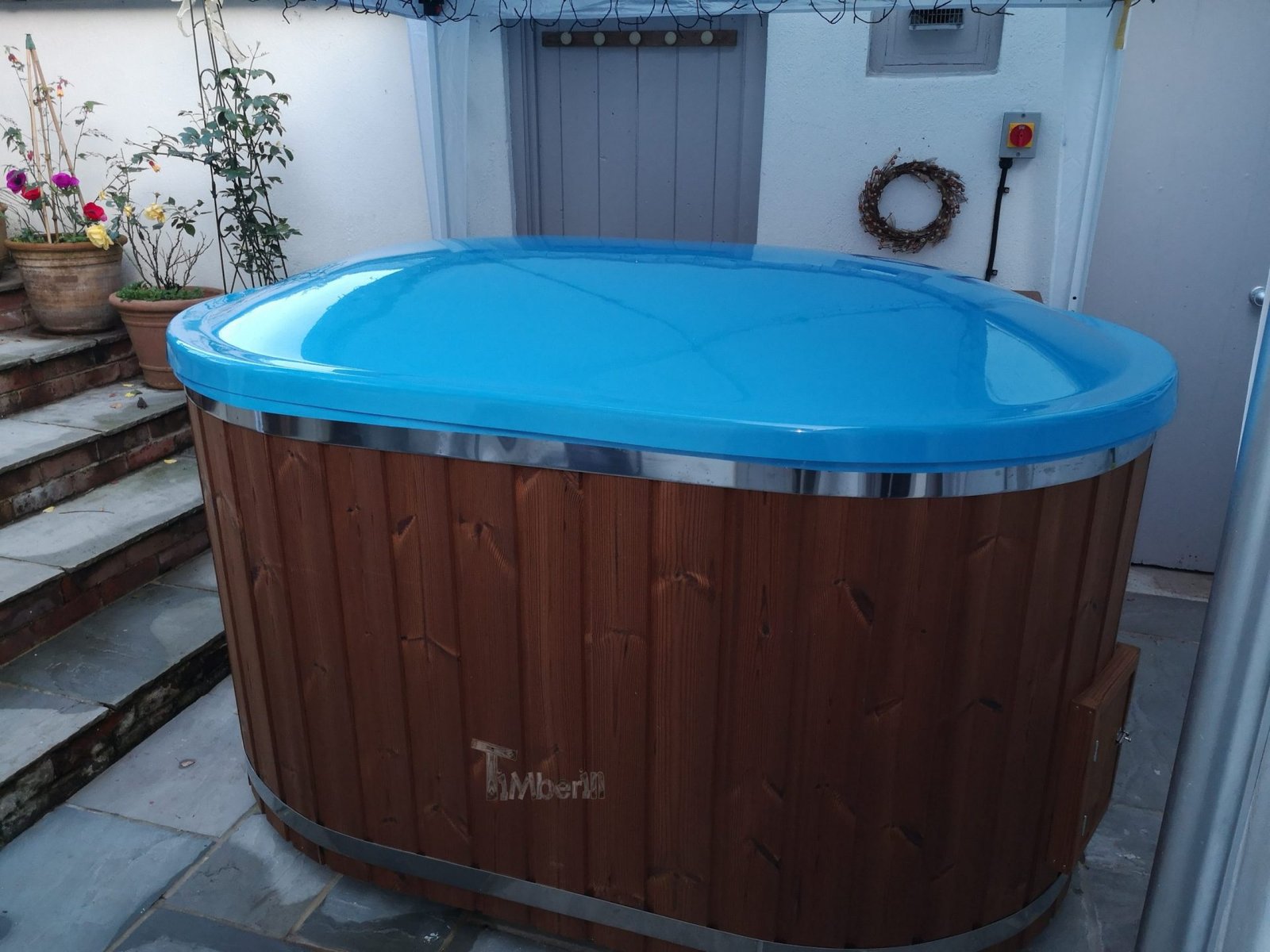
Review and installation photos →Hi Just to say that I am delighted with my hot tub. We have used it most evenings and it has become the highlight of the day.
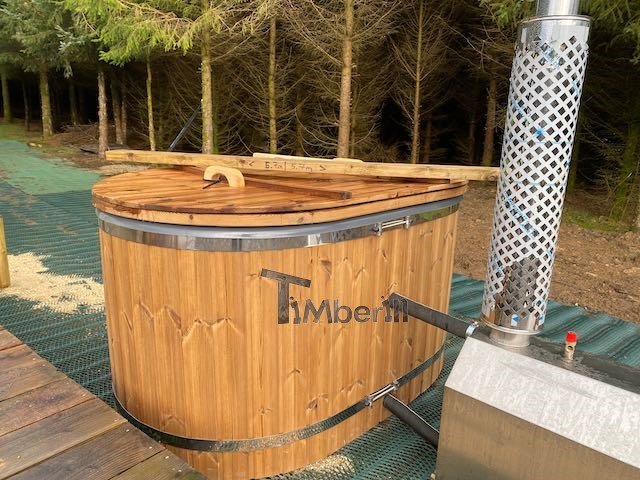
Review and installation photos →Very good service and very good product. Delivered at the agreed time and looks wonderful in my woods.
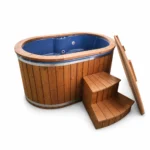
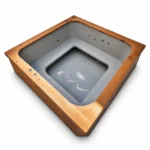
These two current hot-tub examples are not cedar products by implication. Open the selected model to see which exterior woods and vessel constructions are actually available. Only the configurator and written order confirmation establish the chosen material.
| Question | Evidence to request | Why it matters |
|---|---|---|
| What is the material? | Species, grade, producer, process and class as applicable | Marketing names can cover different products |
| Where is it used? | Vessel, cladding, bench, trim or cover component | Water-retaining and decorative roles differ |
| How is it detailed? | Ventilation, drainage, end grain, fasteners and ground clearance | Good material can fail in a poor detail |
| How will it look? | New, weathered and maintained samples | Both colour and finish change outdoors |
| How is it maintained? | Cleaning, coating, moisture and inspection schedule | Ownership cost extends beyond purchase |
| What is confirmed? | Final order specification and warranty conditions | Only written scope resolves the selected option |
Do not infer cedar from this comparison page or from a timber appearance. A material is available only when it is listed for the chosen product and confirmed in the live configurator and written quotation.
No. Species, grade, modification process, component, detailing, finish, maintenance, availability and price all matter. Compare documented products in the same intended role.
Uncoated surfaces normally weather and can grey. A compatible finish can help retain colour but creates preparation and renewal duties. Ask for product-specific coating guidance.
No. Cedar cladding can surround a separate liner or shell. Ask which material retains the water and which parts are exterior finish, seating or trim.
Material name alone cannot answer that. Compare water volume, heater output transferred to water, insulation, cover, exposed surface, weather and the complete wall and floor construction.
Share the preferred appearance, maintenance tolerance, site exposure and vessel type. TimberIN can then identify the current documented materials for compatible models without presenting an unavailable species as a sale option.