
Outdoor Steam Sauna UK: Löyly or Steam-Room Guide
“Outdoor steam sauna” can describe two very different rooms. A Finnish-style sauna creates brief bursts of humidity—löyly—when water is used on suitable hot stones. A true steam room uses a generator to maintain a much wetter environment inside a vapour-tight, washable enclosure.
TimberIN’s outdoor timber saunas are primarily traditional sauna cabins, not tiled steam rooms. This guide explains that distinction so buyers can choose the right construction, heater and maintenance plan. It also covers moisture control, electrical or wood-fired heating, foundations, outdoor weather and commercial water-system duties.
Terminology rule: steam rising from sauna stones does not turn a timber sauna into a continuously saturated steam room. The building envelopes and services are designed differently.
What is löyly in a traditional sauna?
Löyly is the sensation and short-lived humidity produced when an appropriate amount of water is applied to heated sauna stones in a heater designed for it. The water becomes vapour, changes the way the heat feels and then leaves through the room’s ventilation and drying cycle.
Use only the selected heater’s instructions. Do not pour water on infrared emitters, controls or electric equipment not designed for it. The stone type, loading, water quality, ladle quantity and ventilation are part of the system rather than opportunities for improvisation.
Traditional outdoor saunas for a löyly experience
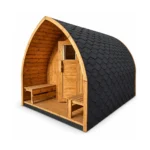
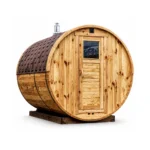
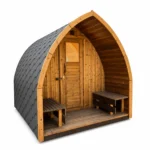
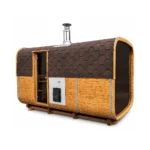
The current outdoor-sauna range appears below. These are not presented as continuous steam rooms. Open a model and confirm its compatible electric or wood-fired heater, stone capacity, ventilation, timber package and cleaning instructions for the exact size selected.
-
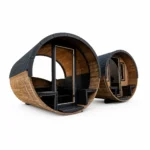
Custom pod
 TimberIN Nordic Pod™ CustomFrom: £4,327
 -
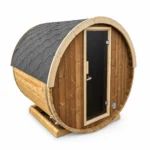
Classic barrelTimberIN Nordic Barrel™ ClassicFrom: £4,106
-
Product on saleSave up to 19%TimberIN Nordic Pod™ PorchFrom: £5,957From: £5,006 -
Square barrelTimberIN Nordic Square Barrel™From: £6,056
-
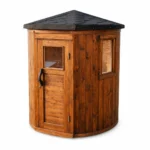
Space-savingTimberIN Nordic Vertical™From: £4,127
-
2-person electricTimberIN Nordic Terrace™ 160 ElectricFrom: £5,192
-
Panoramic glazingTimberIN Nordic Hobbiton™ GlassFrom: £7,348
-
Terrace modelTimberIN Nordic Oval™ TerraceFrom: £7,590
-
Panorama for 4TimberIN Nordic Barrel Panorama™£8,085


Finnish sauna and steam room are not interchangeable
| Feature | Traditional sauna with löyly | True steam room |
|---|---|---|
| Heat source | Electric sauna heater or wood stove with suitable stones | Steam generator feeding the room |
| Moisture pattern | Generally drier heat with brief humidity bursts | Continuously high humidity during operation |
| Interior | Sauna-grade timber and designed ventilation | Vapour-tight, water-resistant, washable envelope |
| Drainage | Model-specific cleaning and floor-water provision | Designed for condensate and wash-down water |
| Service plant | Heater, guard, controls and possibly chimney | Generator, water feed, drain, controls and access |
| After use | Ventilate and dry timber surfaces | Drain, rinse, clean and manage the wet system as specified |
When a buyer really means an outdoor steam room
If the goal is a continuously humid room with tiled, stone or purpose-made composite surfaces, specify a steam room from the beginning. The enclosure needs vapour management, falls, drainage, sealed penetrations, a suitable door and ceiling geometry, plus protected space for the generator and controls.
Do not line a standard timber sauna with waterproof boards and add a generator without a designed system. Trapped moisture can damage hidden construction, while incorrect steam outlets can create a burn risk. Use a specialist able to coordinate the outdoor shell, steam equipment and maintenance.
Choose a heater approved for water on stones
For sauna-style humidity, the heater and stones must be intended for the practice. Confirm the heater model, allowed stone type and quantity, controls, guard, clearances and water-use instructions. An electric room heater or infrared panel is not a substitute.
Heater sizing follows the completed sauna volume, construction, glazing and manufacturer method. A bigger heater does not justify excessive water or poor ventilation. Ask for the approved pairing in writing after any glass or room-size option changes.
Electric sauna heat needs competent outdoor installation
An electric heater, controller, sensor and lights operate close to heat and moisture. A competent electrician should design the property supply, cable route, isolation, earthing and protective devices for the selected equipment and outdoor environment.
Keep controls and sensors in their instructed positions. Do not spray or splash them during cleaning. In England, GOV.UK’s Approved Document P explains the building-regulations framework for electrical safety in dwellings; use the requirements applicable to the installation nation.
Wood-fired löyly adds stove and chimney management
A wood-fired sauna stove can provide traditional stone heat where the complete appliance, guard, hearth or floor protection, flue and chimney are properly installed. Keep dry fuel and ash away from wet traffic and combustible storage.
Water use must follow the stove and stone instructions and should never contact the firebox or chimney unintentionally. Check local smoke restrictions and neighbour impact. Show the complete flue on planning and installation drawings.
Ventilation carries away heat and moisture after use
Ventilation is part of heater performance and room hygiene. Inlet and outlet positions vary with electric and wood-fired systems, so follow the selected design. Moving a vent to hide it behind a fence can disrupt the intended airflow.
After the session, remove wet textiles, clean surfaces and let benches, walls, floor and hidden areas dry. Leave vents or the door in the instructed position. A timber sauna repeatedly left damp can develop odour, staining and deterioration even when its exterior roof is sound.
Glazing shows condensation clearly
Glass can frame a view but also reveals condensate and water marks. Large areas change heater selection and create more surface to clean. Position glazing for privacy and ensure external access does not require squeezing behind a wet boundary screen.
Condensation itself is not evidence that the room is a steam room. Observe whether moisture clears during the designed drying cycle. Persistent wet corners, pooled water or fogging within sealed units need investigation rather than stronger fragrance or hotter operation.
Water quality affects stones and equipment
Use water permitted by the heater manufacturer. Minerals, salt, chemicals, fragrances and contaminated containers can damage stones, elements or surfaces and create unwanted aerosols or deposits. Never assume hot-tub or pool water is suitable for sauna stones.
Inspect and rearrange or replace stones on the specified schedule. Remove fragments and dust safely. For a true steam generator, follow its water-quality, scale-control, flushing and service instructions; the plumbing system is part of ongoing maintenance.
Outdoor weather increases the drying challenge
Low ambient temperatures, driven rain and shaded gardens slow drying. The sauna needs a drained foundation, weatherproof roof, maintained exterior finish and enough clearance for airflow and treatment. A canopy can shelter the entrance but should not block ventilation or chimney clearances.
A true outdoor steam room needs an envelope designed for both internal vapour and external weather. Junctions, penetrations and access panels must remain serviceable. Do not hide them behind permanent decking or planting.
Plan floor water and drainage deliberately
A traditional sauna may only see modest cleaning water and wet feet, but the floor still needs an appropriate routine and a base that stays dry. A steam room produces condensate and wash-down water that should reach a designed drain without pooling.
Confirm falls, traps, discharge, frost protection and access for cleaning. Keep drainage separate from rainwater where required. The route should not undermine the foundation or discharge hot or chemically treated water improperly.
Commercial steam and sauna rooms need formal water management
Employers, landlords and people in control of premises have duties to understand and manage water-system risks. HSE guidance explains that hot and cold water systems can present a foreseeable legionella risk and should be assessed, controlled and monitored appropriately.
A commercial generator, shower, hose or associated storage should sit within a documented water-safety process. Staff also need cleaning, inspection, fault-isolation and user-information procedures. Seek competent advice for the specific system; a domestic sauna checklist is not enough.
Keep health language proportionate
Sauna users may value warmth, ritual and relaxation, but this page does not promise detoxification, treatment of respiratory disease, weight loss or another medical outcome. High humidity is not automatically safer or more beneficial than dry sauna heat.
People who are pregnant, take medication or have cardiovascular, respiratory, heat-sensitivity or other health concerns should obtain individual medical advice. Users should leave if they feel unwell and should not treat a commercial wellness claim as medical clearance.
Budget for the correct room type
| Budget area | Traditional sauna with löyly | True steam room |
|---|---|---|
| Enclosure | Sauna timber, benches, roof and ventilation | Vapour-tight washable shell, ceiling and door |
| Heat or steam | Approved electric heater or stove, stones and guard | Generator, outlet, controls and protected plant space |
| Water | Suitable ladle water and cleaning provision | Feed, treatment or scale plan, flushing and drainage |
| Site | Foundation, weather protection and chimney if used | Foundation, waterproof interfaces and service access |
| Professional work | Electrical or stove installation and commissioning | Waterproofing, plumbing, drainage and electrical commissioning |
| Ownership | Drying, cleaning, stones and exterior treatment | Cleaning, descaling, water-system checks and component service |
Steam-intent buying checklist
- Decide whether you want sauna löyly or a continuous steam room.
- Do not add a steam generator to a standard timber cabin.
- Confirm the heater is approved for water on stones.
- Match heater, volume, glazing and ventilation.
- Plan electrical work or stove and chimney professionally.
- Specify floor water, drainage and post-use drying.
- Check water quality, stones and generator service requirements.
- Use formal water management for commercial premises.
- Reject unsupported medical and detoxification claims.
Frequently asked questions
Is a Finnish sauna a steam room?
No. A traditional sauna can create brief humidity when water is used on suitable hot stones, while a steam room maintains a continuously wetter environment using a generator and different enclosure.
Can I pour water on any sauna heater?
No. Use water only on suitable stones in a heater designed and instructed for it. Never wet infrared emitters, controls or general electric heaters not approved for sauna water.
Can a wooden outdoor sauna become a steam room?
Do not assume so. Continuous steam needs a vapour-tight, washable, drained enclosure and specialist plant. A normal timber sauna is designed for a different moisture pattern.
Does an outdoor steam room need drainage?
A true steam room needs a designed route for condensate and cleaning water. Falls, drain, trap, discharge, frost protection and service access should be specified together.
Which is better: dry sauna heat or steam?
Neither is universally better. They are different environments with different construction and maintenance. Choose the experience you prefer and the system the site and operator can support.
Name the experience before specifying the room
Tell TimberIN whether you want traditional sauna heat with löyly or a continuously humid steam-room environment. We can then identify whether an outdoor sauna model is relevant and provide the correct product information for your project team.