
Traditional Finnish Outdoor Saunas UK – Garden Saunas for Sale
A traditional Finnish outdoor sauna combines high heat, natural timber, heated stones and the option to create short bursts of steam by adding water to the stones. Installed in a garden, beside a holiday cabin or as part of a commercial wellness area, it provides an authentic sauna experience that can be enjoyed throughout the year.
TimberIN outdoor saunas are available in classic barrel, pod, square, vertical, mobile and combined sauna-and-hot-tub designs. They can be heated with a wood-burning stove for a traditional off-grid experience or with an electric heater for convenient temperature control.
Traditional outdoor saunas at a glance:
Typical temperature: approximately 70–100°C, depending on personal preference and heater setup
Humidity: generally low, with brief increases when water is added to hot stones
Heating choices: wood fired or electric
Common designs: barrel, pod, square cabin, vertical sauna, mobile trailer and 2-in-1 models
Best suited to: gardens, cottages, holiday lets, retreats, sports recovery areas and hospitality projects
The terms traditional sauna, Finnish sauna and dry sauna are often used for the same basic sauna type. What matters most is the complete specification: cabin volume, heater output, insulation, ventilation, bench layout, exterior protection and safe installation.
Popular Traditional Sauna Models
Compare established TimberIN barrel, pod and garden-sauna designs for private and commercial use.
-
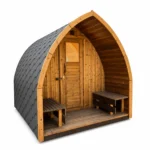
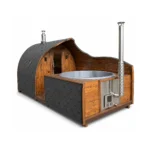
Pod DesignTimberIN Nordic Pod™ CustomFrom: £4,327 -
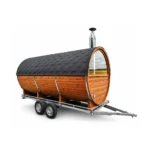
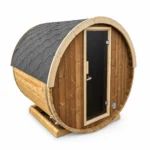
Barrel DesignTimberIN Nordic Barrel™ ClassicFrom: £4,106 -
Best Seller! 15 % OFFTimberIN Nordic Pod™ PorchFrom: £5,957From: £5,006 -
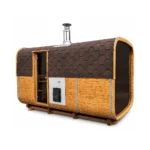
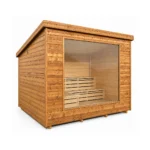
Square designTimberIN Nordic Square Barrel™From: £6,056 -
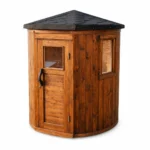
Vertical DesignTimberIN Nordic Vertical™From: £4,127 -
2 Person ModelTimberIN Nordic Terrace™ 160 ElectricFrom: £5,192 -
Hobbit StyleTimberIN Nordic Hobbiton™ GlassFrom: £7,348 -
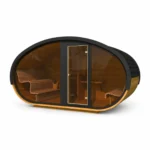
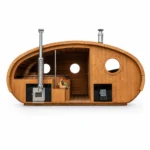
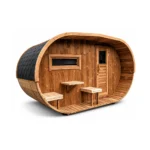
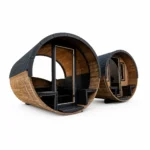
NEW!TimberIN Nordic Oval™ TerraceFrom: £7,590
Modern Outdoor Sauna Models
Contemporary cabins with clean lines, panoramic glazing and space-efficient internal layouts.
-
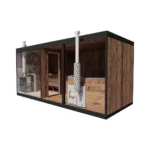
Modern StyleTimberIN Nordic Vista™From: £6,808 -
Module Design 2in1 ComboTimberIN Nordic Modular Spa™From: £4,620 -
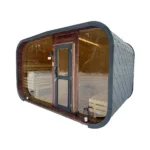
Modern CubeTimberIN Nordic Cube™From: £6,050 -
NEW!TimberIN Nordic Horizon™£9,350 -
NEW!TimberIN Nordic Oculus™£11,990
Mobile Sauna Models
Trailer-mounted saunas for events, hire businesses, retreats and buyers who value relocation flexibility.
-
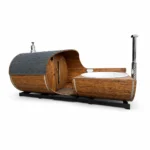
Barrel DesignTimberIN Nordic Nomad™ Mobile Barrel SaunaFrom: £4,106 -
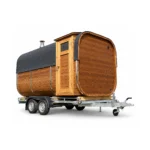
Square designTimberIN Nordic Square Mobile Sauna™From: £6,056 -
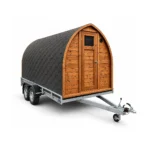
Pod DesignTimberIN Nordic Mobile Sauna Pod™From: £4,327 -
Barrel Design 2in1 ComboTimberIN Nordic Mobile Barrel Sauna & Hot Tub Combo™£15,510 -
Pod Design 2in1 ComboTimberIN Nordic Mobile Sauna Pod & Hot Tub Combo™£15,510
2-in-1 Sauna and Hot-Tub Models
Combined outdoor-wellness installations offering both sauna heat and hot-water bathing.


What Is a Traditional Finnish Sauna?
A traditional Finnish sauna is a timber-lined room heated by a stove containing sauna stones. The heater raises the temperature of the air, benches, walls and stones. Bathers sit or lie on raised benches, where the temperature is normally higher than near the floor.
The base humidity is usually low. Small amounts of water can be poured onto suitably heated sauna stones to create a short burst of steam known as löyly. This briefly increases the sensation of heat without turning the room into a continuously humid steam room.
A traditional sauna can use either a wood-burning stove or an electric sauna heater. The core experience remains the same: high heat, heated stones, natural timber and a cycle of warming, cooling and resting.
Traditional Sauna, Finnish Sauna and Dry Sauna
| Term | What it normally means | Important distinction |
|---|---|---|
| Traditional sauna | Classic high-temperature sauna with heated stones | Can be wood fired or electric |
| Finnish sauna | Traditional sauna associated with Finnish sauna culture | Includes the option to create löyly with water on stones |
| Dry sauna | Common description of the low base humidity | Humidity rises briefly when water is added to stones |
| Steam room | Continuously humid heated room | Operates differently from a Finnish sauna |
| Infrared sauna | Uses infrared panels to heat the body and surfaces | Usually operates at lower air temperatures |
Why Install a Traditional Sauna Outdoors?
An outdoor sauna creates a dedicated wellness space without taking over an existing room inside the house. It also makes it easy to step into fresh air, use an outdoor shower or combine the sauna with a hot tub or cold plunge.
- Dedicated space: no need to convert a bathroom, bedroom or utility area.
- Flexible cabin sizes: choose compact couple models or larger family and commercial cabins.
- Natural cooling: step outside between sauna rounds.
- Garden feature: timber cabins can become a strong visual part of the landscape.
- Wood-fired option: suitable for rural and off-grid-style locations.
- Year-round use: a correctly specified sauna can be used in every season.
- Hospitality appeal: useful for holiday lets, retreats and glamping projects.
Compare the complete outdoor sauna range or see our dedicated garden sauna guide.
Traditional Outdoor Sauna Designs
Barrel sauna
A barrel sauna has a curved body with a relatively compact heated volume. The recognisable shape suits rustic gardens, cabins and holiday properties. Bench width and shoulder space should be checked carefully because the walls curve inward.
Sauna pod
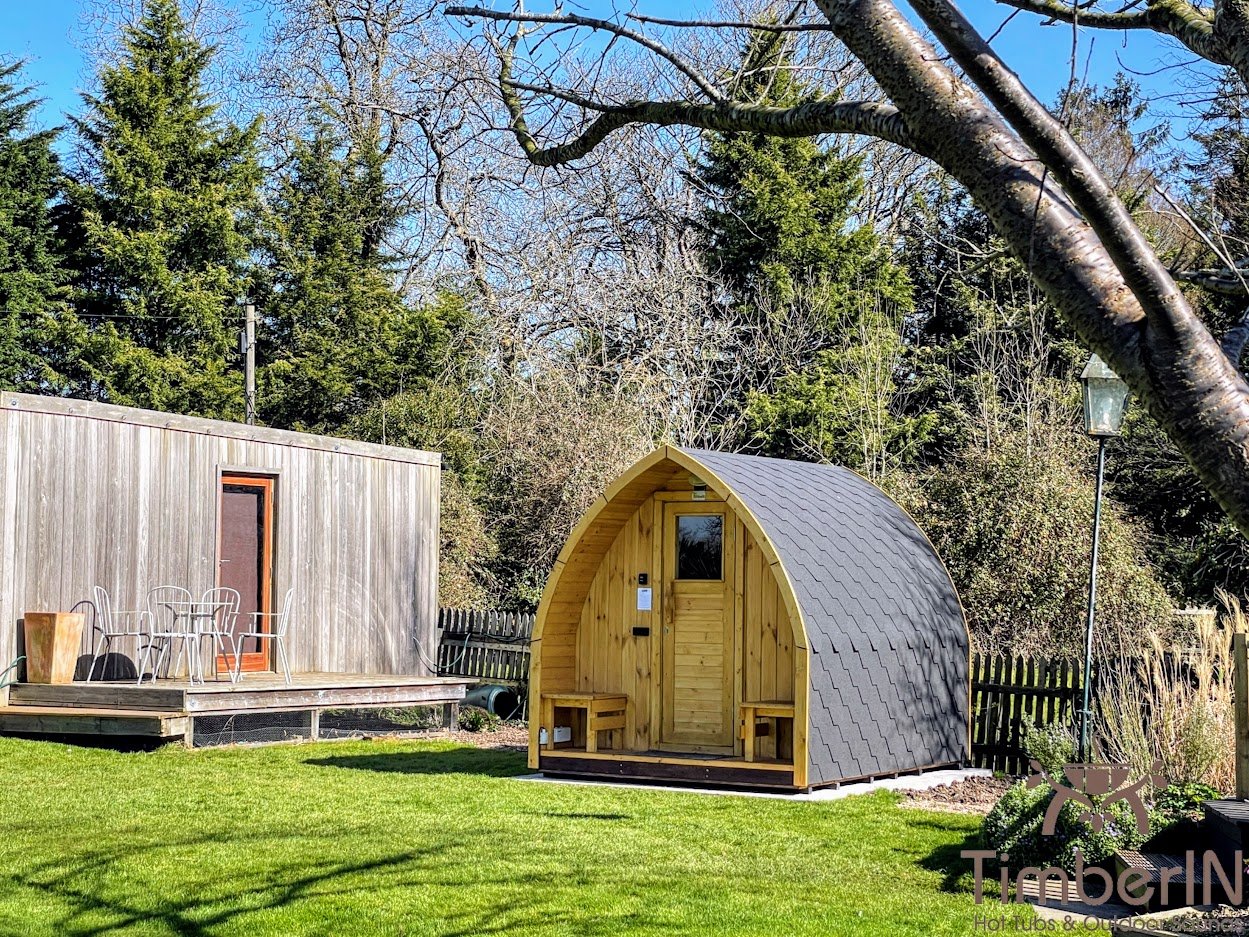
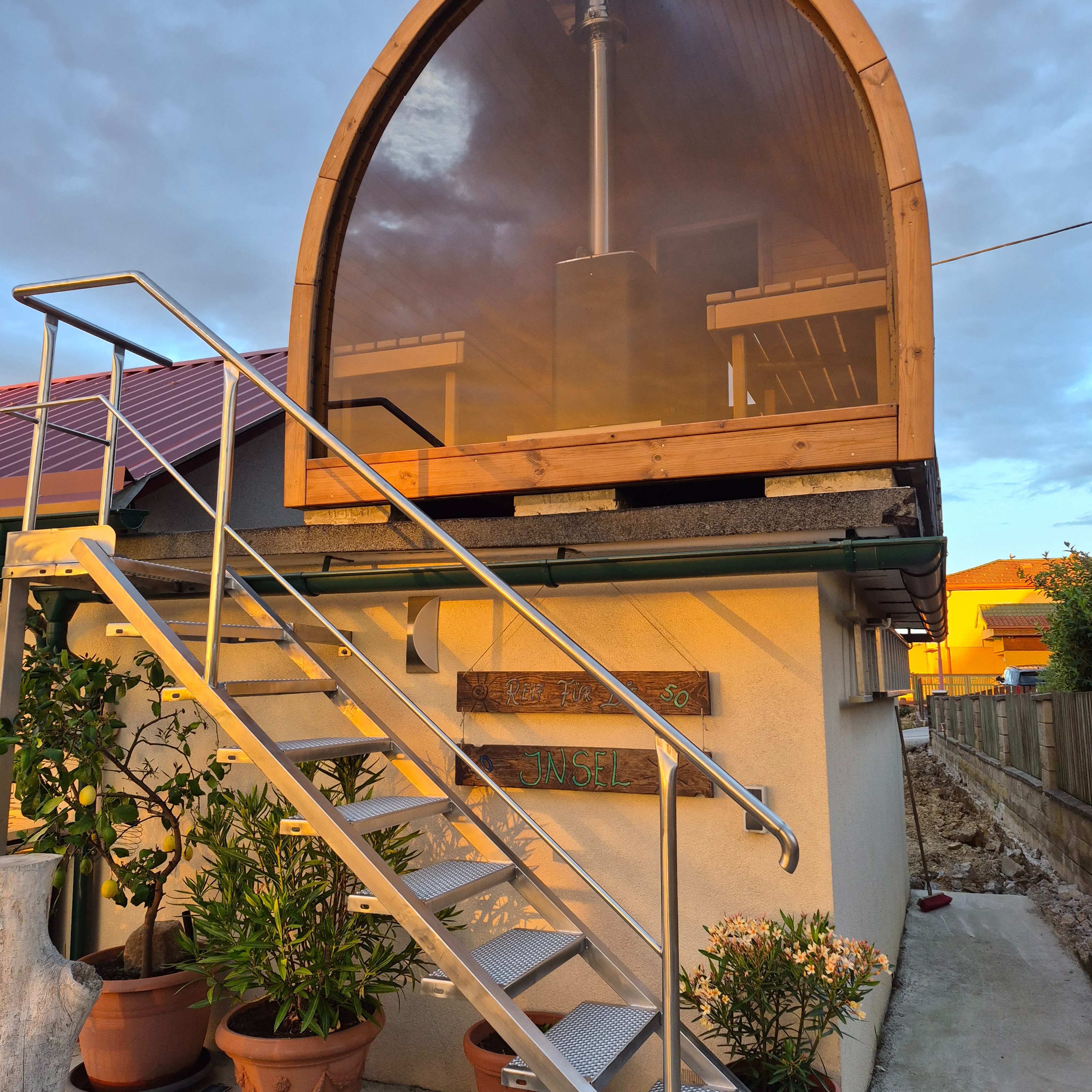
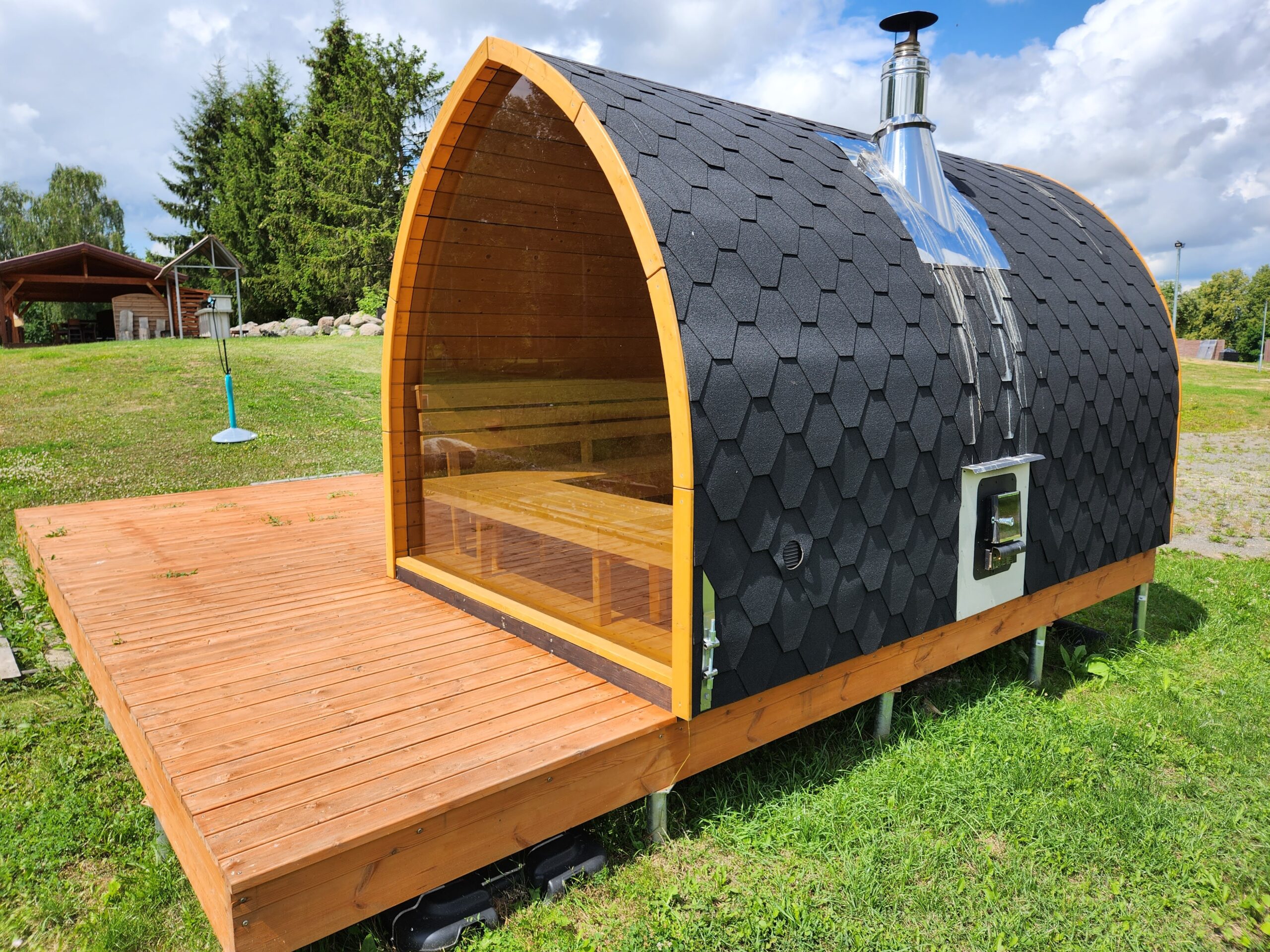
A pod or igloo-style sauna combines curved lines with a distinctive premium appearance. It can include a front porch, panoramic glazing or a dressing area, making it popular for private gardens and hospitality projects.
Square or rectangular sauna
A square cabin uses internal space efficiently and provides straight walls for conventional bench layouts. It can be a strong choice when a changing room, panoramic window or larger group capacity is required.
Vertical sauna
A vertical sauna provides a compact footprint for one or two users. It suits smaller gardens and locations where floor space is limited, although lying-down bench space is reduced.
Mobile sauna trailer
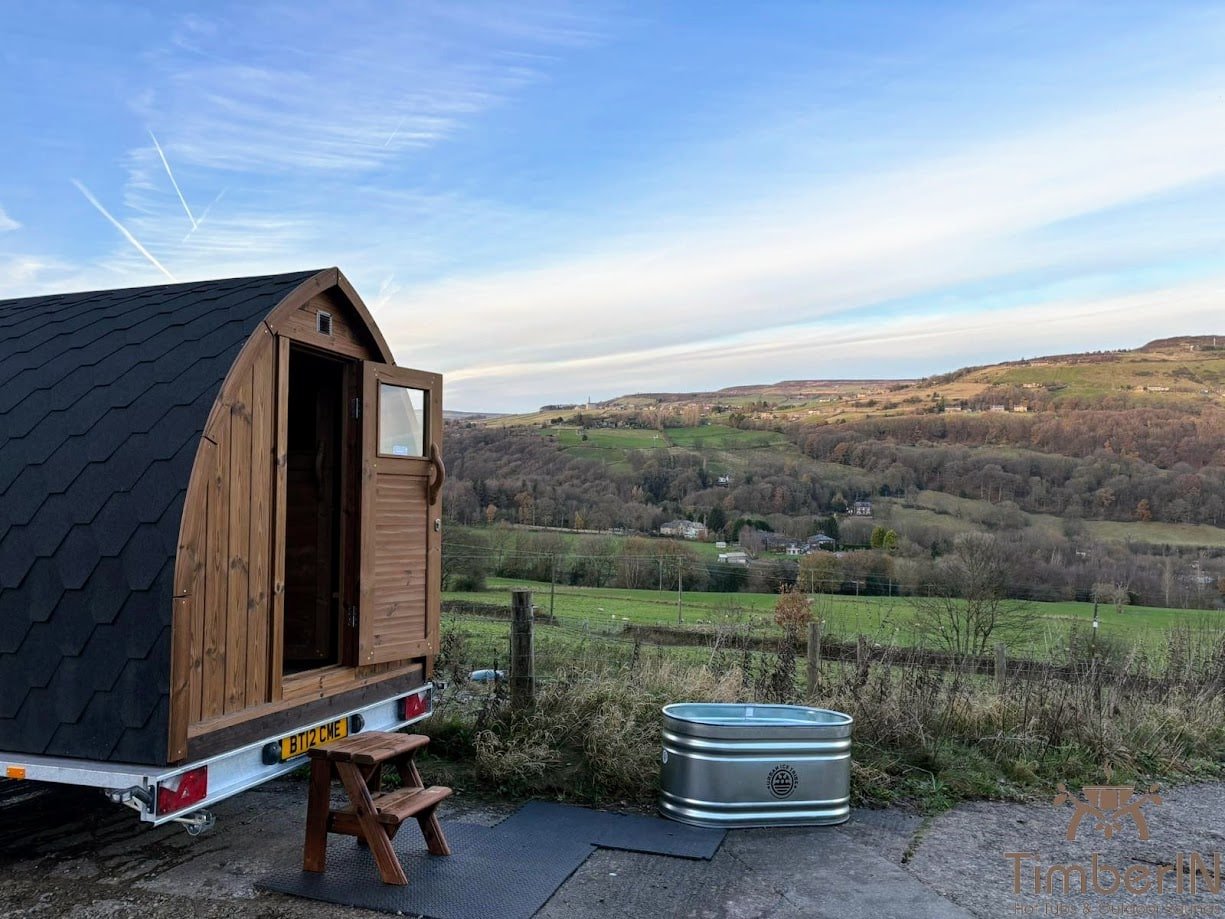
A trailer-mounted sauna can be relocated between properties or event sites when the completed trailer and towing vehicle meet the relevant requirements. See our guide to mobile sauna trailers.
Sauna and hot-tub combination
A 2-in-1 model combines sauna bathing and hot-water relaxation in one outdoor installation. These models provide a complete wellness experience but require more space, greater delivery access and careful planning of water, drainage and heating systems.
| Design | Main advantage | Best suited to | What to check |
|---|---|---|---|
| Barrel | Traditional appearance and compact heated volume | Private gardens and holiday cabins | Curved-wall bench space |
| Pod | Distinctive premium design | Gardens, retreats and glamping | Porch, glazing and internal length |
| Square cabin | Efficient internal layout | Families, groups and commercial use | Overall height, weight and base |
| Vertical | Small installation footprint | One or two users and compact gardens | Limited lying-down space |
| Mobile | Can serve different sites | Events, hire and flexible placement | Trailer compliance and towing limits |
| 2-in-1 | Sauna and hot tub in one installation | Premium hospitality and home wellness | Space, weight, drainage and maintenance |
Wood-Fired vs Electric Traditional Saunas
Wood-fired sauna heater
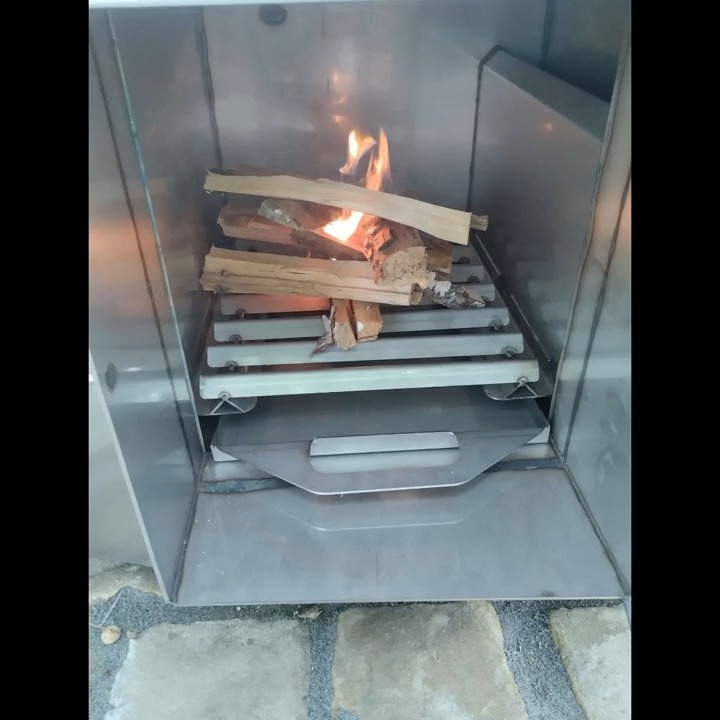
A wood-burning stove provides the most traditional heating ritual. The user lights the fire, manages airflow and adds logs until the stones and cabin reach the desired temperature. This works especially well for rural properties, remote locations and buyers who enjoy fire preparation as part of the experience.
- Can operate without an electrical heater.
- Provides visible fire and a traditional atmosphere.
- Requires dry suitable firewood and ash removal.
- Needs safe chimney installation and clearance from combustible materials.
- Requires supervision during heating and use.
See the dedicated wood-fired outdoor sauna collection.
Electric sauna heater
An electric heater offers convenient controls and predictable operation. It is a practical choice for regular home use, hotels and locations with a suitable electrical supply.
- Simple temperature control.
- No logs, ash or chimney cleaning.
- Suitable for frequent and scheduled use.
- Requires a correctly specified electrical circuit.
- Installation should be completed by a suitably qualified professional.
Compare our electric outdoor saunas.
| Factor | Wood fired | Electric |
|---|---|---|
| Operation | Manual fire lighting and fuel management | Thermostat or controller |
| Off-grid potential | High | Requires electrical power |
| Atmosphere | Visible fire and traditional ritual | Quiet, convenient and controlled |
| Maintenance | Ash, stove and chimney care | Heater and stone inspection |
| Best suited to | Rural properties and traditional sauna users | Frequent use and convenience-focused owners |
How Hot Does a Traditional Sauna Get?
Traditional saunas commonly operate at approximately 70–100°C. The preferred temperature varies between users, and a lower setting may be more comfortable for beginners. Heat also varies by bench height because hot air rises.
The aim is not simply to reach the highest possible temperature. Comfort depends on the relationship between heat, humidity, ventilation, bench height and session length. Water should only be added to stones that are designed and heated for sauna use.
How Long Does an Outdoor Sauna Take to Heat?
Many outdoor saunas reach operating temperature in approximately 30–60 minutes, although larger cabins and very cold conditions can require longer. Heat-up time is affected by:
- internal cabin volume;
- heater output;
- outside temperature and wind;
- wall, roof and floor construction;
- door and glazing area;
- ventilation design;
- wood moisture and fire management for a wood stove;
- how frequently the door is opened.
The heater must be selected for the actual heated volume. Large windows and uninsulated surfaces may require additional heater capacity.
Traditional Sauna vs Infrared Sauna
| Feature | Traditional Finnish sauna | Infrared sauna |
|---|---|---|
| Heating method | Heater warms air, stones and cabin surfaces | Infrared panels emit radiant heat |
| Typical air temperature | Approximately 70–100°C | Usually lower |
| Humidity | Low base humidity with optional löyly | No water-on-stones ritual |
| Outdoor suitability | Well suited to purpose-built outdoor cabins | Depends heavily on cabin and panel specification |
| Experience | Classic high-heat Nordic sauna ritual | Lower-temperature radiant-heat experience |
Neither system is automatically better for every user. Choose a traditional sauna when high air temperature, heated stones and the water-on-stones ritual are priorities.
Sauna Size, Capacity and Bench Layout
Sauna capacity should be assessed using usable bench length rather than the external cabin dimensions alone. A model may accommodate several seated users but fewer people if anyone wants to lie down.
| Capacity | Best suited to | Important considerations |
|---|---|---|
| 1–2 people | Couples, solo use and compact gardens | Bench length, footprint and heater size |
| 3–4 people | Small families and regular home use | Door position and comfortable shoulder space |
| 4–6 people | Families, guests and holiday accommodation | Two-level benches and suitable ventilation |
| 6+ people | Commercial use, retreats and group sessions | Heater output, airflow, changing space and operating procedures |
Timber, Insulation and Interior Construction
A quality sauna must manage heat, moisture and repeated temperature changes. The visible timber is only one part of the complete construction.
Exterior timber
Spruce provides a light traditional appearance and an accessible price point. Thermowood is heat-treated for improved dimensional stability and is popular for exposed outdoor installations. The selected finish should be maintained according to the timber and local weather exposure.
Interior benches
Bench timber should remain comfortable at sauna temperatures, have smooth rounded edges and be arranged to provide safe access. Upper benches are hotter, while lower benches offer a milder temperature.
Insulation and vapour control
Cabin-style saunas can use wall and roof insulation, vapour protection and internal lining to retain heat. Some solid-timber barrel and pod designs use their timber profile as the primary wall construction. Compare the exact build method rather than assuming every outdoor sauna is insulated in the same way.
Roofing and weather protection
The roof should direct water away from doors and walls. External timber, roof covering, glazing seals and base details must be suitable for year-round exposure.
Why Ventilation Matters
Ventilation provides fresh air, supports heater operation and helps the cabin dry after use. The correct inlet and outlet positions depend on the heater type and cabin design.
- Fresh-air supply for bathers.
- More even heat distribution.
- Support for wood-stove combustion where applicable.
- Removal of moisture after bathing.
- Reduced risk of persistent damp and odours.
Vent openings should not be blocked to make the room heat faster. Follow the sauna and heater installation instructions for the selected configuration.
Base, Delivery and Installation
An outdoor sauna needs a level, stable base that supports the complete cabin and keeps structural timber away from standing water. The correct base depends on the model, soil conditions and local site.
| Planning point | What to check |
|---|---|
| Base | Concrete, suitable paving, engineered decking or another manufacturer-approved foundation |
| Drainage | Rainwater and cleaning water move away from the sauna |
| Delivery access | Road width, gates, corners, slopes, branches, cables and lifting requirements |
| Door clearance | Safe access and enough space for outward movement where applicable |
| Wood-stove chimney | Safe route and clearance from combustible structures |
| Electric supply | Correct circuit, isolation and outdoor protection for the heater and lighting |
| Maintenance access | Roof, heater, ventilation and external walls remain reachable |
| Cooling area | Safe non-slip route to outdoor seating, shower or cold plunge |
Planning Permission and Building Regulations
In England, sauna cabins can fall under the rules for domestic outbuildings when they are incidental to the enjoyment of the house. Some outbuildings are permitted development, but only when all relevant limits and conditions are satisfied.
Restrictions can apply to building height, position, boundary distance, site coverage, listed buildings, designated land, flats and properties where permitted-development rights have been removed. Commercial use, guest accommodation and non-domestic sites may be treated differently.
Review the current Planning Portal outbuilding guidance and contact the local planning authority when the position is uncertain. Building-regulations requirements should also be checked separately, particularly for larger buildings and electrical work.
Do not assume that every garden sauna is automatically exempt from planning permission or Building Regulations. The answer depends on the property, location, dimensions, use and installation.
Electrical and Wood-Stove Installation
Electric heater
The electrical supply must be designed for the selected heater output, cable length and installation conditions. Sauna heaters commonly require a dedicated circuit rather than a standard plug connection. Fixed electrical work should be completed and certified by a suitably qualified installer.
Wood-burning stove
A wood stove requires a correctly specified chimney, heat protection, clearances, stable mounting and suitable ventilation. Only the fuels permitted by the stove manufacturer should be used. The heater and flue should be inspected and maintained according to their instructions.
How to Use a Traditional Sauna
- Heat the cabin. Allow the air, surfaces and sauna stones to reach a stable temperature.
- Shower and dry. Enter clean and use a towel on the bench.
- Begin gently. Sit on a lower bench or use a moderate temperature when inexperienced.
- Create löyly if desired. Add only a small amount of clean water to suitable hot stones.
- Cool down. Step into fresh air or use a shower between rounds.
- Rest and rehydrate. Allow the body to recover before repeating.
- Finish and ventilate. Leave the sauna clean and allow the interior to dry.
Session length and temperature should be adjusted to personal comfort. Leave immediately if you feel unwell, dizzy or excessively uncomfortable, and supervise children carefully.
Year-Round Use and Winter Operation
A properly specified outdoor sauna can be used throughout the year. Winter use is one of the strongest reasons to install a garden sauna, but access and maintenance need planning.
- Keep the route to the sauna illuminated and non-slip.
- Clear snow and standing water from the base and entrance.
- Protect external electrical components and cables.
- Use the heater and chimney only as instructed.
- Ventilate and dry the cabin after every session.
- Inspect roof coverings and drainage after severe weather.
Traditional Saunas for Holiday Lets and Commercial Wellness
A traditional outdoor sauna can strengthen the appeal of a holiday cottage, glamping site, hotel, retreat or sports facility. Commercial projects need a more formal operating plan than private home installations.
- Choose a durable cabin and easy-to-clean interior.
- Set a comfortable operating capacity.
- Provide clear guest instructions.
- Control heater access and hot surfaces.
- Plan cleaning, ventilation and maintenance records.
- Check insurance, planning, electrical and fire-safety obligations.
- Provide safe cooling, changing and access areas.
Maintenance and Cleaning
| Area | Maintenance |
|---|---|
| Benches | Use towels, remove dirt and clean with products suitable for sauna timber |
| Floor | Sweep, clean and allow to dry after use |
| Ventilation | Keep openings clear and air the cabin thoroughly |
| Sauna stones | Inspect and rearrange or replace according to heater guidance |
| Wood stove | Remove cooled ash and inspect the firebox and door |
| Chimney | Inspect and clean at intervals appropriate to usage |
| Exterior timber | Clean and maintain the selected finish as required |
| Roof and seals | Check after storms and repair water ingress promptly |
How Much Does a Traditional Outdoor Sauna Cost?
The final price depends on the cabin size, shape, timber, heater, glazing, insulation, changing room, lighting, roofing and delivery requirements. A compact sauna for two people generally costs less than a large square cabin with panoramic glass and a separate entrance area.
Compare the complete specification rather than the headline starting price. Check whether the quotation includes the heater, sauna stones, chimney components, benches, lighting, roof covering, delivery and assembly requirements.
For detailed budget planning, see our outdoor sauna price guide.
Traditional Outdoor Sauna Buying Checklist
- Define the normal capacity. Choose enough bench space for regular users without oversizing the cabin.
- Measure the site. Include the base, door, chimney, steps and maintenance access.
- Choose the cabin shape. Compare barrel, pod, square, vertical, mobile and combined designs.
- Select the heater. Decide between wood-fired tradition and electric convenience.
- Confirm heater output. Match the heater to the actual heated volume and glazing.
- Review construction. Compare timber, insulation, vapour control, roofing and ventilation.
- Check the bench layout. Confirm usable length, levels and comfortable capacity.
- Prepare planning and services. Check permission, base, electricity, chimney and drainage.
- Plan delivery. Measure access and confirm whether lifting equipment is required.
- Request a complete quotation. Confirm VAT, heater, delivery, assembly and selected options.
Why Choose TimberIN?
TimberIN manufactures configurable outdoor wellness products in Europe, allowing buyers to compare different cabin shapes, sizes, heaters, windows and changing-room options. The sauna should be planned around the site and intended use rather than selected only by appearance.
Typical sauna production is approximately 4–6 weeks, but this is an estimate rather than a guarantee. Exact production and delivery timing should be confirmed for the selected model, specification and destination.
Explore all outdoor saunas, compare wood-fired models, review electric models or see the Ireland buying guide.
Frequently Asked Questions About Traditional Outdoor Saunas
What is a traditional Finnish sauna?
It is a high-temperature sauna heated by a wood-burning or electric stove containing sauna stones. The base humidity is low, with optional bursts of steam created by adding water to the stones.
Is a Finnish sauna the same as a dry sauna?
The terms are often used for the same sauna type. “Dry sauna” describes the generally low base humidity, but a Finnish sauna can still use water on the stones to create temporary steam.
How hot does a traditional sauna get?
Traditional saunas commonly operate at approximately 70–100°C. Personal preference, bench height, humidity and heater setup all affect comfort.
How long does an outdoor sauna take to heat?
Many models take approximately 30–60 minutes, although large cabins, cold weather, extensive glazing and lower heater output can increase the time.
Is a wood-fired or electric sauna better?
Wood firing offers a traditional ritual and off-grid potential. Electric heating provides easier control and is often more convenient for frequent use. The best option depends on the site and how the sauna will be operated.
Can a traditional sauna be used throughout winter?
Yes. A correctly specified outdoor sauna can be used year-round. The cabin should be ventilated and dried after use, and access should remain safe in wet or icy conditions.
Does an outdoor sauna need planning permission?
Not always. Domestic sauna cabins can fall under outbuilding permitted-development rules, but limits and exclusions apply. Check the property, location, dimensions and proposed use with the Planning Portal or local planning authority.
What base does an outdoor sauna need?
It needs a level, stable and well-drained base that supports the complete cabin. Suitable solutions may include concrete, paving or engineered decking, depending on the model and site.
Can water be poured onto sauna stones?
Yes, when the heater and stones are designed for it. Add only small amounts of clean water and follow the heater manufacturer’s instructions.
How many people fit in an outdoor sauna?
Models range from compact one- or two-person cabins to larger saunas for six or more users. Comfortable capacity depends on actual bench length and layout.
Is ventilation necessary in a sauna?
Yes. Ventilation supplies fresh air, supports heater operation, improves comfort and helps the cabin dry after use. Openings should follow the selected sauna and heater design.
Can a traditional sauna be used commercially?
Yes. Outdoor saunas are used by holiday lets, retreats, hotels, sports facilities and glamping sites. Commercial operators need suitable planning, safety, cleaning, maintenance and insurance procedures.
Traditional outdoor saunas and classic heat-room layouts
This page supports a specific sauna search intent, while the central commercial category remains outdoor sauna cabins.
Helpful related pages include Scandinavian garden saunas, steam outdoor saunas, wood fired saunas, electric garden saunas, hybrid outdoor saunas, family outdoor saunas and garden sauna prices.
Explore the full range of outdoor saunas, including barrel, pod, cube, traditional, wood fired, electric, hybrid, steam, small, home, commercial, cold plunge combo and planning permission guides.