
Pellet-Fired Hot Tubs: Complete UK Guide to Heating, Controls, Costs and Maintenance
A pellet-fired hot tub uses compressed wood pellets as its main fuel and an automated feed system to deliver heat more consistently than a traditional log-burning stove. It is designed for buyers who want real wood-based heating but prefer less manual fire management.
The important distinction is that a pellet hot tub is not normally electricity-free. The fuel is wood-based, but the burner commonly uses electricity for ignition, controls, fans, sensors or pellet feeding. This makes pellet heating different from a simple off-grid wood-fired stove.
This guide explains how pellet systems work, which parts need electricity, how fuel storage affects reliability, how to estimate heating demand, what maintenance is required, and whether pellet heating suits a private garden, frequent-use home, holiday rental or wellness project.
Pellet heating in one sentence: it offers more automated wood-based heating, but it depends on dry fuel, electrical controls and regular cleaning.
Pellet-fired hot tubs at a glance
| Question | Practical answer | What to confirm |
|---|---|---|
| Does it use real wood fuel? | Yes. It burns compressed wood pellets. | Approved pellet type and storage requirements. |
| Does it need electricity? | Usually yes, for controls, ignition, fans or pellet feed. | Voltage, connected load and power-failure behaviour. |
| Is it fully automatic? | More automated than logs, but not maintenance-free. | Which functions are automatic and which remain manual. |
| Is it off-grid? | Not normally without a suitable independent power source. | Whether every control and pump can operate remotely. |
| Is it suitable for frequent use? | Often, especially where consistent preparation matters. | Fuel availability, cleaning routine and user management. |
| Is it automatically the greenest option? | No. Environmental impact depends on fuel source, combustion, water volume and use. | Pellet certification, delivery distance and heating pattern. |
Current pellet-fired hot-tub model
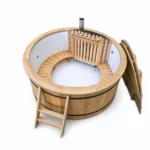
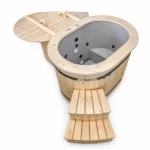
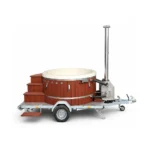
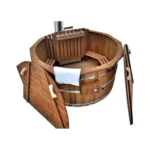
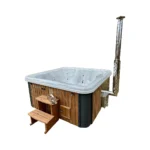
The product and current price below are loaded dynamically from WooCommerce. Open the product page to confirm the current hot-tub size, pellet burner, controls, electrical requirements, included equipment and available options.
What is a pellet-fired hot tub?
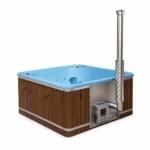
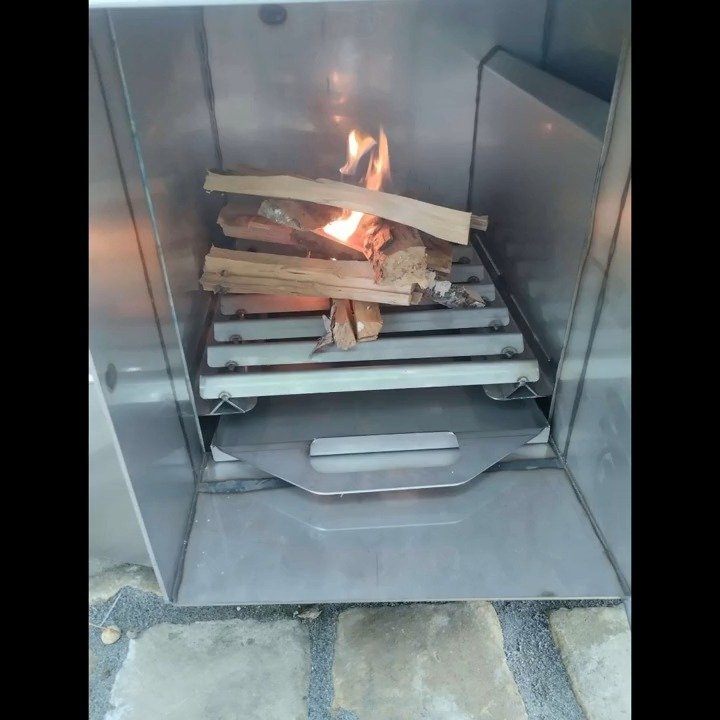
A pellet-fired hot tub transfers heat from a pellet burner into the water through a dedicated heater or heat-exchange system. Pellets are metered from a hopper into the combustion area rather than being added as logs by hand.
| System part | Function | Owner responsibility |
|---|---|---|
| Pellet hopper | Stores fuel before it enters the burner. | Keep pellets dry, clean and suitable for the system. |
| Feed mechanism | Moves pellets into the combustion chamber. | Keep the feed route clear and follow cleaning guidance. |
| Ignition and controls | Starts, regulates and monitors combustion. | Maintain power and respond to faults or warnings. |
| Burner or combustion chamber | Produces heat from the pellets. | Remove ash and deposits on the required schedule. |
| Heat exchanger | Transfers heat into the hot-tub water. | Maintain correct water circulation and inspect for scaling or blockage. |
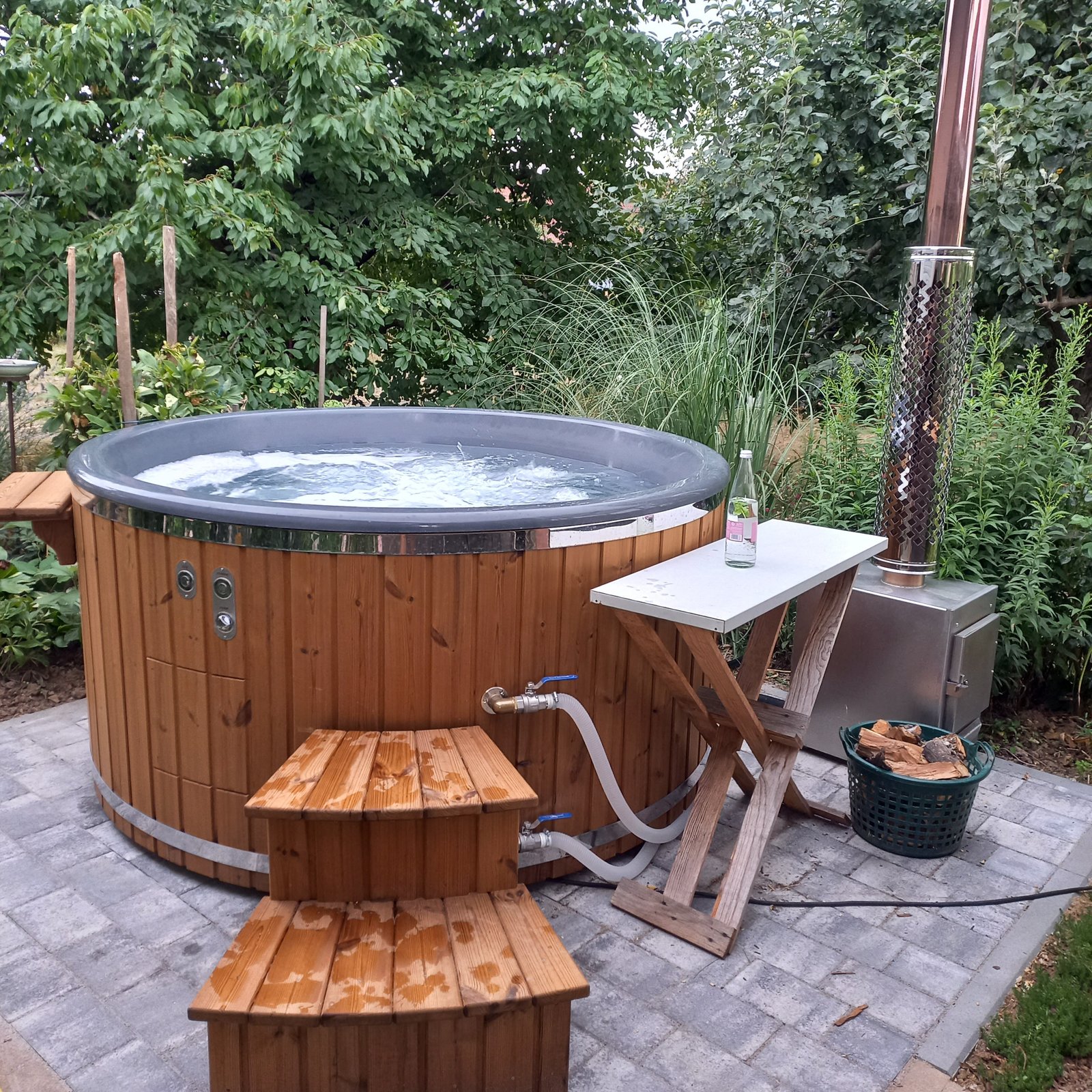
| Flue | Removes combustion gases. | Keep correctly installed, accessible and maintained. |
How pellet heating differs from burning logs
A log-fired hot tub gives the user direct control through the amount and timing of firewood. A pellet system replaces much of that manual process with controlled fuel delivery.
| Topic | Pellet-fired system | Traditional log-fired system |
|---|---|---|
| Fuel handling | Uniform pellets loaded into a hopper. | Logs added manually during the heating cycle. |
| Control | Electronic control and automated feed. | Manual fire management. |
| Electricity | Usually required. | Can operate without electricity on suitable natural-circulation designs. |
| Heat output | More controlled and repeatable when fuel quality is consistent. | Varies with log size, moisture and firing technique. |
| Ash and cleaning | Usually smaller quantities but still requires regular cleaning. | Often more ash and soot, depending on fuel and combustion. |
| User experience | Convenience-focused. | More traditional and hands-on. |
| Power failure | May interrupt the heating sequence. | A simple wood stove may continue, subject to safe water circulation. |
Does a pellet hot tub need electricity?
In most cases, yes. The electrical demand may be much lower than a large electric water heater, but the pellet burner still relies on powered components.
- Fuel feed: an auger or similar mechanism may move pellets into the burner.
- Ignition: automatic ignition commonly uses electricity.
- Combustion control: fans and sensors may regulate air and temperature.
- Water circulation: some configurations may require a pump.
- Digital controls: displays, thermostats and remote functions need power.
- Filtration and accessories: pumps, lights, jets and bubbles add further demand.
Pellet-fired does not mean off-grid. It means the main heat energy comes from pellets rather than an electric resistance heater.
What happens during a power cut?
Power-failure behaviour depends on the burner and hydraulic design. Fuel feed, ignition, fans and controls may stop. The system must have a safe shutdown process, and the owner should know what happens to residual heat and water circulation.
| Power-cut question | Why it matters |
|---|---|
| Does fuel feed stop automatically? | Prevents uncontrolled continued fuel delivery. |
| Does the fan stop? | Changes combustion and flue behaviour. |
| Can water still circulate? | Protects the heat exchanger from overheating. |
| Is a manual shutdown required? | The owner needs a clear procedure. |
| Will settings be retained? | Affects restart and temperature management. |
| Is backup power appropriate? | Useful only when correctly sized for the actual control and pump loads. |
A backup battery or generator should not be assumed suitable without checking starting current, operating time and the manufacturer’s instructions.
Pellet quality and storage
Pellet systems are sensitive to fuel quality. Damp pellets can swell, break down and obstruct the feed mechanism. Poor-quality pellets may produce more ash, deposits or inconsistent combustion.
| Fuel factor | Why it matters | Good practice |
|---|---|---|
| Moisture | Damp pellets can disintegrate and feed poorly. | Store sealed, raised and protected from humidity. |
| Size and density | Inconsistent pellets may not feed or burn as intended. | Use the specification approved for the burner. |
| Dust and fines | Can collect in the hopper and feed route. | Keep bags clean and avoid pouring excessive dust into the hopper. |
| Storage duration | Long storage in damp conditions reduces reliability. | Rotate stock and avoid unnecessary outdoor storage. |
| Idle periods | Pellets left in the system may absorb moisture. | Empty the hopper and feed system before long periods of non-use when instructed. |
Pellet heating is particularly well suited to regular use. When the system will stand unused for an extended period, remaining pellets should normally be removed and stored dry according to the model instructions.
Heating time and energy demand
Pellet feeding can make combustion more consistent, but it does not remove the basic physics of heating water. Water volume, start temperature, target temperature, heat-exchanger output, cover, insulation, wind and air temperature all affect preparation time.
Use this comparison formula: litres of water × temperature rise in °C × 0.001163 = theoretical kWh of heat in the water.
For example, raising 1,200 litres from 10°C to 38°C requires approximately 39.1 kWh in the water. Raising 1,500 litres over the same temperature difference requires approximately 48.8 kWh. Actual fuel input will be higher because some heat leaves through the flue, water surface, walls and pipework.
| Factor | Effect | Practical response |
|---|---|---|
| Larger water volume | More fuel and longer preparation. | Choose the tub size for normal occupancy. |
| Cold source water | Larger temperature rise. | Allow more time in winter. |
| Poor cover | High heat loss from the water surface. | Use a correctly fitting thermal cover. |
| Wind exposure | Higher heat loss. | Choose a sheltered but safely ventilated position. |
| Dirty heat exchanger | Reduced heat transfer. | Follow the cleaning and inspection schedule. |
| Inconsistent pellet quality | Unstable combustion or feed. | Use approved dry pellets. |
Pellet, wood-fired and electric compared
| Topic | Pellet-fired | Log-fired | Electric |
|---|---|---|---|
| Main strength | Automated wood-based heating. | Simple traditional fire and potential off-grid use. | Automatic temperature control and no solid fuel. |
| User involvement | Load pellets, monitor controls and clean burner. | Light and manage the fire manually. | Set controls and maintain the electrical system. |
| Electricity need | Usually essential for the burner. | Not always required for the heater. | Essential and often substantial. |
| Fuel storage | Dry sealed pellet storage. | Dry log storage. | No solid fuel storage. |
| Control precision | More repeatable than manual logs. | Depends heavily on firing technique. | Generally precise. |
| Maintenance | Burner, hopper, ash, sensors and flue. | Firebox, ash and flue. | Heater, pumps, controls and electrical components. |
| Best fit | Frequent use and users wanting less manual firing. | Traditional users and suitable off-grid sites. | Properties prioritising automation and reliable power. |
Compare the wood-fired hot-tub range, the off-grid guide and available electric configurations before deciding.
Is pellet heating environmentally better?
Pellets can make use of compressed wood residues and can burn consistently in a correctly designed appliance. However, no fuel is automatically low-impact in every situation.
| Environmental factor | What affects the result |
|---|---|
| Raw material | Whether pellets come from responsibly managed and traceable sources. |
| Manufacturing | Energy used for drying, pressing and packaging. |
| Transport | Distance from production to the hot-tub site. |
| Combustion | Burner design, maintenance and pellet quality. |
| Water volume | Larger tubs require more heat and water. |
| Frequency of reheating | Repeatedly heating cold water can use more fuel than planned temperature management. |
| Heat retention | Cover, insulation and wind protection reduce waste. |
The most useful efficiency strategy is to choose the right water volume, use a good cover, maintain the burner and avoid heating more water than the normal number of users requires.
Combustion, smoke and flue planning
Pellet combustion may be more controlled than an open log fire, but it still produces hot gases and requires a correctly installed flue.
- Position the flue away from windows, doors, seating and neighbouring properties.
- Maintain the required clearances from timber, screens and combustible materials.
- Keep the flue accessible for inspection and cleaning.
- Do not enclose the burner without the required ventilation.
- Use only the fuel approved for the system.
- Check local smoke, nuisance and commercial-use requirements where relevant.
Can pellet heating be remotely controlled?
Remote or app-based control depends on the specific burner and controller. It should never be promised unless it is included or available for the selected model.
| Remote function | Potential benefit | Important limitation |
|---|---|---|
| Start or schedule heating | Allows preparation before planned use. | Remote starting must still comply with safety instructions. |
| View water temperature | Helps track progress. | Sensor accuracy and water mixing still matter. |
| Receive fault alerts | Can reduce unnoticed downtime. | Requires power and reliable connectivity. |
| Manage rental use | Supports staff planning. | Does not replace local inspection or guest safety procedures. |
| Control filtration | Can coordinate water management. | Only applicable when the configuration includes powered filtration. |
Remote control does not make an unattended solid-fuel system risk-free. Follow the exact operating instructions and local site procedures.
Hot-tub construction and interior choice
| Construction | Advantages with pellet heating | Maintenance consideration |
|---|---|---|
| Polypropylene liner | Smooth interior and flexible equipment layout. | Inspect shell, welds, supports and exterior cladding. |
| Fibreglass or composite shell | Formed seating and easy-clean surface. | Use compatible water treatment and maintain uniform support. |
| Wood-clad liner tub | Natural appearance with smooth water-contact surface. | Exterior timber still needs ventilation and weather care. |
| Traditional all-wood tub | Authentic timber bathing experience. | Water care and drying procedures are more specific. |
The pellet heater does not determine the interior. Confirm the actual shell, benches, water volume and cleaning requirements of the selected product.
Insulation and heat retention
| Area | What to check | Why it matters |
|---|---|---|
| Walls | Insulation type and service access. | Reduces heat loss without hiding fittings. |
| Base | Insulation compatible with structural support and drainage. | Limits heat transfer into cold ground. |
| Pipework | Insulation, drainability and accessible joints. | Reduces heat loss and frost risk. |
| Technical compartment | Dryness, ventilation and access. | Protects controls without trapping heat or moisture. |
| Thermal cover | Fit, insulation and secure closure. | The water surface is a major source of heat loss. |
Foundation, drainage and installation area
One litre of water weighs approximately one kilogram. A filled pellet hot tub can therefore weigh well over a tonne before adding the shell, heater, cover and users.
| Site element | Requirement | Reason |
|---|---|---|
| Foundation | Level, stable and sized for the complete support footprint. | Prevents distortion and uneven loading. |
| Drainage | Rain, splash and full emptying water must leave safely. | Protects the base, timber and controls. |
| Pellet-burner area | Stable, ventilated and accessible. | Supports safe combustion, loading and maintenance. |
| Electrical supply | Permanent suitable connection and isolation. | Powers controls, feed and any pumps. |
| Fuel storage | Dry, accessible and separated from heat. | Protects pellet quality and fire safety. |
| Service space | Burner, hopper, flue, valves and controls remain reachable. | Enables cleaning and repairs. |
Electrical planning
The pellet burner may use less electricity than a full electric heater, but it still needs a reliable supply. Optional filtration, jets, bubbles, lighting and digital controls add further loads.
- Obtain the final connected-load specification before installation.
- Provide a permanent outdoor electrical supply rather than an extension lead.
- Use appropriate protection, earthing and isolation.
- Keep controls dry, ventilated and serviceable.
- Plan for power interruptions and safe restart.
- Use a qualified electrician for the final installation.
Water care and filtration
Pellet heating changes how the water is warmed, not how water hygiene works. Water quality still depends on filtration, treatment, bathing load and cleaning.
| Configuration | Typical routine | Main caution |
|---|---|---|
| No powered filtration | More frequent water replacement and manual cleaning. | Frequent use can overwhelm a simple water routine. |
| Filter pump fitted | Scheduled filtration and compatible water treatment. | Requires electricity and regular filter cleaning. |
| Jets or bubbles fitted | Additional pipework and circulation. | More components to clean, drain and protect from frost. |
| Rental or hospitality use | Documented testing, treatment and cleaning. | Domestic routines may not be sufficient. |
- Shower before bathing.
- Keep the tub covered when not in use.
- Measure water conditions rather than dosing by guesswork.
- Use products compatible with the shell, seals and heater.
- Never mix chemicals.
- Replace water when quality cannot be maintained safely.
Winter use and frost protection
A pellet system depends on electricity, so frost planning must include the possibility of power failure. Water trapped in the heater, pump, filter or pipework can freeze.
- Follow the model-specific winter operating and shutdown procedure.
- Do not operate the burner if circulation may be blocked by ice.
- Drain vulnerable components before long unattended periods.
- Empty pellets from the system before extended shutdown when instructed.
- Keep the cover and access route clear of dangerous ice.
- Plan what happens if power is lost during freezing weather.
Winter-ready means having a documented procedure for both normal use and power failure.
Maintenance routine
| Frequency | Task |
|---|---|
| Before use | Check water level, controls, flue area and pellet condition. |
| During regular use | Monitor fuel feed, temperature and combustion status. |
| After the required number of cycles | Remove ash and clean the burner according to instructions. |
| Periodically | Inspect hopper, feed mechanism, sensors and heat exchanger. |
| Seasonally | Inspect flue, exterior timber, insulation and drainage. |
| Before long idle periods | Remove pellets, clean the system and follow shutdown guidance. |
| Before frost shutdown | Drain all vulnerable water components and isolate power safely. |
Maintenance may be cleaner than with logs, but the system has more moving and electronic components. Simplicity and automation are different advantages.
Private use, rentals and hospitality
| Use case | Why pellet heating may fit | What must be managed |
|---|---|---|
| Private frequent use | Less manual fuel feeding than logs. | Pellet storage, cleaning and power reliability. |
| Weekend home | Can simplify planned heat-up. | Empty pellets for long idle periods where required. |
| Holiday rental | More repeatable operation for staff. | Guest controls, water management and supervision. |
| Glamping or lodge site | Wood-based heating without constant log loading. | Fuel logistics, electrical supply and service access. |
| Wellness venue | Consistent preparation for scheduled sessions. | Higher-duty maintenance and documented operation. |
A pellet-fired hot tub may improve guest appeal, but it does not guarantee higher occupancy, rates, revenue or property value.
Delivery and installation
Hot-tub production is commonly approximately 3–4 weeks, with transport planned after production. Total UK delivery is often around 6–8 weeks depending on the model, options, route and current schedule. These are estimates rather than guaranteed dates.
| Stage | What to prepare |
|---|---|
| Before ordering | Confirm size, burner, controls, electrical load, access and unloading. |
| During production | Complete the foundation, drainage, electrical work and pellet storage. |
| Before transport | Confirm vehicle access and lifting equipment. |
| At delivery | Inspect packaging and position the hot tub safely. |
| Commissioning | Connect power, fill, inspect, test circulation and follow burner start-up instructions. |
Total project cost
The current product price is shown dynamically above. A complete project can also include the burner configuration, chimney, cover, insulation, foundation, electrical connection, filtration, delivery, unloading and fuel storage.
| Cost area | What to compare | Common omission |
|---|---|---|
| Hot tub | Size, shell, seating, cladding and water volume. | Comparing different capacities as equivalent. |
| Pellet system | Burner, hopper, controls, chimney and commissioning. | Treating the stove price as the complete heating cost. |
| Electrical work | Supply, cable, isolation and protection. | Assuming the burner needs no power. |
| Insulation and cover | Walls, base, pipework and top cover. | Ignoring heat loss from the water surface. |
| Water system | Filter, pump, treatment and drainage. | No plan for frequent or rental use. |
| Delivery and unloading | Vehicle access and final placement. | Assuming kerbside delivery includes lifting. |
| Fuel storage | Dry indoor or weather-protected space. | Leaving pellets in damp outdoor conditions. |
Common mistakes
| Mistake | Likely consequence | Better approach |
|---|---|---|
| Calling a pellet hot tub off-grid | Critical electrical requirements are missed. | List every powered component. |
| Storing pellets in a damp shed or hopper | Feed blockage and unreliable combustion. | Use dry sealed storage and empty the system for long idle periods. |
| Promising fixed heating times | Real use differs by water volume and weather. | Use energy calculations and model-specific estimates. |
| Assuming pellet heating needs no supervision | Faults or unsafe operation may be missed. | Follow start-up, monitoring and shutdown instructions. |
| Ignoring power cuts | Burner shutdown or circulation issues. | Know the model’s power-failure procedure. |
| No service access around the burner | Cleaning and repair become difficult. | Maintain working space around the hopper, burner and flue. |
| Assuming eco-friendly by default | The full fuel and usage impact is overlooked. | Assess fuel source, transport, insulation and water volume. |
| Using domestic water-care routines in a rental | Water quality may not match bathing load. | Use documented commercial routines where required. |
Pellet-fired hot-tub buying checklist
- Confirm the exact pellet burner, hopper and control system.
- Check the required pellet specification.
- Plan dry fuel storage and stock rotation.
- Confirm the electrical load and permanent supply.
- Understand what happens during a power cut.
- Choose the normal number of users and actual water volume.
- Calculate theoretical heating demand.
- Compare wall, base, pipe and cover insulation.
- Confirm the flue route, ventilation and safe clearances.
- Prepare a level foundation for the complete wet load.
- Plan drainage for rain, splash and full emptying.
- Choose filtration and water treatment for the real bathing load.
- Keep the burner, hopper, sensors and flue accessible.
- Create routine cleaning and ash-removal schedules.
- Remove pellets before long idle periods where instructed.
- Create a winter shutdown and power-failure procedure.
- Survey the delivery and lifting route.
- Compare total installed cost rather than only product price.
- Treat 3–4 week production and 6–8 week UK delivery as estimates.
Frequently asked questions about pellet-fired hot tubs
What is a pellet-fired hot tub?
It is a hot tub heated by a burner that automatically feeds compressed wood pellets into a combustion chamber. The system transfers the resulting heat into the water.
Does a pellet hot tub need electricity?
Usually yes. Controls, ignition, fans, fuel feed and sometimes water circulation require electricity, even though the main heat energy comes from pellets.
Is a pellet hot tub off-grid?
Not normally. It can only operate away from the grid when a suitable independent power system supports every required electrical component.
How is it different from a log-fired hot tub?
Pellet systems automate fuel delivery and combustion control. Log-fired systems require more manual firing but can be mechanically simpler and may operate without electricity.
How long does a pellet hot tub take to heat?
Heating time depends on water volume, start temperature, burner output, cover, insulation, weather and pellet quality. A fixed time cannot be guaranteed for every configuration.
What pellets should be used?
Use only the pellet type and quality approved for the burner. Fuel should be dry, clean and stored away from humidity.
Can pellets stay in the hopper all year?
Not necessarily. Pellets can absorb moisture and degrade. For long periods without use, the hopper and feed route should be emptied when the model instructions require it.
Is pellet heating cleaner than burning logs?
It can produce more controlled combustion and less ash with suitable fuel and maintenance, but actual emissions depend on burner design, pellet quality and operation.
Can a pellet hot tub be remotely controlled?
Some systems support remote or app-based control, but this must be confirmed for the exact burner and controller.
What happens during a power cut?
Fuel feed, fans, ignition and controls may stop. The correct response depends on the burner and circulation design, so owners need the model-specific shutdown procedure.
How often does the burner need cleaning?
Cleaning frequency depends on use, fuel quality and burner design. Follow the specified ash-removal and maintenance schedule rather than a universal interval.
Can pellet hot tubs have filtration and jets?
Yes, on compatible configurations. Filters, pumps, jets, bubbles and lights add electrical demand and maintenance.
Are pellet hot tubs suitable for rentals?
They can be, especially where staff want repeatable heating. Rentals still need guest controls, water management, cleaning, supervision and service access.
Are pellet hot tubs environmentally friendly?
They can use wood-residue fuel efficiently, but total impact depends on pellet sourcing, transport, combustion, water volume, insulation and usage.
What is the expected UK delivery time?
Hot-tub production is commonly approximately 3–4 weeks, and total UK delivery is often around 6–8 weeks depending on model, options and route. These are estimates, not guaranteed dates.
Choose pellet heating for convenience, not because it is maintenance-free
Start with the frequency of use, access to dry pellets, available electricity and willingness to maintain the burner. Then compare water volume, insulation, filtration, installation and winter use as one complete system.
Pellet fired hot tubs as a niche heating option
This page supports a specific search intent, while the strongest central category remains outdoor wood fired hot tubs.
Helpful related pages include outdoor wood fired hot tubs, wooden electric hot tubs, off grid hot tubs and wood fired heater for hot tub.
Featured pellet heated hot tub models
- pellet fired hot tub is a relevant model to compare for this search intent.
Explore the full range of wood fired hot tubs, including traditional wood burning models, outdoor spa-style options, garden hot tubs, outdoor baths, best-buy comparisons and UK delivery pages.