
Charles — London, United Kingdom
TimberIN Nordic™ Thermowood Deluxe
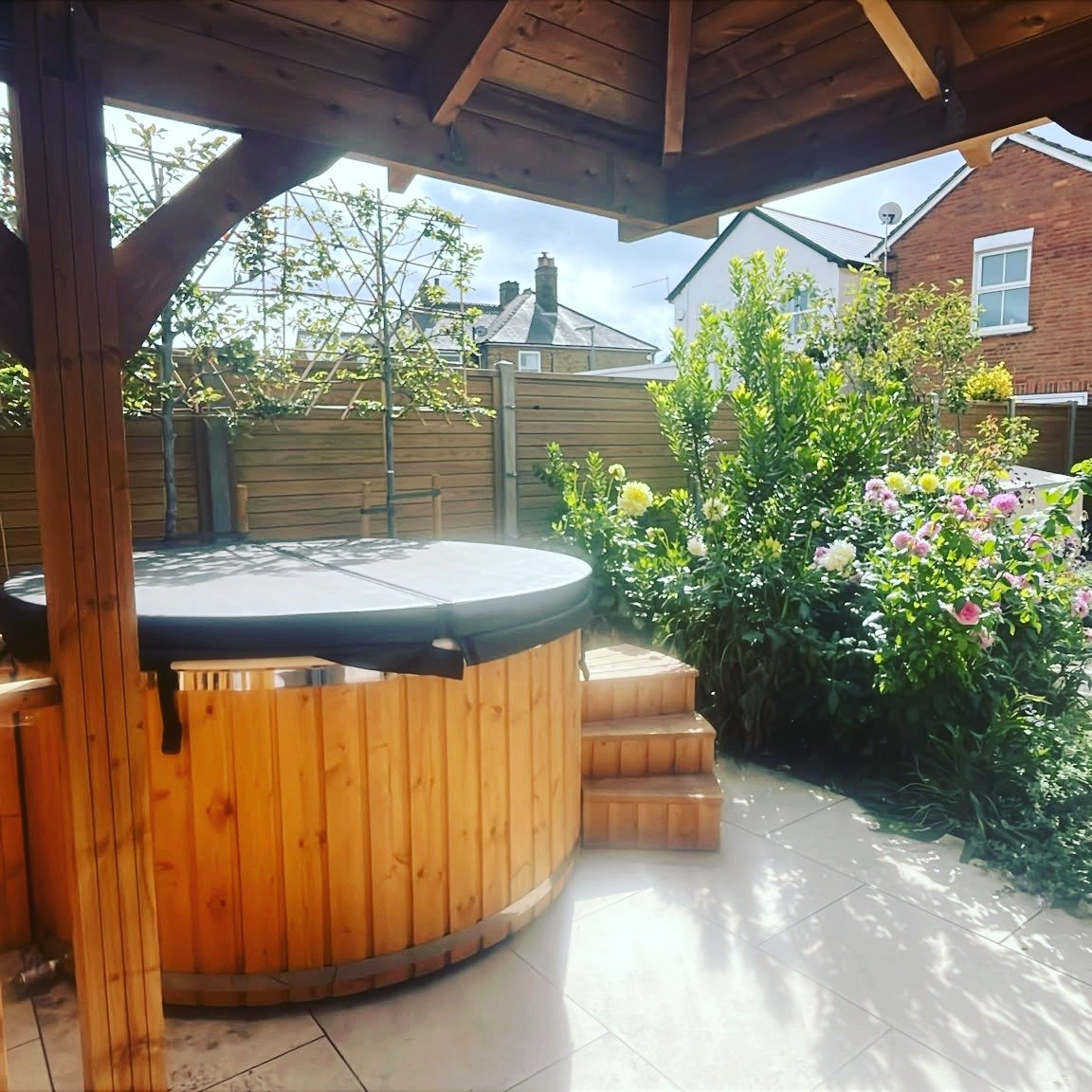
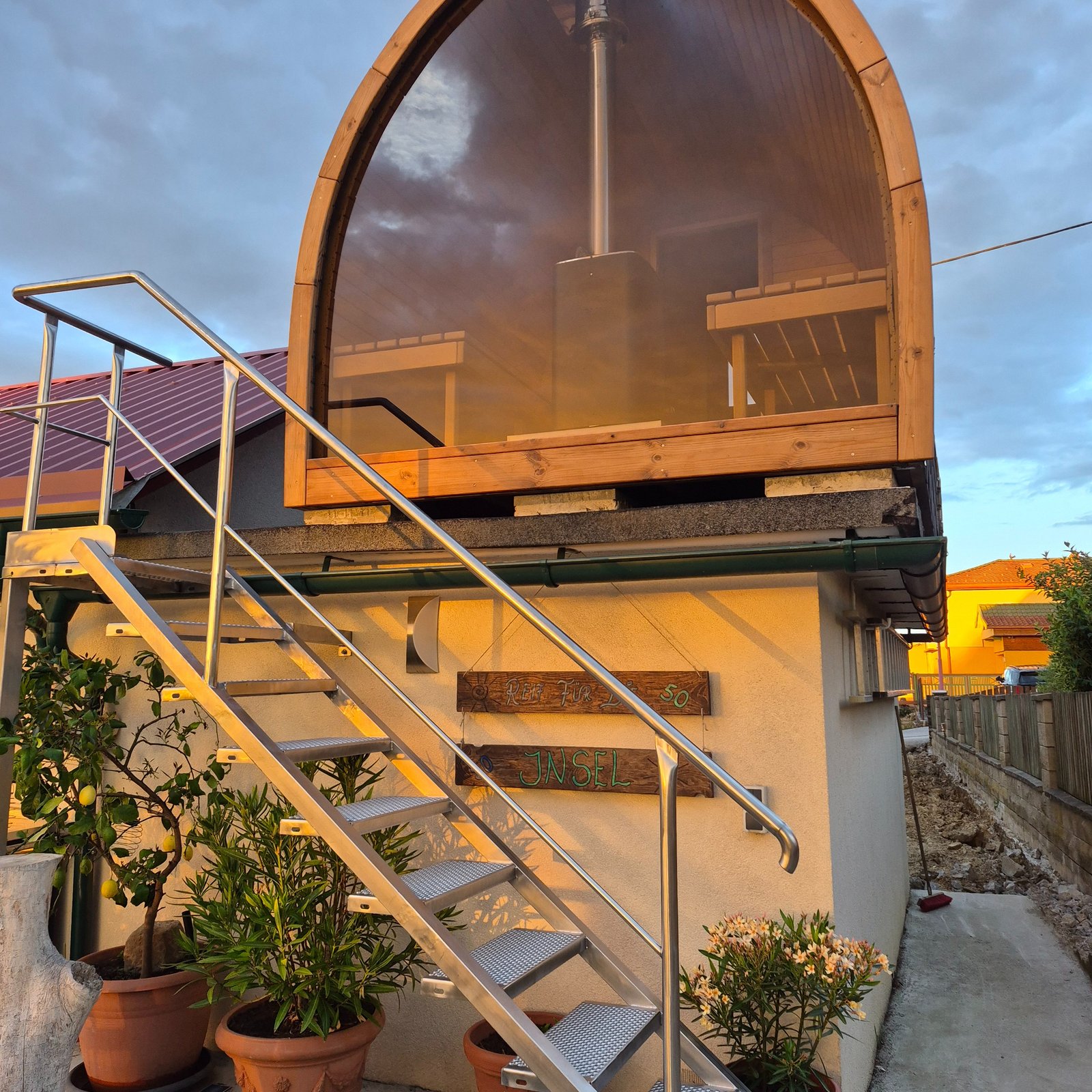
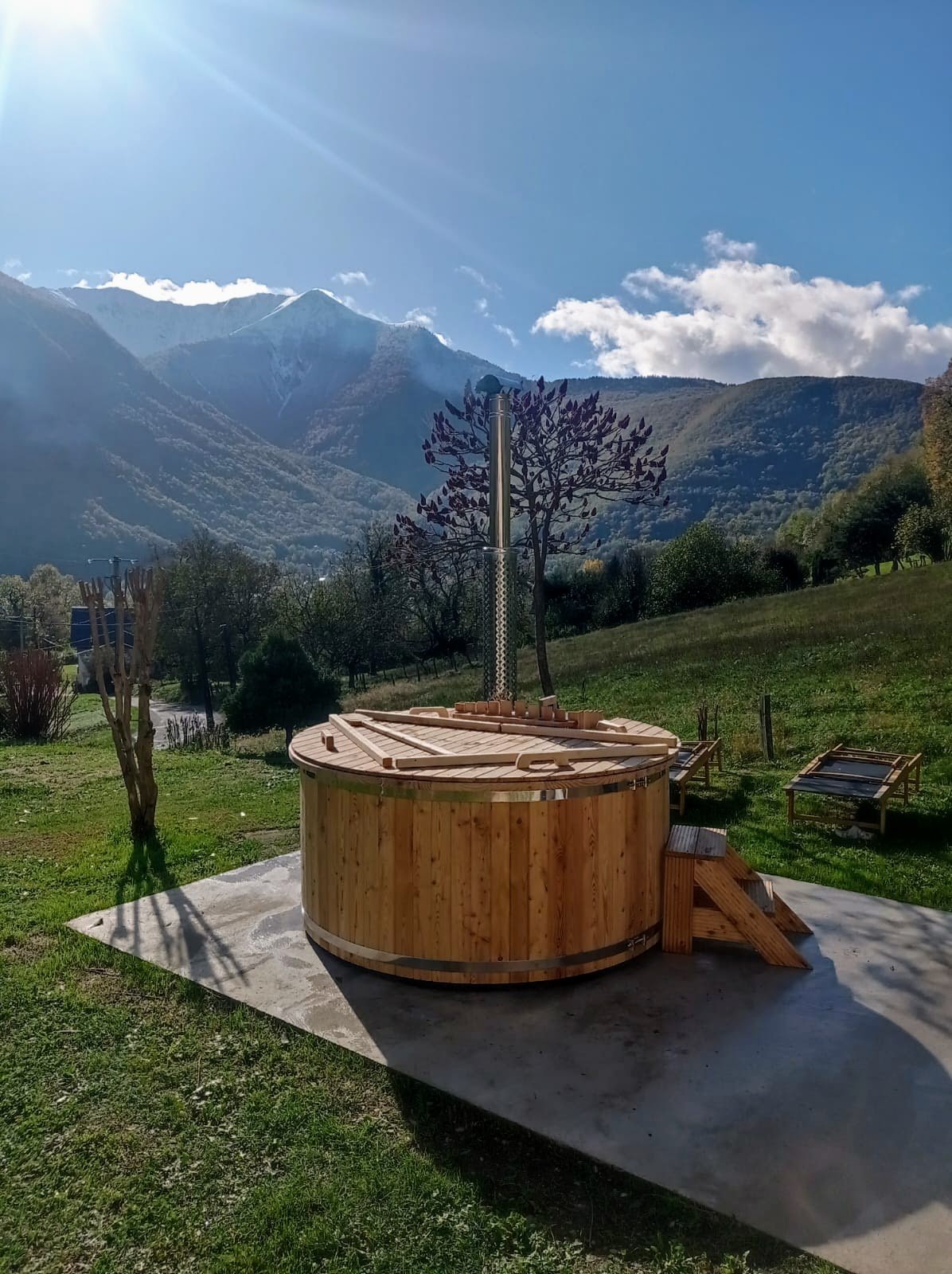
Review and installation photos →Hi, you can see the hot tub in these pics at our retreat.
Wood-fired heat is one part of the site plan
Start with your power and water limits, then choose a hot-tub configuration whose everyday routine fits the site.
The current range is grouped by equipment requirements. Manual wood-heating candidates lead; supplied powered packages and a model needing a fuller specification are labelled separately.
From our customers
Customer projects matched to the products listed on this page. Earlier specifications and selected options may differ.
Customer projects from United Kingdom.
TimberIN Nordic™ Thermowood Deluxe
Review and installation photos →Hi, you can see the hot tub in these pics at our retreat.

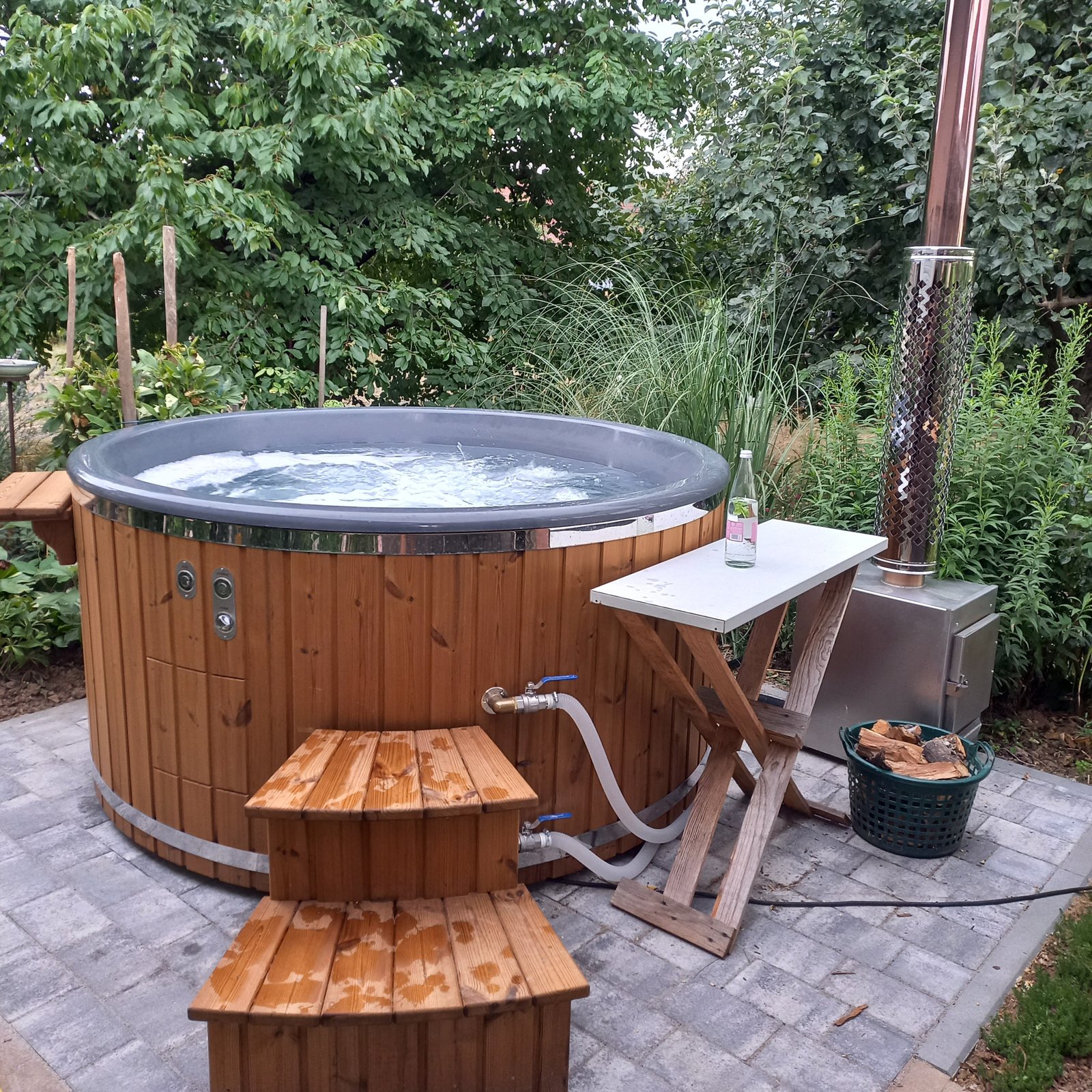
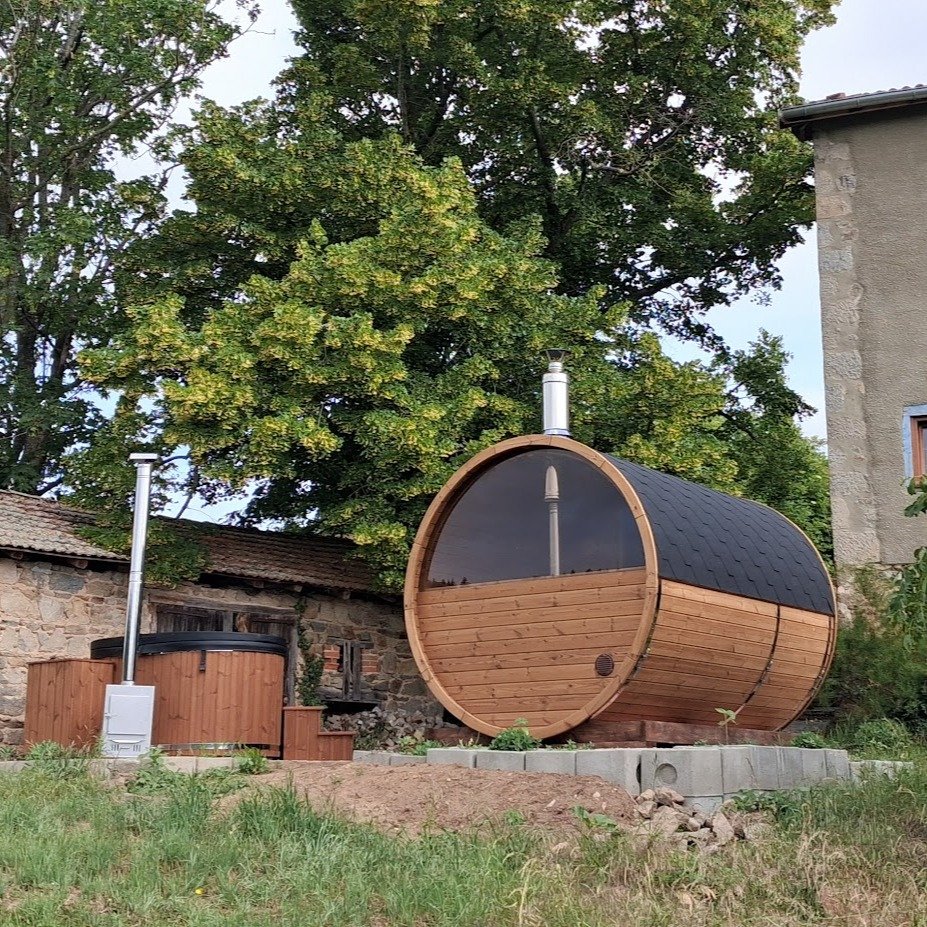
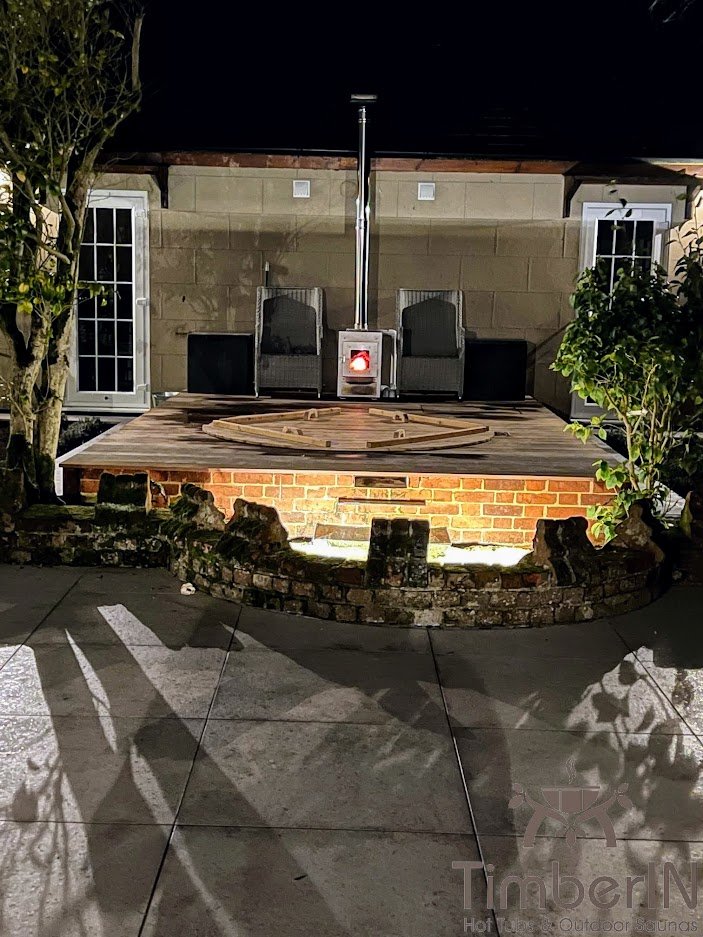
Review and installation photos →Hi, we have finally moved into our house & hot tub is amazing! Attached photo (feel free to use!)
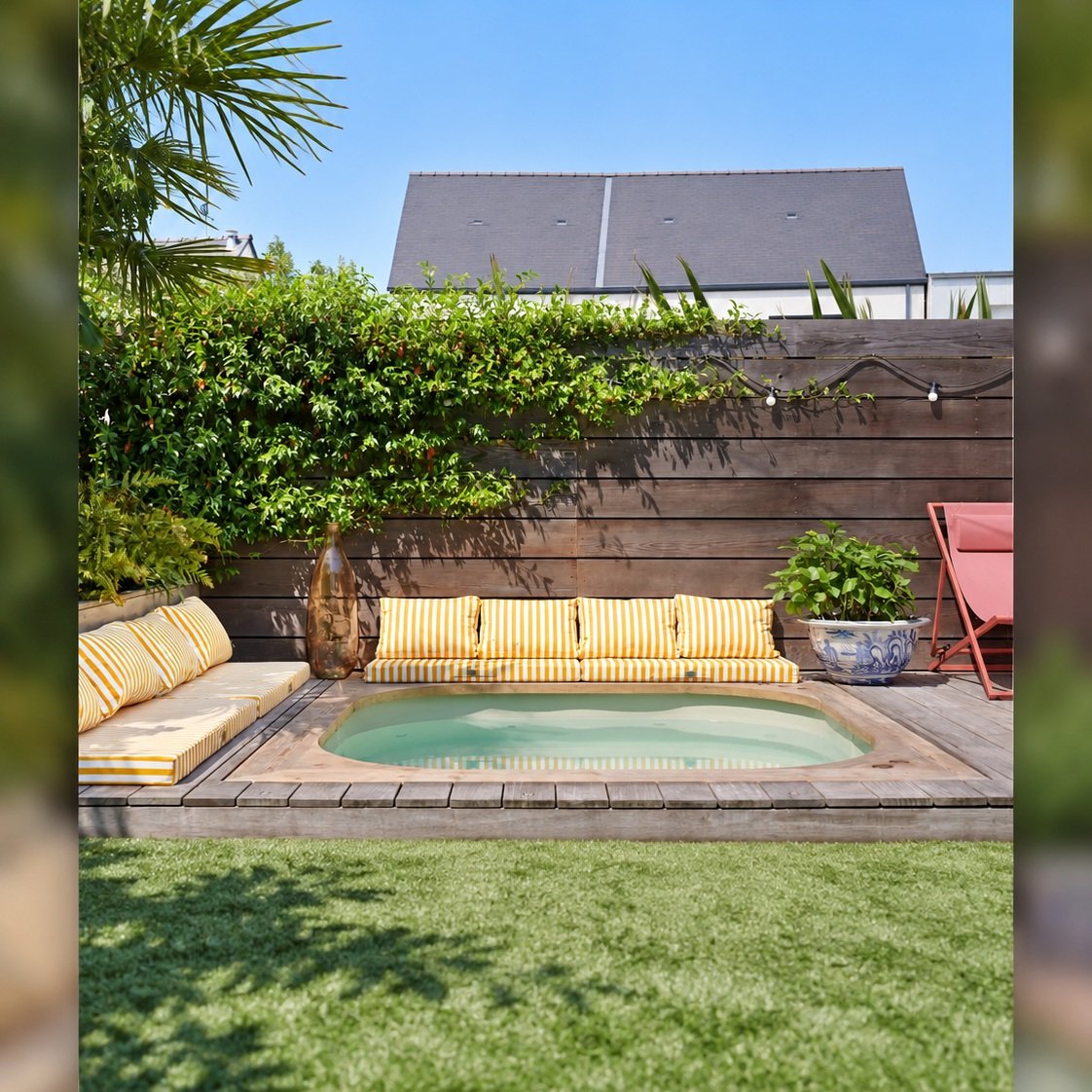
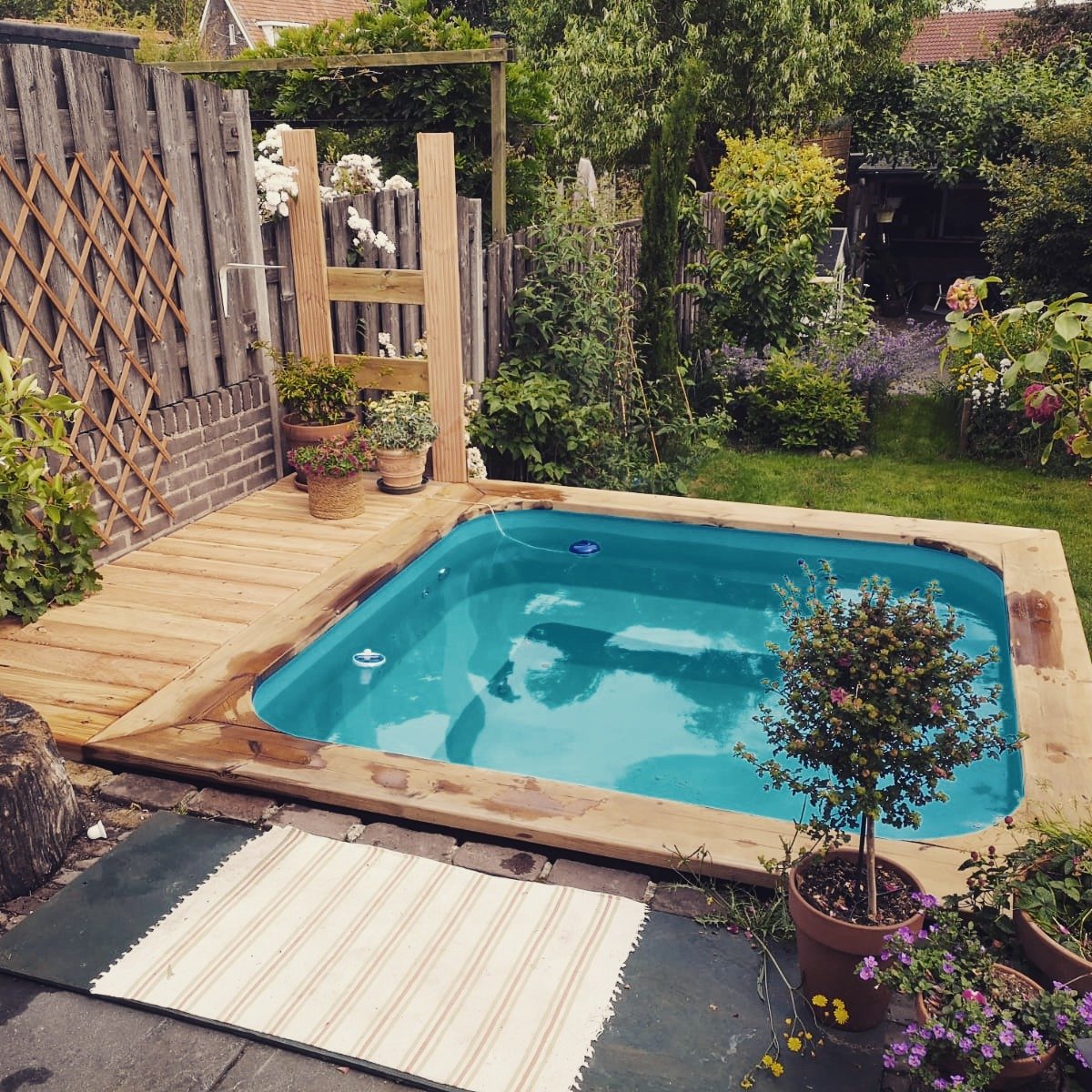
TimberIN Nordic™ InGround Comfort
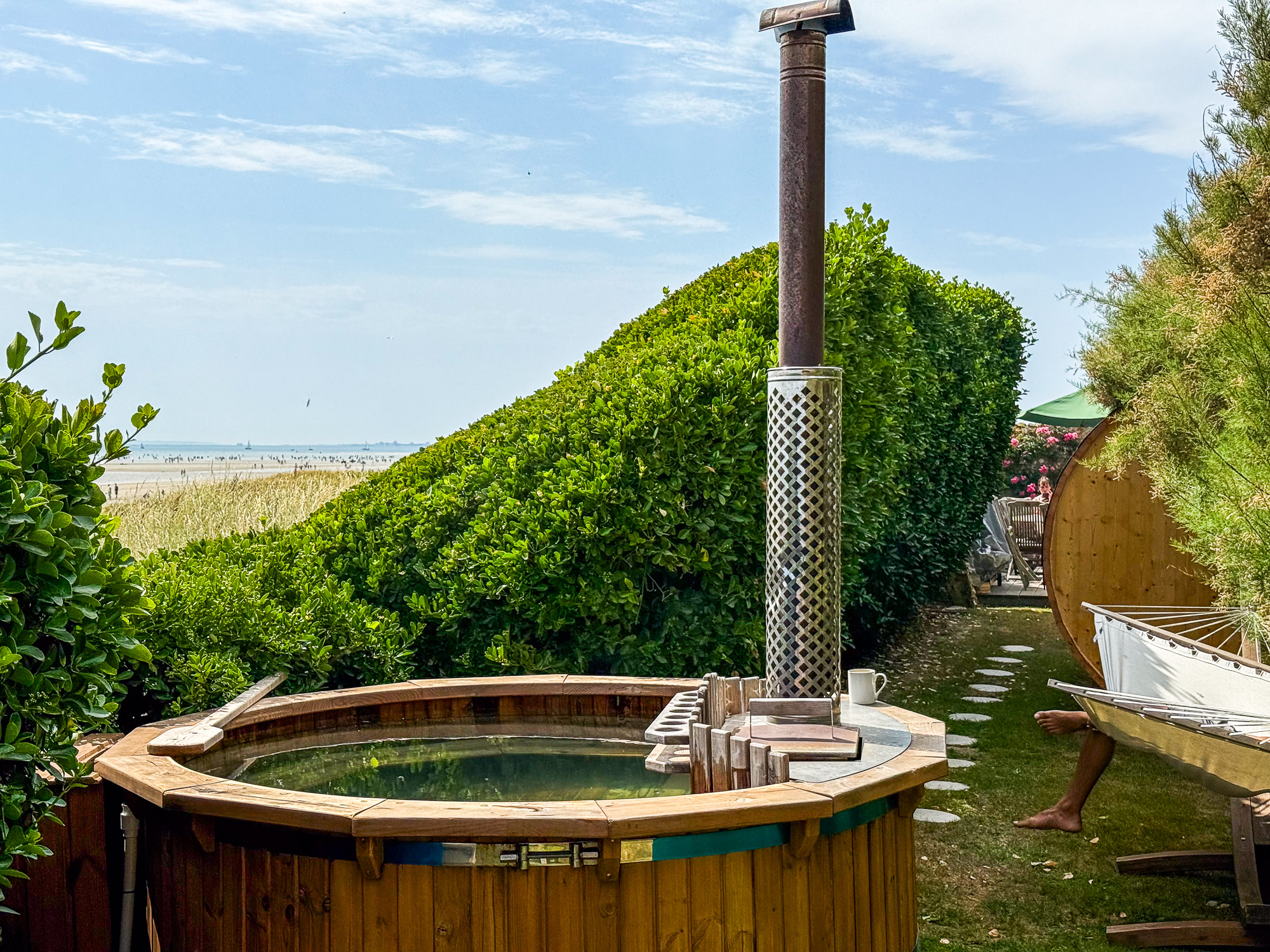
Customer installation photographs.
Review and installation photos →These models offer a conventional wood-heating route. Final suitability depends on the selected heater, omitted or included powered options, approved circulation arrangement and the site water plan.
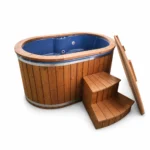
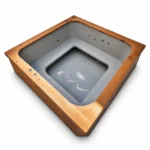

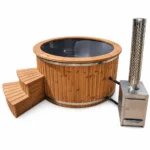
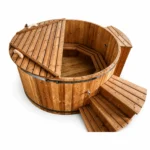
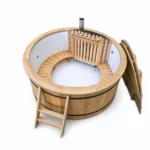
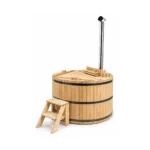
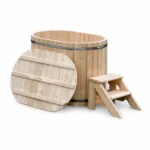
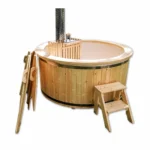
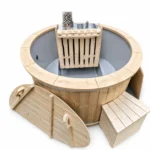
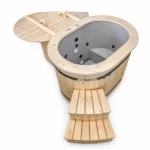
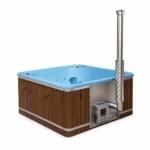
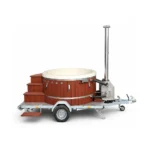
Rojal includes powered spa equipment; Family Electric offers electric or heat-pump heating; smart Pellet Comfort needs feed and control power. These are not presented as electricity-free packages.
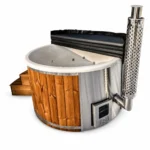

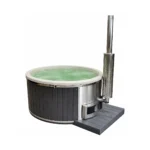
The two wood-stove layouts are selectable, but the short configurator does not settle every supplied system. Request the full equipment and electrical schedule before treating this model as an off-grid match.
“No mains cable to the tub” and “no electricity anywhere in the project” are different requirements. A cabin may have a battery supply for a water pump even when the bathing water is heated entirely with logs. Another owner may want lights and filtration on a small independent supply. Both can be off-grid projects, but only a configuration with no powered components can be described as electricity-free in operation.
Write down which of those outcomes you want before selecting a model. Include the water source as well as the tub: a borehole pump, transfer pump or treatment system can make electricity essential before the first log is lit. This simple brief prevents a seemingly suitable wood-fired purchase arriving with services that the site cannot support.
Then decide how often you will use it. A private weekend retreat, a family garden used every evening and a holiday property with changing guests create different demands for stored water, cleaning, attendance and winter protection. The appeal of a quiet rural setting should be matched by an operating routine that someone can realistically perform.
The first catalogue group contains models with a conventional wood-heating choice in their current configurators. Their suitability still depends on the final equipment list. Selecting a wood stove does not automatically remove a separately chosen filter, air blower, massage pump, light or electric backup heater. Ask for the complete accepted configuration to identify every powered component.
| Model route | Current heating evidence | Off-grid decision |
|---|---|---|
| Nordic Basic and traditional timber models | Manual wood-stove choices; some models also offer no heater or electric heating | Select the approved wood-heated build and agree any optional equipment separately |
| Core, Duo, Square and other configurable lined tubs | Conventional wood choices alongside model-specific electric or hybrid options | Check the heater selection and every spa add-on; a family name alone is insufficient |
| Nordic Rojal | Wood-fired heating with hydromassage, lights, filtration and air bubbles identified as included | Plan power for the supplied equipment; do not assume these systems can simply be deleted |
| Nordic Family Electric | Current heater selector offers electric heating or a heat pump | Requires a properly designed electrical supply |
| Nordic Pellet Comfort | Current heater selector offers smart pellet systems | Include control and feed power in the design; pellets do not mean electricity-free |
| Nordic Square Acrylic | External or integrated wood-stove layout; a short configurator | Obtain a complete supplied-equipment schedule before deciding whether the build meets your power brief |
Current selectors matter when older descriptive text lists a wider choice. If a desired combination is not offered, request confirmation rather than treating it as available. Likewise, a “no heater” option is an incomplete heating project, not evidence that the vessel can be connected to any stove. This page includes the wider family so those alternatives remain visible without presenting them as equivalent off-grid matches.
For each item, record whether it is essential, optional or absent. Start with the water-heating and circulation arrangement, then add filtration, air bubbles, water jets, lighting, controls, water transfer and any frost-protection equipment. Record what happens if the supply stops. A light going out is inconvenient; a system that relies on a pump needs its own manufacturer-approved response.
A conventional wood stove transfers heat to the water through its specified arrangement. Follow its required water level, connection layout and circulation instructions. Do not remove pumps, change hose sizes, add valves or alter pipe routes on the assumption that all wood-fired systems work identically. Ask for the selected heater drawing before building the surrounding platform.
Where equipment needs electricity, obtain its actual input rating, starting demand and expected operating hours. A heater’s thermal output is not necessarily its electrical input; this distinction is especially important for a heat pump. A competent designer should use the supplied technical documents to size and protect the complete installation. A product title or a nominal battery capacity is not a design specification.
Before comparing seat counts, obtain the operating water volume of the chosen shell and heater layout. Work out where that quantity comes from, how it reaches the tub and where it goes afterwards. Storage tanks, hose runs and refill time can dominate the practical experience at a remote property. A larger advertised capacity is only useful if the site can support the corresponding water routine.
A spring, collected rainwater or a private borehole should not be assumed suitable for bathing without assessment and appropriate management. If water is delivered, include storage and transfer arrangements in the plan. Gravity filling depends on the real elevation and pipe route; if a pump is required, add it to the equipment list and power calculation.
Disposal needs the same attention as filling. Identify a suitable route for the full discharge volume, taking account of water treatment, temperature, nearby drains, soft ground and local requirements. Do not allow the tub’s convenient drain position to dictate an unsuitable discharge point. Hoses should reach the agreed destination without crossing the bathing entrance or being trapped beneath permanent decking.
A smaller two-person hot tub may make sense for a couple if it reduces the selected model’s actual volume. Compare the technical figures, not diameter alone: depth, seating and heater position also affect how much water is needed. Leave enough capacity in the source and disposal plan for cleaning and rinsing as well as bathing.
Removing powered filtration is not simply a way to save a cable. It changes how the tub can be used and maintained. Agree a suitable fill, use, clean and drain routine for the exact product, water source and bathing load. Freshly filled water still changes once people enter; visual clarity does not establish that retained warm water is suitable for another session.
If water is to remain between uses, discuss the necessary treatment, circulation and monitoring with a competent specialist and follow the equipment instructions. A filter does not replace every other part of water care. Similarly, timber construction or wood-fired heat does not justify a blanket “chemical-free” promise. Use compatible products and written guidance for the selected shell and heater.
For paid accommodation, make water management part of the business plan before buying. HSE’s spa-pool guidance covers management of infection risks, including domestic-type hot tubs used in business settings. The operator needs an appropriate assessment and arrangements for cleaning, testing, monitoring and maintenance. A private owner’s occasional routine should not be copied into a busy guest site.
Draw the route from the fuel store to the firebox, including the space needed to load fuel and remove ash. An external heater needs its own supported footprint and approved connections. An integrated heater changes the tub’s service face; an internal heater occupies bathing space and needs the specified guarding. Each layout should be checked against the exact supplied drawing.
Keep the operator’s working area separate from wet steps and the usual route to the changing space. Consider how the lid is lifted and stored, how the chimney is inspected and how equipment can be serviced after landscaping is finished. A scenic corner becomes frustrating if every maintenance visit means reaching through planting or moving a heavy cover across the firebox approach.
Use the manufacturer’s permitted fuel and storage guidance. Dry storage should protect fuel from weather while keeping it away from hot equipment. Confirm the applicable smoke and nuisance requirements with the relevant local authority; GOV.UK’s smoke-control guidance is a starting point, not proof that every stove or installation is exempt. A rural address does not settle that question.
Allow time to supervise heating. Water volume, starting temperature, weather, fuel condition and the selected heater affect the warm-up. Request estimates with their assumptions, then learn the installed system’s actual behaviour. Never light a heater without its required water level or drain the tub while the stove remains hot; use the supplied operating and shutdown instructions.
Solar panels and batteries can support some remote installations, but a sunny-day demonstration says little about repeated winter use. Give the designer a schedule showing which devices run together, how long they run and which must remain available between bathing sessions. Include the water pump and controls, not just the equipment attached to the tub.
The final design must account for usable storage, conversion losses, starting loads and seasonal generation. Do not select a solar kit by dividing a battery’s advertised capacity by one device’s rating. If electric water heating is included, assess that load explicitly; it can change the scale of the project far more than adding a light.
A generator adds its own siting, fuel, exhaust, noise and maintenance requirements. It also changes the atmosphere of a retreat that was intended to be quiet. Ask whether the desired feature is valuable enough to justify that operating burden. For some owners, a simpler wood-heated configuration is the better fit; others will prefer an engineered independent supply for the comforts they use regularly.
Have a qualified installer confirm the outdoor electrical arrangements, protective measures and equipment compatibility. Agree a shutdown procedure for loss of supply and keep it with the tub’s instructions. App control is useful only where the relevant power, controller and connection are available; it should not be treated as a substitute for attending to a combustion appliance.
The most revealing planning exercise is the first visit after a period away. Can you reach the tub safely, inspect it, obtain water, bring dry fuel and start the system without improvising? A cover helps keep debris out and, where insulated, limits heat loss, but it does not establish that hidden pipes or equipment are protected from freezing.
Agree the manufacturer’s winter procedure for every component. Draining the visible shell may leave water in a heater, valve, filter or low section of pipe. If the installation depends on powered frost protection, that dependence belongs in the off-grid brief and the failure plan. Do not rely on unattended combustion as an improvised substitute.
Keep the foundation and surrounding route usable through wet weather. The base must support the filled installation according to the final specification, and external equipment needs appropriate support too. Think ahead to maintenance access: a neatly enclosed surround should still allow the required connections and service panels to be reached without dismantling the garden.
Send the supplier photographs and measurements of the approach, gates, turning area and final position. Note steep sections, soft tracks, overhead obstacles and any restrictions affecting the delivery vehicle. Describe seasonal conditions honestly. A route that accepts a car in summer may not support the same unloading plan after sustained rain.
Clarify where the delivery service ends and who provides lifting, onward movement and assembly. A flat-pack option may help some access problems, but it adds assembly responsibilities and is available only on specified models. The DIY and kit guide explains how to separate supplied components from the work arranged on site.
At handover, keep the accepted specification, heater instructions, service information and winter procedure together. Check that the installed equipment matches the power and water brief used to place the order. Any added pump, controller or heater should be reflected in the operating plan before the tub is used.
Compare the total project rather than the tub’s starting price alone. Include the selected shell and heater, cover, access equipment, water storage or transfer, drainage work, foundation, unloading and any independent power system. Add recurring fuel, cleaning, water management and service costs using the expected number of sessions.
Send TimberIN a brief stating normal users, use frequency, the intended electricity boundary, water source, drainage proposal and delivery access. Identify which powered comforts are essential and which you can leave out. Ask the reply to list the exact supplied configuration and any unresolved site requirements. That creates a practical basis for choosing an appropriate wood-fired model.
A workable off-grid tub is the one whose daily routine fits the place and its owners. Once water, heat, access and seasonal care are settled, finishes and optional features become much easier to choose. Discuss your site and configuration with those decisions in hand.
No. The heating arrangement may operate without electricity while included or optional pumps, filters, bubbles, lights and controls still need it. Check the whole supplied configuration and the site’s water-transfer equipment.
The current package identifies powered spa equipment as included. Treat it as requiring a power plan unless TimberIN confirms a different complete specification in writing; do not assume supplied systems can be omitted or disconnected.
The current smart Pellet Comfort configurations need power for their feed and control equipment. Their fuel source differs from electric water heating, but the electrical requirements still belong in the site design.
Only a design based on actual equipment inputs, starting loads, operating hours and seasonal performance can establish suitability. Include water transfer and any electric heating, and have the final installation assessed by a competent designer.
Define the power boundary, choose the exact heater and equipment, establish the water and disposal routine, and confirm access, base, fuel storage and winter care. Those decisions should be reflected in the accepted quotation.