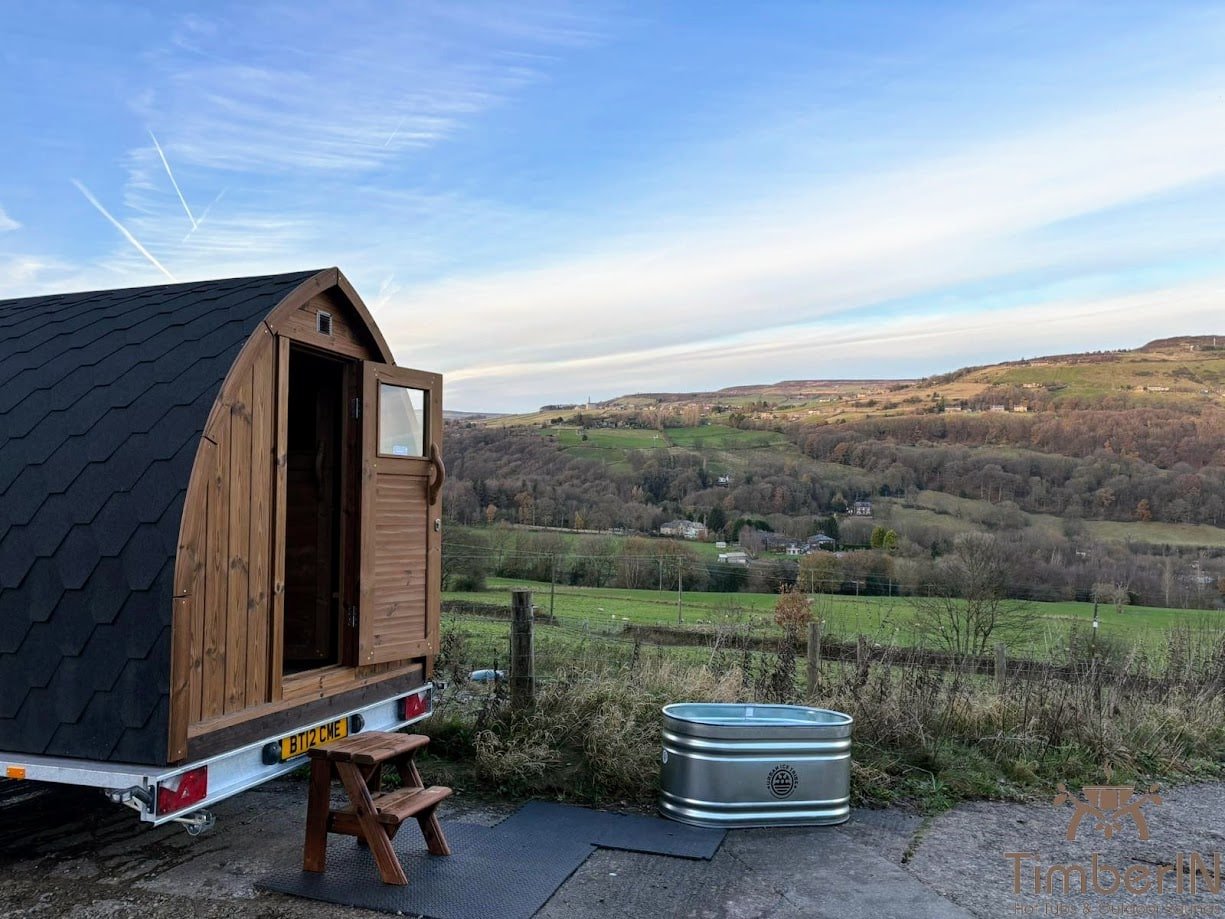

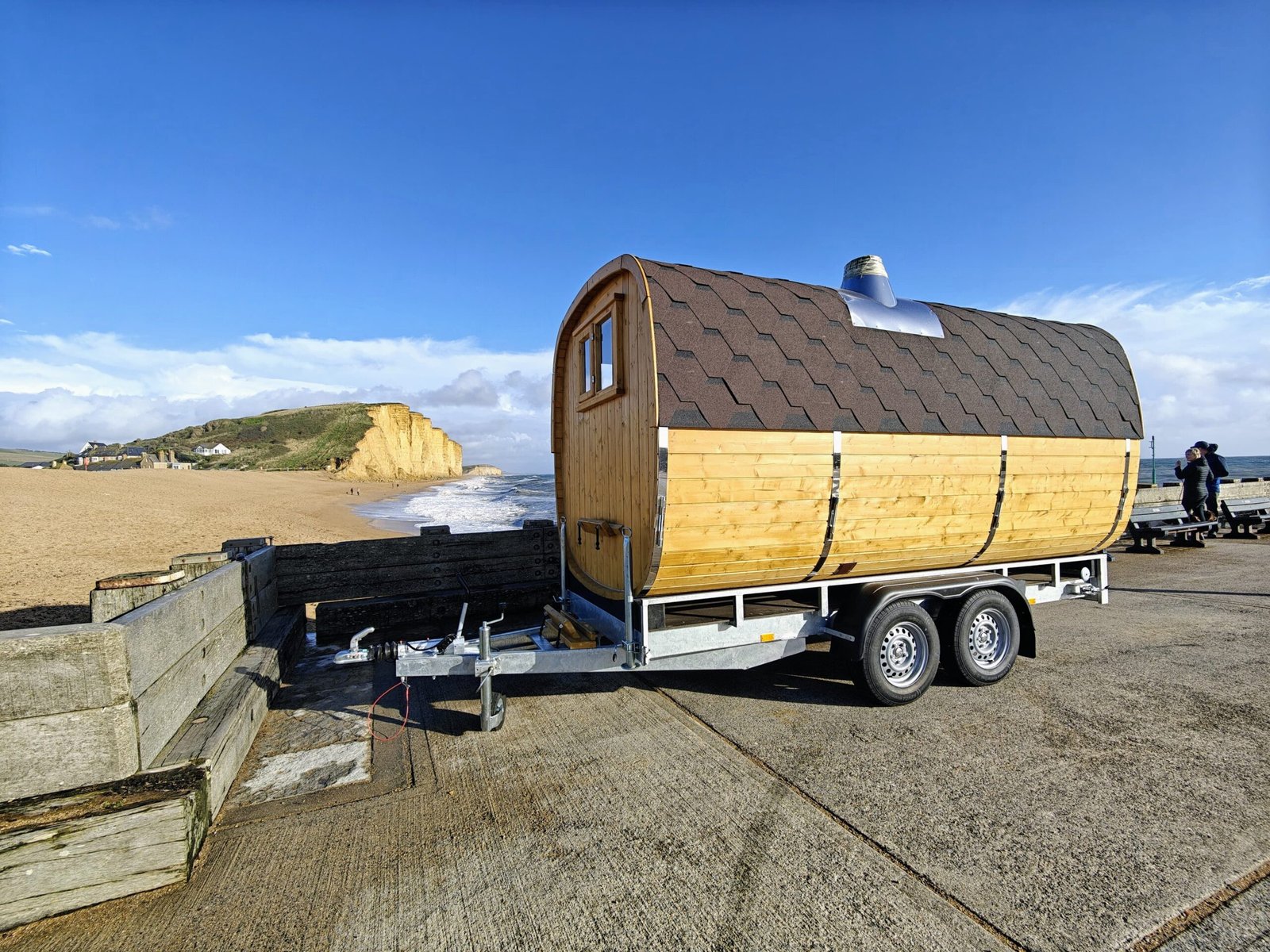
Mobile Sauna Trailers UK: Portable Saunas for Sale
A mobile sauna trailer combines a heated timber room with a road-going platform, so the buying decision must cover both sauna operation and transport. Capacity, heater, benches and changing space matter, but so do plated weights, towing limits, load security, setup ground and inspections before every journey.
This guide is for private owners, event operators, holiday businesses and sauna-hire projects. It explains how to compare current mobile models, choose the heating system, plan towing and site setup, and build a quotation that identifies the complete supplied trailer.
First buying rule: confirm the completed trailer’s plated weight and dimensions before selecting a tow vehicle or assuming a driving licence is suitable.
What is a mobile sauna trailer?
A mobile sauna is built on or integrated with a trailer so it can move between suitable locations. Unlike a fixed garden sauna, it must tolerate road vibration, repeated levelling, changing wind exposure and frequent checks of couplings, tyres, lights and secured equipment.
“Portable” should not be confused with lightweight. Timber, benches, stove, chimney, stones, fuel, accessories and any combined hot-tub equipment all contribute to mass. The relevant figure is the complete, plated and loaded arrangement—not the sauna cabin in isolation.
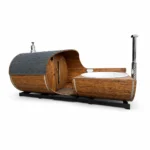
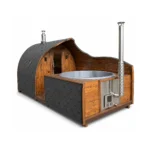
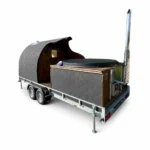
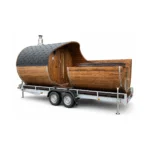
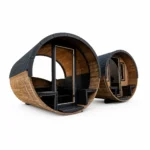
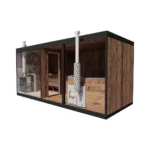
Current mobile sauna and combination models
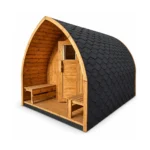
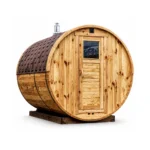
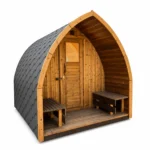
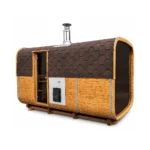
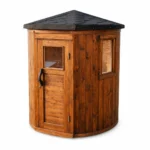
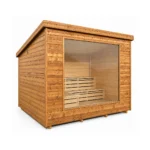
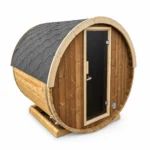
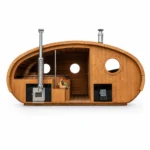
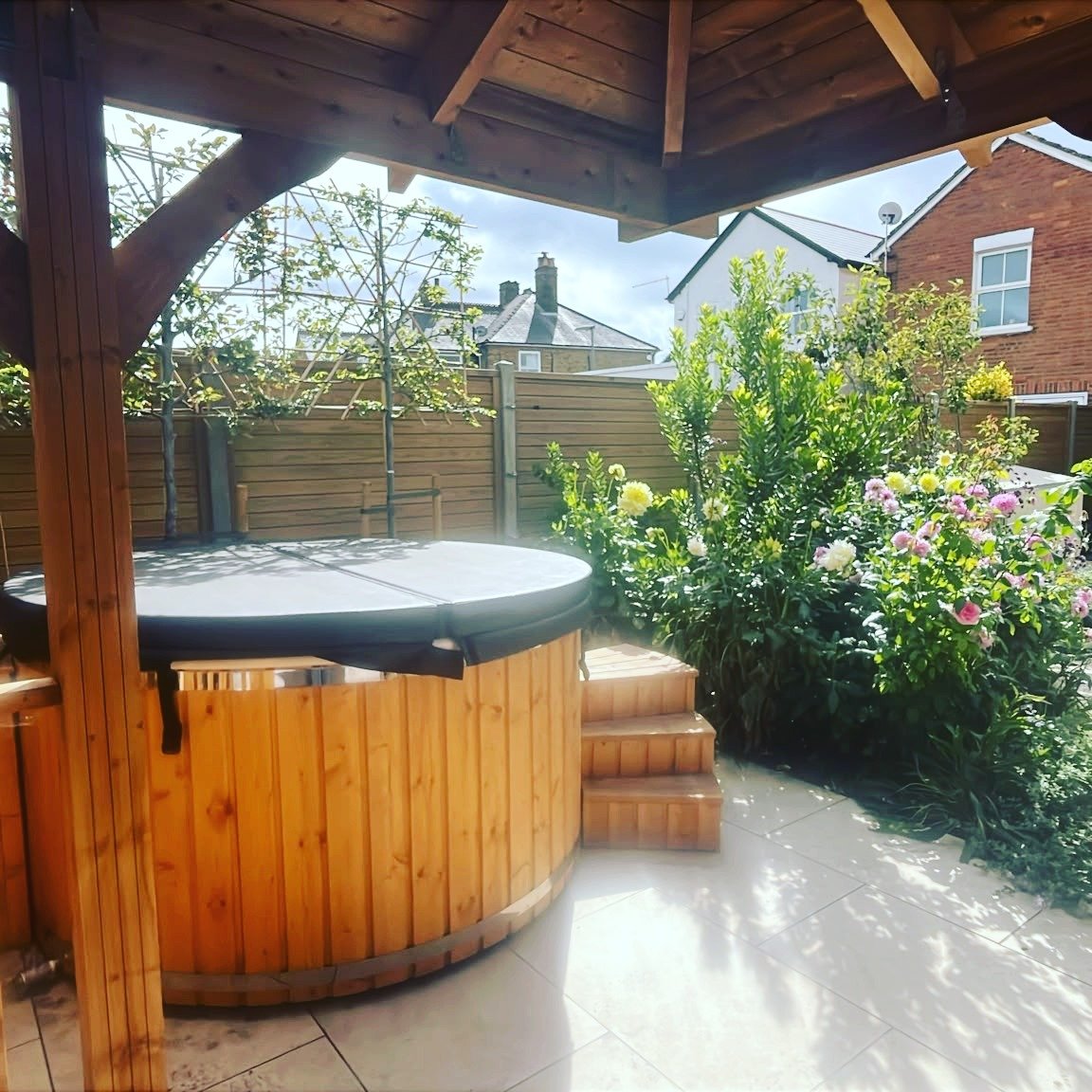
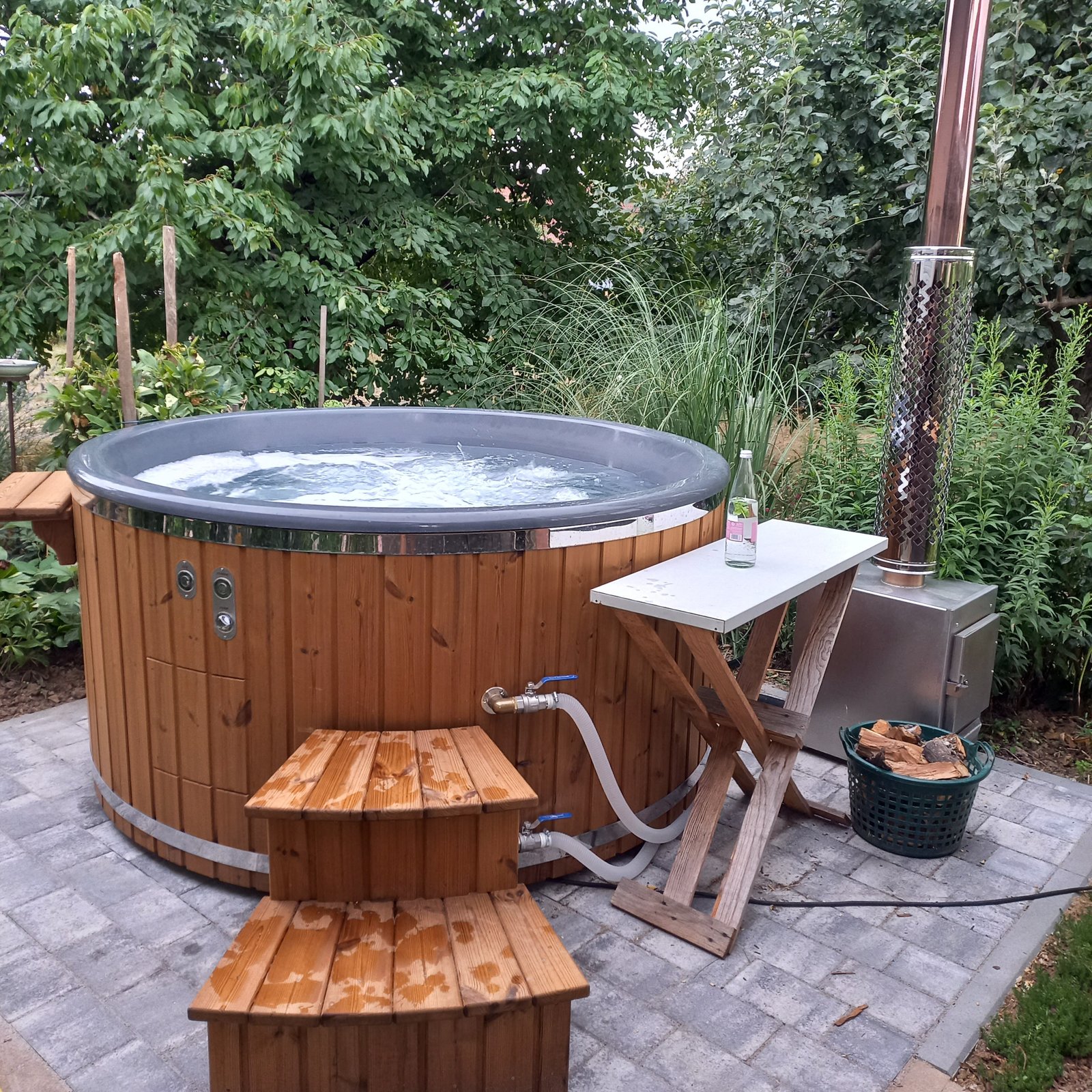
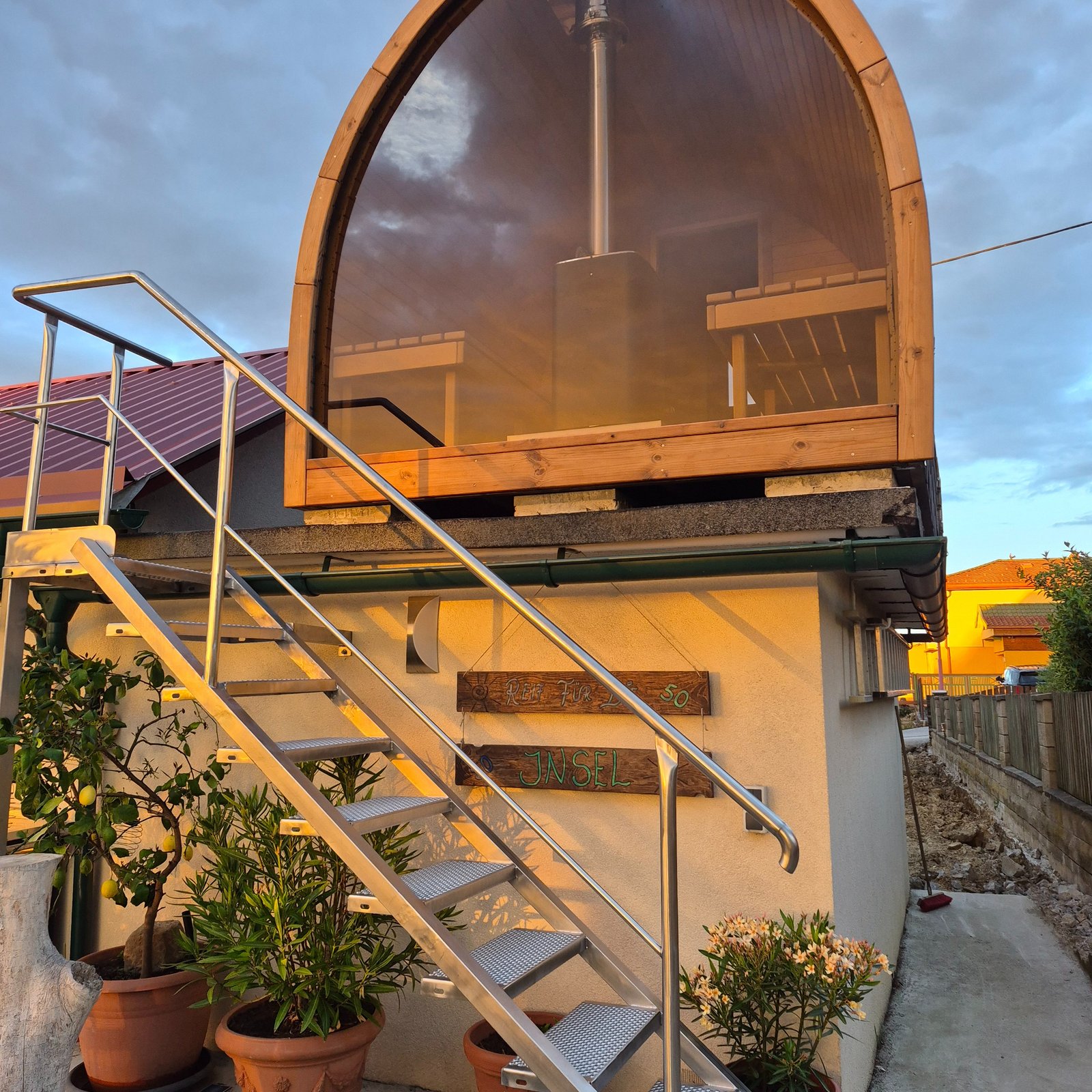
The models below are loaded directly from the current catalogue. Open each product for its available layout and configuration, then request final dimensions, plated weights, heater details and trailer equipment for the exact order.
Who benefits from a sauna on wheels?
Mobile saunas can suit event hire, coastal or lakeside sessions, retreats, glamping sites and operators who serve several locations. A private owner may choose one when the sauna needs to move between properties or when a fixed building is not the preferred long-term arrangement.
Mobility creates work as well as flexibility. Every change of site introduces towing, access, levelling, chimney or electrical setup, customer flow and local permission questions. If the sauna will remain in one garden for most of its life, compare a fixed outdoor sauna before paying for a trailer platform.
Choose the body shape and interior layout
Barrel, square and pod forms distribute height and floor space differently. Ask for an internal plan showing benches, heater, door and any changing area. A commercial hire unit needs room for normal booked occupancy without blocking entry or creating awkward movement around hot surfaces.
Exterior dimensions affect route planning, storage and setup. Check the overall width, height and length in road configuration, including chimney components, steps or accessories that are removed for travel. Establish where these items are secured while moving.
Wood-fired or electric mobile sauna?
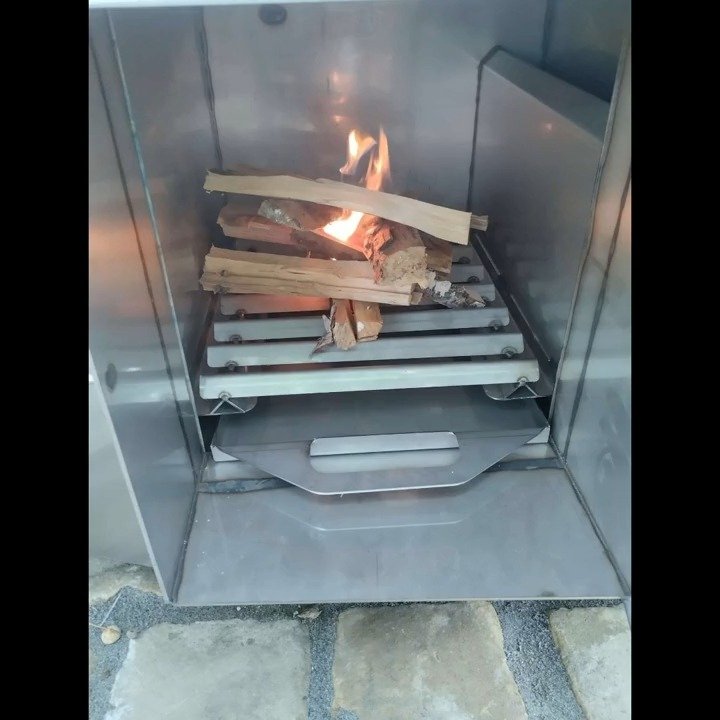
Wood firing is common where the experience and independence from a large electrical supply are important. It needs dry fuel, trained fire management, heat shielding and a chimney that can be secured for travel and correctly assembled at each site. The operator should have a consistent lighting, monitoring, ash and shutdown routine.
An electric heater can simplify control at venues with a verified supply. The exact output, connector, cable protection and site electrical arrangements must be agreed in advance. Do not assume a domestic socket is adequate. Combined sauna-and-hot-tub models add further water, drainage, heating, load and setup questions.
Capacity, payload and load distribution
Separate sauna capacity from trailer capacity. Users are inside only when the trailer is stationary, but the road journey includes every fixed component and every item carried. Ask what the quoted unladen or running weight includes and how much payload remains for stones, fuel, steps, water-related equipment and operating supplies.
Loads must be secured and distributed according to the trailer and tow-vehicle requirements. Adding equipment at the rear or carrying loose stones can change stability. Use the manufacturer’s loading information and competent towing advice instead of rearranging the mobile unit by trial and error.
Buying new versus used
A new mobile sauna can be specified around the intended occupancy, heater and business process, with known documents and a clear handover. A used trailer may reduce the initial price but needs careful checks of identity, plate, chassis, brakes, tyres, coupling, water ingress, timber condition, heater installation and modification history.
Do not assume an attractive cabin proves that the road-going platform is suitable. Ask for service and inspection records, verify weights after any alterations and establish whether replacement parts remain available. Include immediate remedial work in the comparison with a new model.
UK licence, vehicle and trailer checks
Towing entitlement depends on the driver’s licence, while the vehicle and trailer have their own plated limits. GOV.UK advises drivers to know both maximum authorised masses and stay within the tow vehicle’s gross train weight. Check the current towing entitlement guidance for the driver and combination rather than relying on a seller’s summary.
For towing in England, Scotland and Wales, official guidance also covers equipment, braking, width and length limits. A loaded trailer over 750 kg requires a working braking system; the current maximum trailer width is 2.55 metres, and other length or vehicle rules depend on the combination. Verify the latest weight and dimension rules for the actual journey. Requirements can differ for Northern Ireland and international travel.
| Before purchase or travel | What to verify | Evidence |
|---|---|---|
| Driver | Licence entitlement and towing competence | Current licence record and appropriate training |
| Tow vehicle | Towing limit, gross train weight and approved towbar | VIN plate, handbook and towbar information |
| Trailer | MAM, brakes, dimensions, coupling, tyres and lights | Trailer plate, documents and inspection record |
| Load | Actual weight, distribution and secured loose items | Weighing and documented loading arrangement |
| Journey | Route restrictions, speed rules and destination access | Planned route and site confirmation |
Pre-journey safety routine
The Driver and Vehicle Standards Agency recommends checks every time a trailer is towed. Coupling, breakaway cable or secondary connection, tyres, wheel fixings, lights, load security and weight limits all deserve attention. Use the official trailer safety checklist and add sauna-specific items such as chimney sections, stones, doors, steps and heater accessories.
A commercial operator should record defects and take a non-roadworthy unit out of service. Assign responsibility for the tow vehicle, trailer and sauna rather than assuming one visual check covers all three.
Arrival, levelling and site setup
The destination needs safe vehicle access, firm ground and enough room to manoeuvre. Establish the approved method for levelling and stabilising the trailer before people enter. Chocks, supports, steps and handrails must be placed consistently, and the unit should not rely on the tow vehicle alone for stability.
For wood-fired operation, assess wind, combustible surroundings, smoke and chimney assembly. For electric operation, confirm the supply and protected cable route. Plan lighting, changing, cooling down, customer queues and emergency access. The mobile sauna should be operated only after the site setup has been checked.
Private use, hire and events
A private owner may operate at familiar sites with the same small group. A hire or event business needs documented booking, setup, user information, cleaning, drying, inspection and fault procedures. Tell the supplier about the intended commercial frequency and supervision before selecting the configuration.
Insurance, planning, event and business obligations depend on the operator and location. Check the proposal with the relevant insurer, local authority, venue and competent advisers. Do not assume that mobility removes site rules or that a road-legal trailer is automatically approved for public sauna operation.
Maintenance for the trailer and sauna
Maintain the road-going platform and the heated room on coordinated schedules. Trailer work includes tyres, brakes, bearings, coupling, chassis, lights and fixings; sauna work includes timber drying, benches, door, heater or stove, stones, guards and chimney. Repeated road movement makes loose-fixing checks especially important.
Keep service records and identify parts by model. After a long journey or rough access route, inspect before heating. Store the unit in a way that protects the structure while allowing ventilation, and follow the manufacturer’s winter and non-use guidance.
Mobile sauna quotation checklist
| Quotation area | Detail to confirm |
|---|---|
| Trailer | Manufacturer, plate, MAM, unladen estimate, payload, brakes and dimensions |
| Sauna body | Shape, timber, benches, glazing, changing space and occupancy |
| Heating | Heater or stove, output, stones, controls, shielding and chimney |
| Road configuration | Removable items, travel height, load positions and securing method |
| Setup equipment | Stabilisers, chocks, steps, handrails and site connections |
| Handover | Documents, loading instructions, warranty, servicing and spare parts |
Frequently asked questions
Can I tow a mobile sauna with a car?
Only if the driver’s entitlement, tow vehicle, trailer and loaded combination all permit it. Check the vehicle and trailer plates and current government guidance for the actual configuration.
Is a mobile sauna road legal when supplied?
Request the trailer documents and complete specification, then verify registration, equipment, weight and use requirements for your journeys. Road legality is not established by the sauna description alone.
Can a mobile sauna be hired to the public?
It can form part of a hire business, but the operator must establish insurance, site, transport, safety and business requirements and run documented setup and supervision procedures.
Does a mobile sauna need planning permission?
Mobility does not create a universal exemption. The location, duration, use and site restrictions matter. Ask the relevant local authority about the actual proposal.
Which heater is best for a sauna trailer?
Wood firing suits sites without a large supply but adds fire and chimney work. Electric heating can simplify controls where a verified connection is available. Choose for the operating locations.
Specify the road unit and sauna together
Share intended use, normal occupancy, heating preference, tow-vehicle information and typical operating sites. Ask for final plated weights, dimensions and supplied trailer equipment before making transport commitments.