
Hot Tubs Near Me UK: Models, Delivery and Local Site Planning
Searching for a hot tub near you usually means more than finding the nearest seller. Buyers need to know whether a suitable model can reach their postcode, who unloads it, which local trades prepare the site and what aftercare is available once the tub is in use.
TimberIN is a European manufacturer supplying UK projects rather than a claim of having a showroom in every town. This page explains how to compare the current range, obtain a postcode-specific delivery plan and coordinate local foundation, electrical or chimney work without vague “nationwide” promises.
Local-buying rule: ask for the exact delivery address, access route, unloading boundary and installer responsibilities in writing. Distance alone does not determine whether a hot tub is easy to deliver.
What “hot tubs near me” should help you decide
A useful local result should answer five questions: does the range contain the right tub, can it be delivered to the property, what access and unloading are required, who performs the site work and what support exists after handover? A map pin by itself answers none of these.
Start with your regular users and preferred experience, then send the postcode and access information. This lets the product and logistics decisions develop together. It also prevents a buyer from choosing a model that fits the garden but not the gate or lifting plan.
Hot-tub models available for UK delivery planning
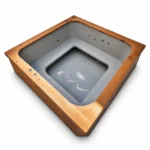
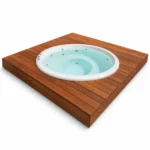
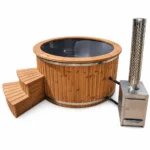
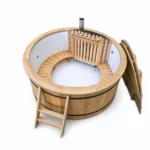
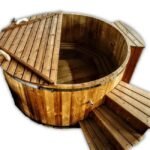
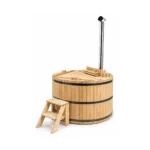
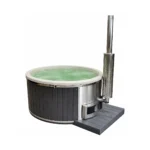
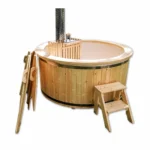
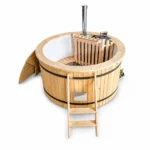
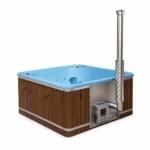
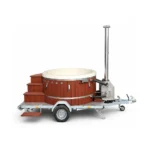
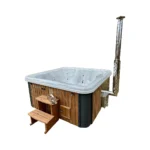
The current range appears below. Open a model to check size, seating, construction, heater position and options. Availability, lead time and delivery cost should then be confirmed for the selected configuration and final address.
-
Product on saleSave up to 16% Wood Fired Hot Tub with Jets – TimberIN Nordic Rojal™ (4–8 Person)
From: £6,785From: £5,874 -
Modular coreTimberIN Nordic Core™From: £3,289
-
ThermowoodThermowood Hot Tub – TimberIN Nordic™ Deluxe (Wood-Fired, 4–8 Person)From: £3,200
-
2-person model2 Person Wood Fired Hot Tub – TimberIN Nordic DuoFrom: £2,420
-
Square modelSquare Wood Fired Hot Tub – TimberIN Nordic Square™ (160–220 cm)From: £2,862
-
In-ground modelTimberIN Nordic™ InGround Comfort – Sunken & In-Ground Hot Tub SystemFrom: £1,662
-
External stoveWood Fired Hot Tub with External Stove – TimberIN Nordic™ External ComfortFrom: £3,300
-
PolypropylenePolypropylene Hot Tub – TimberIN Nordic Flex™ (160–220 cm, Configurable)From: £2,537
-
Traditional timberWood Fired Wooden Jacuzzi – Traditional Timber Hot TubFrom: £2,751
-
Spruce value modelWooden Hot Tub Basic – TimberIN Nordic™ (Affordable Wood Fired Model)From: £2,276
-
App-controlled pelletsTimberIN Nordic™ Pellet Comfort – Wood Pellet Heated Hot TubFrom: £5,350
-
Compact for 44 Person Wood Fired Hot Tub – Compact Snorkel Stove DesignFrom: £2,891
-
Product on saleSave up to 17%Affordable Wooden Hot Tub for Your Garden – TimberIN Nordic Value™From: £3,190From: £2,860 -
8-person modelLarge 8 Person Wood Fired Hot Tub – TimberIN Nordic Elite™ SquareFrom: £4,290
-
Trailer modelMobile Wood Fired Hot Tub on Trailer – TimberIN Nordic Mobile™From: £5,655
-
Acrylic luxuryTimberIN Nordic Square™ Acrylic Hot Tub – External or Integrated Wood Stove (Luxury Marble Edition)From: £6,787
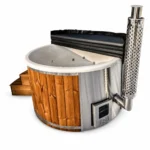
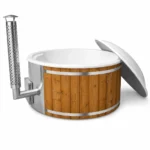
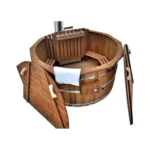
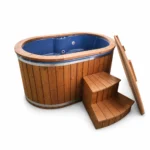
Choose a model before asking for a delivery price
Freight depends on packed size, weight and route. A two-person oval tub, a family round tub and a square spa-style model can require different vehicles and handling. The heater, steps and accessories may travel separately or change the overall load.
Shortlist by usable seating, water volume, body material and heating route. If you are still comparing systems, use the wood-fired hot-tub guide, electric hot-tub guide and jetted hot-tub guide before requesting a final quote.
How postcode-specific delivery planning works
| Information needed | What it establishes | What the quotation should state |
|---|---|---|
| Full postcode and address type | Main route, regional constraints and likely vehicle | Destination and any route-specific assumptions |
| Selected model and options | Packed dimensions, weight and handling points | Exact goods included in the delivery price |
| Road and parking photographs | Vehicle access, turning and unloading position | Where the carrier is expected to stop |
| Garden-route measurements | Gate, alley, corner, slope and overhead clearance | Whether placement or only unloading is included |
| Lifting plan | Forklift, crane, smaller transfer vehicle or labour | Who books, pays for and operates the equipment |
Use measurements, not descriptions such as “normal access” or “wide gate”. Photograph the narrowest point with a tape measure visible where practical. Include weight limits, private roads, islands, ferries, restricted streets and timed access when they apply.
Delivery is not always installation
Clarify whether the carrier provides kerbside delivery, unloads on a driveway or places the tub on the finished base. Assembly, water connections, electrical work, stove and chimney work and commissioning can be separate responsibilities. The word “delivered” must not be assumed to include them.
Where several contractors are involved, make one responsibility schedule. The base should be ready from the final drawing; the route should remain open; and the correct trades should attend at the agreed stage. Do not book a crane before packed dimensions and weight are confirmed.
What a local delivery price may—and may not—include
A postcode price can cover line-haul freight while leaving final unloading, lifting and placement to the buyer. Another quotation may include a tail-lift or forklift but stop before the garden route. Ask the seller to separate factory dispatch, UK transport, postcode surcharge, timed delivery, unloading equipment and movement to the base.
Also identify costs triggered by failed access: waiting time, redelivery, storage or a smaller transfer vehicle. A clearly higher quotation can be better value when it resolves those stages. The written delivery plan should name the vehicle and agreed stopping point, not merely say “UK delivery included”.
Which work should be local?
Foundation design depends on the property and ground, so it is normally completed or checked locally. Electrical work must be assessed against the actual supply and the requirements of the relevant UK nation. Stove and chimney installation must follow the approved components, clearances and local constraints.
Give local trades the manufacturer’s drawing and equipment data rather than asking them to estimate from a sales photograph. Agree who supplies cables, isolators, drainage materials, heat shielding, flue components and testing. Keep invoices, certificates and commissioning records with the product documents.
Local authority, property and insurance checks
A freestanding tub may be treated differently from a raised deck, shelter, enclosure, chimney or commercial installation. Requirements also differ across England, Wales, Scotland and Northern Ireland and can be affected by listed status, conservation controls, tenancy or previous planning conditions. Ask about the complete proposal instead of asking only whether “a hot tub” needs permission.
Tell the insurer about permanent equipment, wood burning, guest use and major electrical work where relevant. Holiday accommodation and paid use need formal water, cleaning, inspection, user-instruction and emergency routines. Local proximity does not remove the owner’s duty to confirm these site-specific responsibilities.
Visit, video review or documented remote purchase?
A physical visit can help buyers judge materials, seating and scale when a relevant model is available. It is not the only way to buy responsibly. A remote purchase can be well documented through drawings, dimensions, photographs, option schedules, manuals and a written delivery survey.
Ask whether any display model matches the configuration you are considering. Do not infer the comfort, heater or finish of one tub from a different showroom unit. Where no local display exists, request the exact internal and external dimensions and discuss user height, mobility and expected occupancy.
Foundation, drainage and utilities before delivery
The base must support the filled tub, water, heater and users and remain level. Obtain support points, water capacity and empty weight before construction. Plan drainage that does not flood the property or neighbours and retains access to the outlet after landscaping.
For electric systems, have the supply and cable route assessed before the heater is fixed. For wood-fired systems, mark the stove door, chimney, clearances and fuel route. The complete garden hot-tub planning guide covers siting, privacy and winter use.
Regional and remote-access considerations
Dense city streets can create parking, time-window and crane constraints. Rural and Highland locations can add narrow lanes, weak verges, bridges and longer transfer distances. Islands may require ferry coordination. These are logistics questions, not reasons to make blanket promises or exclusions.
Location-specific guides include Manchester, Glasgow, Scotland and Ireland. They provide planning context, but the final quotation still depends on the individual address and model.
Aftercare does not have to be physically nearby
Useful support begins with clear manuals, model identification, accessible components and a reliable fault-reporting route. Ask which parts are considered consumable, what photographs or test information are needed for diagnosis and whether a local technician can work from the documentation.
Confirm warranty scope, exclusions, labour and travel treatment before ordering. Keep the serial or model details, selected-option schedule and commissioning records. A seller being geographically close does not automatically guarantee better support; a distant manufacturer still needs a practical parts and advice process.
Why the nearest seller is not always the best-value supplier
Local availability is valuable when it gives access to the right model, competent installation or responsive service. It is less valuable when the displayed tub differs from the quoted configuration or the seller cannot document heater, foundation and maintenance requirements. Compare what will actually be supplied and supported.
Direct ordering can offer more configuration choice, while a nearby dealer may coordinate more local work. Neither route wins automatically. Put the product, delivered price, installation responsibilities, warranty and parts process in one table and choose the offer that leaves the fewest unresolved tasks.
Compare local and direct-from-manufacturer offers fairly
| Comparison area | Questions for every seller | Evidence to request |
|---|---|---|
| Product | Is this the exact body, size, heater and option package? | Drawing and itemised specification |
| Price | Which tax, delivery and installation items are included? | Delivered-address quotation with exclusions |
| Lead time | Is the tub in stock, made to order or dependent on options? | Current written estimate and update process |
| Installation | Who completes foundation, electrical, chimney and commissioning work? | Responsibility schedule and required certificates |
| Aftercare | How are faults diagnosed and parts supplied? | Warranty terms, manuals and support contact |
Near-me buying checklist
- Define normal users, heating choice and desired equipment.
- Select a model and obtain its packed and installed dimensions.
- Send the full postcode, site photographs and measured access route.
- Confirm delivery boundary, unloading and placement separately.
- Have foundation, drainage and utilities planned locally.
- Compare itemised specifications rather than distance or headline price.
- Document installation, commissioning, warranty and parts support.
Frequently asked questions
Is there a TimberIN hot-tub showroom near me?
Do not assume there is a showroom in every region. Ask about current viewing possibilities for the model you are considering, or use drawings, photographs, dimensions and a documented video or remote review where appropriate.
Can TimberIN deliver a hot tub to my UK postcode?
Feasibility and price depend on the address, selected model, route, access and unloading plan. Send the postcode and measured photographs for a written delivery assessment.
Does delivery include placing the tub in my garden?
Only when the quotation explicitly says so. Kerbside delivery, unloading, lifting and movement to the base are separate stages and responsibilities should be stated in writing.
Who installs a wood-fired hot tub near me?
The order should identify which tasks are factory supplied and which need competent local trades. Foundation, chimney, electrical and commissioning work must follow the selected model’s documents and local requirements.
How long does local delivery take?
There is no fixed time for every order. Production, configuration, route, carrier scheduling and access can all affect it. Request a current estimate for the final model and address, and avoid booking trades from an unconfirmed date.
Check the model and postcode together
Send your shortlisted model, full postcode, road-to-base photographs and narrowest access measurements. TimberIN can then clarify delivery feasibility, boundary and the remaining local work without pretending every address is the same.