
From postcode to winter routine

Wood-fired hot tubs in Scotland: delivery, winter use and site planning

Plan the Scottish site and delivery route alongside the tub, especially where access, wind and winter absence affect everyday use.

Plan the delivery route · Compare current models

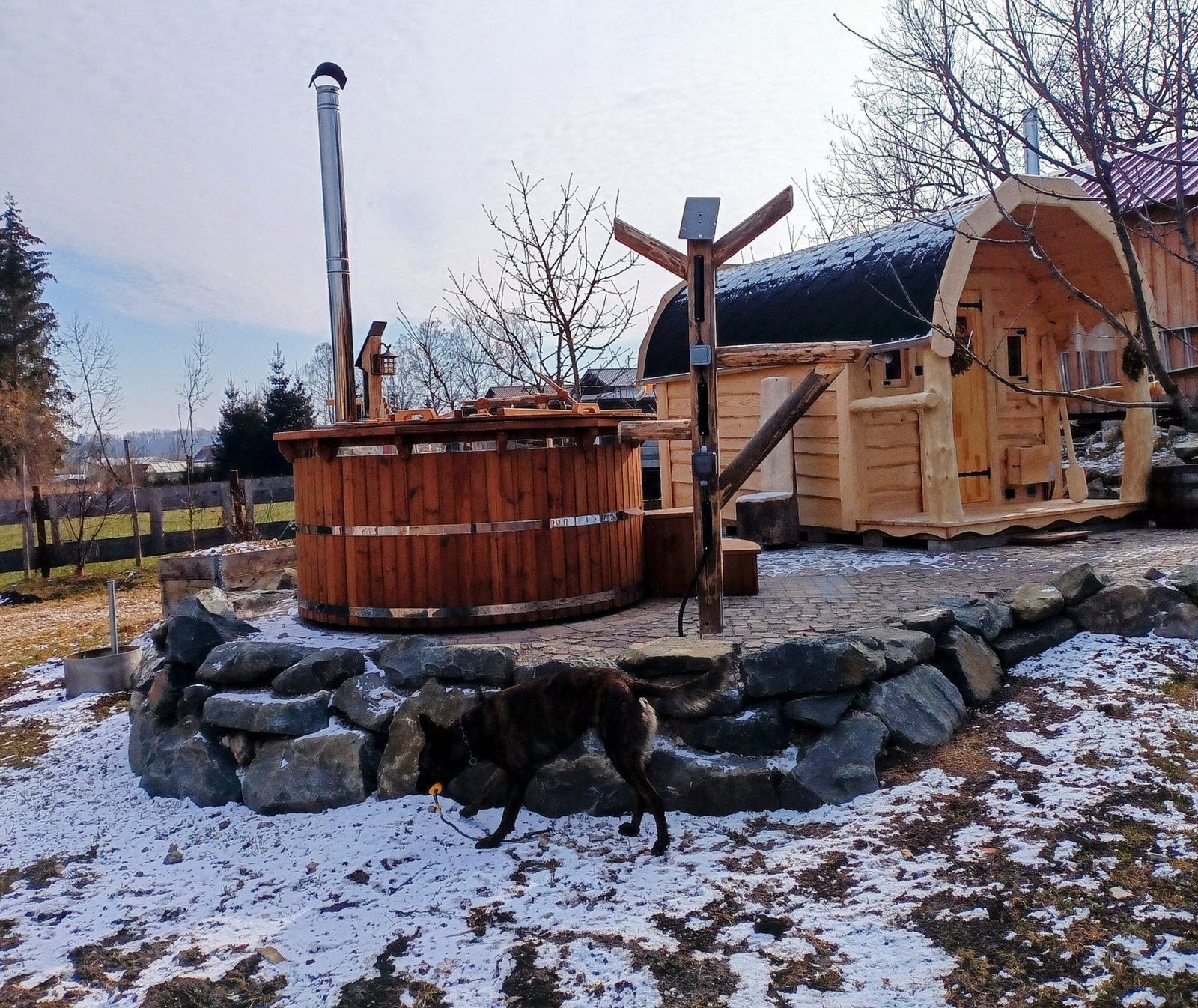
Covered timber hot tub with a tall flue beside a small sauna on raised paving with light snow around the site
A wintry installation illustrates the need to plan access, cover handling and drainage. The photograph is not presented as a Scottish location or proof of a model’s winter performance.

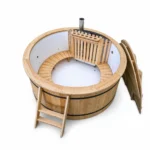
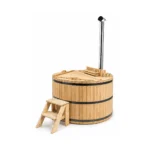
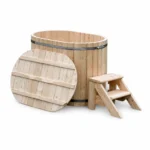
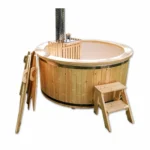
Current wood-fired models for Scottish project enquiries

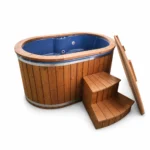
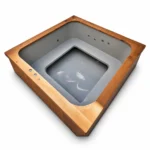
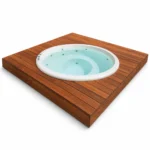
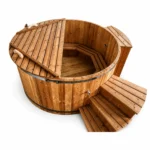
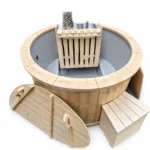
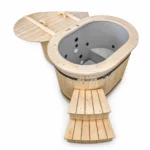
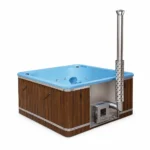
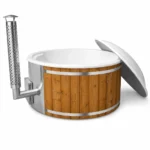
Compare the configured tub, water volume and equipment, then confirm delivery and site requirements for the actual address. These cards do not imply Scottish stock or universal winter suitability.

Electric and automatic-pellet alternatives

These options use a different heating routine from manual log firing. Confirm their power, fuel, service and frost-protection requirements before comparing the full project.

Compare current models, then confirm the freight stages, local site work, drainage and heating routine for your address. A scenic setting is only one part of a workable installation.

From our customers

These products at our customers’ homes

Customer projects matched to the products listed on this page. Earlier specifications and selected options may differ.

Customer projects from United Kingdom.

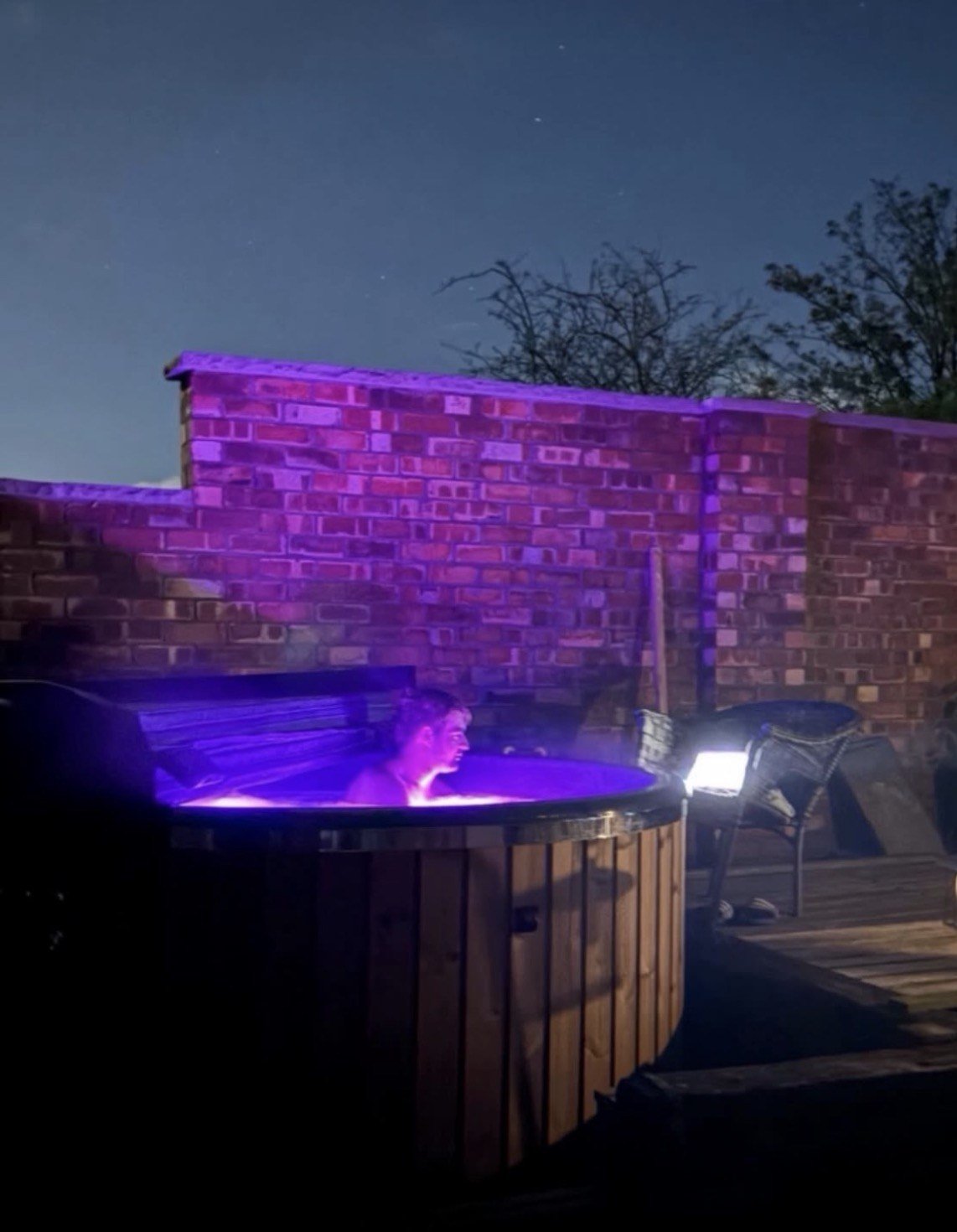
Customer project: J. — Bickerton, Cheshire, United Kingdom

J. — Bickerton, Cheshire, United Kingdom

TimberIN Nordic™ External Comfort

Efficient delivery time and details provided along the way. Delivery driver was helpful. Luckily we have access to a telehandler which helped with unloading the pallets! We were kept informed through the build process an…

Read full review

Efficient delivery time and details provided along the way. Delivery driver was helpful. Luckily we have access to a telehandler which helped with unloading the pallets! We were kept informed through the build process and once setup the hot-tub has been excellent. Really like the wifi connection feature and cover locking mechanism.
Review and installation photos →
Customer project: Ray — Newport, United Kingdom

Ray — Newport, United Kingdom

TimberIN Nordic Core™

Hi Albertas, as promised, I’ve attached some photos of our Hot Tub. We’re not on Facebook or the other social media platforms, but we’re happy for you to use any you might want for your website. It arrived Friday morning…

Read full review

Hi Albertas, as promised, I’ve attached some photos of our Hot Tub. We’re not on Facebook or the other social media platforms, but we’re happy for you to use any you might want for your website. It arrived Friday morning 4th April and we were in the water and enjoying it on Saturday evening. We’ve been in it every night since! A big thank you to you and your team. The specification is exactly as planned, and the workmanship is excellent. You might welcome some feedback on a couple of relatively minor issues, which I hope you will find helpful. We only received 4 pictures of the hot tub, but in all honesty, these weren’t really enough for us to confirm that we would be happy with the product before making the final payment. We trusted the process and made payment, but it would have been better if we could have seen images of the liner and also inside the electric cupboard and the insulation. Just something to be aware of. The other minor point relates to the sand filter and UV-C. both of them came with European plug fittings that required changing. I would have thought that a UK specification would come with a UK plug. Again, this is not a huge point, but it was inconvenient to have to change these. Apart from those minor niggles, everything was great. So, once again, a big thank you to you and your team. Best of luck and continued success in the future.

Review and installation photos →

Browse the full customer review library →

Why wood-fired heating appeals in Scotland

Wood firing can work where buyers enjoy active fire management, have suitable dry fuel and want the main heat source to remain independent of a large electric water-heater load. It can be attractive for remote cabins and rural homes, but rural location does not remove the need for safe chimney placement, dependable water, drainage and access.

The trade-off is manual operation. Someone must light and supervise the stove, manage ash and hot surfaces, monitor water temperature and protect the circuit from freezing. A wood-fired tub is not automatically “off grid” when filtration or spa equipment is specified. Use the off-grid hot-tub guide to map every utility.

Delivery to Scotland starts with a route survey

Provide the postcode and exact property access before treating a delivery quotation as final. Mainland trunk-road delivery differs from a narrow glen road, ferry movement or an island transfer. Confirm freight stages, vehicle limits, unloading point, ferry booking responsibility, storage if a sailing is disrupted, and whether the final vehicle can reach the property.

Measure gates, turns, gradients, bridges, walls, eaves and overhead cables against packed dimensions. Soft verges and seasonal ground can prevent a heavy vehicle or crane from using an apparently open route. Agree who supplies lifting equipment, labour, slings and insurance; kerbside delivery is not installation.

Scottish delivery settingConfirm before orderingLikely local input
Central-belt or urban gardenParking, restricted streets, gate width, neighbours and crane positionAccess survey, lifting and traffic or parking arrangements
Rural mainland propertyRoad width, bridge or weight limits, turning, gradients and firm unloading areaFinal-mile vehicle and weather-resilient ground plan
Highland or exposed siteWind, snow, power resilience, water source and winter accessStructural, drainage and freeze-protection assessment
Island deliveryFerry route, booking, dimensions, transfer, delay and onward haulageLocal carrier, storage contingency and final lift
Holiday-let or commercial siteGuest management, staff access, water controls and service responseRisk assessment, operating system and competent maintenance

Define the handover at each transport stage

For a route involving a ferry or local transfer, identify where the main carrier’s responsibility ends and the next carrier’s begins. Record the packed dimensions and lifting information supplied for the actual tub, not just the diameter of the bathing vessel. Agree who checks for transport damage at a transfer point and who can accept the load if the final site is temporarily inaccessible.

A quotation that includes a delivery postcode does not necessarily include the last movement across a field, a crane lift over a house or storage after a disrupted sailing. Ask for those boundaries in writing. Plan a realistic sequence for the base contractor, carrier and lifting provider so a delay does not leave the tub standing in an unsuitable location. No single delivery time or island surcharge should be assumed for every Scottish address.

Cold weather changes heat demand, not the laws of physics

Water volume and temperature rise set the basic energy demand. Wind, low air temperature, exposed pipework and an uncovered surface increase losses. A larger stove can change heat-up, but so can a well-fitting insulated cover, shelter that preserves safe clearances and a smaller everyday water volume.

Do not rely on a universal Scottish heat-up time. Ask for the exact water volume and test conditions behind a claim. During heating, circulate or mix as instructed and measure away from the hot outlet. The main wood-fired guide gives a heat-demand calculation.

Wind exposure affects the chimney, cover and bathing area

Use the heater manufacturer’s approved flue system and clearances, then assess prevailing wind, gusts, nearby roofs, trees, doors, windows and user routes. A windbreak or enclosure must not create unsafe combustion, flue or service conditions. Secure the cover using its approved method and avoid a storage position where a gust turns it into a lifting hazard.

Plan sheltered changing and non-slip access without trapping smoke where people gather. A dramatic exposed view can be enjoyable, but it can also make cover handling, fire management and temperature control harder.

Write a complete frost-protection procedure

Water can remain in the heater jacket, connecting pipework, valves, pump, filter housing, jets and air lines after the visible vessel is empty. If it freezes, expansion can crack components. Follow the selected model’s drain-down instructions and identify every low point. Never light a heater to thaw a frozen or uncertain circuit.

If the tub remains filled, define how circulation and protection are maintained during power cuts, absence and extreme conditions. A backup plan is especially important where winter access or service response can be delayed. Record who acts and where safe drainage goes.

Choose a routine for absence, not just a cold evening

A tub used at home every weekend has a different winter problem from one left at a cabin for several weeks. For the cabin, nominate someone who can inspect it when travel is disrupted. Decide with the supplier whether the selected installation should remain operating under a documented protection system or be fully winterised. A warm vessel alone does not establish that every external component is protected.

Build the procedure around the specific model. A Core configuration with massage and filtration equipment has additional water-containing components to account for. An external-stove configuration needs the heater and connecting circuit included in the plan. A traditional timber vessel needs its own storage and drying instructions as well as frost protection. Ask for an annotated component list rather than relying on one generic instruction to empty the bath.

Smoke-control and nuisance checks are local

Air Quality in Scotland’s smoke-control guidance directs owners to their council’s environmental services department to establish local restrictions. It also distinguishes authorised fuels and exempt appliances. Do not infer that a particular hot-tub stove is exempt from a generic description of outdoor burning or from guidance for an indoor room heater.

Send the council the appliance identity, fuel, flue arrangement and proposed position before fixing the installation. Use fuel allowed by the heater instructions, and do not burn treated, painted or glued timber or household waste. Consider smoke reaching nearby homes and gathering areas even where the address is outside a designated smoke-control area.

Planning and building questions depend on the whole project

A freestanding domestic tub, raised deck, shelter, outbuilding, flue, retaining work and holiday-let development are not the same proposal. Describe the whole scheme to the relevant planning authority, including the intended use, dimensions and position. Conservation areas, listed buildings and business activity can change the questions that need answering.

The Scottish guidance on garden installations sets conditions for permitted development at dwellinghouses and explicitly says its guidance does not cover business use. It advises checking with the council and notes that other approvals may be needed. Treat that as a starting point for a site enquiry, not a blanket hot-tub exemption. Obtain building-standards and competent design input where relevant to the associated work.

Foundation and drainage need site-specific design

Obtain empty weight, normal water volume and support requirements, then add bathers, stove, steps and equipment. Peaty, sloping, made-up or waterlogged ground needs particular care. A patio that looks level is not proof that it can support the concentrated load without movement.

SEPA’s current hot-tub discharge guidance identifies General Binding Rule 35 for discharge to groundwater from a site with only one hot tub. It also identifies registration for discharges up to 10 cubic metres per day that are not authorised by that rule, and a permit route above that volume. The relevant conditions and destination still matter: one tub does not automatically mean any drain or stream is acceptable.

Agree the route for emptying and filter backwash before installing the tub. Identify whether the proposed destination is a public sewer, private treatment system, ground or surface water, and obtain the appropriate advice or consent. Keep that decision separate from the design of the base and splash-water drainage. Do not assume that an existing septic-tank arrangement can accept the extra volume and treatment chemicals.

Wood, electric or approved hybrid?

Wood suits users willing to manage fuel and fire. Electric heating suits scheduled control where the supply and tariff support the water volume. An approved hybrid package can combine wood heat with electric maintenance, but it adds installation and two systems to protect. Compare the complete connected load on the electric guide rather than assuming a standard socket is enough.

The catalogue separates the manual log-fired routes from the electric and pellet routes of External Comfort and Nordic Core. Automatic pellet operation is a different fuel and control arrangement from feeding logs by hand. Any combined wood-and-electric proposal should be a supplier-confirmed system for the selected tub, with both installation and winter duties defined. Do not connect an extra heater to a water circuit simply because it fits the pipe size.

Holiday lets need more than a guest instruction card

Wood firing introduces hot surfaces, fuel, ash, temperature overshoot and user behaviour. Decide whether guests may operate the stove or whether trained staff heat the tub. Define water treatment, testing, cleaning, records, fault isolation and emergency response. Confirm that the product, warranty and insurer permit the intended use.

The HSE spa-pool guidance addresses hot tubs used as part of business activity. At a remote site, agree how faults are reported and who can take the tub out of use while competent help is arranged.

Compare complete delivered-and-sited cost

Start with the configured tub, then add Scottish freight stages, ferry where applicable, unloading, lifting, foundation, drainage, electrical work, fuel storage, chimney setting and commissioning. Include filters, treatment, test supplies, cover care and winter maintenance. The price guide provides a like-for-like quotation table.

For two regular users, compare the Duo, Duo Wood and Oval Duo against the water volume and seating you actually need. For a family brief, compare a Core configuration with and without the spa package against the selected Square package. For restricted access, investigate the currently offered timber-kit routes and the assembly responsibilities. These are planning examples from the current range, not claims that one model has been independently certified for all Scottish winter conditions.

Scotland site and quotation checklist

DecisionEvidence to recordWho confirms it
ModelSize, internal layout, water volume, heater and equipmentSupplier and buyer
RoutePacked dimensions, roads, ferry, gates, slopes and unloadingCarrier and lifting provider
BaseOperating load, ground, support and levelCompetent local contractor or designer
Fire settingFlue, clearances, wind, smoke area and neighbour impactManufacturer, local authority and installer as applicable
WaterSupply, filtration, treatment, testing and drain routeOwner or business operator
WinterDrain points, power resilience, cover and responsible personOwner, supplier and service provider
Project costProduct, freight, ferry, lift, site works and commissioningAll quoted parties

Frequently asked questions

Can TimberIN deliver a wood-fired hot tub to the Scottish Highlands?

Routes can be quoted, but the postcode, road access, vehicle limits, unloading area and final lift must be assessed. Remote and island movements may need separate final-mile or ferry arrangements.

Do wood-fired hot tubs work in Scottish winter weather?

Yes when heat demand, wind, cover, access and freeze protection are planned for the exact site. Every heater, pipe, pump, filter and spa line needs a documented winter procedure.

Does a hot tub need planning permission in Scotland?

It depends on the complete project and property. Decking, shelters, outbuildings, flues, listed or protected sites and business use can change the answer. Ask the local planning authority with drawings and dimensions.

Can a Scottish cabin hot tub be off grid?

The wood heater may operate without mains electricity in an approved natural-circulation design, but pumps, filtration, lights and jets need power. Water supply, drainage and winter protection also remain necessary.

Are wood-fired tubs suitable for Scottish holiday lets?

They can be, but the operator needs a risk-based water and fire-management system, competent responsibility, records, maintenance and an emergency plan. Confirm product, warranty and insurance terms for business use.

Build the Scottish enquiry around the postcode and operating plan

Send the full delivery postcode, photographs and measurements of the access route, and a sketch showing the tub, stove and proposed base. State whether the property is a main home, an occasionally visited cabin or a managed holiday let. Add normal occupancy, preferred heating routine, available utilities and what should happen during winter absence.

Ask for the quotation to identify the selected configuration, transport boundaries and any decisions still awaiting a site contractor or authority. Request a Scottish project quotation once those details are available. This page helps plan supply to Scotland; it does not establish a local showroom, stockholding or installation team at your address.

GET A QUOTE FAST!
close slider

TIMBERIN ON INSTAGRAM

Claim 4% discount

Follow @timberinhottubs and send us a direct message. We’ll reply with your discount code.

Open this TimberIN project on InstagramOpen this TimberIN project on InstagramOpen this TimberIN project on InstagramOpen this TimberIN project on InstagramOpen this TimberIN project on InstagramOpen this TimberIN project on Instagram

Open Instagram profile