
Charles — London, United Kingdom
TimberIN Nordic™ Thermowood Deluxe
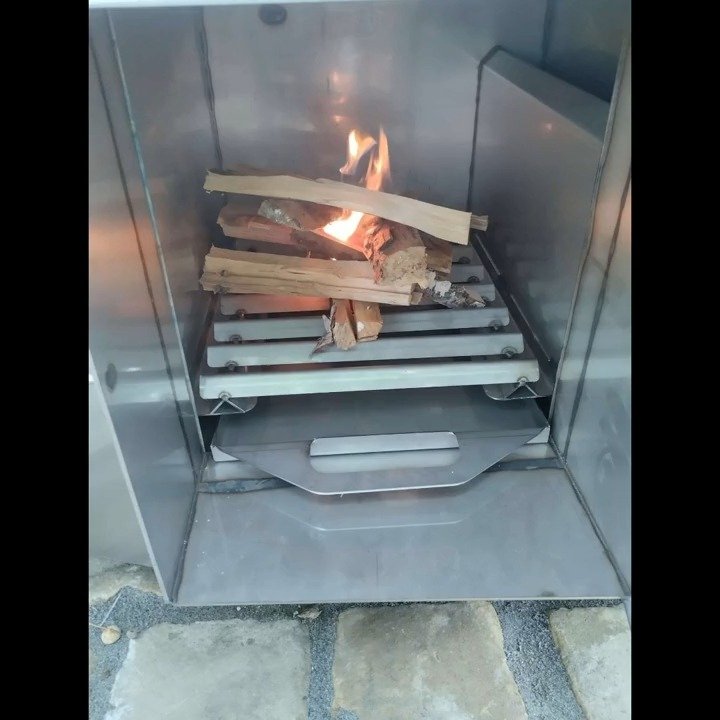
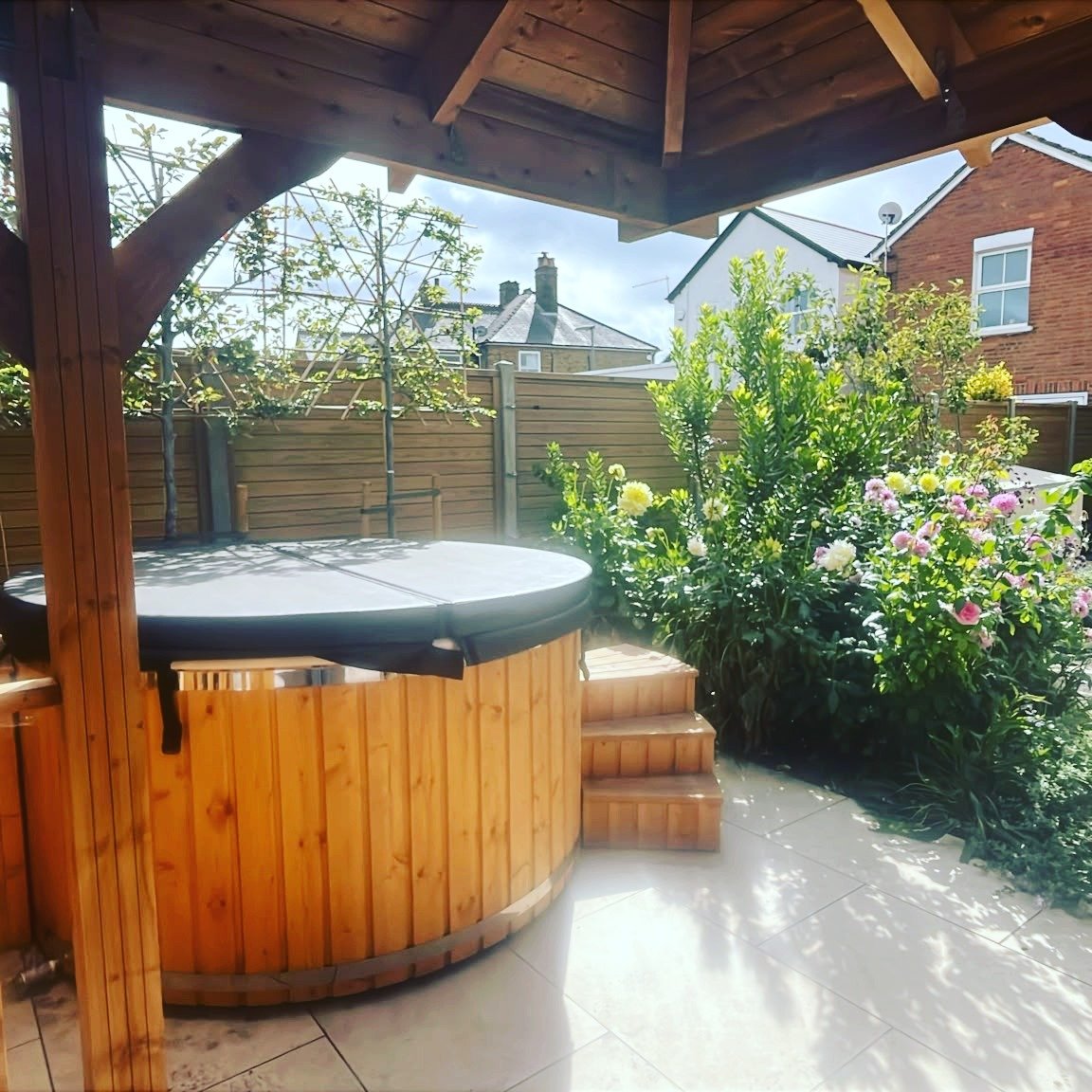
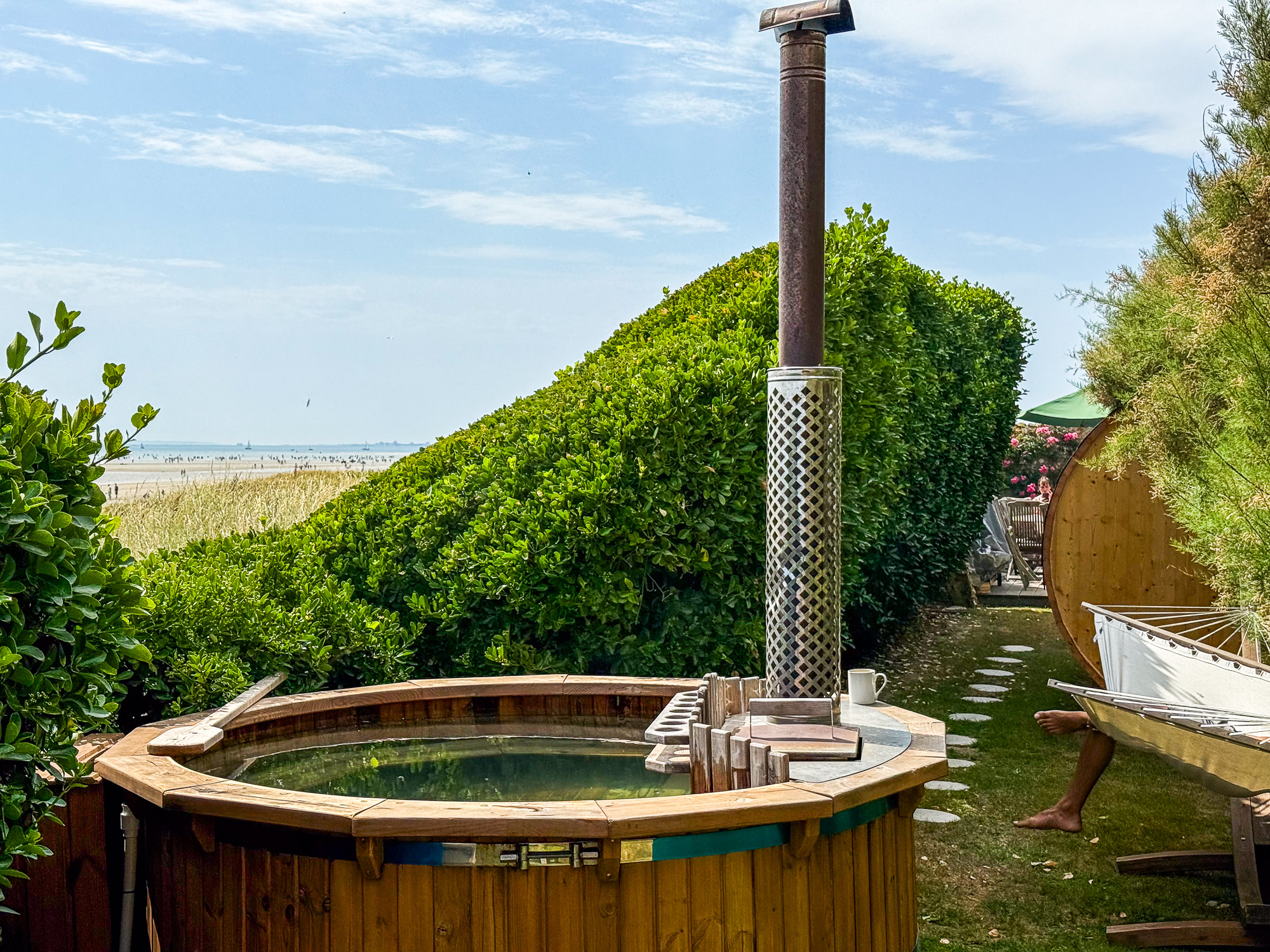
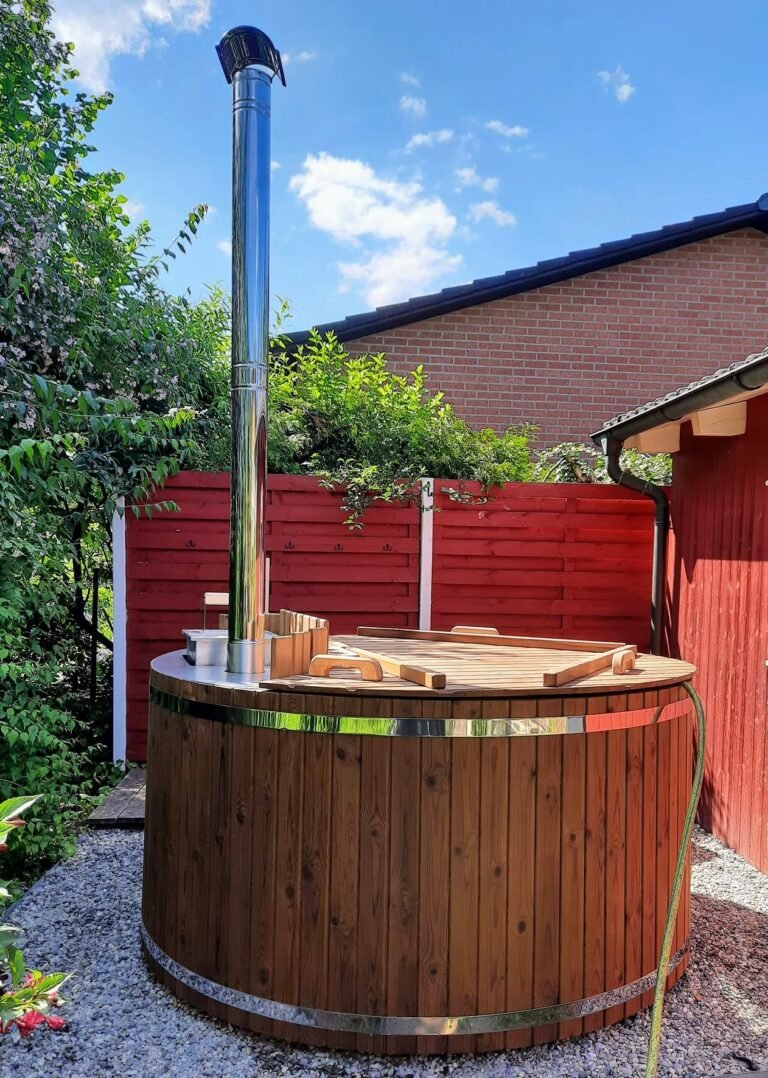
Review and installation photos →Hi, you can see the hot tub in these pics at our retreat.
Warm water, wood heat and room to unwind
A wood-fired soaking tub puts the outdoor bath at the centre of the experience. Choose a comfortable vessel and heater arrangement, then decide which equipment supports the way you want to bathe.
The first group below offers wood-fired configurations suitable for soaking without selecting optional massage. Other complete hot tubs follow as alternatives. Check the chosen product’s inclusions: no jets does not automatically mean no electricity, filtration or water care.
Explore soaking configurations · Plan a quieter outdoor bath
From our customers
Customer projects matched to the products listed on this page. Earlier specifications and selected options may differ.
Customer projects from United Kingdom.
TimberIN Nordic™ Thermowood Deluxe
Review and installation photos →Hi, you can see the hot tub in these pics at our retreat.

Hi Albertas, as promised, I’ve attached some photos of our Hot Tub. We’re not on Facebook or the other social media platforms, but we’re happy for you to use any you might want for your website. It arrived Friday morning…
Hi Albertas, as promised, I’ve attached some photos of our Hot Tub. We’re not on Facebook or the other social media platforms, but we’re happy for you to use any you might want for your website. It arrived Friday morning 4th April and we were in the water and enjoying it on Saturday evening. We’ve been in it every night since! A big thank you to you and your team. The specification is exactly as planned, and the workmanship is excellent. You might welcome some feedback on a couple of relatively minor issues, which I hope you will find helpful. We only received 4 pictures of the hot tub, but in all honesty, these weren’t really enough for us to confirm that we would be happy with the product before making the final payment. We trusted the process and made payment, but it would have been better if we could have seen images of the liner and also inside the electric cupboard and the insulation. Just something to be aware of. The other minor point relates to the sand filter and UV-C. both of them came with European plug fittings that required changing. I would have thought that a UK specification would come with a UK plug. Again, this is not a huge point, but it was inconvenient to have to change these. Apart from those minor niggles, everything was great. So, once again, a big thank you to you and your team. Best of luck and continued success in the future.

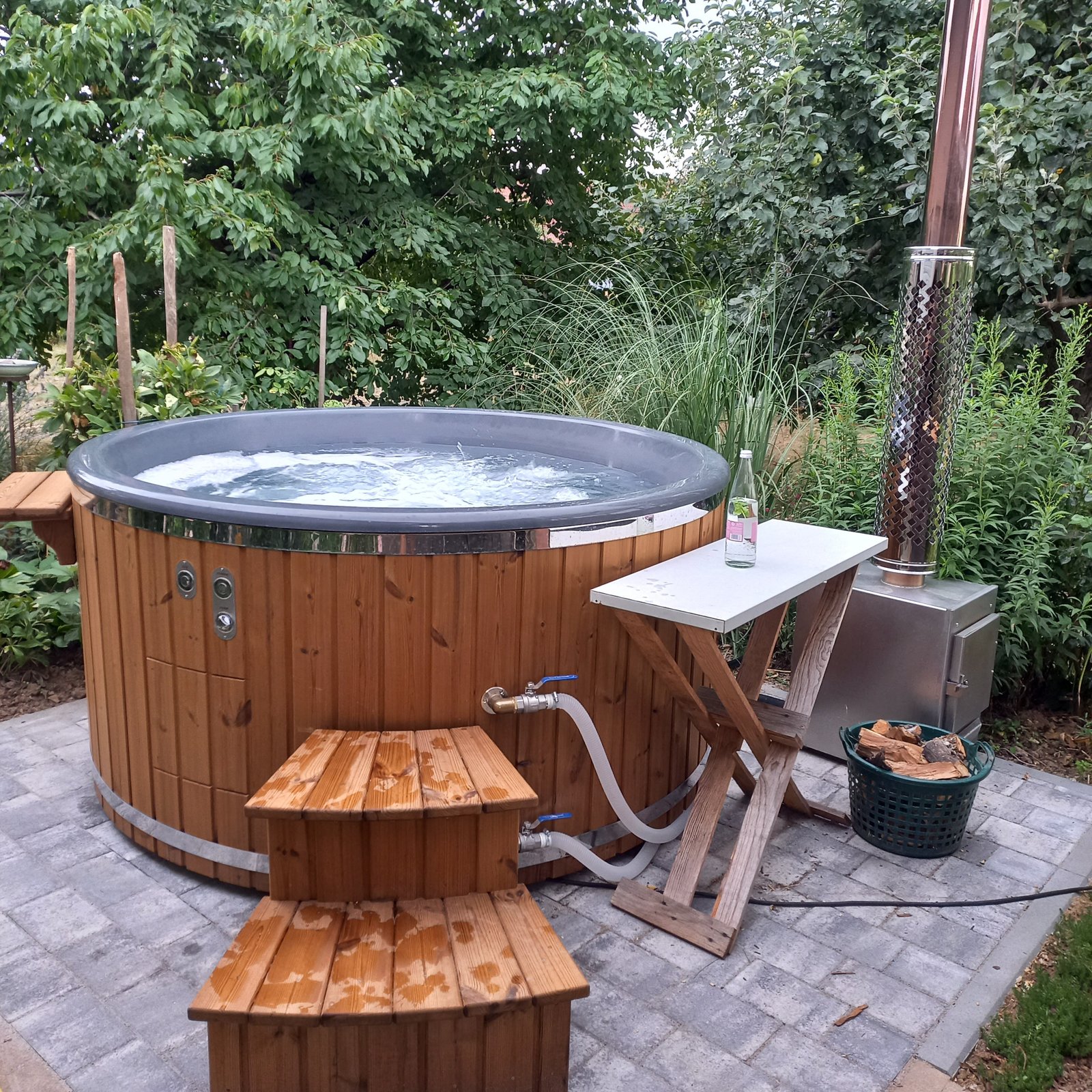
Review and installation photos →Hi, we have finally moved into our house & hot tub is amazing! Attached photo (feel free to use!)
Choose the wood-fired option on the product page and omit optional massage if that is your preference. Current prices, sizes and included equipment belong to the selected build; photographs can show additional features.
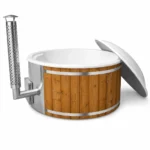
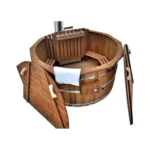
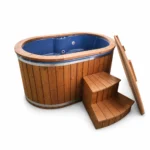
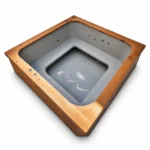
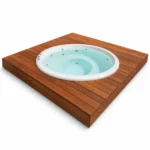
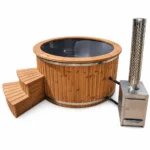
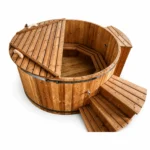
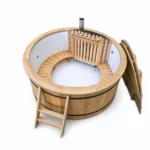
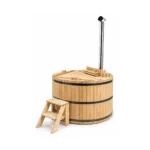
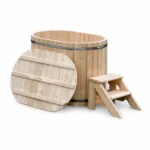
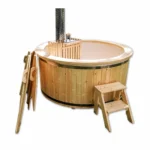
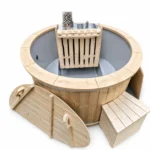
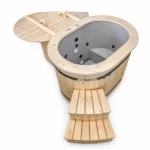
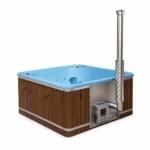
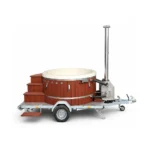
These models include a massage package, need confirmation of a no-massage specification, or use electric or pellet heat. Compare them if your preferred routine changes; they are not presented as confirmed simple wood-fired soaking builds.
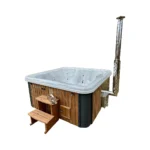
For some buyers, a soaking tub means a small outdoor bath for one or two people. For others it means sitting with family in warm water without powered massage. Both can be wood-fired, but they lead to different vessels and routines. Begin with the number of people who will usually bathe, the way you want to sit and how much preparation you enjoy. Those choices are more useful than the word “soaking” on its own.
The distinction is the ordered configuration. A model family can be available with a wood heater and optional air bubbles or water jets. If you want a simpler soak, leave those optional systems out and have that choice recorded in the quotation. A model with massage included as part of its package is a different proposition. Turning its pumps off for a session does not remove the fitted equipment or its maintenance requirements.
This page therefore puts suitable wood-fired configurations first while keeping the rest of the range available as alternatives. The main wood-fired hot-tub guide covers the wider heating and range decision. Here the starting point is the quieter bathing experience: comfortable immersion, a manageable vessel and equipment chosen for a clear purpose.
An outdoor bathtub should support the posture you find comfortable. Check the seat height, usable water depth, back support and space for feet. Overall external height does not tell you how deeply a seated person will be immersed. The bench position and intended fill level matter, as does the space taken by an internal heater. Request the selected model’s drawing when those dimensions are important to your choice.
A continuous bench allows people to change position, while a formed seat gives a more defined place to sit. Neither is automatically better for quiet bathing. Think about the usual users’ height, how they enter and whether they prefer sitting upright or leaning back. Maximum person counts help compare the range but do not guarantee equal comfort for every adult or every combination of adults and children.
If the normal use is a couple’s bath, begin with the two-person hot-tub range before accepting the extra water and garden space of a larger model. If upright or deeper bathing is the main attraction, compare the separate Japanese-style soaking-tub guide. The style label alone does not establish a tub’s actual depth, origin or suitability for your posture.
Entry deserves the same attention as the seated position. Allow a stable approach to the steps and room to turn without stepping across a heater connection or loose cover. Consider how the cover is removed and where it rests during use. A compact vessel is only a compact installation when those surrounding tasks fit comfortably into the available space.
It helps to compare the build in three parts. The vessel determines seating and the surface you clean. The wood heater determines how you prepare the bath and where the fire is managed. Additional equipment changes the experience or supports water care. Keeping these decisions separate prevents a useful cover or filter from being confused with a massage upgrade you did not intend to order.
| Part of the build | Question for a soaking setup | What to confirm |
|---|---|---|
| Bathing vessel | Can the regular users sit and move comfortably? | Interior material, seat arrangement, usable dimensions and fill level |
| Wood heater | Where will you tend the fire and check the water? | Heater position, connections, guarding and operating instructions |
| Cover and access | Can you open, enter and close the tub easily? | Included cover, steps and the space required around them |
| Water-care equipment | How will water be managed between sessions? | Compatible treatment, filtration if selected and service access |
| Massage and lighting | Do you want these functions in the finished bath? | Which are optional, which are included, and their electrical needs |
The current range contains both straightforward vessels and configurable models with optional massage. Basic and Value have relatively short equipment lists. Core, Duo and several other families offer additional systems that should be chosen deliberately. Nordic Core can be configured with or without its SPA options, so the same tub can serve either a massage or a simple no-massage specification.
Read the product’s current inclusions and selectors together. A gallery photograph can show a lid, lighting or massage fittings that belong to a particular customer’s build. Ask the quotation to identify what is supplied on yours. If you decide that water movement is central to the experience, the hot tubs with jets guide compares that equipment in more detail.
A traditional wooden vessel puts the bath water in contact with timber. That is different from timber cladding around a lined shell. Natural staves respond to moisture, and their commissioning and storage routine should follow the supplied instructions. Choose that construction because you want the material and accept its care, rather than assuming it behaves like a moulded bathroom bath.
A lined tub may use polypropylene, fibreglass or another specified surface. Its cleaning method, permitted products and repair requirements depend on the material and components. A smooth interior can make routine wiping more straightforward, but it does not make water treatment unnecessary. Exterior timber still has its own weathering and maintenance needs even when it is not the bathing surface.
The wooden hot-tub guide develops the vessel-versus-cladding distinction. For a soaking shortlist, compare how each surface feels to use, how the seating is formed and what the maker requires between sessions. Avoid choosing a finish from its colour alone. Ask which parts need access for inspection and whether any cleaning product you already use is suitable for the ordered heater and shell.
A wood-fired outdoor bath is normally a planned activity. Filling, preparing the fire, tending it and checking the water take attention. Decide who will do those tasks and where the fuel and tools will be kept. If the appeal is a quiet hour after work, be realistic about the preparation before that hour begins. A larger water volume changes the task even if the tub looks only slightly bigger.
An internal heater occupies part of the vessel and needs its designed guard and separation from bathers. An external heater preserves more internal space but adds equipment, connections and access beside the tub. Integrated arrangements have their own service faces and firebox positions. Compare the chosen model, not an assumption that one label always means the smallest footprint or the easiest maintenance.
Use the heater’s specified fuel and follow its filling, circulation and temperature-checking instructions. Do not light a dry or incompletely connected system. Stirring or other water-mixing steps, where required by the instructions, remain important even when you have deliberately omitted powered jets. Quiet water is not evidence that the temperature is uniform throughout the bath.
There is no single warm-up time that applies to the whole range. Starting water temperature, volume, fuel, heater output, weather and cover use all contribute. Establish the routine for the delivered build instead of promising guests an exact time based on another model. Keep fire-tending access separate from the steps and leave the clearances required by the heater and chimney instructions.
The question is not simply whether a tub has jets. It is how the water will be used and managed. Replacing water between uses and retaining it across several sessions create different practical demands. The appropriate routine depends on the vessel, connected equipment, frequency of use and supplier instructions. Describe the intended pattern when enquiring so that the recommended configuration supports it.
A fill-and-drain routine requires a suitable water supply, time to fill and heat, and an agreed place to discharge the water. Confirm how the vessel and heater should be emptied and cleaned. Do not drain a wood-fired installation while the heater is still hot or contrary to its operating instructions. Emptying the visible vessel may leave water in connected components, so the complete system needs attention.
Retained water needs the specified treatment, testing, circulation or filtration arrangements and replacement schedule. A cover helps protect the water but does not provide those functions. The wood fire heats water; it is not a substitute for the required hygiene routine. Fewer optional features may simplify the equipment you maintain, but it does not remove the need to manage the bath water.
Filtration is a separate choice from massage. A buyer who does not want jets may still want an appropriate filter for their intended use. Check compatibility, pump supply and where the filter can be reached for cleaning. A no-jets configuration can therefore still require electricity. Include lighting, pumps and any supplementary heater when discussing electrical requirements, rather than describing the installation as off-grid solely because its main heat comes from logs.
The most enjoyable setup is one you can leave in the correct condition after use. Make room for the cover, cleaning equipment and any testing supplies. Follow the instructions for ash handling and heater maintenance, including the point at which components are cool enough to work on. Keep tools and stored fuel from obstructing the route around the bath.
For timber vessels, ask specifically about wet storage, empty periods and seasonal use. Do not impose a lined-tub routine on natural wood. For any configuration with pipes, pumps or filters, follow its winter procedure and identify where water can remain trapped. An unused tub still needs the care appropriate to its materials and local conditions; a lid alone is not a winter plan.
If you often leave the property empty, explain that before choosing the water-retention system. Decide who can perform the required checks or arrange the approved shutdown procedure. A holiday property also needs an operating plan appropriate to guest use. A simple soaking appearance does not establish that a domestic model is suitable for unattended or commercial operation.
Start the enquiry with the usual number of bathers and the seated experience you want. Add the preferred vessel, wood-heater position and a clear statement about massage: omitted where optional, or included if you have chosen a different type of build. Then list the cover, steps, water-care equipment and any lighting. This keeps a “simple tub” request from becoming an ambiguous order.
Match that specification to the actual garden. Confirm the finished dimensions and filled support requirements, the packed delivery size and the route to the base. Allow service access as well as a place to sit. A screened corner can feel private, but its smoke route, chimney clearances and nearby windows still need consideration. Assess the intended site using the selected heater instructions and relevant local requirements.
Compare current product prices against the same included equipment and delivery scope. A lower starting price may represent a different size, heater or accessory package. The final written quotation should settle what is supplied, any work remaining on site and the instructions for the finished configuration. The aim is a manageable bathing routine, with every necessary component accounted for.
No. Some families offer massage as an optional addition; others include it or need a more detailed specification. Check the current product options and have the chosen equipment stated in the quotation. Leaving installed jets switched off does not remove their care requirements.
No. The term describes the bathing emphasis rather than a universal size. Compare the actual seat height, usable water depth, heater space and intended number of bathers. A compact upright design and a larger bench-seated tub offer different experiences.
That depends on the specified water-care system and operating instructions. Discuss filtration, treatment, testing and replacement for your intended use. Wood heat and a cover do not replace the required care.
Tell TimberIN how many people normally bathe, how you want to sit, whether you want optional massage omitted and how often the tub will be used. Include your preferred material and heater arrangement. The next step is a specific model and equipment list that supports that routine.