
Charles — London, United Kingdom
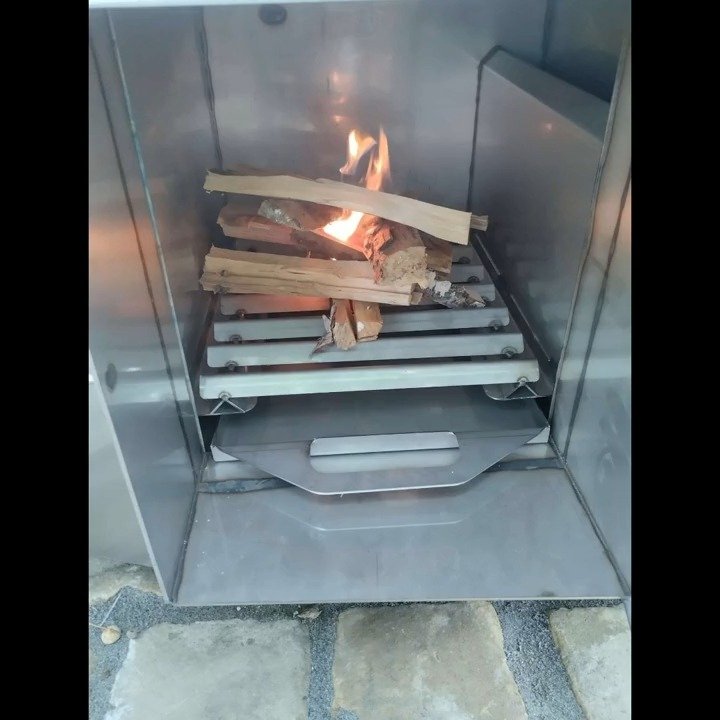
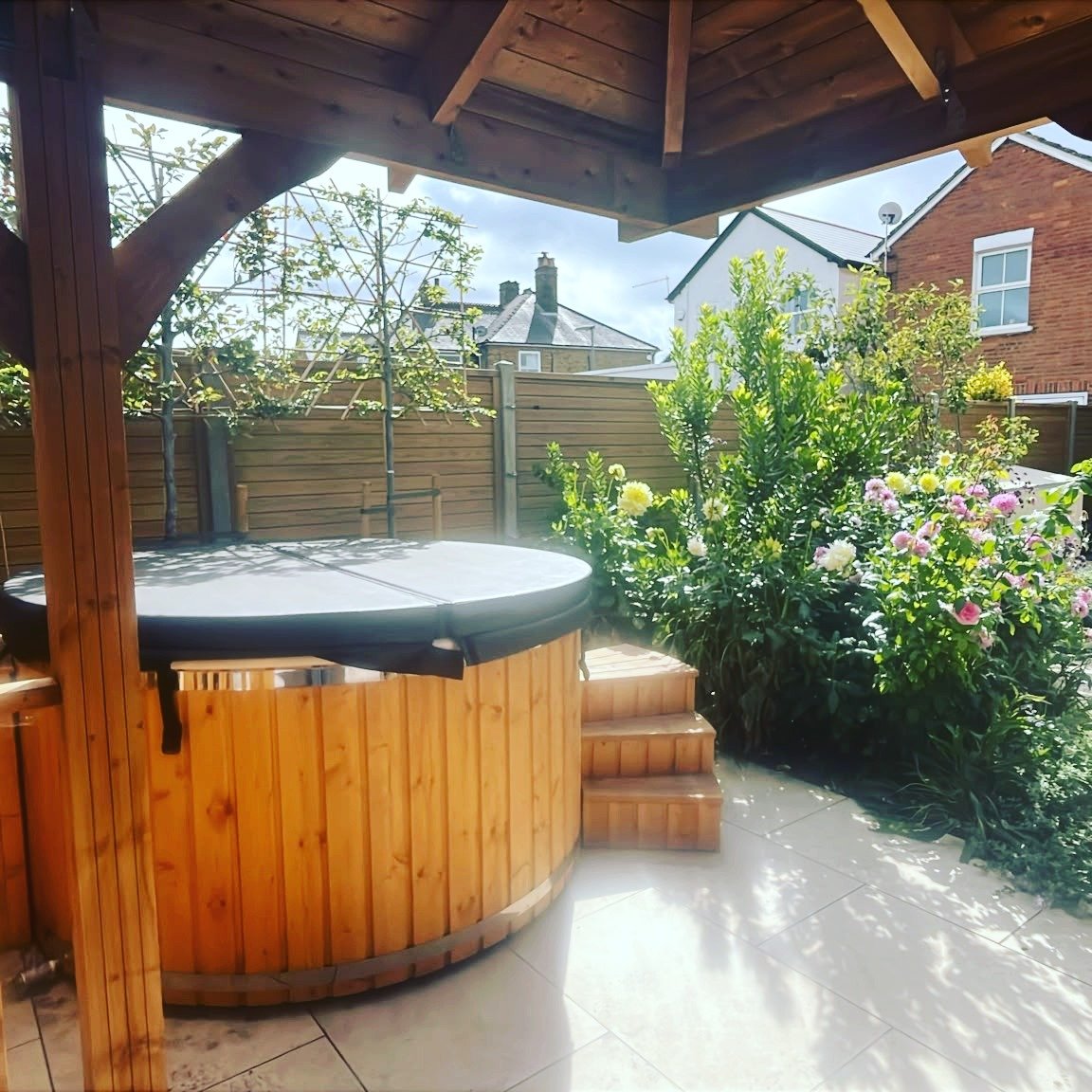
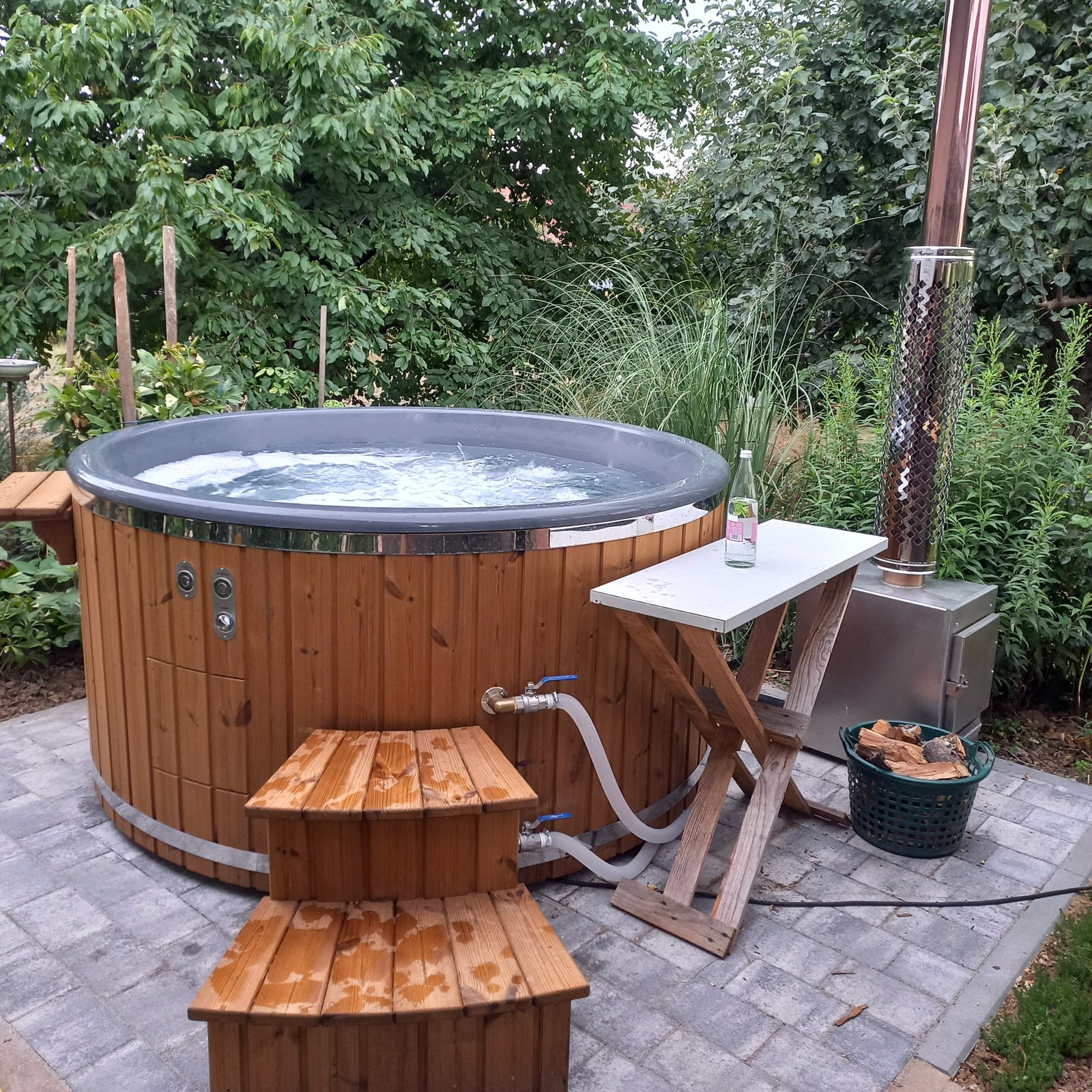
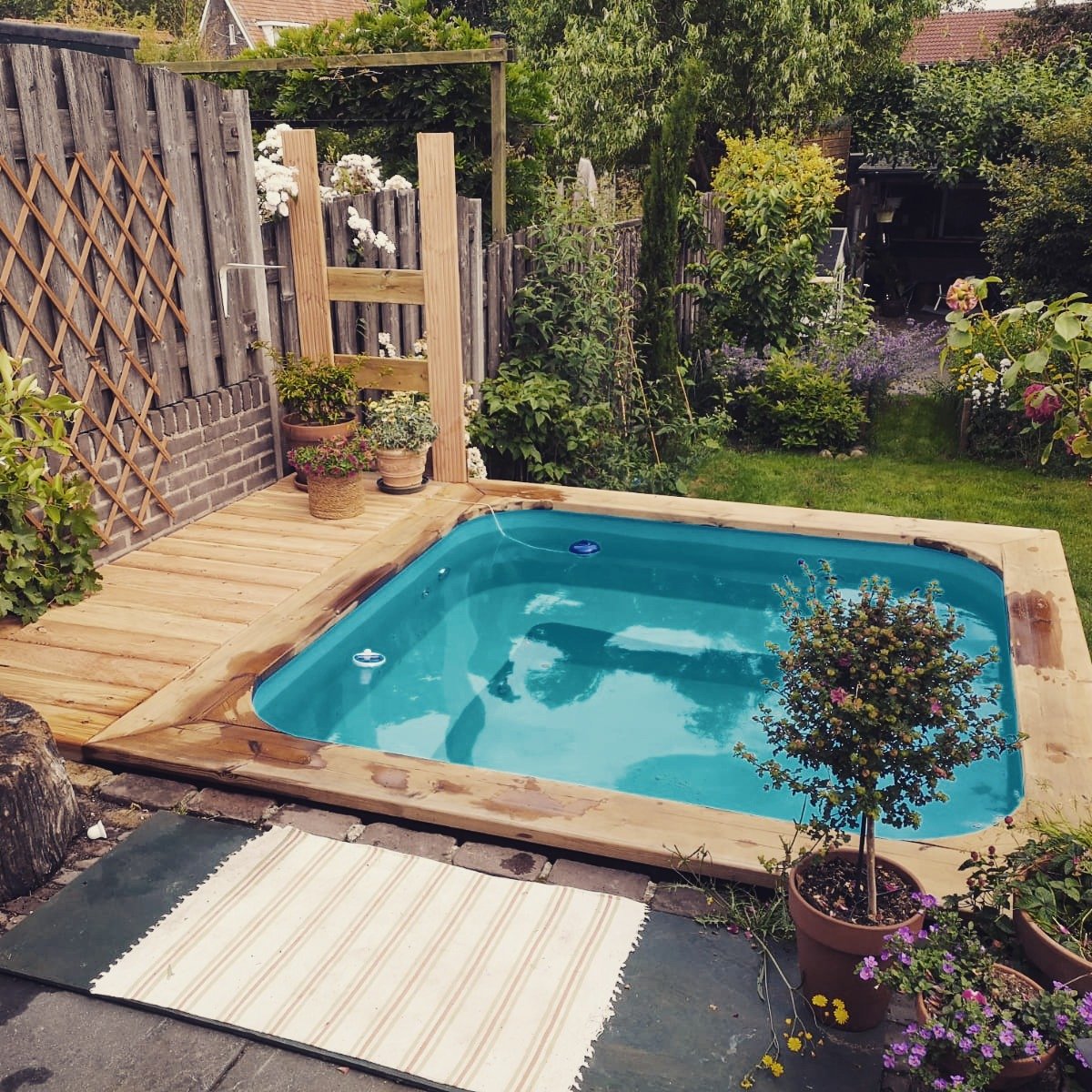
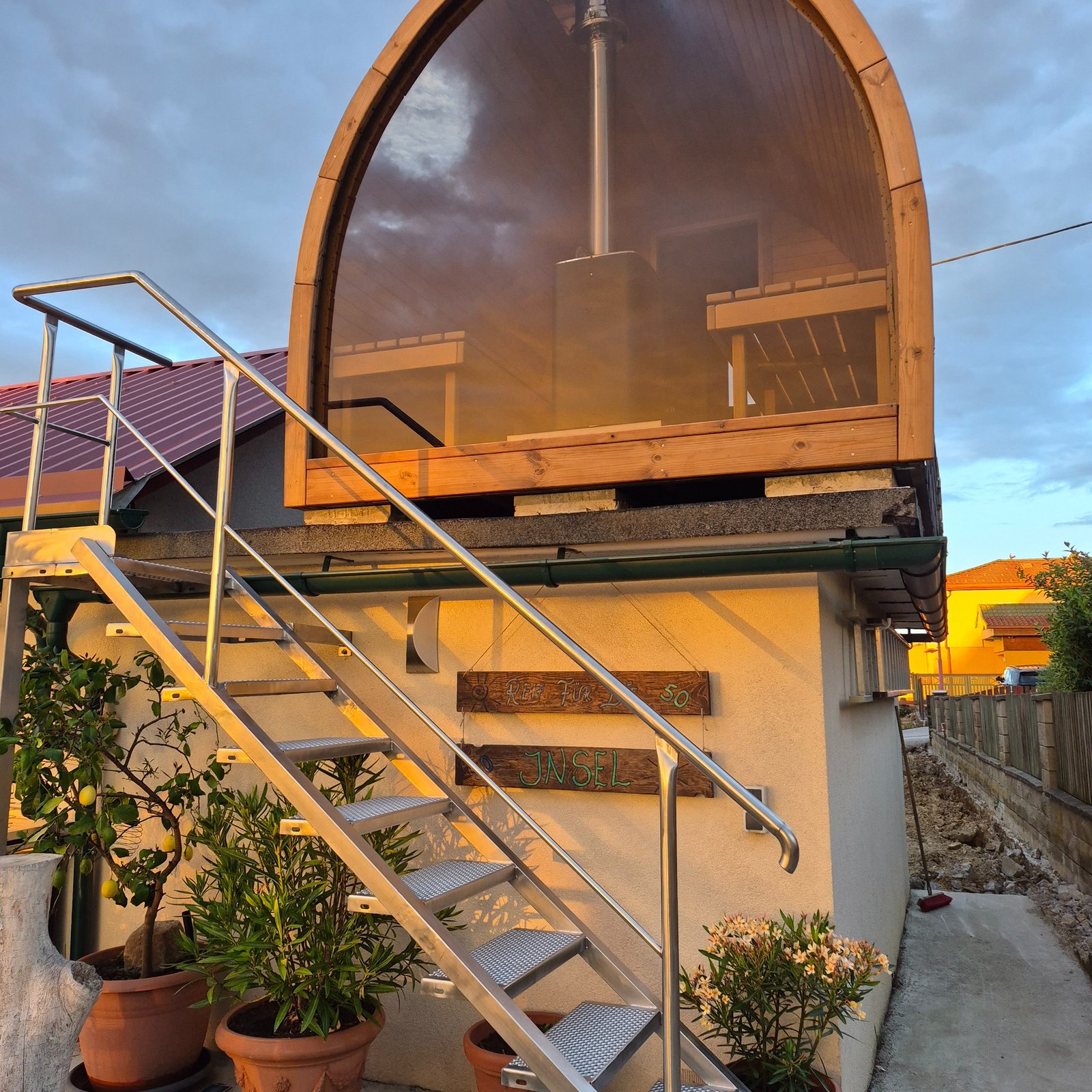
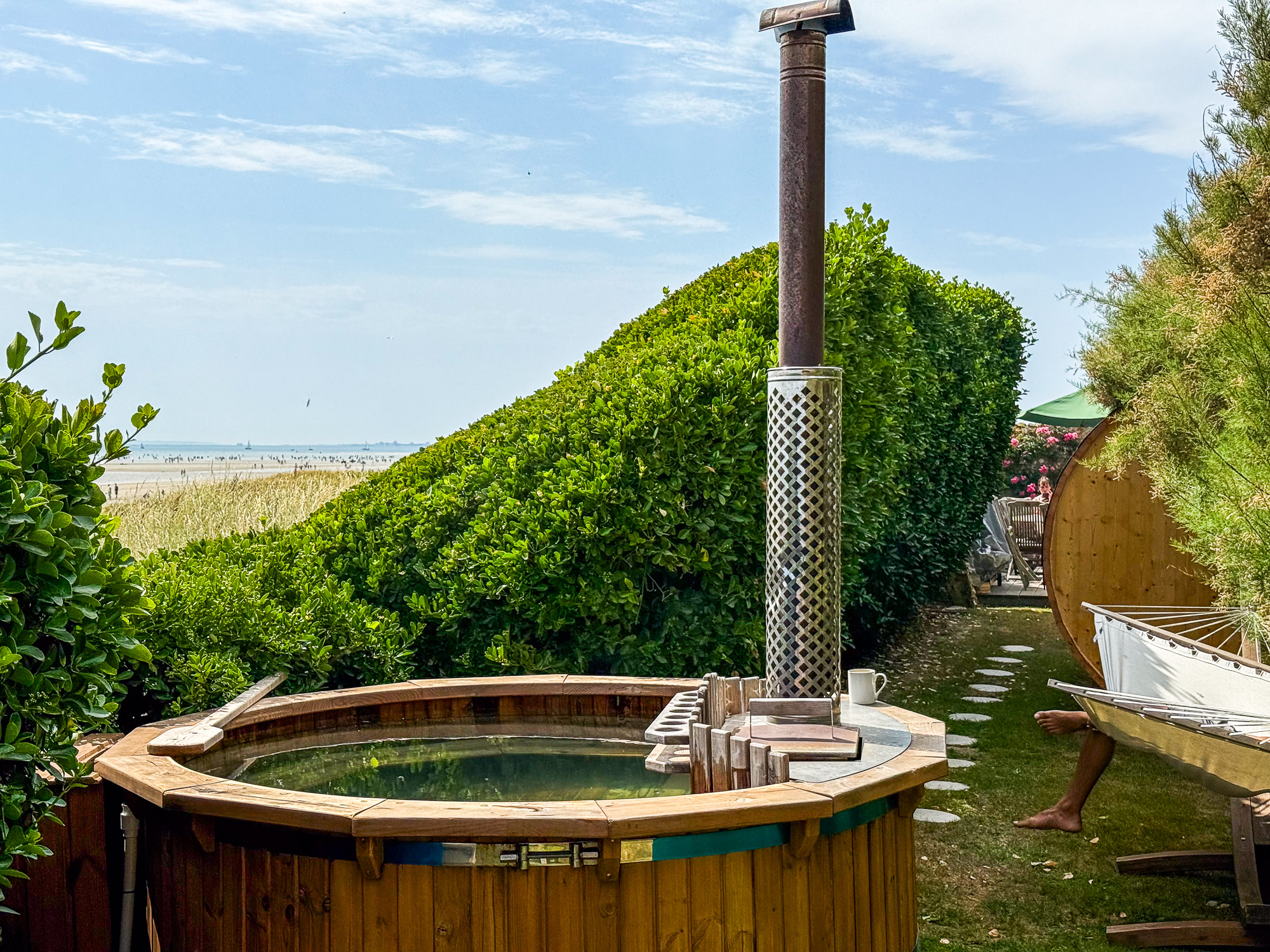
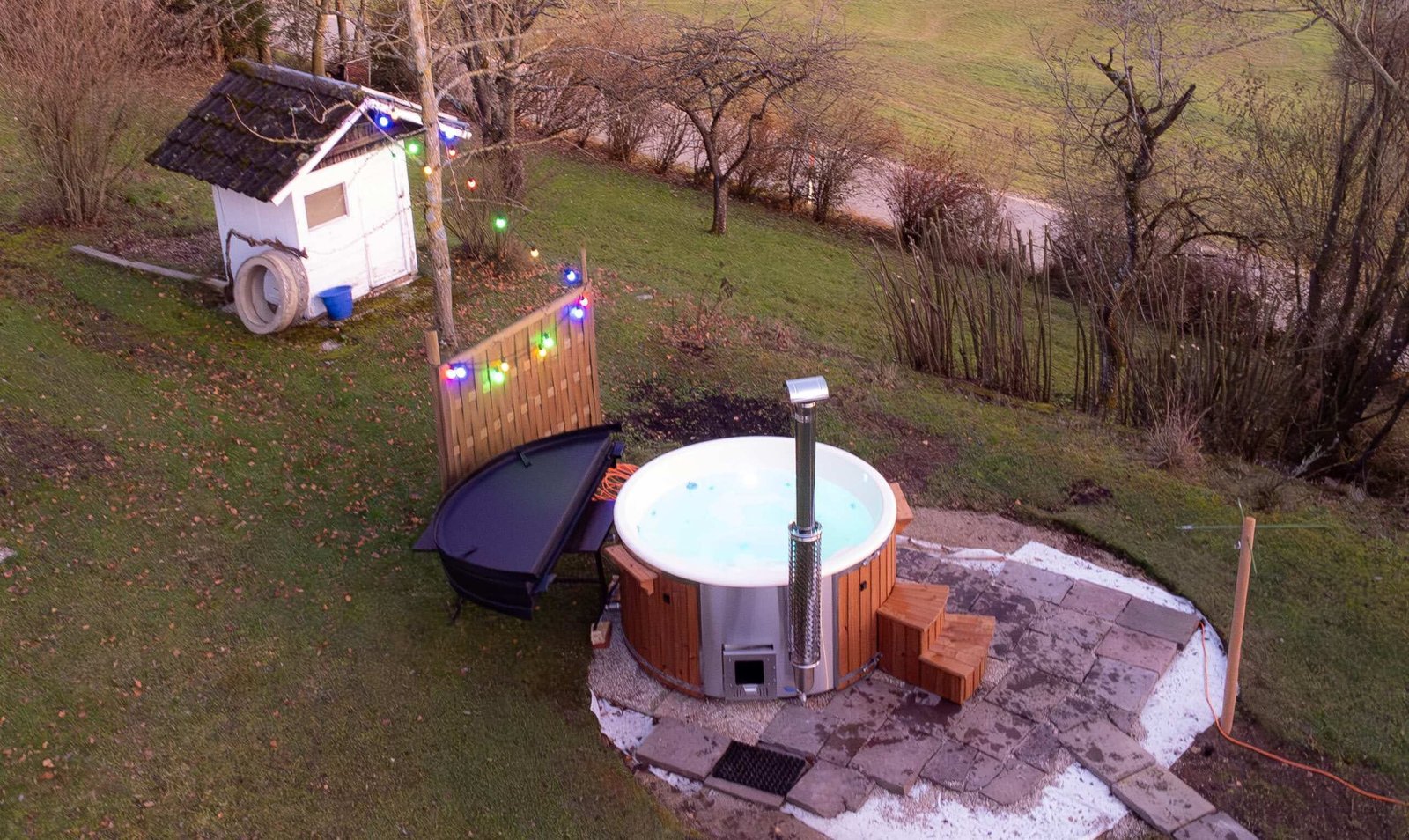
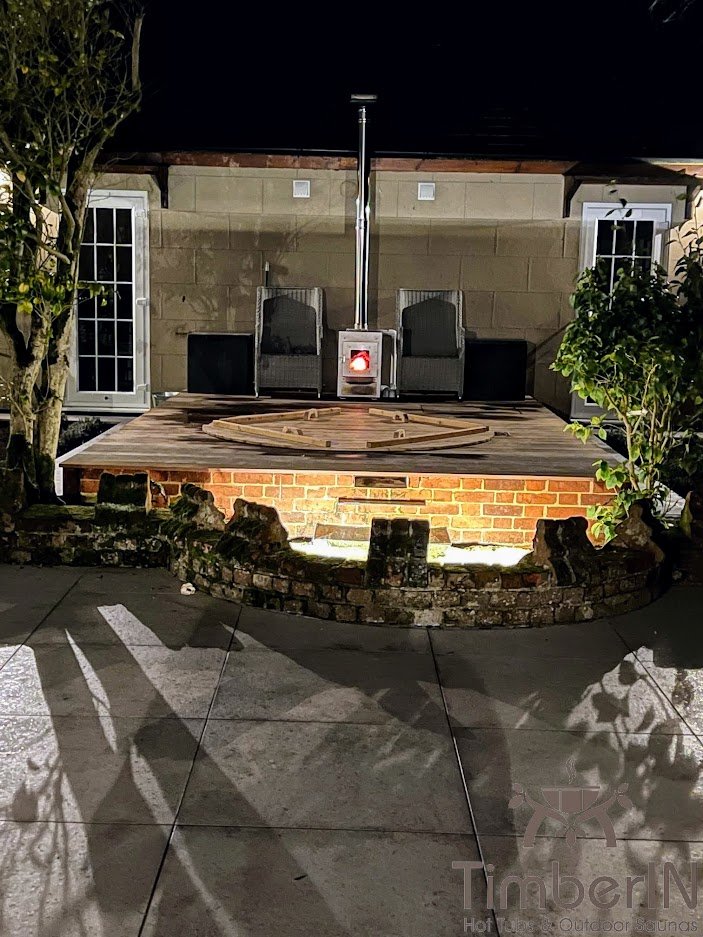
Review and installation photos →Hi, you can see the hot tub in these pics at our retreat.
Plan the seating circle and everything around it
A round hot tub brings bathers towards a shared centre, but comfort depends on the usable seats, footwell and heater arrangement. Compare the inside layout before deciding how large the outside circle should be.
Explore currently offered circular configurations across timber and lined vessels, heating methods and installation types. Then allow space for the steps, cover and equipment that sit beyond the rim.
From our customers
Customer projects matched to the products listed on this page. Earlier specifications and selected options may differ.
Customer projects from United Kingdom.
Review and installation photos →Hi, you can see the hot tub in these pics at our retreat.

Hi Albertas, as promised, I’ve attached some photos of our Hot Tub. We’re not on Facebook or the other social media platforms, but we’re happy for you to use any you might want for your website. It arrived Friday morning…
Hi Albertas, as promised, I’ve attached some photos of our Hot Tub. We’re not on Facebook or the other social media platforms, but we’re happy for you to use any you might want for your website. It arrived Friday morning 4th April and we were in the water and enjoying it on Saturday evening. We’ve been in it every night since! A big thank you to you and your team. The specification is exactly as planned, and the workmanship is excellent. You might welcome some feedback on a couple of relatively minor issues, which I hope you will find helpful. We only received 4 pictures of the hot tub, but in all honesty, these weren’t really enough for us to confirm that we would be happy with the product before making the final payment. We trusted the process and made payment, but it would have been better if we could have seen images of the liner and also inside the electric cupboard and the insulation. Just something to be aware of. The other minor point relates to the sand filter and UV-C. both of them came with European plug fittings that required changing. I would have thought that a UK specification would come with a UK plug. Again, this is not a huge point, but it was inconvenient to have to change these. Apart from those minor niggles, everything was great. So, once again, a big thank you to you and your team. Best of luck and continued success in the future.
TimberIN Nordic™ InGround Comfort
Customer installation photographs.
Review and installation photos →These families offer a circular bathing layout. Materials, heaters and equipment vary. Select a documented round TERRACE shell within the InGround system; the Mobile family adds a trailer specification. The selected drawing defines the ordered layout and dimensions.
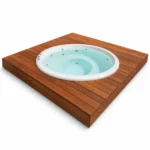
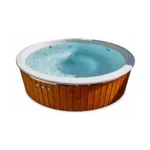
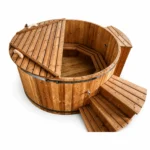
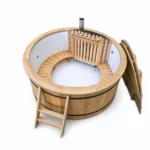
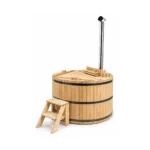
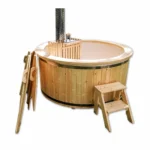
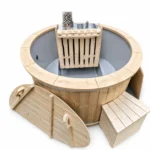
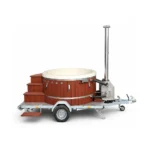
Compare these other shapes when their opposing seats, defined corners or proportions better suit the users and site. Assess each with its actual heater and equipment layout.
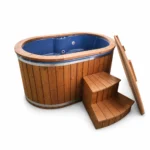
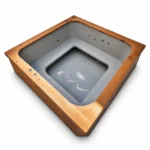
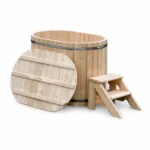
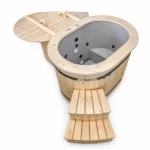
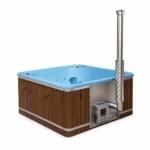
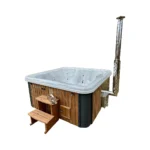
A round hot tub brings bathers towards a shared centre. That can make conversation easy and let a small group spread around a continuous bench. Yet two tubs with similar circular outlines can feel very different inside. Bench depth, the size of the central footwell, the shape of the back support and the heater’s position all influence where people can sit.
Start with the household’s normal use. Record how many people will usually bathe together, whether they prefer an upright position or more room to stretch, and how easily each person can step in and out. Then consider occasional visitors within the selected model’s stated capacity. Choosing a much larger vessel for rare gatherings also means managing that larger vessel during ordinary use.
A nominal capacity is useful for finding candidates, but it does not describe every person’s shoulder room or leg position. Ask for the seating plan with the actual heater fitted. A continuous bench can allow flexible spacing, while a moulded shell may provide more defined positions. Compare both with the intended users rather than assuming that either a bench or a sculpted seat is automatically more comfortable.
For households weighing occasional group use against everyday ownership, our family hot-tub guide provides a wider planning route. This page concentrates on what the circular layout changes: seating arc, shared central space and the room needed around the outside.
The outside diameter describes the vessel’s external size at a stated point. Check whether the drawing measures the rim, cladding or another projection. It helps establish the delivered package and position on a base, but it is not the complete installation width. Steps, a cover lifter, heater, equipment housing and service clearances can extend beyond that circle.
The inside measurement is closer to the bathing space, although the level at which it is measured matters. A rim may flare beyond the seating area. Ask for the diameter at the relevant level and a section through the tub. Wall thickness and insulation explain part of the difference between inside and outside sizes; they should not be mistaken for extra usable seating.
Bench depth takes space from the central footwell. A deeper seat can support the body differently while leaving less clear floor in the middle. The number of people around the rim therefore cannot be calculated from diameter alone. Check where feet rest, whether there is an internal step and how the heater or its guard interrupts the seat circle.
Wall height, bench height and the operating waterline are separate measurements. The approved fill level must suit the heater and allow for people entering. Use the stated working volume for the chosen configuration when planning ownership; do not estimate litres by treating the entire outside cylinder as water. Benches, shaped floors and equipment displace part of that apparent volume.
The leading catalogue group contains families with a currently offered round bathing configuration. Materials and heating methods vary. For the InGround system, choose one of its documented round shells; the same family also offers other shapes. The Mobile family has a circular vessel on a trailer, so its overall site and transport requirements must be considered separately.
Nordic Core offers two defined diameter routes with an integrated-heater arrangement. Its published inside sizes are 1,800 and 2,000 mm, while the documented outside dimensions are larger. External Comfort uses an external stove and keeps that equipment outside the bathing shell. Comparing their drawings shows why an internal-size label is insufficient for choosing between heater layouts.
Nordic Wooden Basic, Nordic Thermowood Basic and Nordic Deluxe offer several diameters with different heating choices. A round timber vessel and a lined circular shell can both create social seating, but their material care differs. Nordic Flex adds polypropylene shell and bench choices; Compact Snorkel uses a smaller circular format with an internal heater. Confirm the exact offered configuration rather than transferring one family’s capacity to another.
Electric and pellet configurations of External Comfort and Nordic Core broaden the comparison to different heating and equipment priorities. Round does not imply logs, an unlined vessel or the absence of jets. The barrel hot-tub guide explains the separate question of stave construction and timber appearance. Oval and square alternatives remain below the round group for buyers whose seating or site needs point elsewhere.
An internal snorkel-style stove and its guard occupy part of the vessel. The layout can keep equipment within a compact outside outline, but the protected heater zone is not a bathing position. Ask how much of the bench remains available, where bathers pass the guard and how the operator approaches the heater. Compare the finished seat plan, not an empty circular shell.
An external wood stove moves that equipment beside the tub and can preserve more of the interior. The trade-off is extra space for the heater, connections and their required access. Mark the stove’s position before deciding the orientation of the steps. A fire-loading route should not depend on moving the cover or asking people to pass through a cramped bathing entrance.
An integrated heater is built into the tub’s perimeter and needs its own access arrangement. Identify the firebox face, flue position and service panels on the chosen drawing. It may produce a tidy outline, but it should not be treated as maintenance-free or interchangeable with an internal snorkel stove. The wood-fired hot-tub range gives a broader comparison of the available fire-heated options.
Electric and hybrid systems change the service plan again. Establish equipment position, controls, power requirements and responsibility for installation. Pellet heating has its own fuel and equipment access needs. Choose the operating routine first, then test it against the circular seat layout and the surrounding garden. Shape alone cannot tell you which heating method is the better fit.
Use the final outside dimensions to mark the proposed vessel position, then add the separately specified spaces around it. A circular tub can sit attractively within a rectangular terrace, but the corners left around the circle are not automatically useful working areas. A narrow pocket beside a fence may be too awkward for a cover, filter housing or regular maintenance.
Place a clear entry route from the house or changing area to the steps. Then mark where the cover will go during bathing and how it will be moved there. Check the approach to the heater and the route for emptying or servicing equipment. These activities happen at different times, but they all need a workable arrangement. A plan that fits only while the cover is closed is incomplete.
Keep the manufacturer’s required clearances distinct from convenient walking space. The clearance around hot equipment comes from its installation instructions and the actual surroundings, not a universal gap attached to every round tub. Show nearby walls, fences, planting, roof edges and other structures when asking the supplier to review the proposed location.
The base needs the support and load capacity specified for the selected build. A circular outline does not mean a ring of supports is suitable, nor does a flat-looking terrace establish its structural capacity. Confirm the filled load, support arrangement and drainage before committing to a platform. For a recessed round shell, the surrounding structure must also preserve removal and service access.
Although the vessel is circular, its equipment gives it an orientation. Rotating the proposed layout can move the entry steps towards the path while moving a service panel towards a fence. Check those consequences on the drawing before the installation position is fixed. Mark the drain outlet and planned discharge route as well; a convenient bathing entrance does not help if routine drainage becomes difficult. Keep the agreed orientation with the final specification so the delivery and installation teams are working from the same plan.
Shape becomes a practical choice when you compare the same needs across drawings. A round bench faces towards the centre; a square or oval shell changes how people face one another and how the tub aligns with the site. Neither the photograph nor a shared nominal headcount is enough to settle the comparison.
| Question | Round configuration | Square or oval alternative |
|---|---|---|
| Where do people sit? | Around an inward-facing arc or shaped circular seats | Along defined sides, corners or opposing ends |
| What limits legroom? | Bench depth, centre space and any heater intrusion | Footwell shape, seat projections and heater position |
| How does it fit the terrace? | Check the full circle plus equipment and cover space | Check length and width plus the same operating needs |
| Which measurements control? | Inside/outside diameters and the seat plan | Inside/outside length and width and the seat plan |
| What should stay comparable? | Regular occupancy, working volume and chosen equipment | The same occupancy and equipment expectations |
Review the square hot-tub options if straight edges and corner seating suit the terrace. For a narrow space used mainly by one or two people, compare the small and two-person layouts. A compact round model may still be right, but an oval alternative deserves consideration when its proportions solve the actual access and seating problem.
A larger diameter changes more than the distance between opposite bathers. It can increase water volume, the filled load, cover size and the space needed to move the delivered vessel. The scale of each change depends on the particular shell and bench design. Use the selected technical data rather than assuming that one size step has the same effect in every family.
For example, the current Core specification distinguishes its 1,800 and 2,000 mm versions with different working volumes and outside dimensions. Other families have different relationships between size and litres. Compare the exact two configurations on your shortlist, including heater layout, before estimating water use or heating demand. A larger label may buy useful personal space, but it should earn that additional ownership commitment.
A round cover also needs a handling plan. Check its material, number of sections, lifting weight and any compatible assistance. There must be room for the cover both on and off the vessel. Ask how the specified cover fits around the chosen heater and accessories, and how it is secured when the tub is out of use. Do not assume that any cover of roughly the right diameter is an appropriate replacement.
Finally, water care and cleaning depend on the vessel material and fitted equipment, not the circular shape. Timber, polypropylene and fibreglass need their respective approved cleaning and treatment guidance. Jets and filtration add parts that must remain accessible. Choose those features because they support your intended routine, then include their maintenance, services and shutdown requirements in the plan.
Provide the expected regular occupancy, shortlisted model and size, heater preference and a simple site sketch. Include the available installation area, gate openings, narrow turns and changes of level along the delivery route. Ask the supplier to distinguish the assembled delivery dimensions from the final operating footprint. Confirm who handles unloading, positioning, installation and commissioning.
Request a drawing showing the chosen bench, working waterline, heater zone, steps and service points. The written quotation should repeat the vessel material, outside finish, cover, insulation, filtration and any powered accessories. This makes different offers comparable without turning a family card’s starting price into a promise for your finished installation.
If two diameters remain plausible, ask for both configurations with the same equipment. Compare the extra usable seating against their working volumes, cover handling and total site needs. The wood-fired project cost guide helps organise the remaining allowances when wood heating is selected.
No. Wall construction, insulation, bench depth and the heater arrangement affect the usable interior. Compare the selected seat plan and inside dimensions as well as the outside diameter.
Yes, where the complete installation fits. Include the steps, heater, cover handling and required maintenance and safety clearances. Space left in the corners may not be accessible enough to serve those functions.
No. Temperature distribution depends on the actual heating and circulation arrangement and how it is operated. Follow the selected system’s instructions, including checking bathing temperature; the outline alone is not a guarantee.