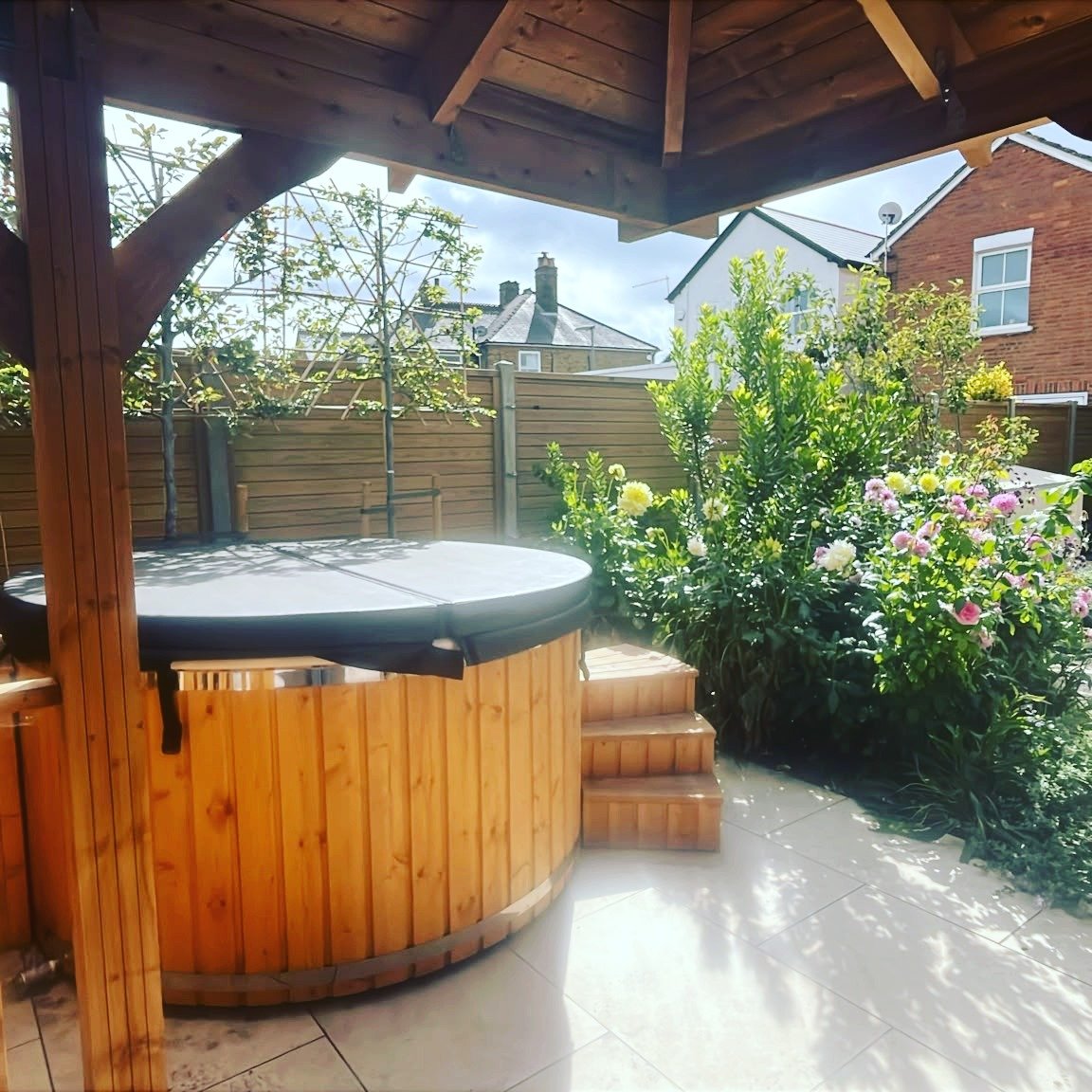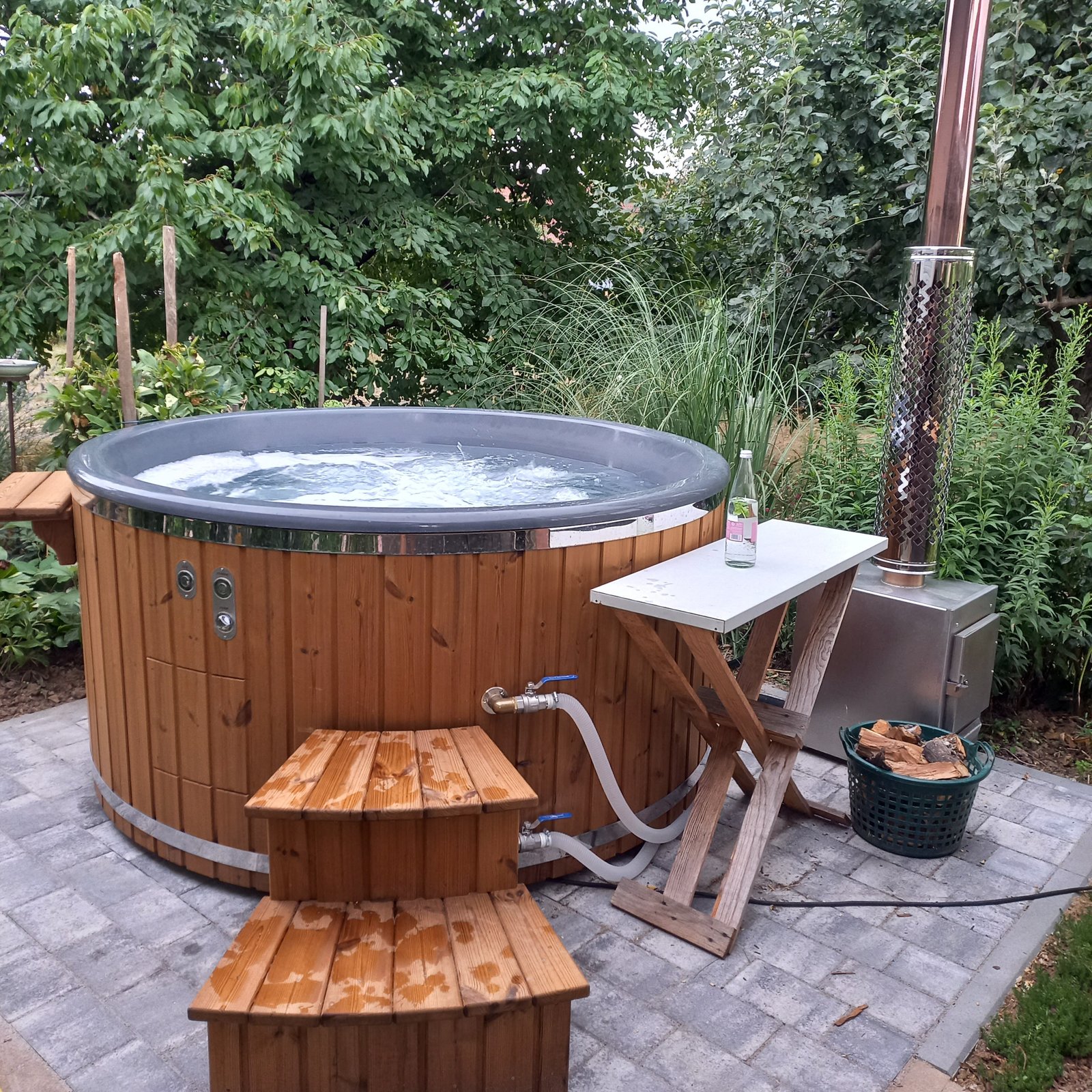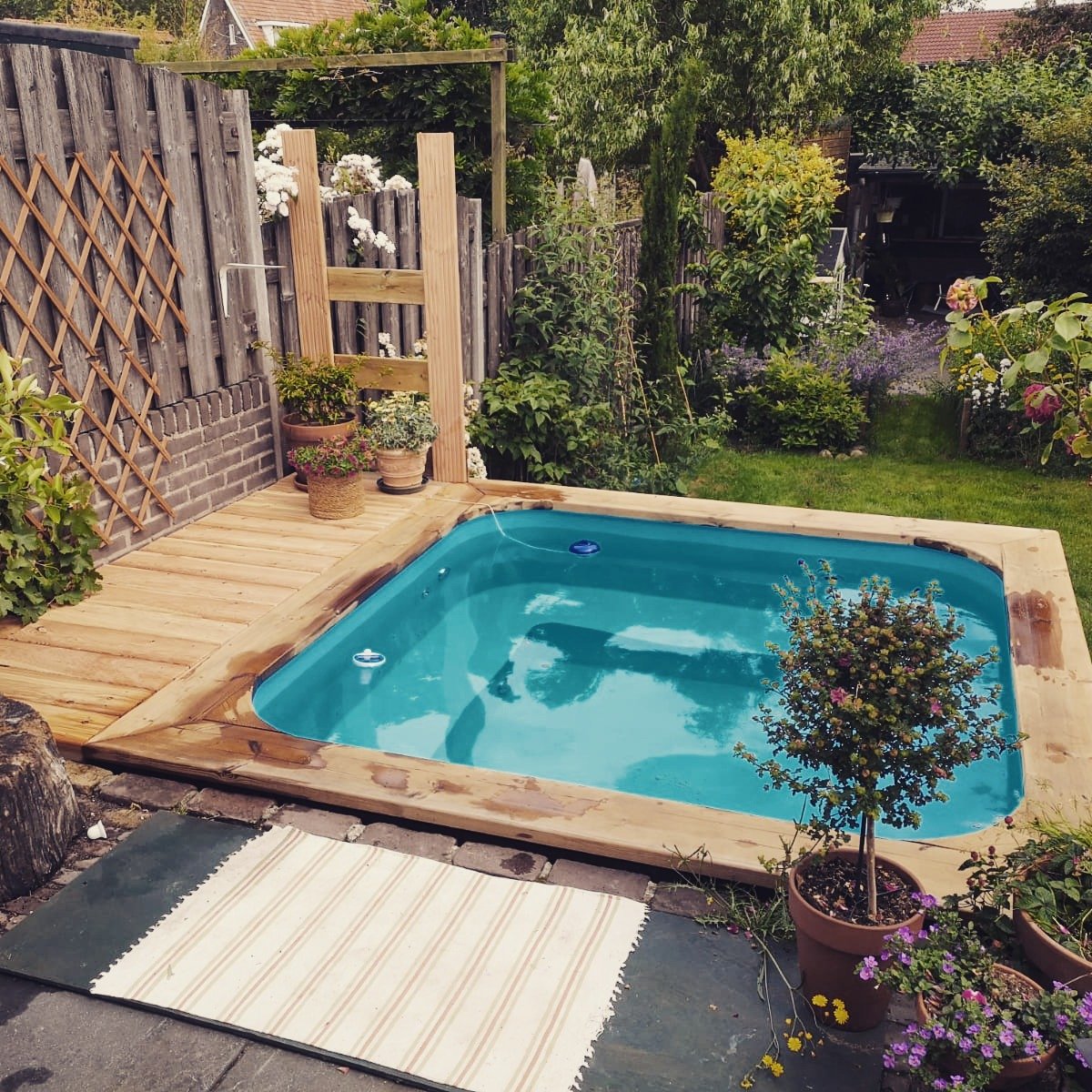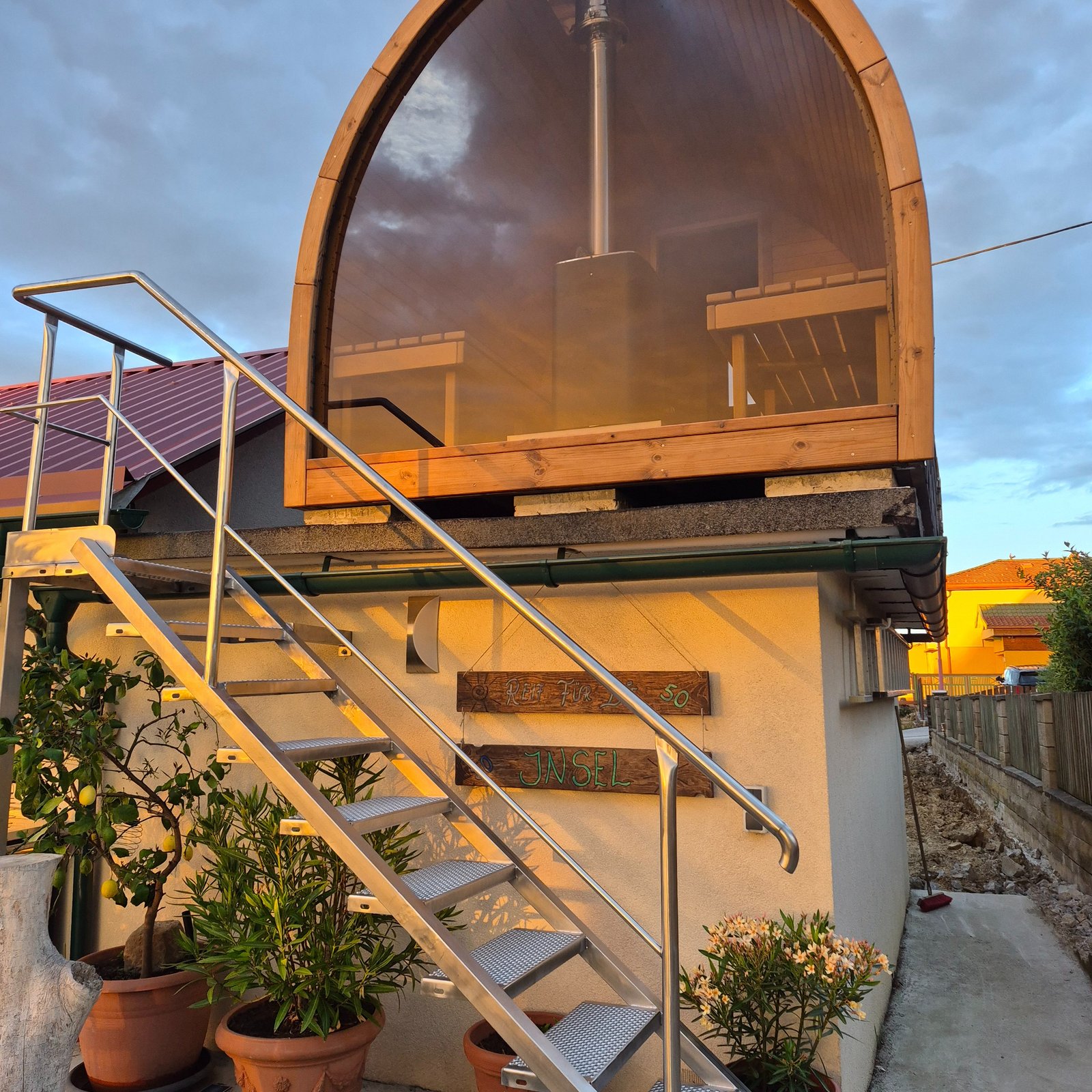

Plan the bath, heater and garden as one system
Wood-Fired Hot Tubs: Models, Heaters and Buying Advice
A wood-fired hot tub is best chosen as a complete bathing system, not as a tub with a stove added to it. Start with the number of people who will use it most often, the water volume and the construction you want; then match the heater position, insulation, cover, water-care equipment and site access to that exact model.
The useful comparison is the finished project: the bathing vessel, heater, chimney, circulation, cover, foundation, drainage and delivery route. That is why this guide keeps live TimberIN models near the top and then explains the technical decisions that change comfort, heating routine and ownership in a British garden.
Complete current catalogue
Every current TimberIN hot-tub model
The wood-fired models most closely matched to this guide appear first. The complete current hot-tub range follows, so heating systems, sizes and constructions can be compared without leaving the page.
Wood-fired models to compare first
Start with these wood-fired models, then compare them with every other current TimberIN hot tub below.
-
Thermowood
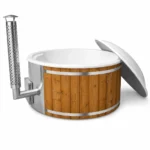
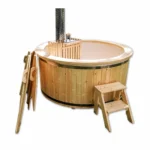
 Thermowood Hot Tub – TimberIN Nordic™ Deluxe (Wood-Fired, 4–8 Person)From: £3,200
 -
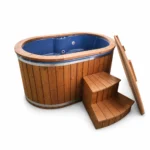
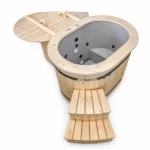
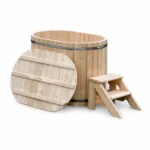
2-person model2 Person Wood Fired Hot Tub – TimberIN Nordic DuoFrom: £2,420
-
Modular coreTimberIN Nordic Core™From: £3,289
-
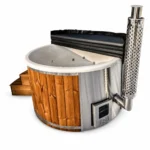
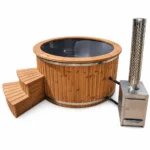
Product on saleSave up to 16%Wood Fired Hot Tub with Jets – TimberIN Nordic Rojal™ (4–8 Person)From: £6,785From: £5,874
All other current TimberIN hot-tub models
The remaining current models are included here for a complete comparison. Open any model for its live specification, price and available options.
-
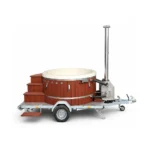
Trailer modelMobile Wood Fired Hot Tub on Trailer – TimberIN Nordic Mobile™From: £5,655
-
8-person modelLarge 8 Person Wood Fired Hot Tub – TimberIN Nordic Elite™ SquareFrom: £4,290
-
Acrylic luxuryTimberIN Nordic Square™ Acrylic Hot Tub – External or Integrated Wood Stove (Luxury Marble Edition)From: £6,787
-
Product on saleSave up to 17%Affordable Wooden Hot Tub for Your Garden – TimberIN Nordic Value™From: £3,190From: £2,860 -
TimberIN Nordic Compact™ SnorkelFrom: £2,617
-
PolypropylenePolypropylene Hot Tub – TimberIN Nordic Flex™ (160–220 cm, Configurable)From: £2,537
-
Electric heatingElectric Wooden Hot Tub for Garden Use – TimberIN Nordic Family™ ElectricFrom: £2,903
-
Traditional timberWood Fired Wooden Jacuzzi – Traditional Timber Hot TubFrom: £2,751
-
Spruce value modelWooden Hot Tub Basic – TimberIN Nordic™ (Affordable Wood Fired Model)From: £2,276
-
2 Person Polypropylene Hot Tub – TimberIN Nordic Oval™ DuoFrom: £2,255
-
2-person wood tubTimberIN Nordic Duo™ WoodFrom: £1,911
-
Compact for 44 Person Wood Fired Hot Tub – Compact Snorkel Stove DesignFrom: £2,891
-
External stoveWood Fired Hot Tub with External Stove – TimberIN Nordic™ External ComfortFrom: £3,300
-
In-ground modelTimberIN Nordic™ InGround Comfort – Sunken & In-Ground Hot Tub SystemFrom: £1,662
-
Square modelSquare Wood Fired Hot Tub – TimberIN Nordic Square™ (160–220 cm)From: £2,862
-
App-controlled pelletsTimberIN Nordic™ Pellet Comfort – Wood Pellet Heated Hot TubFrom: £5,350
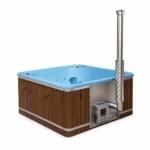
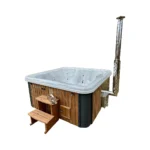
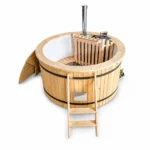
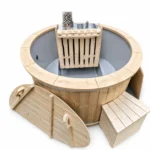
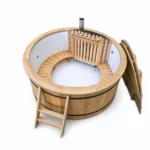
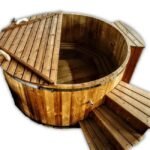
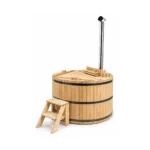
What buyers mean by a wood-fired hot tub
The phrases wood fired hot tubs, wood fired hot tub for sale, wood heated hot tub, fire heated hot tub and wood fired outdoor tub are often used by the same buyer at different stages of the purchase journey. Some people are comparing the full category, while others are ready to choose a model and need practical installation details.
Comparing complete wood-fired tubs
Start with the bathing vessel, usable capacity, water volume and heater position. Then compare what is included in the cover, insulation, water-care equipment and delivery.
Choosing by heating method
If the fire-heated routine is the priority, compare how the stove transfers heat, how water circulates and how the chimney and firing area fit the garden.
Planning a traditional bathing routine
Allow for dry firewood, active supervision, water mixing, safe chimney clearances and the time needed to prepare each session.
Planning the outdoor installation
Check the base, drainage, wet operating weight, delivery access, cover handling and winter drain-down before deciding that two tubs are genuinely comparable.
Wood-fired hot tubs at a glance
| Decision | Practical direction | Confirm before ordering |
|---|---|---|
| How many regular users? | Choose around normal use rather than rare maximum capacity. | Internal dimensions, bench layout and water volume. |
| External, internal or integrated heater? | Choose from seating space, operating footprint and service access. | Heater clearances, plumbing and chimney. |
| Traditional wood or smooth liner? | All-wood tubs offer the most traditional construction; liners simplify cleaning. | Water-contact material and maintenance routine. |
| Simple or fully equipped? | Basic soaking needs less infrastructure; filters and jets add convenience and complexity. | Electric supply, pipework and winter drainage. |
| Occasional or frequent use? | Usage pattern affects water care, cover choice and heating strategy. | Whether water will be replaced or retained. |
| Garden, rental or mobile use? | Each application needs different access, safety and operating procedures. | Foundation, supervision, insurance and servicing. |
External, integrated and internal heaters
External heater
Main advantages: Preserves internal seating and gives easy firebox access.
Main trade-offs: Needs extra ground area, water connections and frost planning.
Integrated heater
Main advantages: Creates a compact overall form and tidy appearance.
Main trade-offs: Ventilation and service access must remain available.
Internal snorkel heater
Main advantages: Compact external footprint and direct heat transfer.
Main trade-offs: Uses bathing space and needs a secure protective guard.
External wood-fired heater
An external heater stands beside the tub. Cooler water enters through a lower connection and warmer water returns through an upper connection. Correct pipe height, diameter and route are essential when the system relies on natural thermosiphon circulation.
Integrated heater
An integrated heater is incorporated into the tub body or equipment zone. It can reduce the visible external footprint while preserving more internal space than a fully submerged stove. Access for ash removal, inspection, ventilation and winter drainage remains essential.
Internal snorkel heater
An internal heater sits inside the bathing area behind a guard. It removes the need for external water hoses but reduces real capacity. Compare the usable bench and leg space after the heater enclosure is included.
For deeper technical information, see the wood-fired hot-tub heater guide.
Realistic heating-time calculation
A universal claim such as 1.5–3 hours cannot describe every tub. Heat-up depends on litres, starting temperature, target temperature, useful heater output, fuel, cover, insulation and weather.
Litres of water × temperature rise in °C × 0.001163 = theoretical kWh added to the water.
700 litres from 10°C to 38°C
Theoretical heat required before losses: Approximately 22.8 kWh.
1,000 litres from 10°C to 38°C
Theoretical heat required before losses: Approximately 32.6 kWh.
1,200 litres from 10°C to 38°C
Theoretical heat required before losses: Approximately 39.1 kWh.
1,500 litres from 10°C to 38°C
Theoretical heat required before losses: Approximately 48.8 kWh.
Actual fuel input must be higher because not all combustion energy reaches the water and heat is lost through the surface, walls, pipework and chimney.
Choosing the correct size for wood fired hot tubs
Two-person
Best suited to: Couples, terraces and compact gardens.
What to verify: Internal length, depth, legroom and heater position.
Four-person
Best suited to: Couples with guests and small families.
What to verify: Shoulder room and real seating for four adults.
Six-person
Best suited to: Families and regular social use.
What to verify: Water volume, foundation and heater match.
Eight-person
Best suited to: Large families, groups and hospitality.
What to verify: Access, fuel, water care and maintenance workload.
Compare 2-person, 4-person, 6-person and 8-person hot tubs. For restricted spaces, see small hot tubs.
Traditional timber and modern liners
Traditional all-wood vessel
Advantages: Natural material experience and traditional appearance.
Ownership considerations: Timber swelling, movement and compatible water care.
Fibreglass liner
Advantages: Smooth surface and formed seating.
Ownership considerations: Uniform support, fittings and treatment compatibility.
Polypropylene liner
Advantages: Easy-clean interior and flexible configuration.
Ownership considerations: Welds, fittings and exterior-cladding ventilation.
Acrylic or composite shell
Advantages: Premium finish and integrated seating.
Ownership considerations: More technical equipment and service access.
Exterior finishes can include spruce, larch and Thermowood. Thermowood offers improved dimensional stability, but it still weathers and requires appropriate detailing. Compare wooden hot tubs and the cedar versus Thermowood guide.
Insulation and thermal covers
Walls
What to compare: Material and insulation continuity.
Why it matters: Controls side heat loss.
Base
What to compare: Insulation compatible with structural support.
Why it matters: Reduces loss into the ground.
External pipework
What to compare: Insulation and drainability.
Why it matters: Reduces loss and frost exposure.
Technical compartment
What to compare: Dryness, ventilation and access.
Why it matters: Protects pumps and controls.
Top cover
What to compare: Fit, insulation and water resistance.
Why it matters: The water surface is a major heat-loss area.
A larger heater does not compensate efficiently for a poorly fitting cover or exposed pipework.
Jets, bubbles, lighting and filtration
Hydromassage jets
Benefit: Targeted pressurised water massage.
Added requirement: Pump, electricity, pipework and cleaning.
Air bubbles
Benefit: Gentle whole-tub movement.
Added requirement: Blower, air lines and faster cooling.
LED lighting
Benefit: Atmosphere and evening visibility.
Added requirement: Controls and electrical installation.
Filtration
Benefit: Supports retained-water management.
Added requirement: Pump operation, filter cleaning and treatment.
Electric backup
Benefit: Can support temperature maintenance on compatible models.
Added requirement: Suitable supply, controls and higher complexity.
Wood heating and powered massage are separate systems. Compare wood-fired hot tubs with jets and the broader hot tubs with jets range.
Water care and filtration
The heating method does not determine how long water remains suitable. Water management depends on bathing frequency, hygiene, filtration, testing, treatment and the selected shell or timber construction.
Occasional private soaking
Likely direction: Frequent replacement and manual cleaning may be practical.
Regular household use
Likely direction: Filtration and consistent testing can reduce repeated refilling.
Jets or bubbles
Likely direction: Hidden pipework requires circulation and cleaning.
Holiday rental
Likely direction: Documented testing, treatment and turnover procedures.
Traditional timber vessel
Likely direction: Use treatment compatible with wood and metal components.
- Shower before entering.
- Keep the fitted cover closed when the tub is unused.
- Test retained water rather than dosing by guesswork.
- Never mix chemicals.
- Use products compatible with the shell, timber, seals and heater.
- Drain and clean the tub when water quality cannot be maintained safely.
Foundation and complete filled weight
One litre of water weighs approximately one kilogram. Add the empty tub, heater, cover, equipment and users when designing the foundation.
Concrete slab
Potential use: Permanent installations.
Critical checks: Level, dimensions, drainage and services.
Engineered paving base
Potential use: Many garden installations.
Critical checks: Sub-base compaction and uniform support.
Ground screws and platform
Potential use: Selected sloping sites.
Critical checks: Professional design and exact support points.
Engineered timber deck
Potential use: Raised terraces.
Critical checks: Full wet load, deflection, ventilation and moisture.
Compacted gravel system
Potential use: Only where the product base permits.
Critical checks: Stable edges, level and drainage.
Operating footprint and delivery access
Entry steps
Why it matters: Need a stable non-slip approach.
External heater
Why it matters: Requires a firing area and pipe access.
Chimney
Why it matters: Needs clearances from structures and planting.
Cover movement
Why it matters: Requires opening or storage space.
Service access
Why it matters: Valves, pumps, filter and heater must remain reachable.
Gate and side passage
Why it matters: Determine whether the tub can reach the base.
Crane or telehandler position
Why it matters: May be required where direct access is impossible.
A compact tub can still require a substantial operating area once the heater, steps, chimney and cover are included.
Winter use and frost protection
Wood-fired hot tubs are popular in cold weather, but they are not automatically frost-proof. Water trapped in an external heater, pump, filter or low pipe section can freeze and split components.
- Follow the model-specific winter procedure.
- Drain vulnerable heaters, hoses, pumps and filters when required.
- Do not light a heater if circulation may be blocked by ice.
- Keep drain fittings and low points accessible.
- Protect steps and the bathing route from ice.
- Plan for power failure where frost protection depends on pumps or controls.
Total installed cost of a wood fired hot tub for sale
Current prices load dynamically above. When comparing any wood fired hot tub for sale, the final project can also include the heater package, chimney, cover, insulation, filtration, foundation, drainage, electrical work, delivery, unloading and landscaping.
Tub body
What to compare: Size, shell, timber, seating and water volume.
Common omission: Comparing different capacities as equivalent.
Heater
What to compare: Type, output, chimney and water connections.
Common omission: Ignoring flue and safety-clearance work.
Insulation and cover
What to compare: Walls, base, pipework and top cover.
Common omission: Focusing only on heater size.
Water system
What to compare: Filter, pump, treatment and drainage.
Common omission: No plan for repeated use.
Foundation
What to compare: Slab, paving, deck or platform.
Common omission: Treating the tub as lightweight furniture.
Delivery and lifting
What to compare: Vehicle, crane, telehandler and final placement.
Common omission: Assuming kerb delivery includes installation.
Options
What to compare: Jets, bubbles, lighting and electric backup.
Common omission: Ignoring power and future maintenance.
Production and UK delivery
Production and delivery timing depends on the exact model, options, current factory schedule and route. Confirm the working estimate in the written quotation for the selected configuration; treat it as an estimate rather than a guaranteed date.
Explore wooden hot tubs, Scandinavian hot tubs, the wood-fired price guide and the complete hot-tub collection.
Wood-fired hot-tub buying checklist
- Confirm the normal number and size of users.
- Check internal dimensions and actual water volume.
- Choose external, integrated or internal heater placement.
- Confirm the heater and circulation layout.
- Choose traditional timber, fibreglass, polypropylene or acrylic.
- Compare wall, base, pipe and cover insulation.
- Decide whether filtration, jets, bubbles or lighting are required.
- Check the complete electrical demand for accessories.
- Prepare a level foundation for the full wet load.
- Plan rainwater, splash water and full-volume drainage.
- Keep the heater, valves, pumps and filter accessible.
- Measure the complete operating footprint.
- Survey road, gate, passage, turns and lifting route.
- Plan dry untreated firewood storage.
- Create a water-care and cleaning routine.
- Create a frost-protection and drain-down procedure.
- Compare complete installed cost.
- Confirm the current production and transport estimate for the exact configuration in writing.
Frequently asked questions about wood-fired hot tubs
What is a wood fired hot tub?
It is an outdoor bathing tub whose water is heated by a dedicated internal, integrated or external wood-burning heater. Many buyers also describe it as a wood heated hot tub or fire heated hot tub.
Are wood fired hot tubs the same as wood-burning hot tubs?
Yes. The phrases wood fired hot tubs, wood-burning hot tubs, log-burner hot tubs and wood-stove hot tubs normally describe the same general product category.
How long does a wood-fired hot tub take to heat?
Heat-up depends on water volume, temperature rise, heater performance, fuel, cover, insulation and weather. A universal time cannot be guaranteed.
How much wood does a hot tub use?
Fuel use varies with water volume, temperature rise, wood moisture, heater efficiency, cover and weather. There is no reliable universal amount.
Does a wood-fired hot tub need electricity?
A basic natural-circulation heater may not. Filters, jets, bubbles, lights and electric backup systems normally require power.
Can a wood-fired hot tub have jets?
Yes. The stove heats the water while electric pumps or blowers operate the massage equipment.
Is an external or internal heater better?
External heaters preserve bathing space. Internal heaters reduce the exterior footprint. The better option depends on the site and required capacity.
Can a wood-fired hot tub be used in winter?
Yes, when the tub and heater are operated correctly and all vulnerable water-filled components are protected from freezing.
Choose the complete system, not only the stove
Start with users, water volume, heater position and construction. Then compare insulation, water care, foundation, access and delivery as one complete project for a wood heated hot tub or fire heated hot tub.