
Wood-Burning Hot Tubs: A Practical Log-Heated Guide
A wood-burning hot tub is designed for people who want the log fire to be part of every bathing session. Dry fuel has to be stored nearby, ash has to be removed and the water temperature needs checking as the fire develops. For many owners, that hands-on routine is precisely what makes the tub feel different from an automatic spa.
The terms log burning, log fired and wood stove powered describe the fuel and the operating method rather than a separate kind of vessel. The tub may still be traditional timber or lined, round or square, simple or fitted with filtration and jets.
A useful comparison therefore follows the whole path from the wood store to the chimney: fuel quality, firebox access, circulation, cover handling, water care and the cold-weather drain-down procedure. Those details decide whether log heating remains enjoyable after the novelty of the first few fires.
In practical terms: choose a log-heated system only if its fire-lighting, refuelling and cooling routine fits the site. A neat stove position is not enough if fuel access, smoke direction or maintenance space has been overlooked.
Safety note: never light a water heater while it is empty or isolated by closed valves. Keep combustible materials clear, allow the stove to cool before draining, supervise children and seek medical advice if a health condition, pregnancy or medication may affect safe hot-water bathing.
Current wood-burning hot-tub models
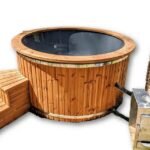
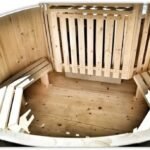
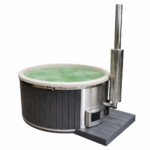
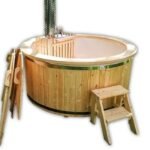
The current models and prices appear below. Check the product page for the exact stove layout, dimensions, water capacity, construction, filtration and optional equipment.
-
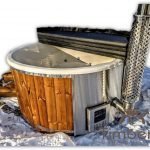
 20% OFF!Wood Fired Hot Tub with Jets – TimberIN Nordic Rojal™ (4–8 Person)
From: £6,785From: £5,874 -
Best seller!TimberIN Nordic Core™From: £3,289
-
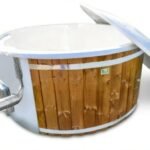
Thermowood DeluxeThermowood Hot Tub – TimberIN Nordic™ Deluxe (Wood-Fired, 4–8 Person)From: £3,200
-
2 Person Model2 Person Wood Fired Hot Tub – TimberIN Nordic Duo (Compact Fiberglass Model)From: £2,420
-
Spacious!Square Wood Fired Hot Tub – TimberIN Nordic Square™ (160–220 cm)From: £2,862
-
Sunken!TimberIN Nordic™ InGround Comfort – Sunken & In-Ground Hot Tub SystemFrom: £1,662
-
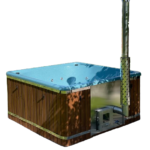
External burnerWood Fired Hot Tub with External Stove – TimberIN Nordic™ External ComfortFrom: £3,300
-
PolypropylenePolypropylene Hot Tub – TimberIN Nordic Flex™ (160–220 cm, Configurable)From: £2,537
-
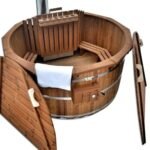
Spruce basic cheapWooden Hot Tub Basic – TimberIN Nordic™ (Affordable Wood Fired Model)From: £2,276
-
Smart pellet!TimberIN Nordic™ Pellet Comfort – Wood Pellet Heated Hot TubFrom: £5,350
-
4 Person Model4 Person Wood Fired Hot Tub – Compact Snorkel Stove DesignFrom: £2,891
-
ValueAffordable Wooden Hot Tub for Your Garden – TimberIN Nordic Value™
From: £3,190From: £2,860 -
Square model!Large 8 Person Wood Fired Hot Tub – TimberIN Nordic Elite™ SquareFrom: £4,290
-
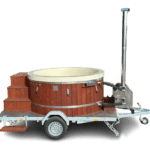
Mobile hot tubMobile Wood Fired Hot Tub on Trailer – TimberIN Nordic Mobile™From: £5,655
-
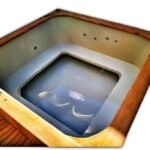
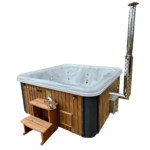
Square jacuzziTimberIN Nordic Square™ Acrylic Hot Tub – External or Integrated Wood Stove (Luxury Marble Edition)From: £6,787




Wood burning hot tubs at a glance
| Buying decision | Practical direction | Confirm before ordering |
|---|---|---|
| Log-burning routine | Choose this category if you enjoy lighting and managing a real fire. | Dry fuel, safe access, fire supervision and water-temperature checks. |
| Heater position | External heaters preserve bathing space; internal heaters reduce exterior footprint. | Real seating, clearances, service access and chimney route. |
| Water volume | Choose for normal users rather than rare maximum groups. | Litres, filled weight, heating demand and foundation load. |
| Simple or upgraded | A basic tub can be natural and low-infrastructure; jets and filtration add comfort. | Electrical supply, pipework, maintenance and winter drain-down. |
| Private or guest use | Holiday lets need clearer procedures than private family tubs. | Instructions, cleaning, water hygiene, insurance and staff time. |
| Winter use | Cold weather can be enjoyable but must be planned. | Frozen pipework, drainability, cover and safe walking route. |
Log burning, log fired and wood stove powered
These descriptions normally refer to the same heating family. “Wood burning” emphasises the fuel, “log fired” the traditional fire-led experience and “wood stove powered” the equipment that transfers heat into the water.
Whichever term is used, compare the heater output, circulation method, chimney, clearances and usable seating. The wording on its own says nothing about whether the tub has a liner, filter, powered accessories or a winter-ready pipe layout.
What is a wood burning hot tub?
A wood burning hot tub is an outdoor tub where the water is heated by a stove designed to transfer combustion heat into the bathing water. The stove may sit inside the tub behind a protective guard, outside the tub with water connections, or within an integrated equipment area.
- Tub vessel — Purpose: Holds the bathing water and users; What to check: Material, seating, water volume and support.
- Wood stove or heater — Purpose: Transfers heat from burning logs into the water; What to check: Output, material, clearances and water level rules.
- Water circulation — Purpose: Moves cooler and warmer water through the system where needed; What to check: Natural thermosiphon or pump compatibility.
- Chimney or flue — Purpose: Routes smoke away from users and structures; What to check: Support, height, wind exposure and combustible clearances.
- Cover — Purpose: Reduces surface heat loss during heating and when unused; What to check: Fit, insulation, handling and separation from hot parts.
- Optional equipment — Purpose: Adds filtration, lighting, jets or backup heating; What to check: Electrical supply, maintenance and frost protection.
In everyday UK search language, a wood burning hot tub, log burning hot tub and log fired hot tub usually mean the same broad product category: an outdoor hot tub whose main heat source is burning logs.
Why choose a log burning hot tub?
- Real fire experience — Why buyers like it: Lighting and tending the stove becomes part of the outdoor ritual; Important qualification: It requires active management and safe operation.
- Natural garden atmosphere — Why buyers like it: Steam, timber, water and flame create a distinctive setting; Important qualification: The visual appeal should not replace technical checks.
- Lower reliance on electric water heating — Why buyers like it: The main water heat can come from logs; Important qualification: Jets, filtration, lighting or controls may still need electricity.
- Suitable for rural settings — Why buyers like it: Cabins, lodges and glamping sites often fit the fire-heated routine; Important qualification: Smoke, fuel storage and guest instructions need planning.
- Session-based use — Why buyers like it: Water is heated when wanted rather than continuously maintained; Important qualification: Preparation time varies by water volume, weather and fuel.
- Configurable comfort — Why buyers like it: Many models can include liners, jets, covers or filtration; Important qualification: Upgrades increase infrastructure and maintenance.
Wood burning hot tub vs wood fired hot tub
There is usually no practical difference between a wood burning hot tub and a wood fired hot tub. “Wood burning” describes the action and fuel, while “wood fired” is often used as the category term. A log fuelled hot tub and wood stove powered hot tub are also usually part of the same family.
- Wood burning hot tub — Focus of the phrase: Fuel and fire process; Practical interpretation: A tub heated by burning wood in a purpose-designed stove.
- Wood fired hot tub — Focus of the phrase: Product category wording; Practical interpretation: Same broad category, often used by manufacturers.
- Log burning hot tub — Focus of the phrase: Use of logs as fuel; Practical interpretation: A hot tub where dry logs heat the water.
- Log fired hot tub — Focus of the phrase: Traditional fire-heated experience; Practical interpretation: A tub whose heating depends on a log fire.
- Wood stove powered hot tub — Focus of the phrase: The stove as the core heating system; Practical interpretation: Requires correct stove size, clearances, circulation and safe access.
For the main collection page with broader model comparison, see wood fired hot tubs.
Internal, external and integrated log-burner systems
| Heater type | Best suited to | Main trade-off |
|---|---|---|
| Internal log burner | Compact footprint and very traditional appearance. | Uses bathing space and needs a secure protective guard. |
| External log burner | More internal seating and easier firebox access. | Needs additional ground area and water connections. |
| Integrated wood stove system | Cleaner external appearance and designed equipment zone. | Service access, ventilation and drainability must remain clear. |
| Wood stove with jets or filtration | Buyers wanting fire heating plus spa features. | Powered equipment needs electricity and maintenance. |
| Wood stove with electric support | Selected configurations where temperature support is desired. | More controls, supply checks and service points. |
A wood stove powered hot tub should be chosen from the complete layout. The stove affects the real seating space, cover movement, chimney route, fuel-loading area, service access and safe movement around the tub.
How a wood stove powered hot tub heats water
A wood stove powered hot tub heats water through direct contact with the stove body or through a water jacket and circulation path. In an external system, cooler water usually enters the heater through a lower connection and warmer water returns through a higher connection. Correct routing is essential where natural circulation is used.
- Water volume — Why it matters: More litres require more energy and more time.
- Starting water temperature — Why it matters: Cold winter fill water increases the temperature rise.
- Heater output — Why it matters: The stove should match the tub volume and intended use.
- Dry log quality — Why it matters: Wet fuel wastes energy and can smoke more.
- Cover quality — Why it matters: The water surface is a major heat-loss area.
- Insulation — Why it matters: Walls, base and pipework affect retained heat.
- Wind and rain — Why it matters: Outdoor conditions change heat loss and firing comfort.
- Circulation — Why it matters: Poor flow can create uneven temperature and heater stress.
Realistic heat-up expectations
A universal heat-up time should not be promised for a log fired hot tub. The useful calculation starts with water volume and temperature rise, but real heating also depends on stove performance, fuel, cover, insulation and weather.
Litres of water × temperature rise in °C × 0.001163 = theoretical kWh added to the water.
| Example | Theoretical heat required before losses |
|---|---|
| 700 litres from 10°C to 38°C | Approximately 22.8 kWh. |
| 1,000 litres from 10°C to 38°C | Approximately 32.6 kWh. |
| 1,200 litres from 10°C to 38°C | Approximately 39.1 kWh. |
| 1,500 litres from 10°C to 38°C | Approximately 48.8 kWh. |
Log fuel, storage and running cost
A log fuelled hot tub can be economical where dry untreated firewood is available at a good local cost, but fuel use should never be presented as a fixed universal figure. It changes with water volume, starting temperature, weather, stove design, wood moisture, log size, cover quality and user technique.
- Wood moisture — Practical effect: Wet logs waste energy evaporating water and can smoke more.
- Log size — Practical effect: Small kindling lights easily; larger logs sustain the fire.
- Fuel species — Practical effect: Different woods have different density and burn behaviour.
- Firebox loading — Practical effect: Overfilling can reduce control and increase risk.
- Air control — Practical effect: Too little air smokes; too much air can waste heat.
- Storage — Practical effect: Logs should stay dry and away from sparks.
- Session length — Practical effect: Maintaining water temperature after heat-up also uses fuel.
- Use clean, dry and untreated logs.
- Do not burn painted, glued or pressure-treated timber.
- Store logs under cover with airflow.
- Keep spare fuel away from the stove and sparks.
- Do not overfill the firebox.
- Stop adding logs before the water exceeds the intended temperature.
Wood burning hot tub or electric hot tub?
- Main routine — Wood burning hot tub: Light and manage a log fire; Electric wooden hot tub: Use controller-based heating.
- Experience — Wood burning hot tub: Traditional, natural and atmospheric; Electric wooden hot tub: Convenient and predictable.
- Best for — Wood burning hot tub: Rural homes, gardens, cabins, glamping and fire-led bathing; Electric wooden hot tub: Frequent home use and easier temperature management.
- Infrastructure — Wood burning hot tub: Stove, chimney/flue, fuel storage and safe firing area; Electric wooden hot tub: Electrical supply, heater, controls and equipment access.
- Manual work — Wood burning hot tub: Higher: lighting, logs, ash and temperature checks; Electric wooden hot tub: Lower: still needs water care and maintenance.
- Optional features — Wood burning hot tub: Jets and filtration can be added where specified but need power; Electric wooden hot tub: Often easier to integrate with powered systems.
If convenience is the main priority, compare electric wooden hot tubs.
Choosing the right size
- Compact 2-person tub — Best suited to: Couples, patios and small gardens; What to verify: Internal length, water volume and heater position.
- 4-person tub — Best suited to: Couples with guests and small families; What to verify: Real seating comfort and shoulder room.
- 6-person tub — Best suited to: Family use and regular social bathing; What to verify: Filled weight, water care and heater match.
- 8-person tub — Best suited to: Large families, holiday lets and groups; What to verify: Access, fuel use, staff routine and foundation load.
Compare 2-person hot tubs, 4-person hot tubs, 6-person hot tubs, 8-person hot tubs and small hot tubs.
Round, square and compact log fired hot tubs
- Round wood burning hot tub — Benefit: Traditional social seating and Nordic look; Planning issue: Curved landscaping, legroom and cover handling.
- Square wood burning hot tub — Benefit: Modern edges and easier patio integration; Planning issue: Corner construction, seating layout and access.
- Oval or compact tub — Benefit: Efficient for couples and smaller gardens; Planning issue: Less equal social seating for groups.
- Barrel-style tub — Benefit: Rustic timber appearance; Planning issue: Check whether the term refers to shape, cladding or construction.
- Sunken or decked-in tub — Benefit: Integrated outdoor wellness look; Planning issue: Drainage and removable service access are essential.
Jets, bubbles and filtration in a wood burning hot tub
A log burning hot tub can still include modern comfort features. The stove heats the water, while jets, air bubbles, lights and filtration are separate powered systems. This distinction matters because a basic wood stove powered hot tub may not need electricity for heating, but upgraded equipment usually does.
- Hydromassage jets — Benefit: More spa-like massage experience; Added requirement: Pump, pipework, electrical supply and cleaning.
- Air bubbles — Benefit: Gentle whole-tub water movement; Added requirement: Blower, air lines and faster heat loss.
- LED lighting — Benefit: Evening atmosphere and visibility; Added requirement: Outdoor-rated electrical installation.
- Filtration — Benefit: Supports retained-water routines; Added requirement: Pump schedule, filter cleaning and treatment.
- Electric backup — Benefit: Can support temperature maintenance where compatible; Added requirement: Suitable supply, controls and extra complexity.
Compare hot tubs with jets and wood-fired hot tubs with jets.
Foundation, filled weight and drainage
One litre of water weighs approximately one kilogram. A log fuelled hot tub base must support the water, users, empty tub, stove, cover, accessories and any surrounding deck or steps.
| Base option | Potential use | Critical checks |
|---|---|---|
| Concrete slab | Permanent installations. | Level, dimensions, drainage and service routes. |
| Engineered paving | Many garden installations. | Compacted sub-base and uniform support. |
| Ground screws and platform | Selected sloping or low-excavation sites. | Professional design and exact support points. |
| Engineered timber deck | Raised terraces and holiday lets. | Full wet load, deflection, ventilation and moisture. |
| Existing patio | Possible where condition is suitable. | Do not assume it supports the filled tub. |
| Recessed installation | Lower visual height. | Drainage, access and future replacement planning. |
Garden placement and delivery access
- Firebox access — Why it matters: Users need safe space to load logs and remove ash.
- Chimney or flue route — Why it matters: Smoke, wind and combustible clearances must be considered.
- Cover movement — Why it matters: The cover needs room to open, lift or store safely.
- Water drainage — Why it matters: Full-volume emptying must have a safe route.
- Privacy — Why it matters: Bathing areas should not feel overlooked.
- Gate and side passage — Why it matters: The tub must physically reach the prepared base.
- Crane or telehandler access — Why it matters: May be needed for restricted sites.
- Service space — Why it matters: Heater, valves, pumps, filters and lights need inspection access.
Winter use and frost protection
Wood burning hot tubs are enjoyable in cold weather, but water-filled heaters, external pipes, pumps, filters and low points can freeze if the winter procedure is wrong. A tub should not be fired if circulation may be blocked by ice.
- Follow the exact model winter procedure.
- Drain vulnerable heaters, hoses, pumps and filters when required.
- Do not light the stove if water flow may be blocked by ice.
- Keep valves, drains and low points accessible.
- Protect steps and the route to the tub from ice.
- Plan for power failure where frost protection depends on pumps or controls.
Holiday lets, cabins and glamping sites
A wood burning hot tub can be a strong visual feature for holiday lets, cabins and glamping sites, but business results should not be guaranteed. Commercial use depends on location, guest expectations, pricing, water-care procedures, safe operation and staff time.
- Guest instructions — Why it matters: Visitors may not know how to use a log fired hot tub safely.
- Water hygiene — Why it matters: Testing, treatment, cleaning and turnover must be documented.
- Staff preparation time — Why it matters: Filling, heating, checking and cleaning need realistic scheduling.
- Safe heater position — Why it matters: Hot surfaces and fuel loading should not be in a public route.
- Insurance — Why it matters: Guest use should be confirmed with the insurer.
- Durability — Why it matters: Higher usage needs robust materials and easy service access.
- Claim safety — Why it matters: Avoid guaranteed income, occupancy or health claims.
Compare the complete installed cost
| Cost area | What to compare | Common omission |
|---|---|---|
| Tub body | Size, shell, timber, seating and water volume. | Comparing different capacities as equivalent. |
| Wood stove | Internal, external or integrated heater, chimney and fittings. | Ignoring flue and safety-clearance work. |
| Insulation and cover | Walls, base, pipework and top cover. | Focusing only on stove size. |
| Water system | Filter, pump, treatment and drainage. | No plan for repeated retained-water use. |
| Foundation | Slab, paving, deck or platform. | Treating the tub as lightweight furniture. |
| Delivery and lifting | Vehicle, crane, telehandler and final placement. | Assuming kerb delivery includes installation. |
| Options | Jets, bubbles, lighting and electric backup. | Ignoring power and future maintenance. |
| Commercial setup | Instructions, signs, testing and cleaning procedures. | No time allowed for guest turnover. |
How to choose the best wood burning hot tub
- Choose normal capacity: size the tub for regular users, not rare maximum groups.
- Check water volume: litres drive heating demand, filled weight and water-care workload.
- Select heater position: compare internal, external and integrated stove layouts.
- Confirm fuel routine: plan dry log storage, firing area and ash removal.
- Compare materials: traditional timber, fibreglass, polypropylene and acrylic liners need different care.
- Decide on features: add jets, bubbles, lights or filtration only where they support the intended use.
- Prepare the base: finish a level, stable and drained foundation before delivery.
- Survey access: measure gates, turns, slopes, steps and lifting route.
- Create a winter plan: protect every water-filled component from freezing.
- Compare full cost: include tub, stove, cover, base, delivery, lifting, accessories and maintenance.
Production and UK delivery
Hot-tub production typically takes around 3–4 weeks, subject to confirmation for the selected model. Transport timing is separate and depends on the destination, access and route.
Wood burning hot tub buyer checklist
- Confirm whether you mean wood burning, log burning, log fired, log fuelled or wood stove powered hot tub.
- Choose the normal number and size of users.
- Check internal dimensions, real seating and actual water volume.
- Decide between internal, external or integrated stove placement.
- Confirm heater output, water circulation and chimney or flue details.
- Plan dry untreated log storage and safe firebox access.
- Choose traditional timber, fibreglass, polypropylene or acrylic construction.
- Compare wall, base, pipework and cover insulation.
- Decide whether jets, bubbles, filtration, lights or electric backup are needed.
- Check the complete electrical demand for any powered accessories.
- Prepare a level foundation for the full wet load.
- Plan rainwater, splash water and full-volume drainage.
- Keep heater, valves, pumps and filter accessible.
- Survey road, gate, passage, turns, steps and lifting route.
- Create a water-care, cleaning and frost-protection routine.
- Compare complete installed cost rather than starting price alone.
- Treat the typical 3–4 week production period as approximate and confirm transport separately.
Frequently asked questions about wood burning hot tubs
Is a wood burning hot tub the same as a wood fired hot tub?
Yes, in most cases they describe the same type of outdoor tub heated by burning logs in a stove or heater.
What is a log burning hot tub?
A log burning hot tub is a hot tub heated by a stove that burns dry logs and transfers heat into the bathing water.
What is a log fired hot tub?
A log fired hot tub is another phrase for a fire-heated outdoor hot tub where logs are the main fuel source.
What is a log fuelled hot tub?
A log fuelled hot tub uses logs as the main fuel for heating the water, although powered accessories such as jets or filtration may still need electricity.
What is a wood stove powered hot tub?
It is a hot tub whose water is heated by a wood stove, either internal, external or integrated into the tub system.
How long does a wood burning hot tub take to heat?
Heat-up depends on water volume, starting temperature, heater output, dry log quality, cover, insulation and weather. A universal time cannot be guaranteed.
How much wood does a log burning hot tub use?
Wood use depends on water volume, temperature rise, wood moisture, stove design, insulation, cover and user technique. There is no reliable universal amount.
Does a wood burning hot tub need electricity?
A simple stove-heated tub may not need electricity for heating. Jets, bubbles, lights, filtration or electric backup normally need power.
Can a wood burning hot tub have jets?
Yes. The water can be heated by logs while jets or air bubbles are powered separately where the model is configured for them.
Is an internal or external wood stove better?
External heaters preserve bathing space and are easy to access. Internal heaters reduce exterior footprint but use some bathing space.
Can a wood burning hot tub be used in winter?
Yes, when the tub, heater and water-filled components are operated correctly and protected from freezing.
What base does a log fired hot tub need?
It needs a level, stable and drained base designed for the complete filled weight, users, stove and accessories.
Is a wood burning hot tub suitable for holiday lets?
It can be, provided water hygiene, guest instructions, stove safety, cleaning, staff preparation time and insurance are properly managed.
How much does a wood burning hot tub cost?
The full cost depends on size, construction, stove type, insulation, cover, options, foundation, delivery, lifting and installation.
What should I check before buying?
Check capacity, water volume, heater position, fuel storage, insulation, cover, water care, foundation, access, winter procedure and complete installed cost.
Choose the log-burning system as a complete project
Start with water volume, users, stove position, dry-log routine, foundation and access. Then compare liners, insulation, jets, filtration, delivery and winter care as one complete wood burning hot tub project.
Wood burning and wood fired hot tub comparison
This page supports wood burning and log burner search language, while the central category remains outdoor wood fired hot tubs.
For heater-led and off-grid decisions, compare hot tub wood heater, outdoor wood fired baths, off grid hot tubs and pellet fired hot tubs.
For purchase comparison, also review wood fired hot tub prices, best outdoor wood fired hot tubs and outdoor hot tubs for sale.
Featured wood burning hot tub models
- TimberIN Nordic Core wood burning hot tub is a relevant model to compare for this search intent.
- wood fired hot tub with external stove is a relevant model to compare for this search intent.
- cheap wood fired hot tub is a relevant model to compare for this search intent.
Explore the full range of wood fired hot tubs, including traditional wood burning models, outdoor spa-style options, garden hot tubs, outdoor baths, best-buy comparisons and UK delivery pages.